2 Hours to Build, 3 Days to Earn $1000: Building AI Agents for Global Markets with Nana Banana
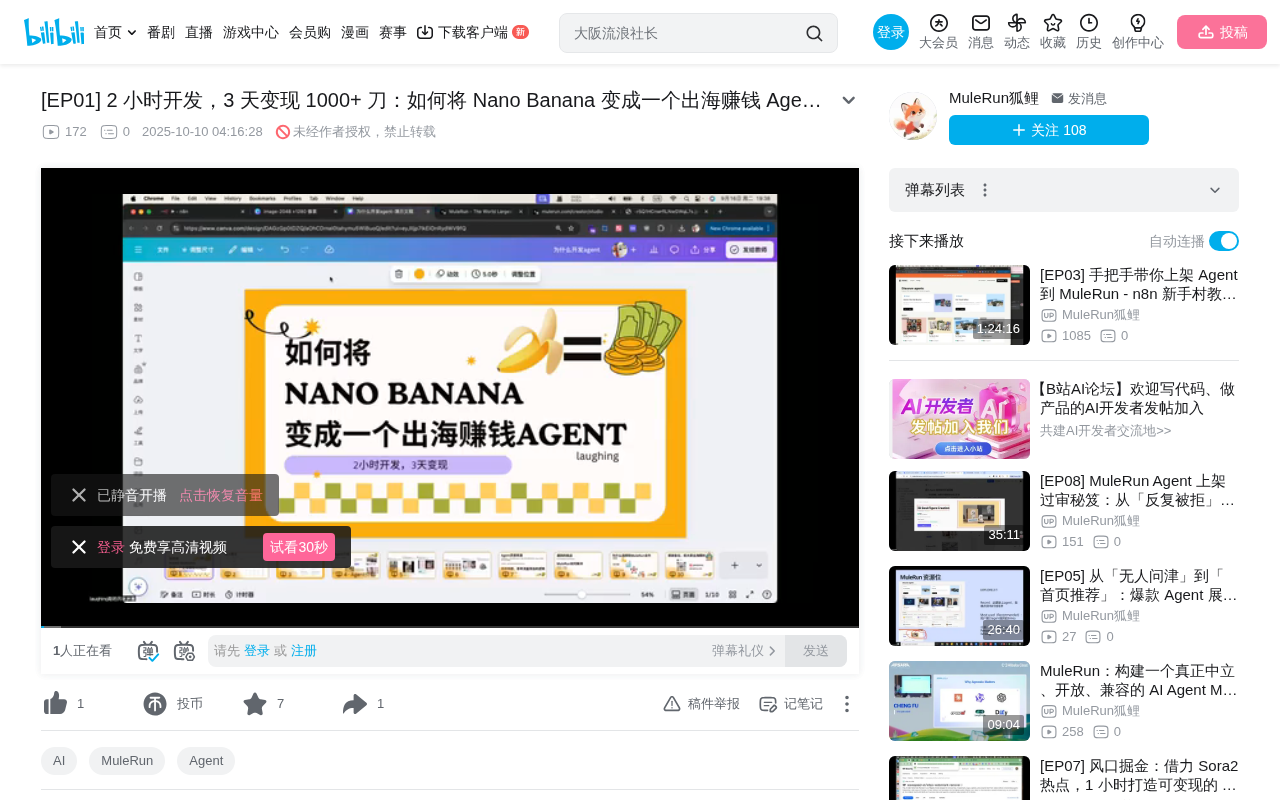
Launched 9 AI Agents in two weeks using Nana Banana model, earning over $1000 in revenue.
Bilibili creator Luffin capitalized on social media trends following the Nana Banana model release to launch 9 zero-barrier AI Agents on the Mirror platform within two weeks (including 3D figurine generation and old photo restoration), accumulating over $1,000 in revenue. His core methodology involves tracking social media trends to identify demand, packaging ready-to-use products, leveraging platforms for user acquisition and payments, and balancing short-term viral hits with long-term evergreen needs through matrix operations.
Rapid AI Agent Monetization: 9 Products, $1000+ Revenue in Two Weeks
When a new AI model launches, those who capitalize on the hype first often reap the biggest rewards. Bilibili creator Luffin shared how he leveraged the Nana Banana model to launch 9 AI Agents in under two weeks, accumulating over $1,000 in revenue. This case study demonstrates how an ordinary creator can achieve rapid monetization in the AI global market through sharp market instincts and efficient execution.
Nana Banana is an image generation model released by Fal AI, renowned for its excellent image editing and style transfer capabilities. The model sparked a massive creative wave on social media from late 2024 to early 2025, particularly with the viral trend of transforming portrait photos into 3D figurine-style images. Unlike traditional Stable Diffusion or Midjourney, Nana Banana demonstrates higher consistency and controllability in specific style transfer tasks, making it particularly suitable for packaging into standardized AI Agent products.
Revenue Data and Product Matrix
The Product Logic Behind $1000+ Revenue
Luffin published his Agents on the Mirror platform, with total revenue now exceeding $1,000. The 3D Desk Figure Creation Agent is the highest-earning single product, precisely capitalizing on the social media buzz following Nana Banana's release. All Agents went live within the past two weeks, demonstrating extremely high production efficiency.
Owning a Quarter of 38 Total Agents
At the time of sharing, the Mirror platform had a total of 38 Agents, with Luffin alone contributing 9—roughly a quarter—making him the most prolific Agent creator on the platform. His product matrix includes:
- 3D Figurine Generation: Transform any photo into a 3D desktop figurine effect
- Old Photo Restoration: A perennial demand scenario, not dependent on short-term trends
- GPT Cartoon Style: Generate cute stickers and cartoon avatars
- Room 3D Rendering: Architecture/interior design scenarios
- Pet Portrait Oil Painting: Transform pet photos into Napoleon-style oil paintings
- Nine-Grid Photo Booth: Multiple pose generation
- Cosplay Style: Character roleplay image generation
This product matrix strategy embodies the core playbook for AI products targeting global markets—don't put all your eggs in one basket. "AI going global" refers to Chinese developers leveraging AI technology to build products and services for overseas markets. Compared to the domestic market, overseas users (especially in Western markets) have a stronger willingness to pay for digital products, with higher per-transaction amounts. The AI Agent global market track entered an explosive growth phase in 2024-2025, driven primarily by: rapid improvements in large model capabilities enabling more scenarios to be automated, high overseas user acceptance of AI tools, and increasingly mature cross-border payment and distribution infrastructure. This track is characterized by extremely fast iteration cycles, short trend windows, and significant first-mover advantages.
Core Methodology: How to Find Inspiration for Hit Agents
Monitor Social Media Trends, Seize the Hype Window
Luffin's inspiration logic is crystal clear: when a new model launches, immediately monitor how it spreads on social media. Content with high views and heavy discussion represents the best candidates for Agent packaging.
Take the 3D figurine as an example—after Nana Banana's release, this use case went viral on X (Twitter). While many people saw the effect, far more didn't know how to create it or where to do it. Comments like "how did you do this" and "where can I generate this" appeared frequently—these are clear user demand signals.
No Prompts Required, Ready Out of the Box
The design philosophy behind all of Luffin's Agents is zero-barrier usage: users don't need to write prompts, don't need to tweak parameters—just upload an image and get results. All prompts, instructions, and complete workflows are built in. This "foolproof" experience dramatically lowers the usage barrier, which is key to why overseas users are willing to pay.
Here, "prompts" refer to the text instructions users input when interacting with AI models. In the hands of expert users, carefully crafted prompts can guide models to generate high-quality images in specific styles, but for average users, writing effective prompts is itself a barrier. Luffin's approach is to hardcode thoroughly tested optimal prompts into the workflow—users only need to provide raw materials (like a photo), and the system automatically handles all technical details.
Developing Internet Intuition Through Pattern Recognition
Beyond chasing trends, Luffin emphasizes understanding the underlying logic behind viral content:
- Why did a particular effect go viral? Is it visual impact? Emotional resonance? Or social sharing appeal?
- Can this logic be adapted to other scenarios?
- Even content you personally dislike is worth analyzing for its spread mechanics if it generates high engagement
This "internet intuition" must be cultivated through extensive social media browsing and continuous reflection.
Technical Implementation: N8N Workflow + Mirror Platform Deployment
N8N Workflow Setup
Luffin uses N8N as his workflow orchestration tool. N8N is an open-source workflow automation tool, similar to Zapier or Make (formerly Integromat), but offering greater flexibility and self-hosting capabilities. Through visual node drag-and-drop, it allows users to chain multiple API services into complete automated processes without writing extensive code. In AI Agent scenarios, N8N can orchestrate image upload, API calls (such as Fal AI's image generation endpoints), data storage (such as Supabase), and result delivery into a complete processing pipeline, achieving full automation from user input to output.
His previous N8N workflows were built for personal use and had several pain points:
- No user system
- No idea how to deploy for others to use
- Complex billing processes
- Difficulty collecting payments from overseas users
Core Problems Solved by the Mirror Platform
Mirror is a distribution and monetization platform for AI Agent creators, positioned similarly to an App Store for AI tools. It addresses three core pain points that independent developers face when going global: overseas user acquisition (traffic distribution), cross-border payments (payment infrastructure), and product deployment (technical hosting). Creators only need to focus on the Agent's functionality development, while the platform handles user registration, payments, revenue sharing, and other commercialization aspects.
Specifically, Mirror helps creators solve three major challenges: user acquisition, payment collection, and growth.
- User system and payment flow: Built into the platform, no need to build your own
- Technical deployment: Just modify your workflow according to documentation to go live
- Traffic distribution: Product and operations teams promote excellent Agents
- Overseas payment collection: Handled uniformly by the platform, creators don't need to worry
Agent Upload and Publishing Process
The actual operation is very streamlined:
- Debug your workflow in N8N
- Export (download) the workflow
- Click "New Agent" in the Mirror backend, fill in the name
- Upload the workflow file, select version
- Upload showcase images and cover
- Set pricing model (per run, per minute, per API call, etc.)
- Submit for review
For pricing, Luffin demonstrated a setting of $0.50 per run. The workflow primarily uses API Keys from two external services: Supabase and Fal AI.
Supabase is an open-source Firebase alternative that provides database (PostgreSQL-based), authentication, storage, and real-time subscription backend services. In Agent workflows, Supabase is typically used to store user-uploaded images, generated results, and task status data. Fal AI is a cloud platform focused on AI model inference, offering API endpoints for various image generation and editing models. Developers can use models including Nana Banana through simple API calls without deploying their own GPU servers. Together, they form the typical backend architecture for lightweight AI applications—developers don't need to maintain any server infrastructure and can build complete AI products solely through API calls.
Platform Collaboration and Creator Incentive Mechanisms
As a new platform, Mirror provides multi-dimensional support for creators:
- Revenue incentives: The more platform revenue, the more bonus rewards
- Traffic support: Excellent Agents receive significant exposure
- Technical support: One-on-one guidance for workflow modification and submission
- Creator services: Dedicated policies and documentation support
- Referral rewards: Regular users can also earn through referrals
Luffin described the team as "quite professional," noting their ability to systematically advance creator collaborations during the platform's early stage—a key reason he could maintain such high output in a short time. This symbiotic relationship between platform and creators is not uncommon in the internet industry—early YouTube, TikTok, and Xiaohongshu all established their content ecosystems by heavily supporting top creators. For creators, joining a platform during its early development phase often yields traffic dividends and policy advantages far exceeding what's available during maturity.
Summary: Five Core Insights for AI Agent Global Monetization
The core takeaways from this case study:
- Speed is the moat: Trend windows are extremely short—2-hour development and rapid deployment are essential to capture the first wave of dividends. In the AI space, technology itself is hard to maintain as a long-term moat because model capabilities are rapidly democratizing, but the first-mover advantage from timing—including user accumulation, reputation building, and platform authority—is difficult for latecomers to overcome.
- Lower the user barrier: Overseas users are willing to pay for convenience—ready-to-use beats feature-rich. This aligns with the "Don't Make Me Think" principle in product design—user attention and patience are the scarcest resources.
- Matrix operations: Don't bet on a single product—multiple Agents covering multiple scenarios stabilize revenue. A single trending product may have a lifecycle of only days to weeks, but a multi-product portfolio smooths revenue fluctuations.
- Leverage platforms: Choose platforms that solve user acquisition and payment collection, and focus your energy on the product itself. The biggest bottleneck for independent developers is often not technical capability, but building commercialization infrastructure.
- Balance short and long term: Chase trends (3D figurines) while also serving perennial needs (old photo restoration) to ensure sustainable revenue. Trending products drive explosive growth, long-tail products provide stable cash flow—together they form a healthy revenue structure.
Related articles
 Tutorials
Cursor + Codex Dual-IDE Collaboration: A Practical Methodology for Open-Source Project Customization
A complete methodology for open-source project customization based on real-world experience, detailing the Cursor+Codex dual-IDE workflow, seven-stage process, MVP validation, and AI source code reading techniques.
 Tutorials
Cursor Multi-Agent in Practice: Building a Full-Stack Next.js Blog in 50 Minutes
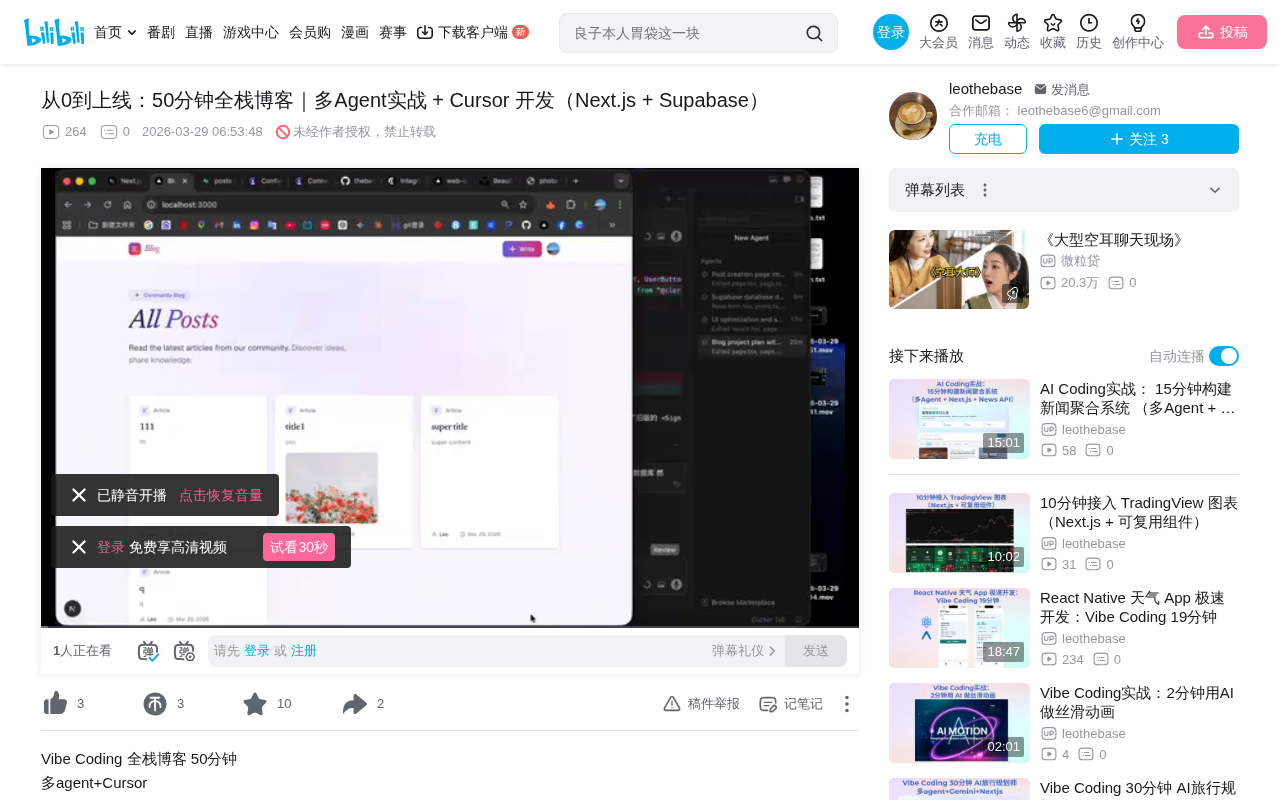
Build a full-stack blog in 50 minutes using Cursor IDE's multi-Agent mode with Next.js, Clerk auth, and Supabase. Learn the 4-phase AI Agent workflow and key integration pitfalls.
 Tutorials
Building an AI Software Factory from Scratch: A Cursor Engineer's Hands-On Experience with Multi-Agent Collaboration
Cursor engineer Eric shares practical insights on building an AI software factory: automation levels, guardrail design, parallel Agent management, and scaling to 1000+ Agents for 24/7 development.