6 Core Skills to Stay Irreplaceable in the AI Era: From Getting Started to Building Your Competitive Moat
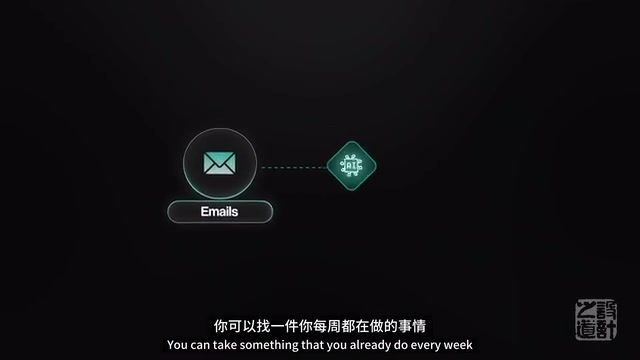
Six essential skills to stay irreplaceable and thrive in the AI-driven workplace.
This article outlines six core skills for thriving in the AI era: becoming the go-to AI expert in your circle, cultivating taste and judgment to curate AI output, mastering context engineering over simple prompting, iterating rapidly, building autonomous automation systems, and creating multiple AI-powered income streams. Together, these form a complete framework for career resilience.
AI is reshaping the professional landscape at an unprecedented pace. Just as social media replaced newspaper ads and Netflix replaced cable TV, AI will transform and eliminate millions of jobs. But that doesn't mean you have to switch careers or start a business from scratch — the key is mastering the right skills.
An overseas AI content creator has summarized six core skills that are crucial in the AI era, applicable to any role and industry. These skills aren't about becoming an AI engineer — they're about making yourself more valuable and irreplaceable in your current position.
1. Become the "AI Expert" in Your Circle
The first skill sounds simple, but many people misunderstand what it truly means. Being an AI expert is relative — you don't need to understand the underlying architecture of every model. You just need to know more than the people around you.
Many people start learning AI as a hobby: playing with Claude, testing Codex, building small tools with Google Veo 3, automating parts of their workflow. Then they show the results to colleagues — "I used AI to cut a three-hour task down to 20 minutes" — and suddenly, they're labeled the "AI person."
This matters because companies are about to face a massive wave of AI use cases. An IBM CEO survey found that 85% of CEOs believe all functional department leaders must become technology experts in their domain — not just CTOs or engineers, but leaders in marketing, sales, finance, legal, and every other department.
How to Do It Specifically
Pick one primary AI tool and truly master it. Then choose a workflow you repeat every week in your current job and figure out how to make it better or faster with AI. Document these changes, including what still requires human judgment. You don't need to switch careers — you just need to find the AI-native version of your existing role.
2. Taste and Judgment — The Scarcest Ability in the AI Era
As AI capabilities improve, people increasingly tend to trust the first result it gives them. This is precisely the most dangerous trap.
Here's a classic ironic scenario: on one end, someone uses AI to expand a single bullet point into a super-professional, structured email. On the other end, the recipient uses AI to condense that email back into a single bullet point. Everyone is transforming content, but is anyone actually reading it?
Taste shows up in the details. For example, AI loves using em dashes because its training data comes from vast amounts of white papers and formal documents. If your content suddenly contains five em dashes, anyone who knows you can tell you didn't write it. Once they develop that suspicion, it completely changes how they interpret the entire message.
How to Cultivate Taste: Three Steps
- Study the best work in your field — great sales emails, excellent landing pages — and ask yourself "why is this outstanding?"
- Build a swipe file — collect examples you genuinely admire that match your style
- Establish a feedback loop — every time you correct AI output, feed the reasoning back into the system, update your instructions, and make it closer to your standards next time
At the end of the day, AI can generate work, but taste determines what's worth putting your name on. Whether the output is brilliant or terrible, your name is still on it.
3. From Prompt Engineering to Context Engineering
A few years ago, "prompt engineering" was all the rage. The core logic was: give AI quality prompts to get better output. But as model capabilities have dramatically improved, the importance of prompt engineering is gradually declining.

Top AI expert Andrej Karpathy has called Context Engineering "an exquisite art." In plain language: the prompt is how you ask the question; context is what the AI actually knows. No matter how powerful models become, they still need to know what's really in your head — your business progress, schedule, and priorities.
Practical Tips for Context Engineering
- Stop opening blank chat windows — create custom GPTs or Claude projects and input the real context of what you're working on
- Treat AI like you're onboarding a new employee — explain the business, team members' responsibilities, and current key projects
- Inject your non-public data — your domain expertise, thinking patterns, and intellectual property are what make the output unique
Remember: garbage in, garbage out. If everyone uses the same model with the same requests, the output will be identical. Your contextual information is your true differentiator.
4. Iteration Speed — The Core Competitive Advantage of the AI Era
This is the most underrated skill on the entire list. In the AI era, the person who iterates fastest wins. Every iteration means more data, more learning opportunities, and more chances to improve your skills, agents, prompts, and context.

It's like teaching a kid to ride a bike: you can't just throw them on and expect them to ride. You have to feel which way they're leaning and correct in real time, repeating and adjusting constantly. After you teach the first kid, the second one is easier, and by the 15th, the process is practically a science.
How to Train Rapid Iteration
- Master keyboard shortcuts and use voice input instead of typing (voice input is much faster than typing)
- Rapid prototyping — don't try to plan the perfect version; build a rough version first, then fix problems as you find them
- Set a North Star goal — tie automation to specific business metrics and clearly define what "done" looks like
Equally important is knowing when to stop iterating. Pick your metric, keep building until you hit it, then switch to maintenance mode to prevent scope creep.
5. Build Your Own "Jarvis" Automation System
This skill is inspired by Iron Man. Tony Stark doesn't sit at a computer all day typing commands to Jarvis — Jarvis runs in the background, proactively alerts him when attention is needed, and even executes tasks before Tony asks.

Unlike context engineering, this skill is about teaching AI to act autonomously based on what it already knows, without you serving as the trigger. Audit your daily work and identify repetitive tasks triggered by predictable events — specific types of emails, fixed weekly schedules, new leads in the CRM — these can all be handed off to automated systems.
Workflows vs. AI Agents: The Key Decision Criteria
Not every task needs an AI agent. The author uses a brilliant analogy:
- Vending machine (Workflow): Deterministic — same input always produces the same output, extremely low cost, no errors
- Slot machine (AI Agent): Non-deterministic — requires reasoning and variability, higher cost, greater risk
For example, pulling daily revenue data from Stripe and posting it to Slack doesn't need an agent at all — a simple workflow takes 5 minutes to set up. But reading customer emails, understanding their needs, and drafting customized replies — that's where AI should step in.
Someone who can step back and say "AI isn't needed here" shines far brighter than someone who forces AI into every task. It shows you truly understand the business problem, rather than just riding the AI hype wave.
6. Use AI to Build Multiple Income Streams — Your "Unemployment Insurance"
The final skill might sound radical: use AI to build multiple income streams so that no single employer or client can take you down.
The old career model was one job, one paycheck, one retirement plan. The new model is work stacking: your day job plus several AI-powered side income streams. AI enables one person to do the work that used to require a five-person team, making multiple income streams possible.
Key Principle: Branch Out from Your Core
Don't build five income streams in completely unrelated fields. For example, your primary expertise can be packaged into a course, a niche newsletter, a blog, a micro-SaaS, or freelance consulting — same domain, different formats.
The default recommendation is to build in public: experiment with AI tools, build small projects, share what you learn, and document both successes and failures. From the moment you start publishing, you become discoverable — clients will find you, job offers will find you. In a world where people increasingly search for information through AI interfaces, if you have zero online presence, being discovered becomes much harder.
Summary: A Complete Survival Framework for the AI Era
These six skills form a complete survival framework for the AI era:
- Become a relative AI expert — stay one step ahead in your circle
- Cultivate taste and judgment — know what's good and what's worth putting your name on
- Master context engineering — help AI truly understand your world
- Increase iteration speed — fail fast, learn fast
- Build autonomous systems — let AI work for you in the background
- Establish multiple income streams — reduce single-point-of-failure risk
The core idea is simple: survival of the fittest. AI won't wait for you to be ready, but as long as you keep up with the changes, your ability to earn a living will always be secure. The advantage isn't in waiting until you're forced to learn — it's in taking action while most people still think it's optional.
Related articles
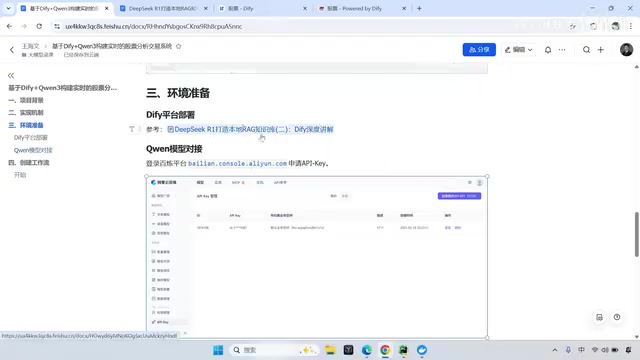
Building an AI Stock Analysis System with Qwen3 + Dify: A Hands-On Tutorial
A hands-on guide to building a real-time AI stock analysis system using Dify workflows and Qwen3. Covers deployment, technical indicators (RSI/MACD/Bollinger Bands), and trading strategy generation.
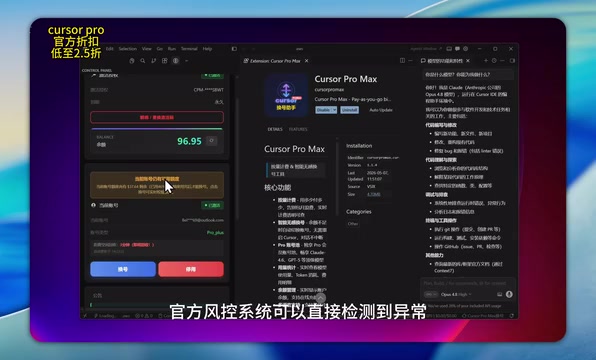
Deep Dive into Cursor Refill Plugins: Pay-Per-Use Billing and Account Pool Scheduling Mechanisms
Deep analysis of Cursor refill plugin architecture: how clean account pool scheduling replaces cracking tools, the business logic of 35% pay-per-use pricing, and compliance risks developers should consider.
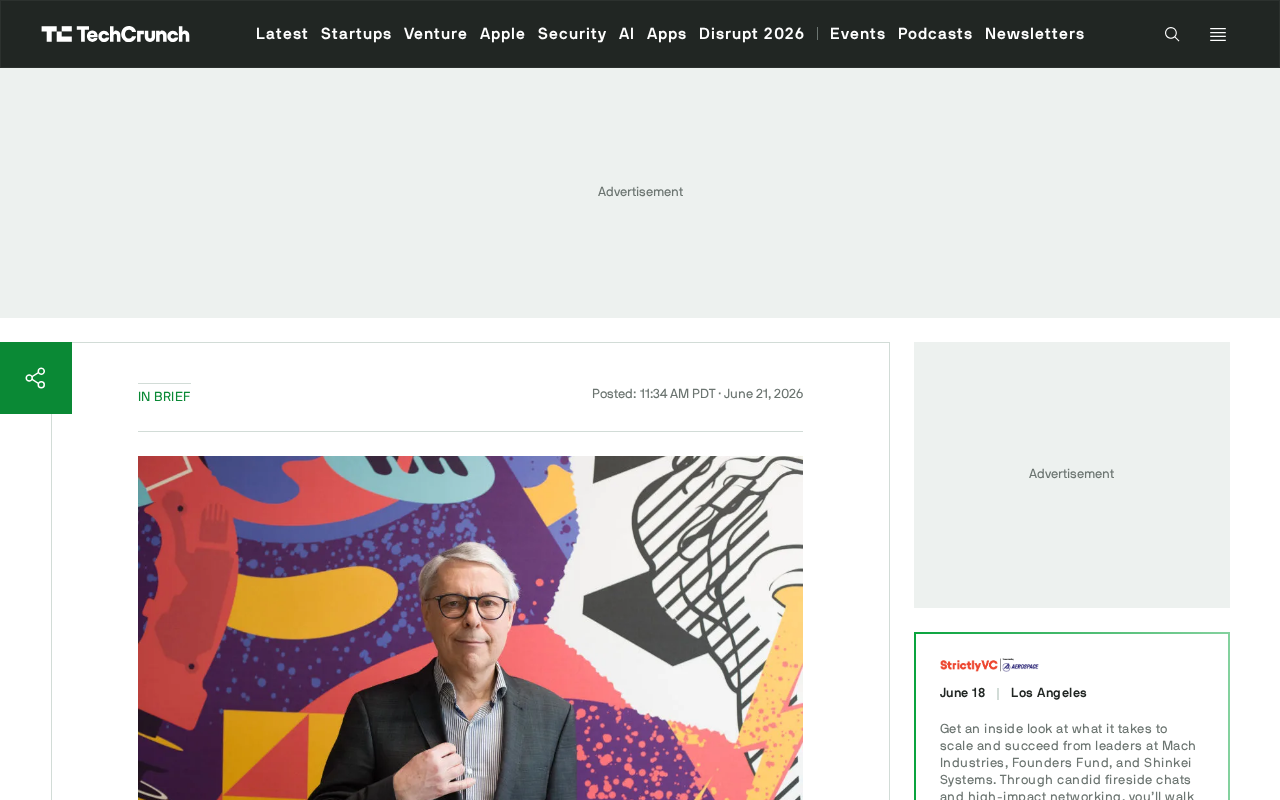
Ubisoft Co-Founder Claude Guillemot Dies in Plane Crash at Age 69
Ubisoft co-founder Claude Guillemot has died in a plane crash at age 69. He co-founded Ubisoft with his four brothers, creating iconic IPs like Assassin's Creed and Far Cry.