6 Must-Have MCP Plugins to Supercharge Your Claude Code Productivity
6 Must-Have MCP Plugins to Supercharge…
6 essential MCP plugins that transform Claude Code into a full-featured AI development workflow engine
This article introduces how Claude Code extends its capabilities through the MCP (Model Context Protocol) plugin ecosystem, recommending 6 must-have plugins for beginners: File System (file operations), Structured Thinking (logical reasoning), GitHub (code collaboration), Chrome DevTools (browser control), Context7 (real-time documentation retrieval), and Memos (long-term memory). Together they cover six key dimensions and form a complete AI programming workflow loop.
Claude Code and the MCP Ecosystem: Redefining the Boundaries of AI Programming Tools
As one of the most powerful AI programming tools available today, Claude Code's true power lies in its MCP (Model Context Protocol) plugin ecosystem. MCP is a standardized protocol open-sourced by Anthropic in late 2024, designed to solve the fragmentation problem of integrating AI models with external tools and data sources. Before MCP, every AI application needed custom adapters for different external services, making maintenance costs extremely high. By defining a unified client-server communication specification, MCP enables any protocol-compliant tool to plug into large models like Claude seamlessly—its architecture is similar to the concept of a package manager in programming languages, where developers only need to implement standard interfaces to expose any capability for AI to call.
By strategically combining MCP plugins, you can upgrade Claude Code from a simple code assistant into a full-featured AI workflow engine covering file management, logical reasoning, code collaboration, browser control, documentation queries, and memory storage.
This article curates 6 must-have MCP plugins for beginners to help you quickly build an efficient AI development environment.
File System MCP: Fully Automated File Operations
File System MCP is one of the most fundamental and important plugins. It gives Claude Code the ability to directly operate on your local file system—reading files, modifying code, moving directories, creating files—all done automatically.
Without this plugin, you'd need to manually copy and paste code snippets to the AI, then manually write the AI's output back to files. With it, Claude Code can work directly in your project directory like a real developer. For everyday code refactoring, batch file processing, and similar scenarios, the productivity boost is substantial.
Structured Thinking MCP: Double Your Output Quality
The core philosophy of this plugin is to make the AI reason along strict logical chains rather than blurting out answers all at once. It guides Claude to break down problems step by step, analyze layer by layer, and ultimately produce structured, high-quality results.

The underlying principle of Structured Thinking MCP is closely related to the widely researched Chain-of-Thought technique in academia. Research by the Google Brain team in 2022 demonstrated that guiding large models to reason step by step rather than directly outputting answers can significantly improve accuracy on complex tasks. Structured Thinking MCP engineers this concept—by forcing the model to complete problem decomposition, hypothesis verification, and step-by-step derivation before answering, it makes the otherwise implicit reasoning process explicit. This not only improves output quality but also allows developers to audit the AI's reasoning path and quickly pinpoint issues when errors occur.
In practice, Structured Thinking MCP is especially effective for complex architecture design, bug investigation, and technical solution comparisons. It's essentially a systematized implementation of Prompt Engineering that makes the AI's reasoning process more transparent and controllable—output quality compared to using the model raw is effectively doubled.
GitHub MCP: The Open Source Collaboration Powerhouse
While GitHub MCP requires configuring a GitHub API Token, the value it delivers is immense. Once installed, Claude Code can interact directly with GitHub repositories—browsing code, submitting PRs, managing Issues, searching open source projects—all within the conversation.
The required API Token is a GitHub Personal Access Token (PAT), which can be generated in the Developer Settings section of your GitHub settings page. Tokens come in two types: Classic and Fine-grained. Classic Tokens have coarser permission granularity, suitable for quickly getting started with personal projects; Fine-grained Tokens support precise repository-level permission control, better suited for team collaboration scenarios. When configuring, follow the principle of least privilege—only enable permissions actually needed such as repo read/write and issues management to avoid repository security risks from token leaks. Set token expiration to 90 days and rotate regularly.
For developers who frequently reference open source projects and manage multiple repositories, this plugin eliminates significant time spent switching between browser and terminal. You can directly ask Claude to examine how a particular open source library is implemented, or even automatically submit code changes.
Chrome DevTools MCP: Let AI Control Your Browser
Chrome DevTools MCP is a plugin that truly opens your eyes. It enables Claude Code to directly control Chrome browser, fully automating web data scraping, form filling, content publishing, and more.

This plugin relies on the Chrome DevTools Protocol (CDP)—Chrome browser's native debugging interface, which mainstream automation testing frameworks like Puppeteer and Playwright are also built upon. Compared to traditional Selenium approaches, CDP communicates directly with the browser kernel, offering lower latency, stronger stability, and access to underlying capabilities like network request interception and performance analysis. By wrapping CDP capabilities as an MCP plugin, AI can drive the browser to execute complex operation sequences through natural language commands—essentially a deep fusion of RPA (Robotic Process Automation) with large model semantic understanding.
Imagine this scenario: you ask Claude to write an article, then it automatically opens the browser, logs into your blog platform, pastes the content, and publishes it. Or have it automatically browse competitor websites, collect key data, and compile it into a report. This plugin extends AI's capabilities from the code editor to the entire Web world.
Context7 MCP: Real-Time Latest Documentation Retrieval
Large models always have a training data cutoff date, meaning they may know nothing about the latest versions of frameworks and libraries. This problem is known as the "Knowledge Cutoff" dilemma in the AI engineering field—mainstream large models typically have a 6-18 month lag in training data, and for rapidly iterating tech ecosystems (like React, Next.js, various Python libraries), models may output deprecated API patterns.
Context7 MCP was born to solve this exact pain point. Its approach is a vertical application of RAG (Retrieval-Augmented Generation) technology—before the model generates code, it retrieves the latest content from official documentation sources in real-time and injects it into the context, anchoring the model's output to accurate information from the current version rather than relying on static knowledge from training time.

For example, if you're using the latest version of a framework, the API may have undergone Breaking Changes, but the AI is still using the old syntax. With Context7 MCP, Claude will consult the latest documentation before writing code, fundamentally avoiding the embarrassment of "code that looks right but won't run." For developers who stay on the cutting edge of their tech stack, this is a truly essential plugin.
Memos MCP: Give AI Long-Term Memory
Memos MCP solves AI's "goldfish memory" problem. The root cause lies in the stateless architecture of large models—each conversation is an independent context window, and information is completely lost after the session ends. Persistent memory implementation typically follows two paths: one is the vector database approach, embedding historical information as vectors and retrieving by semantic similarity; the other is the structured storage approach, saving key preferences and decisions as key-value pairs. Memos MCP adopts the latter combined with cloud synchronization, automatically injecting relevant historical context into the prompt at the start of each conversation to simulate "long-term memory"—this is similar in principle to the Memory feature OpenAI launched in ChatGPT, but the MCP approach gives users complete control over their data.

"Gets smarter the more you use it" isn't just a slogan. As usage accumulates over time, Memos MCP helps Claude build an understanding of your personal work habits—your preferred code style, commonly used tech stack, project architecture conventions, and more. This persistent contextual memory transforms AI from a stranger you have to re-introduce yourself to every time into a development partner that truly understands you.
Building Your AI Workflow Loop
These 6 MCP plugins each serve their purpose, combining to form a complete AI workflow loop:
| Plugin | Core Capability | Problem Solved |
|---|---|---|
| File System | File operations | Manual copy-paste |
| Structured Thinking | Logical reasoning | Inconsistent output quality |
| GitHub | Code collaboration | Multi-platform switching |
| Chrome DevTools | Browser control | Manual web operations |
| Context7 | Documentation queries | Outdated knowledge |
| Memos | Memory storage | Lost context |
Beginners are recommended to install and configure these one by one in the order listed above, starting with File System and Structured Thinking as the two foundational plugins, then expanding to others based on actual needs. The MCP ecosystem is still rapidly evolving—mastering these core plugins will build a solid foundation for exploring more advanced use cases down the road.
Key Takeaways
- File System MCP and Structured Thinking MCP are the two most fundamental must-have plugins, addressing file operation automation and AI output quality respectively
- Structured Thinking MCP is based on Chain-of-Thought principles, making implicit reasoning processes explicit and AI decision paths transparent and auditable
- Context7 MCP uses RAG technology to retrieve the latest technical documentation in real-time, fundamentally solving code compatibility issues caused by outdated model training data
- Chrome DevTools MCP is built on the CDP protocol, fusing RPA capabilities with large model semantic understanding to achieve fully automated web operations
- Memos MCP provides AI with cross-session long-term memory capabilities, with users retaining complete control over stored data, making the tool increasingly attuned to user habits over time
- The 6 plugins cover six dimensions—files, reasoning, collaboration, browser, documentation, and memory—forming a complete AI workflow loop
Related articles
 Tutorials
Cursor + Codex Dual-IDE Collaboration: A Practical Methodology for Open-Source Project Customization
A complete methodology for open-source project customization based on real-world experience, detailing the Cursor+Codex dual-IDE workflow, seven-stage process, MVP validation, and AI source code reading techniques.
 Tutorials
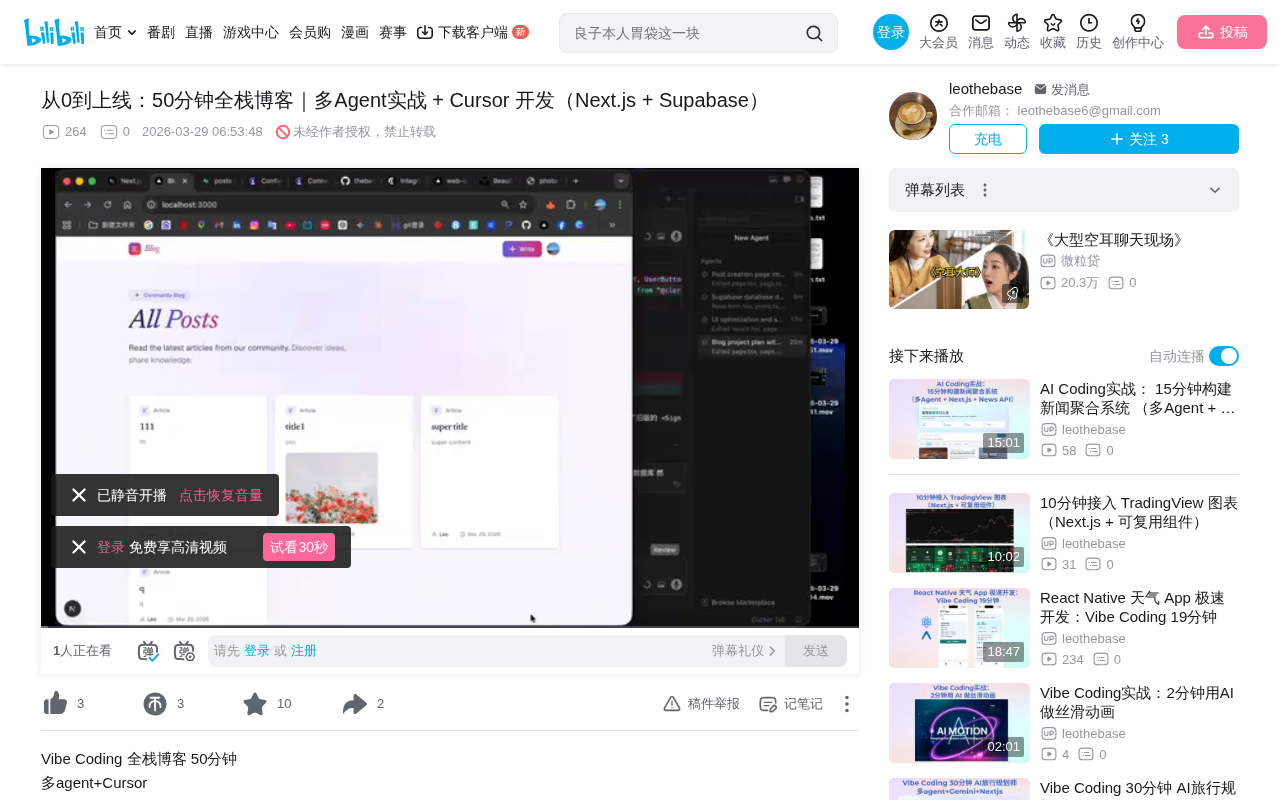
Cursor Multi-Agent in Practice: Building a Full-Stack Next.js Blog in 50 Minutes
Build a full-stack blog in 50 minutes using Cursor IDE's multi-Agent mode with Next.js, Clerk auth, and Supabase. Learn the 4-phase AI Agent workflow and key integration pitfalls.
 Tutorials
Building an AI Software Factory from Scratch: A Cursor Engineer's Hands-On Experience with Multi-Agent Collaboration
Cursor engineer Eric shares practical insights on building an AI software factory: automation levels, guardrail design, parallel Agent management, and scaling to 1000+ Agents for 24/7 development.