A Complete Guide to Multi-Agent Teams in AI Coding: From Solo Work to Team Collaboration
How Cursor, Claude Code, and CodeBuddy are turning developers into AI team commanders.
AI coding tools are evolving from single-agent assistants to multi-agent team systems. This article compares three leading approaches — Cursor's competitive parallel architecture, Claude Code's master-worker collaboration model, and Tencent CodeBuddy's enterprise-grade design — covering their core advantages in parallel exploration, cross-layer collaboration, context isolation, and professional specialization, with practical tips on team building, task decomposition, and cost control.
From Solo Work to Team Collaboration: A Paradigm Shift in AI Coding
AI coding tools are undergoing a quiet revolution — not because the models have gotten smarter, but because they've learned to "work as a team." While most developers are still chatting with a single AI, some are already commanding 8 agents to write code in parallel. This isn't science fiction — it's the daily reality unfolding in tools like Cursor, Claude Code, and Tencent's CodeBuddy.
Six major tools have rolled out multi-agent capabilities (Agent Teams) in quick succession, turning what was once an experimental feature into an industry standard. The signal is clear: the developer's role is transforming — you're no longer a coder buried in lines of code, but a commander orchestrating an AI team.
Multi-Agent refers to a system architecture where multiple AI agent instances run simultaneously, each taking on different responsibilities and collaborating to complete complex tasks. Unlike traditional single-turn conversational AI assistants, multi-agent systems introduce classic software engineering patterns such as task decomposition, parallel execution, and result aggregation, upgrading AI from a "Q&A tool" to a "collaborative team."
Three Multi-Agent Approaches Compared: The Alchemy Furnace, the Regular Army, and the Enterprise Architecture
There are currently three major multi-agent solutions, each with a distinctly different design philosophy:
Cursor 2.0: The Alchemy Furnace Model
Up to 8 agents run in parallel, using Git Worktree for file isolation. Git Worktree is an important feature introduced in Git 2.5 that allows multiple independent working directories to be checked out simultaneously within the same repository. Each worktree has its own working area and staging area but shares the same .git directory and commit history. In a multi-agent scenario, this means each AI agent can modify code in a completely independent file space without interfering with others, avoiding the tedious operations of stashing or committing current work that come with traditional branch switching.
Agents don't communicate with each other — the developer cherry-picks and merges the best results. This model is like an alchemy furnace: 8 agents each work independently while you collect the output. It's ideal for parallel exploration and comparison of multiple approaches. The advantage of this "competitive" architecture lies in its simplicity and controllability: one agent's failure doesn't affect the others, and developers can compare the pros and cons of different solutions like A/B testing.
Claude Code: The Regular Army Model
It can launch hundreds of parallel agents. Sub-agents have independent contexts, and results are passed back without polluting the main session with internal details. Team members can also communicate directly and autonomously claim tasks. With leaders, members, task lists, and a messaging system, this is a truly collaborative architecture.
This architecture draws from the "Master-Worker Pattern" in distributed systems: the master agent handles task decomposition and result aggregation, while sub-agents handle specific execution. Unlike Cursor's competitive architecture, Claude Code's agents have explicit communication mechanisms and coordination protocols, making it better suited for complex engineering tasks requiring tight coordination across multiple modules.
Tencent CodeBuddy: Enterprise-Grade Architecture
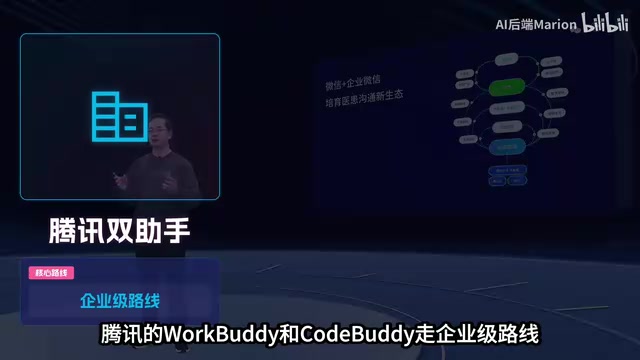
CodeBuddy takes the enterprise route — members can communicate directly without going through the leader, and it supports the full MCP protocol along with private deployment. MCP (Model Context Protocol) is an open standard protocol launched by Anthropic in late 2024, designed to establish a unified communication interface between AI models and external tools and data sources — think of it as the USB-C port of the AI world. Full MCP protocol support means CodeBuddy's agents can flexibly invoke various enterprise internal toolchains, including databases, internal APIs, file systems, and more, without needing to develop a separate adapter for each tool.
It features a 5-layer structural design, 22 built-in specialized Agents, and support for China's national cryptographic standards (GM algorithms). GM algorithms are a series of cryptographic standards published by China's State Cryptography Administration (including SM2 asymmetric encryption, SM3 hash algorithm, SM4 block cipher, etc.), which are mandatory compliance requirements in critical sectors such as finance, government, and defense. CodeBuddy's support for GM algorithms enables it to meet the stringent data security and regulatory compliance requirements of Chinese enterprises — a key differentiator from overseas tools.
Four Core Advantages of Multi-Agent Mode
Despite their completely different design philosophies, the three architectures share common core advantages:
Parallel Exploration: Exponentially Expanding the Search Space
Previously, comparing 3 technical approaches meant executing them sequentially. Now you can spin up 8 agents running different paths simultaneously — Cursor has even coordinated hundreds of agents to produce millions of lines of code. This isn't incremental improvement; it's a qualitative leap — the exploration space expands exponentially.
From a computational complexity perspective: if evaluating each technical approach takes 30 minutes, sequentially evaluating 8 approaches takes 4 hours; parallel execution takes just 30 minutes, reducing time complexity from O(n) to O(1). More importantly, parallel exploration allows developers to try approaches that "seem unlikely but might surprise you" — because the cost of experimentation is virtually zero, greatly encouraging technical innovation and validation of unconventional ideas.
Cross-Layer Collaboration: Simultaneous Frontend, Backend, and Testing Progress
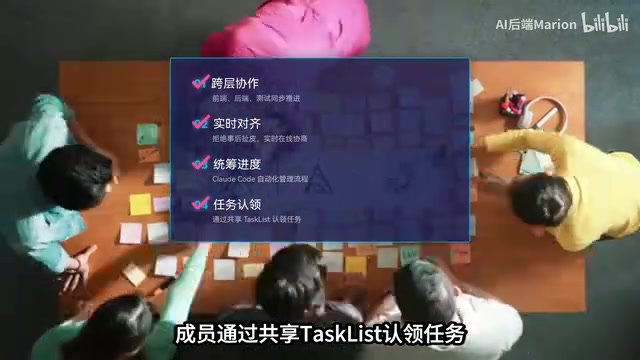
Frontend, backend, and testing advance simultaneously. API alignment is no longer a post-hoc blame game but a real-time negotiation. Claude Code's team leader coordinates progress while members claim tasks through a shared Task List.
In traditional development workflows, frontend-backend API inconsistency is one of the top causes of project delays. The backend changes a field name without notifying the frontend; the frontend assumes a data format that doesn't match what the backend actually returns — these issues often only surface during integration testing. The multi-agent cross-layer collaboration model enables the frontend Agent and backend Agent to validate API contracts in real-time during development, shifting integration issues from the testing phase to the development phase.
Context Isolation: Say Goodbye to Long-Conversation Memory Loss
Sub-agents' trial-and-error, debugging, and intermediate states don't pollute your main session. Conversations don't balloon indefinitely, and the main agent stays sharp.
This solves the long-standing problem of AI "forgetting" and "going off track" in long conversation scenarios. Although the context window of large language models has expanded to 128K or even 200K tokens, "attention dilution" still occurs in long conversations — as conversation length increases, the model's attention to earlier information drops significantly. Academic research calls this the "Lost in the Middle" problem. Context isolation lets sub-agents work in independent short contexts, passing only final result summaries back to the main session. This architecturally circumvents this fundamental limitation, ensuring the main agent always makes decisions within a clean, focused context.
Professional Specialization: Building an AI Expert Advisory Team
By customizing prompts and toolsets for different Agents, you essentially build an expert advisory team. CodeBuddy's 22 built-in specialized Agents — from code review to security auditing — each handle their own domain, achieving true professional specialization.
The underlying logic of this specialization is: through carefully designed system prompts and tool sets, a general-purpose large model can be "shaped" into a domain-specific expert. For example, a security audit Agent's prompt includes the OWASP Top 10 vulnerability checklist and common security anti-patterns, along with access to static analysis tools; while a performance optimization Agent focuses on time complexity, memory allocation patterns, and database query efficiency. This combination of "role-playing + tool augmentation" enables each Agent to far outperform generic conversational mode within its area of expertise.
Real-World Cases: Efficiency Gains from Multi-Agent Mode
These advantages are backed by real-world cases:
-
Cursor + Fair E-commerce: Compressed what was originally an 18-month codebase migration into a single-person manageable effort, with PR throughput directly doubling. PR (Pull Request) is a core process in code collaboration where developers submit code changes for team review and merging after completing feature development. PR throughput is a key metric for measuring engineering team delivery efficiency — doubling it means delivering twice the features and fixes in the same timeframe, directly reflecting the acceleration effect of multi-agent parallel work on the development pipeline.
-
Claude Code + Every Team: Two people built a product serving 10,000 users in three months, delivering 6 new features and 5 fixes per week. What's remarkable about this case is that in traditional software engineering, a product serving tens of thousands of users typically requires a team of 5-10 people, including frontend, backend, testing, and operations roles. Multi-agent mode lets AI fill these role gaps — the two people were effectively commanding a "virtual team."
-
Tencent Internal CodeBuddy: Covers 90% of engineers, 90% of code is AI-generated, and coding time is reduced by 40%.

18 months compressed to a single-person effort, two people matching a traditional team, 90% of code AI-generated — multi-agent mode is redefining the baseline for development efficiency.
Practical Tips: How to Use Multi-Agent Mode Effectively
Team Building Strategy
- Define specialized members by role, and prioritize using built-in Agents (such as Explorer and Planner). The Explorer Agent excels at codebase exploration and understanding, quickly mapping out project structure and dependencies; the Planner Agent focuses on task decomposition and execution planning, making it the ideal starting point for complex tasks.
- Use @member to communicate directly when needed.
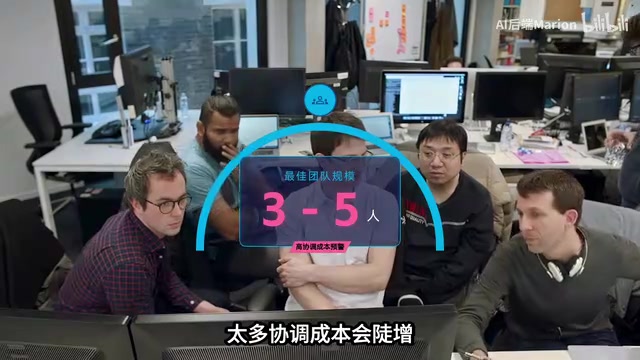
- Keep team size between 3 and 5 — too many and coordination costs spike. This aligns with the classic "Brooks's Law" in software engineering: adding manpower to a late project only makes it later, because communication costs grow quadratically with team size. AI teams are no different: coordination overhead between agents and the probability of merge conflicts both increase sharply with numbers.
Task Decomposition Principles
- Use SubAgent mode for independent subtasks — suitable for work with clear inputs and outputs that doesn't need to interact with other tasks, such as implementing a single function or writing unit tests for an independent module.
- Use Agent Teams for complex work requiring collaboration — when tasks have data dependencies or API constraints, agents need to communicate and coordinate.
- Choose Cursor for multi-approach exploration — leveraging the natural advantage of its competitive architecture.
- Use Dynamic Workflows for large-scale branch refactoring. Dynamic Workflows is an orchestration pattern that, unlike static predefined workflows, allows AI to adjust task allocation and execution order in real-time based on actual runtime conditions — such as code dependency chains, test results, and conflict detection. This mode is particularly suited for large-scale code refactoring, where unexpected dependency chains and side effects frequently emerge, requiring flexible responses rather than rigid execution of preset processes.
Cost Control Tips
Claude Code lets you point sub-agent models to lightweight versions (such as Claude Haiku or Sonnet) while using high-performance versions (such as Claude Opus or Sonnet 4) for the main agent. Cursor selects models by task complexity tier — flagship models for high-value tasks, lightweight models for batch processing.
The economic logic of this tiered strategy is clear: flagship model API calls typically cost 10-30x more than lightweight models, but the performance difference on simple tasks is minimal. For example, code formatting, simple variable renaming, and boilerplate code generation are tasks lightweight models handle perfectly well; while architecture design, complex bug diagnosis, and security vulnerability analysis are high-cognitive-load tasks worth investing flagship model compute power in. Proper tiering can reduce total costs by 50%-70% while maintaining quality.
Selection Guide: Combine Tools Based on Your Scenario
Choose based on your core needs:
| Scenario | Recommended Tool | Core Advantage |
|---|---|---|
| Parallel exploration, approach comparison | Cursor | Competitive architecture, Git Worktree isolation, cherry-pick best results |
| Deep team collaboration, large-scale concurrency | Claude Code Agent Teams | Master-worker collaborative architecture, robust communication mechanisms, supports hundreds of concurrent agents |
| Enterprise deployment, compliance requirements | CodeBuddy | Private deployment, GM encryption, full MCP protocol support |
But the best practice is: use these tools in combination, understand their different design philosophies, and build your own agent orchestration strategy. For example, use Cursor for parallel exploration of technical approaches in the early project phase, switch to Claude Code's Agent Teams for collaborative development once the approach is decided, and finally complete compliance deployment and security auditing through CodeBuddy in the enterprise environment.
A developer's core competitive advantage is no longer just coding speed — it's the ability to command an AI team. The identity shift from "person who writes code" to "AI team commander" is already irreversible. Future technical interviews may no longer test only algorithm problems — they'll also assess how you decompose tasks, how you assemble agent teams, and how you find the optimal balance between cost and quality. These "AI orchestration skills" are becoming the core competency of the next generation of developers.
Key Takeaways
Related articles
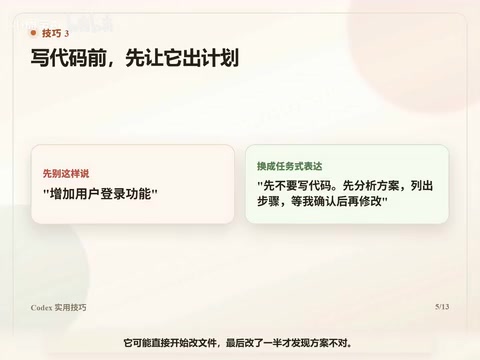
The Codex Power User Guide: 10 Tips to Make AI Actually Do the Work for You
Master 10 power-user tips for OpenAI Codex: from assigning tasks and phased planning to automated testing and code reviews. Make AI Agents truly work for you.
9 Failure Modes and Best Practices Guide for the GrillMe Skill
Deep dive into 9 common failure modes of GrillMe and GrillWithDocs skills, covering scope control, question fidelity, model selection, parallel sessions, and more best practices.
Harness Engineering in Practice: Building an Enterprise E-Commerce System with Claude Code — A Complete Walkthrough
A deep dive into Harness Engineering for AI programming, from concept to implementation. Build an enterprise Java e-commerce system using Claude Code with Skill-driven AI development pipelines.