A Guide to UI Animation: Practical Methods for AI Agent & SaaS Product Promotion
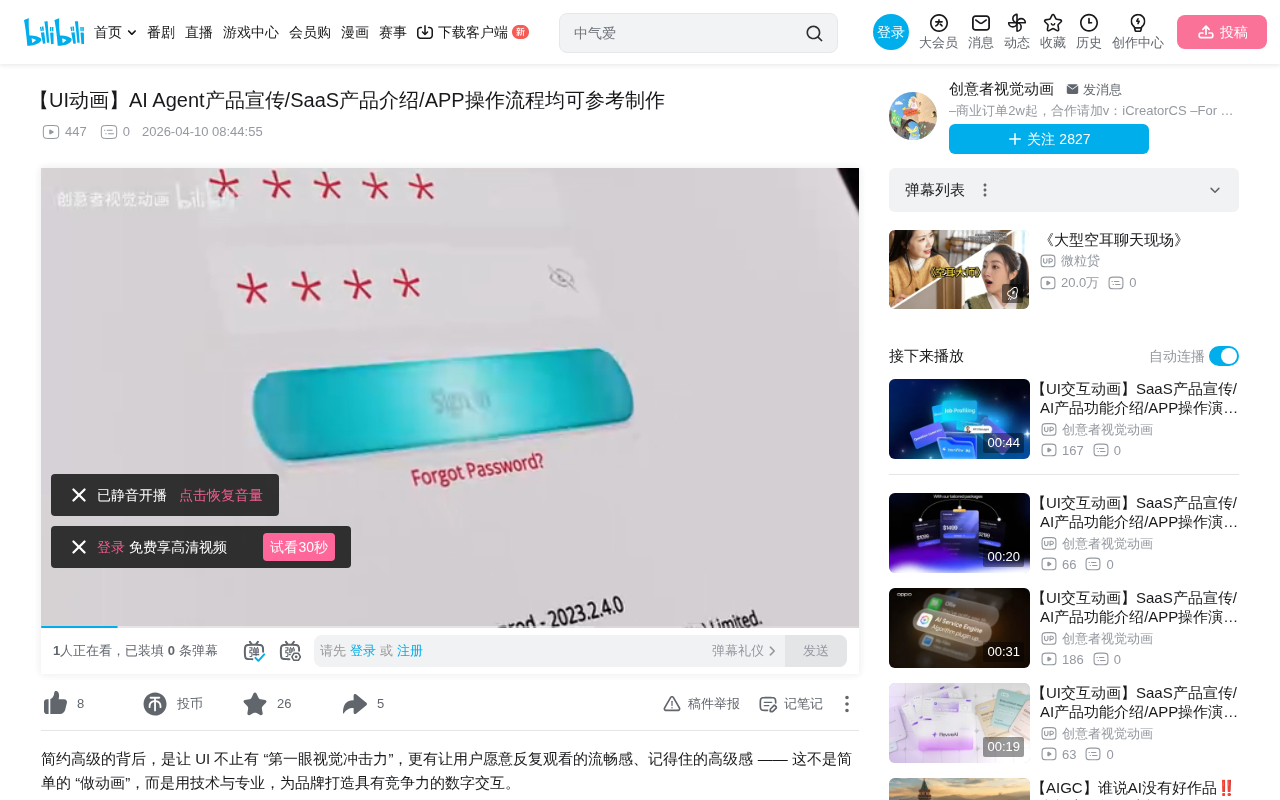
UI animation is becoming the go-to method for AI Agent, SaaS, and APP product promotion and workflow demos.
This article explores the critical value of UI animation in product promotion, highlighting how dynamic visuals help users understand products far more effectively than static images and text. It covers three major use cases — AI Agent workflow visualization, SaaS core scenario showcasing, and APP workflow demonstration — along with practical guidance on tool selection and design workflows. The article also notes that AI-assisted tools are rapidly lowering production barriers, with the potential for one-sentence professional animation generation in the near future.
Introduction: Why Does Product Promotion Need UI Animation?
In today's increasingly competitive landscape of AI Agents, SaaS products, and various apps, helping users understand product value in the shortest possible time has become a core challenge for every product team. Traditional static screenshots and text descriptions can no longer meet users' cognitive needs, and UI animation is becoming the mainstream approach for product promotion and workflow demonstration.
A well-crafted UI animation not only clearly demonstrates a product's interaction logic and core features but also conveys brand identity through visual rhythm and motion design, significantly improving user comprehension and conversion intent.
From a cognitive psychology perspective, the human brain processes dynamic visual information far more efficiently than static images and text. According to Dual Coding Theory, when visual animation and semantic information are presented simultaneously, user information retention can exceed 65%, compared to typically no more than 20% for text-only descriptions. Moreover, animation inherently possesses a temporal dimension, leveraging "sequential cognition" to help users build an understanding of cause-and-effect relationships — which is particularly critical for demonstrating product workflows. Users can not only see "what to do" but also intuitively grasp "in what order" and "what feedback each step produces."
Three Major Use Cases for UI Animation
AI Agent Product Promotion
AI Agent products often involve complex multi-step interaction workflows — from user input, intent understanding by the Agent, tool chain invocation, to final output. If described through text alone, users struggle to build an intuitive understanding. Through UI animation, the Agent's "thinking process" can be visualized, using smooth interface transitions and data flow effects to make abstract AI capabilities tangible and concrete.
To understand why AI Agents particularly need UI animation for promotion, it helps to first understand the Agent's technical architecture. An AI Agent is an AI system capable of autonomously perceiving its environment, making plans, and executing actions. Unlike traditional single-turn Q&A AI, Agents typically employ a ReAct (Reasoning + Acting) framework or similar Chain-of-Thought architecture. After receiving a user instruction, they go through a multi-step reasoning process: "understand intent → decompose tasks → select tools → execute operations → verify results." The Tool Chain involved may include API calls, database queries, code execution, web browsing, and other capabilities. Since the entire reasoning and execution process is a "black box" to users, the value of UI animation lies in opening this black box and presenting the Agent's internal decision logic in a visual way.
Key production tips include:
- Step-by-step workflow display: Break down the Agent's workflow into clear step nodes
- Data flow visualization: Use animated arrows, connecting lines, and other elements to show information transfer paths
- Result highlighting: Use emphasis effects at the final output stage to underscore product value
SaaS Product Introduction
SaaS products typically have numerous feature modules, and new users can easily get lost in complex interfaces. UI animation can serve as a "virtual tour guide," leading users through core features step by step along typical use cases. Compared to traditional product demo videos, UI animations are cheaper to produce, faster to iterate, and easier to keep consistent with the actual product interface.
In the SaaS (Software as a Service) industry, there's a widely tracked metric called "Time to Value" (TTV) — the time it takes from user registration to first experiencing product value. Research shows that most SaaS product churn is concentrated within the first 7 days after registration, and the core reason for churn is often not insufficient features but rather users' inability to quickly understand how to use the product to solve their problems. By pre-demonstrating core use cases, UI animation can establish the correct mental model before users even sign up, significantly shortening TTV and improving activation rates. This is why leading SaaS products like Notion, Linear, and Figma all heavily use UI animation on their homepage.
Excellent SaaS product UI animations typically follow these principles:
- Focus on 1-2 core scenarios; avoid feature laundry lists
- Use real interface elements rather than concept art
- Keep the duration between 30-90 seconds to maintain user attention
APP Workflow Demonstration
For mobile apps, UI animation is widely used in app store listings, user onboarding, and customer support scenarios. By simulating real gesture interactions (taps, swipes, long presses, etc.) combined with interface transition effects, users can set expectations for the app experience before even downloading it.
Practical Methods for Creating UI Animation
Tool Selection
The mainstream UI animation tools currently include:
- Figma + Prototype Animation: Ideal for quickly creating simple interaction demos
- After Effects: Suited for producing high-quality promotional animations
- Principle / ProtoPie: Focused on interaction prototype animation with a gentler learning curve
- Motion (formerly Framer Motion): Ideal for front-end developers implementing animations directly in code
Recommended Design Workflow
- Script Planning: Define the core message the animation should convey and the target audience
- Keyframe Design: Determine the start and end states for each scene
- Motion Choreography: Design transition animations, easing curves, and timing rhythm
- Music & Sound Effects: Appropriate background music and interaction sounds can significantly enhance the viewing experience
- Export & Adaptation: Adjust resolution and format based on the distribution channel
In the motion choreography phase, the easing curve is the core parameter controlling movement rhythm — it determines how an element accelerates and decelerates from point A to point B. Common easing types include: ease-in (slow then fast, suitable for element exits), ease-out (fast then slow, suitable for element entrances), ease-in-out (slow at both ends and fast in the middle, suitable for position changes), and spring (spring physics model, simulating natural elasticity). In product promotional animations, proper use of easing curves makes interface transitions feel natural and fluid, avoiding a mechanical feel. Additionally, motion choreography must consider the "Choreography Principle" — the coordination of multiple elements moving simultaneously, including staggered timing, unified direction, and hierarchy relationships. Mastering these details is what separates amateur animation from professional animation.
Trends and Reflections
With the advancement of AI tools, the barrier to creating UI animations is dropping rapidly. Some emerging AI-assisted design tools can already automatically generate transition animations from static design files, and can even produce complete product demo videos from text descriptions. This means that in the future, even small teams or solo developers will be able to create professional-grade product promotional animations.
Currently, AI-assisted UI animation generation follows three main technical paths: First, auto-tweening based on design files — tools like Jitter and Motionity can recognize Figma layer structures and automatically generate transition animations. Second, animation script generation based on large language models, where users describe desired animation effects in natural language and the AI outputs corresponding animation parameters or code (such as Lottie JSON or CSS Animation). Third, video generation models (such as Runway Gen-3, Pika, etc.) that directly generate dynamic demo videos from static UI screenshots. Each path has its pros and cons — tweening tools are precise but creatively limited, LLM approaches are flexible but require debugging, and video generation models produce stunning results but offer less control. As multimodal AI models continue to evolve, these paths are gradually converging, with the promise of a future "one-sentence professional UI animation generation" experience.
For product teams, now is the best time to build UI animation capabilities. Whether it's an AI Agent, SaaS platform, or mobile app, a high-quality UI animation can be a powerful weapon for product communication.
Key Takeaways
- UI animation is a highly effective way for AI Agents, SaaS products, and apps to showcase core features and interaction workflows
- AI Agent products can use UI animation to visualize abstract AI workflows and improve user understanding
- SaaS product UI animations should focus on core scenarios and stay within 30-90 seconds
- Mainstream production tools include Figma, After Effects, Principle, and others, each suited to different scenarios
- AI-assisted design tools are lowering the barrier to UI animation production, enabling even small teams to produce professional-grade content
Related articles
 Tutorials
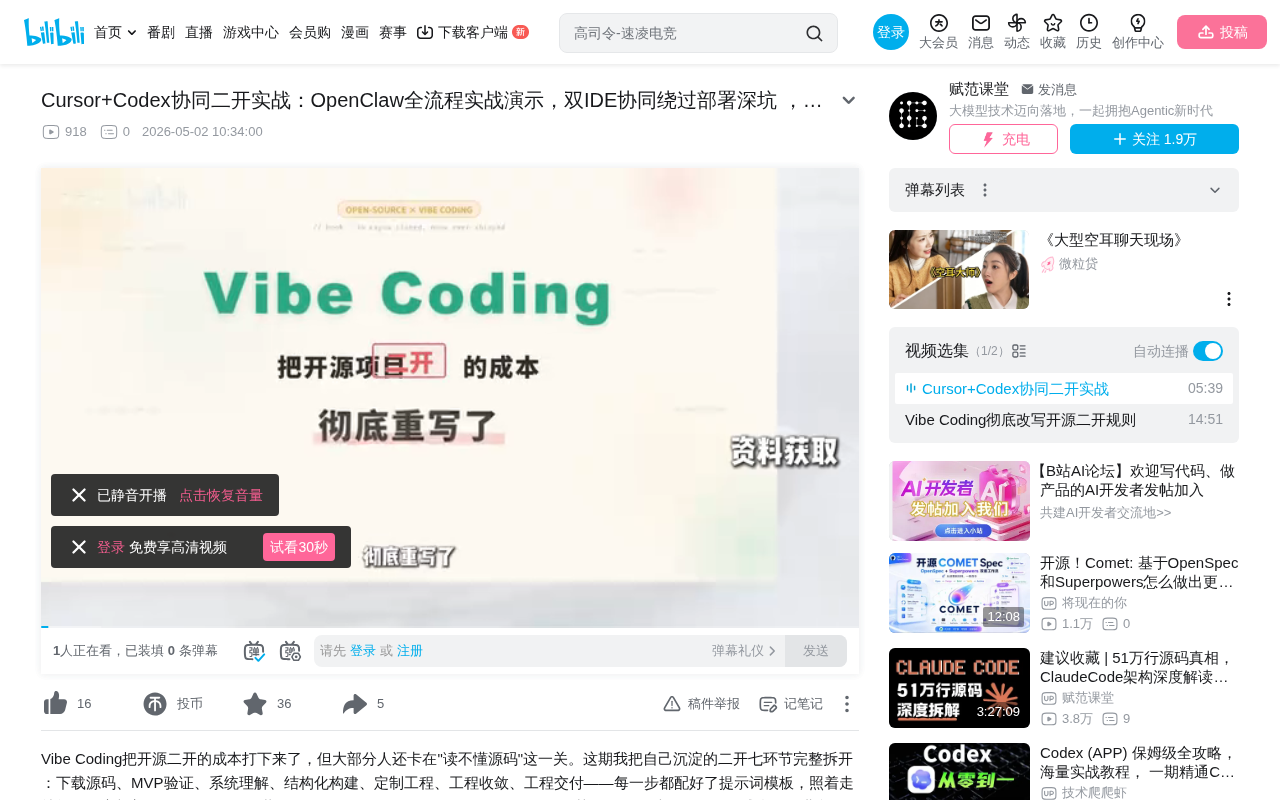
Cursor + Codex Dual-IDE Collaboration: A Practical Methodology for Open-Source Project Customization
A complete methodology for open-source project customization based on real-world experience, detailing the Cursor+Codex dual-IDE workflow, seven-stage process, MVP validation, and AI source code reading techniques.
 Tutorials
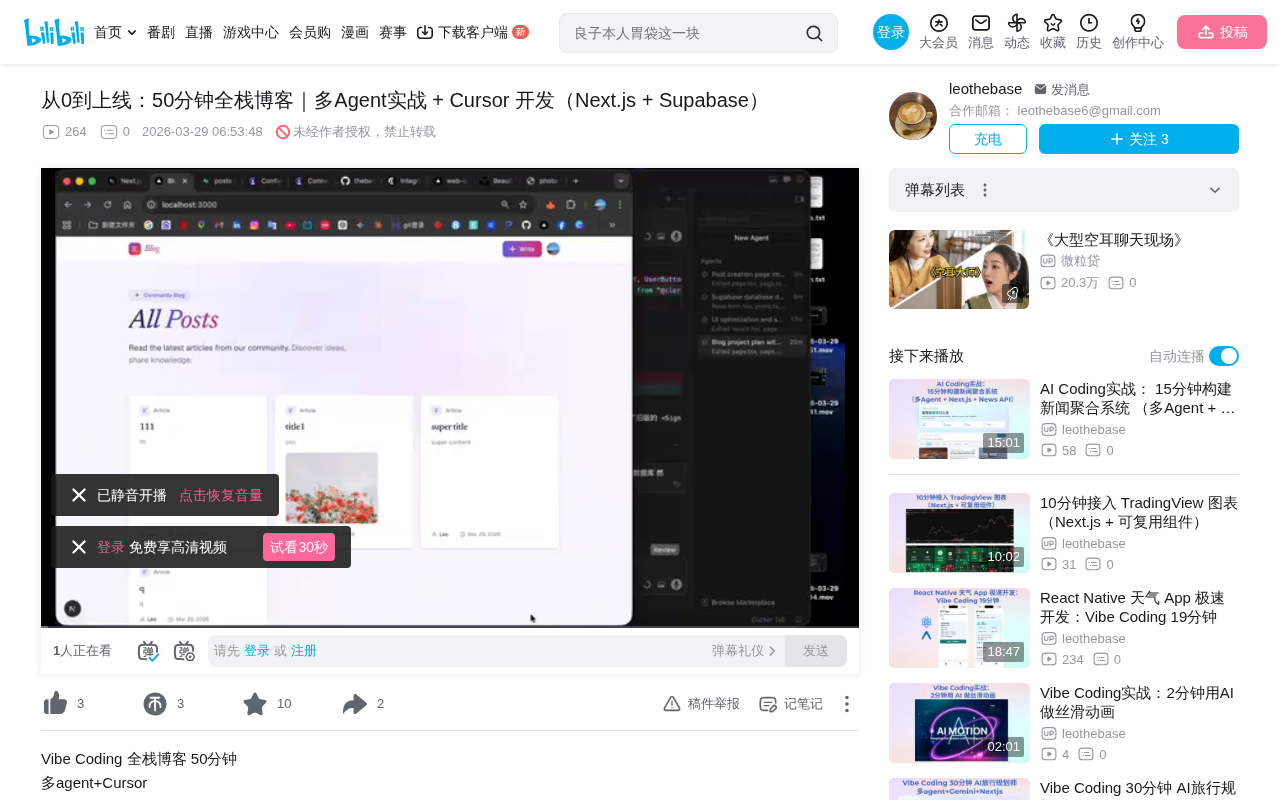
Cursor Multi-Agent in Practice: Building a Full-Stack Next.js Blog in 50 Minutes
Build a full-stack blog in 50 minutes using Cursor IDE's multi-Agent mode with Next.js, Clerk auth, and Supabase. Learn the 4-phase AI Agent workflow and key integration pitfalls.
 Tutorials
Building an AI Software Factory from Scratch: A Cursor Engineer's Hands-On Experience with Multi-Agent Collaboration
Cursor engineer Eric shares practical insights on building an AI software factory: automation levels, guardrail design, parallel Agent management, and scaling to 1000+ Agents for 24/7 development.