A2A Protocol Explained: Complementing MCP to Build a Standard Communication Layer for Multi-Agent Collaboration
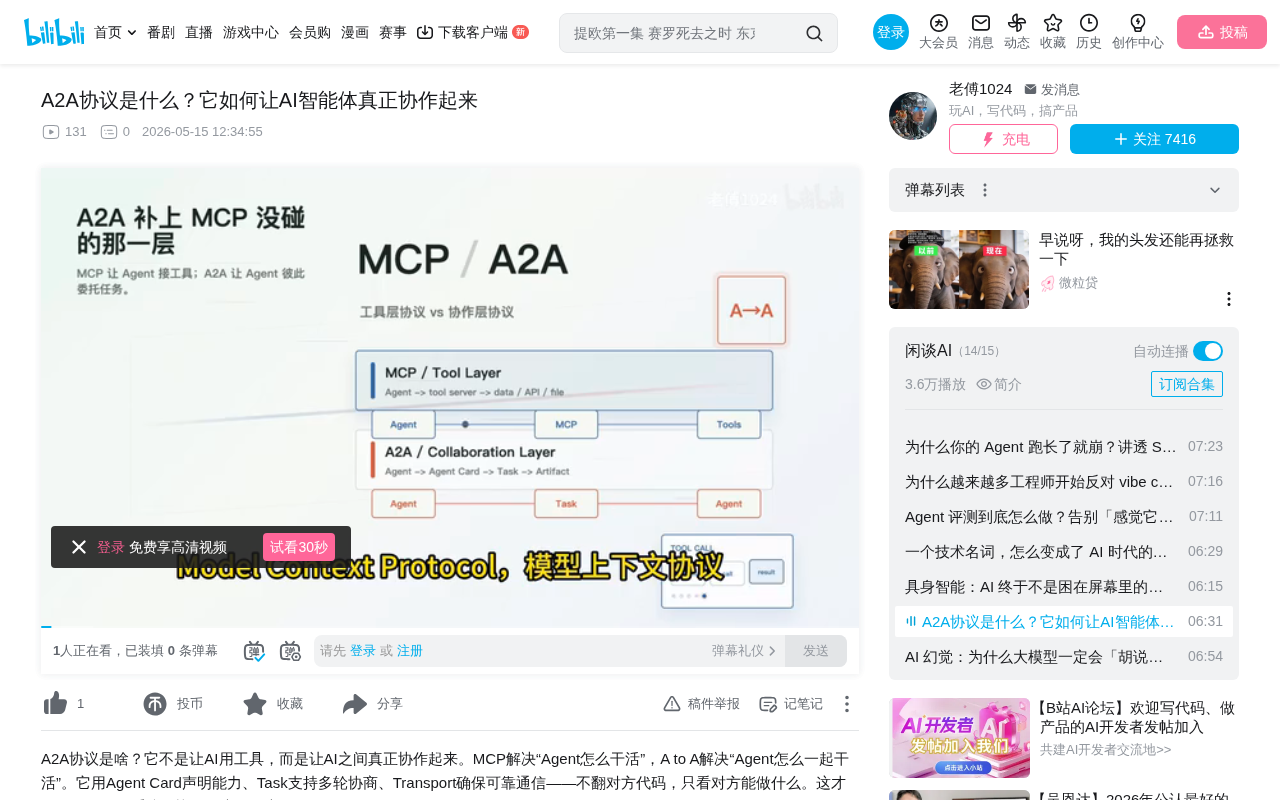
A2A protocol fills the critical gap in multi-agent communication that MCP leaves unaddressed.
MCP solved how AI Agents connect to tools and data, but can't handle communication between multiple Agents. Google's A2A protocol enables Agents to collaborate like colleagues through Agent Card capability declarations, stateful Task mechanisms, and a mature transport layer — rather than treating each other as simple tool calls. The two are complementary: MCP is the tool layer, A2A is the collaboration layer, together forming the standardized protocol stack for AI Agent infrastructure.
After MCP, the Missing Piece for AI Multi-Agent Collaboration
If you had to pick the most successful protocol in the AI space from 2024-2025, MCP (Model Context Protocol) would be the undisputed winner. Open-sourced by Anthropic in late 2024, by early 2026 its SDK had surpassed 97 million monthly downloads, with over 9,400 public servers adopted by OpenAI, Google, Microsoft, and Amazon — truly the "USB-C port" for AI Agents.
MCP's success was no accident. Before MCP, every AI Agent framework (LangChain, AutoGPT, CrewAI, etc.) had its own way of integrating tools, forcing developers to write separate adapters for each framework. This fragmentation was reminiscent of the smartphone charging port wars — every manufacturer had its own standard, and users suffered. MCP defined a standardized Client-Server communication protocol so that any tool provider only needed to implement an MCP Server once to be callable by any MCP-compatible Agent. This "write once, use everywhere" value proposition, combined with Anthropic's decision to fully open-source it, drove rapid industry-wide adoption.
But once you truly understand MCP, you hit a question it deliberately doesn't address — when multiple AI Agents need to collaborate, how should they communicate with each other?
This is exactly the core problem A2A protocol aims to solve.
Why MCP Can't Solve Multi-Agent Collaboration
Consider a common enterprise task:
"Analyze our company's sales data from last month, identify the product line with the steepest decline, then write an email to the manager responsible for that line suggesting three improvement strategies."
This requires at least four roles: one Agent to pull data, one to perform analysis, one to write the report, and one to send the email. Each Agent might use different tools, run different models, be deployed on different servers, or even belong to different companies.
MCP can help each Agent connect to its own tools, but there's one thing it can't manage: how these Agents talk to each other.
MCP's Implicit Assumption: Servers Are Passive
MCP's design logic works like this: an Agent acts as an MCP Client calling an MCP Server. The Server exposes a tool list; the Client discovers tools, invokes them, and gets results. This process has an implicit assumption — the Server is passive. The Server doesn't think, doesn't make decisions, doesn't judge whether to accept a task. It simply exposes tools and waits to be called.
But if you try to treat another Agent as a tool to call, problems arise. An Agent is not a tool — an Agent has its own internal reasoning process, its own invisible state, its own task rhythm, and its own matters that need user confirmation.
Understanding the fundamental difference between an Agent and a Tool is key to grasping this problem. In AI systems, a Tool is a deterministic, stateless function call — you give it input, it returns output, with no autonomous judgment. For example, a weather query API takes a city name and returns temperature data. An Agent, on the other hand, is an entity with autonomous reasoning capabilities, possessing its own objective function, memory system, planning ability, and decision logic. An Agent can refuse tasks, request clarification, change execution strategies, or even discover during execution that the original task needs adjustment. This autonomy means that interactions between Agents are fundamentally more like delegated collaboration between people, rather than a program calling a function.
When you ask it to "give me the sales data," it might need to ask: "Which time period do you want?" When you ask it to "send an email," it might need to confirm: "Is this the correct recipient list?"
If you force MCP's tool-calling pattern to drive another Agent, you'd need to expose every step of its reasoning, manage its state, and handle any user interactions it might need. This is completely impractical in real engineering.
A2A Protocol Core Design: Treating the Other Party as a Colleague, Not a Tool
A2A, short for Agent-to-Agent Protocol, was released by Google in April 2025 and officially reached version 1.0 in April 2026. It's currently in production use across more than 150 organizations, and in late 2025 was donated alongside MCP to the Agentic AI Foundation under the Linux Foundation for joint governance.
If MCP is the tool-layer protocol for AI Agents, A2A is the collaboration-layer protocol.
A2A's design philosophy is fundamentally different from MCP: it doesn't treat the other party as a tool, but as another Agent. It defines three core mechanisms.
Agent Card: A Standardized Business Card for Agents
Any Agent supporting the A2A protocol publishes a JSON-formatted "business card" (Agent Card) at a standard path. This card states:
- Who I am
- What I can do
- What input/output modalities I support
- What authentication methods I require
- What my service quality commitments are
But what the Agent Card doesn't state is: what model I use internally, what's in my memory, or how my tools are organized.
This is A2A's most fundamental design principle: Agents collaborate based on declared capabilities, not by inspecting each other's internal code. If you want a sales data Agent to do something, you don't need to know whether it uses GPT or Gemini, nor how many database tables it connects to internally — you just check its Agent Card, confirm it can do sales analysis, and assign it the task.
As Turian AI eloquently put it in a May 2026 article:
"A2A Agents collaborate based on declared capabilities, not by inspecting each other's internals."
Task: The Core Work Unit of A2A
Task is the most fundamental work unit in the A2A protocol. A Task has a unique ID and a complete state machine:
- Submitted → Working → Completed / Failed / Canceled
- Plus one critical state: Input Required
The "Input Required" state is what fundamentally distinguishes A2A from MCP. When an Agent receives a task and finds insufficient information, it can ask you back. The task state changes to "Input Required," you provide the additional information, and it continues. This process can go back and forth over multiple rounds.
A2A's Task state machine design reflects deep distributed systems engineering experience. In distributed environments, any remote call can fail due to network partitions, service outages, timeouts, and other issues. Traditional synchronous call patterns (send request → wait for response) are extremely fragile in such environments. By assigning each Task a unique ID and explicit state machine, A2A achieves task trackability, recoverability, and auditability. This aligns with the design philosophy of enterprise message queues (like Apache Kafka) and workflow engines (like Temporal). The introduction of the "Input Required" state essentially implements a coroutine-style collaboration pattern — tasks can be suspended at any point, waiting for external input before resuming execution, something that cannot be elegantly achieved in traditional request-response models.
A2A's designers clearly understood: multi-agent collaboration isn't a one-shot call — it's multi-round, stateful, potentially interruptible, and requires negotiation. This is almost identical to how people delegate work to each other.
Transport: A Mature and Stable Transport Layer
The transport layer design is actually quite simple: JSON-RPC 2.0 over HTTPS; long-running tasks use Server-Sent Events for streaming updates, or Webhooks for async notifications; version 0.3 also added gRPC support. In short, it's a protocol stack so mature it's "boring" — no fancy tricks.
A2A's choice of these technologies is deliberate. JSON-RPC 2.0 is a lightweight remote procedure call protocol using JSON as its data format. Compared to heavyweight protocols like SOAP, it has extremely low learning costs, simple implementation, and is naturally web-friendly. Server-Sent Events (SSE) is a standard HTTP push technology that allows servers to continuously push data to clients through a unidirectional long-lived connection, making it ideal for scenarios like task progress updates. Compared to WebSocket, SSE is simpler and natively compatible with HTTP infrastructure (CDNs, load balancers, proxy servers can all transparently pass through SSE traffic). gRPC is Google's open-source high-performance RPC framework based on HTTP/2 and Protocol Buffers, suitable for scenarios with strict latency and throughput requirements. This layered design allows A2A to cover both lightweight web integrations and enterprise-grade high-performance needs.
A2A vs. MCP: A Single Table to Clarify Their Roles
With an understanding of A2A's three core mechanisms, the division of labor between A2A and MCP becomes crystal clear:
| Dimension | MCP Protocol | A2A Protocol |
|---|---|---|
| Core Problem | How Agents connect to tools and data | How Agents connect to other Agents |
| Work Unit | Tool call (one-shot, typically stateless) | Task (multi-round, inherently stateful) |
| Discovery Mechanism | Server exposes tool list | Agent declares Agent Card |
| Transport Layer | Stdio / HTTP+SSE / WIPS | HTTP+SSE / gRPC / JSON-RPC 2.0 |
| What It Manages | Agent's "hands" — can it access the right tools | Agent's "mouth" — can it communicate properly with other Agents |
A2A and MCP are not competitors — they're complementary. Production-grade AI Agent systems will most likely need both: MCP at the bottom layer for connecting tools and data, A2A at the upper layer for multi-Agent orchestration.
In other words: MCP makes a single Agent powerful; A2A turns a group of Agents into a team.
Cross-Organization Collaboration: A2A's Killer Use Case
A2A is naturally suited for cross-organization multi-agent collaboration scenarios. Your Agent can tell an external Agent: "Do a competitive analysis for me." The other party accepts the task, completes it, and returns results as a structured Artifact.
Throughout this entire process, neither party exposes their models, data, internal tools, or business logic. This is enormously valuable for enterprise AI applications — it solves the most sensitive trust and privacy issues in multi-agent collaboration.
A2A's approach to solving trust in cross-organization scenarios borrows from the core principles of Zero Trust Architecture: never trust, always verify. In traditional API integrations, partners often need to share database access, API keys, or even partial source code, creating enormous security and compliance risks. Through Agent Card's capability declaration mechanism, A2A implements a "minimum exposure principle at the capability level" — you only need to know what the other party can do, not how they do it. This design is particularly important given increasingly strict data privacy regulations like GDPR (General Data Protection Regulation) and CCPA (California Consumer Privacy Act), because it ensures clear data processing boundaries at the protocol level. Each Agent is responsible only for its own data processing behavior, dramatically reducing compliance complexity in cross-organization collaboration.
A2A Protocol Status and Future: Standardization Convergence Is Happening
Of course, A2A isn't perfect yet. It's still young — first publicly released in April 2025, with production deployments still ramping up. Interoperability with MCP (such as wrapping an MCP Server directly as an A2A Agent) is currently still on the roadmap, with the community expecting a joint specification by Q3 2026.
But the signals are already very clear:
- At Google Cloud Next in April 2026, Google rebranded its entire cloud AI infrastructure around "autonomous enterprise Agents"
- At the same time, Anthropic launched Managed Agents and Claude Opus 4.7
- LangChain downloads surpassed 1 billion
- MCP and A2A were simultaneously placed under Linux Foundation governance
The donation of both MCP and A2A to the Agentic AI Foundation under the Linux Foundation carries strategic significance far beyond the technical level. The Linux Foundation is the world's largest open-source foundation, managing critical infrastructure projects including the Linux kernel, Kubernetes, and Node.js. Placing protocols under neutral foundation governance means: first, no single company can monopolize the protocol's evolution, avoiding "standard privatization" risk; second, competitors can negotiate technical roadmaps at the same table, reducing the likelihood of industry fragmentation; third, enterprise users can more confidently adopt these protocols in production, knowing they won't suddenly change direction due to one company's strategic shift. This governance model has been repeatedly validated historically — Kubernetes went from Google's internal project to the de facto cloud computing standard precisely because of CNCF's (Cloud Native Computing Foundation) neutral governance.
All these signals point to the same thing: AI Agent infrastructure standardization is moving from "everyone reinventing the wheel" to a "unified protocol" phase.
Just as the internet's early days saw proprietary network protocols from various companies battling each other before converging on TCP/IP, the Agent world is now experiencing the same convergence — MCP has claimed the tool layer, and A2A is claiming the collaboration layer.
Final Thoughts
This may be the most important development in AI infrastructure to watch in 2026. Because once the A2A protocol is established, it means that all future AI Agent collaboration patterns will be defined by these two protocols.
MCP gave Agents a toolbox; A2A gave Agents a circle of colleagues. A single Agent that can work is important, but a group of Agents that can coordinate together — that's the real productivity revolution. And A2A protocol is the working language taking shape in this multi-agent collaboration revolution.
Related articles
 Deep Dives
Deep Dive into How OpenClaw (Open-Source Crayfish) AI Agent Works
Deep analysis of OpenClaw AI Agent internals: System Prompt, tool calling, SubAgents, Skill system, memory, and Context Engineering explained.
 Deep Dives
Demystifying Transformer: A Word-Continuation Function, Deconstructed
Understand Transformer through the lens of word continuation. Breaking down language generation into Embedding, Transformer Block, and Probability output modules for intuitive understanding.
 Deep Dives
Five Core Differences Between Claude Code and Regular AI Chat
A detailed comparison of Claude Code vs regular AI chat across five dimensions: interaction, context understanding, execution, memory, and tool integration.