Ableton MCP: A New AI Paradigm for Controlling Music Production with Natural Language
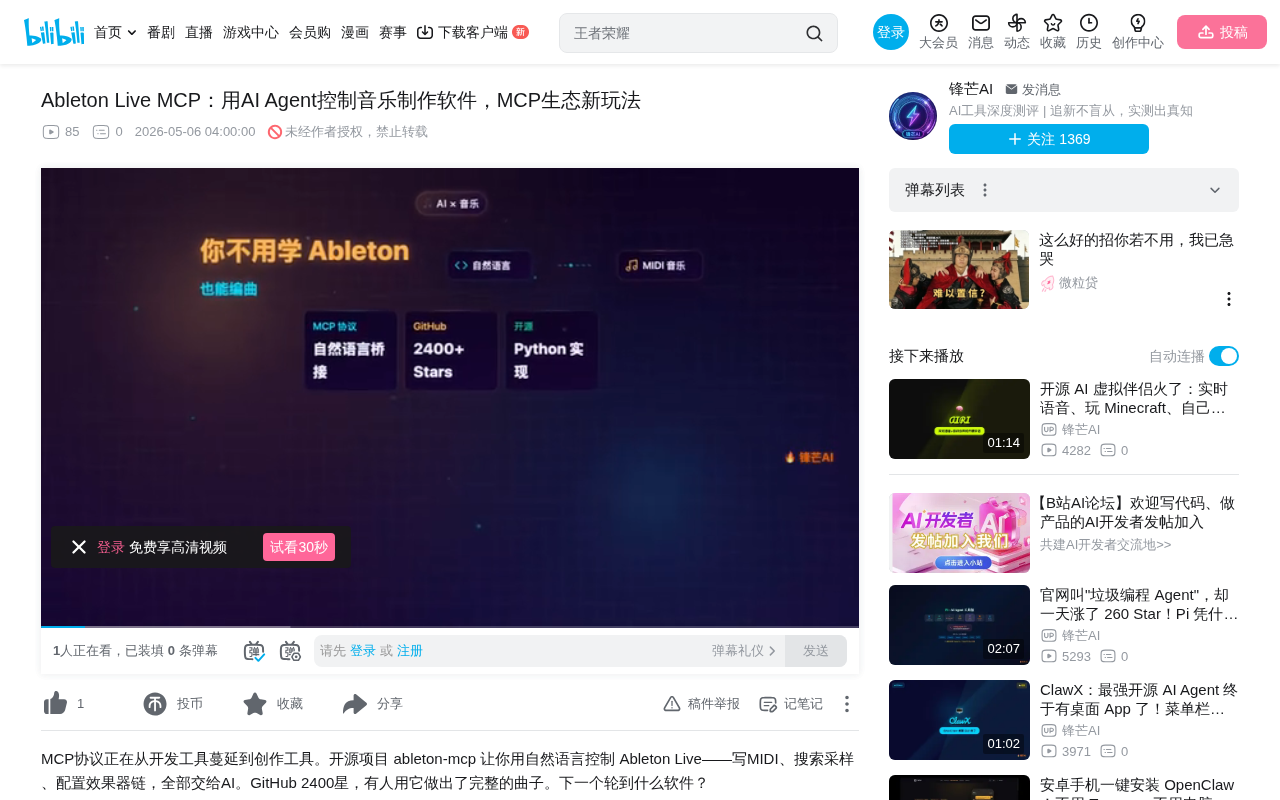
Ableton MCP lets AI directly control Ableton Live for music production via natural language
The open-source project Ableton MCP connects AI Agents to Ableton Live through the MCP protocol, allowing users to generate MIDI, search sounds, and configure mixing with natural language — no complex DAW expertise required. With 2,400+ GitHub stars, one user completed an entire track through 70+ tool calls. This marks an important expansion of the MCP ecosystem from development tools to creative tools, though AI currently serves better as an efficiency tool than a creative replacement.
As the MCP protocol expands from code editors and design software into the realm of music production, an exciting possibility emerges — you don't need to learn complex DAW operations; simply describe what you want in natural language, and an AI Agent can handle arranging, mixing, and sound design for you. The open-source project Ableton MCP is making this a reality.
Ableton's High Barrier to Entry and AI's Breakthrough
A Digital Audio Workstation (DAW) is the core software platform for modern music production, handling the entire workflow from recording, arranging, and mixing to mastering. Ableton Live was released by the German company Ableton in 2001 and is renowned for its unique dual-mode design featuring Session View and Arrangement View. It's one of the most popular DAWs in the world, considered an essential tool by countless professional musicians and producers. However, its steep learning curve has deterred many music enthusiasts — users need to master not only the software's operational logic but also understand underlying music technology concepts like MIDI protocol, audio routing, and signal processing chains. Complex MIDI editing, effects chain configuration, and sound library management each require significant time to master.
It's worth noting that MIDI (Musical Instrument Digital Interface) is a communication protocol established in 1983 that records performance instructions such as notes, velocity, and duration rather than actual audio waveforms. This makes AI generation and editing of MIDI data inherently feasible from a technical standpoint — AI operates on structured symbolic data rather than complex audio signals.

The open-source project Ableton MCP uses Python to build a bridge that lets AI Agents connect directly to Ableton Live through the MCP (Model Context Protocol). MCP is an open protocol standard released by Anthropic in late 2024, designed to solve the standardization problem of connecting AI large models with external tools and data sources — its design philosophy is similar to the standardization logic of USB ports: as long as software conforms to the specification, it can plug-and-play with any compatible AI Agent. Before MCP, every AI application needed to develop separate integration solutions for different tools, resulting in massive amounts of repetitive and fragmented engineering work.
Ableton MCP's technical implementation relies on two key layers: first, Ableton Live's built-in Remote Scripts mechanism, an official Python extension interface that allows external programs to communicate bidirectionally with Live; second, the MCP server layer, which parses natural language commands from the AI Agent into specific API call sequences. The complete call chain is: user natural language input → AI model understands intent → MCP protocol encapsulates commands → Python server receives → translates to Ableton Live API calls → software executes operations. This means AI is no longer just giving you suggestions — it's actually operating your music software hands-on — writing MIDI, adjusting tracks, loading effects, all through natural language commands.
Three Core Capabilities Explained
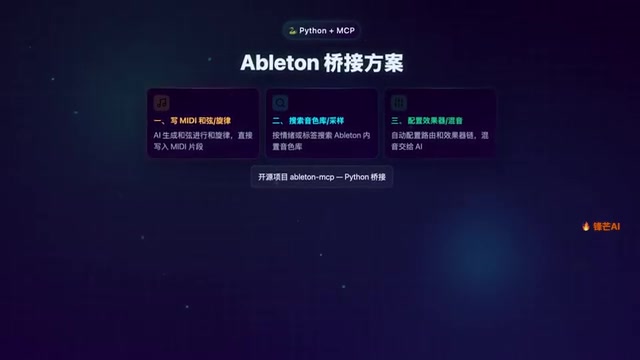
Natural Language MIDI Generation
This is Ableton MCP's most intuitive capability. You can tell the AI "give me a melancholic jazz chord progression, four bars, half notes," and the AI will directly create a track in your Ableton project and write the corresponding MIDI data. No need to manually click notes one by one in the piano roll, no need to understand the complex details of chord theory — AI converts your musical ideas into actual MIDI clips.
Mainstream large language models derive their understanding of music theory from sheet music text, music theory books, and MIDI datasets in their training data, enabling them to handle rule-heavy tasks like chord progressions and mode selection reasonably well. For creators who have musical inspiration but lack music theory foundations, this is practically a transformative experience.
Intelligent Sound Library Search
Ableton comes with a massive sound library and sample resources, but finding the right sound among vast amounts of material is often time-consuming. Ableton MCP supports searching the sound library by mood, style, or tags — for example, "warm pad sound" or "aggressive bass" — and the AI will automatically match and load it onto the corresponding track.
Automated Mixing and Effects Configuration
Mixing is the most experience-dependent stage of music production. Ableton MCP can automatically configure routing and effects chains, delegating part of the mixing work to AI. It should be noted that excellent mixing engineers rely on trained auditory perception and extensive A/B comparison experience, while AI currently lacks real-time audio perception capabilities and can only configure parameters based on rules or statistical patterns. Therefore, AI can quickly set up a basic framework and significantly shorten workflows, but fine-tuned mixing still requires human ears for final judgment.
Real-World Results: 70+ Tool Calls to Assemble a Complete Track
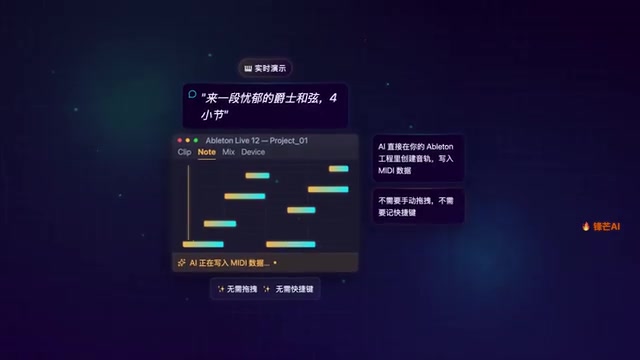
On GitHub, the Ableton MCP project has already earned over 2,400 stars, with impressive community activity. One user shared a remarkable case: through over 70 automated tool calls, an AI Agent assembled a complete song. This means everything from chord progressions, melody writing, and sound selection to effects configuration was automatically completed by AI within Ableton. Behind those 70+ tool calls lies the MCP protocol's ability to decompose complex creative workflows into a series of atomic operations — each call corresponds to a specific software action, and AI orchestrates these action sequences to achieve macro-level creative goals.

Notably, the Gemmo team has already developed a finished product based on a similar approach, positioned as an "AI co-producer." This demonstrates that this technical path isn't just at the open-source experiment stage — teams are already productizing it.
The MCP Ecosystem's Boundaries Are Expanding
From a broader perspective, the emergence of Ableton MCP marks an important expansion of the MCP protocol ecosystem. Previously, MCP was primarily active in the development tools space — code editors, database management, API debugging, and similar scenarios. It then expanded to design software, such as MCP integrations with tools like Figma. Now, music production has become the new frontier.
This expansion reveals a clear trend: MCP is spreading from development tools to creative tools. Any professional software with an API or programmable interface could potentially be brought into an AI Agent's capability scope through the MCP protocol. Video editing software (like DaVinci Resolve), 3D modeling tools (like Blender), and even game engines could all be the next domains covered by AI Agents. These software applications generally have scripting extension capabilities, with technical paths highly similar to Ableton MCP — they're simply waiting for community or commercial teams to implement them.
A Sober Reflection: Where Are the Limits of AI Arranging?
Of course, we need to remain rational. The current capability boundaries of AI in music generation are clearly visible: there are still obvious shortcomings in long-range structural coherence (such as thematic development and section callbacks) and micro-level emotional expression (such as dramatic velocity gradient designs). Generated MIDI clips still fall short of excellent human musicians in creativity and emotional expression. Ableton MCP is better suited as an efficiency tool rather than a creative replacement — it can help you quickly build musical frameworks and handle repetitive work, but final artistic judgment and emotional infusion still require human involvement.
For beginners in music production, it lowers the barrier to entry; for professional producers, it accelerates workflows. This positioning as an "AI co-producer" is perhaps the most pragmatic value proposition at the current stage.
Every boundary expansion of the MCP protocol redefines the answer to "what can AI do." And Ableton MCP tells us: AI can not only write code and create design mockups — now it can help you arrange music too.
Related articles
 Tech Frontiers
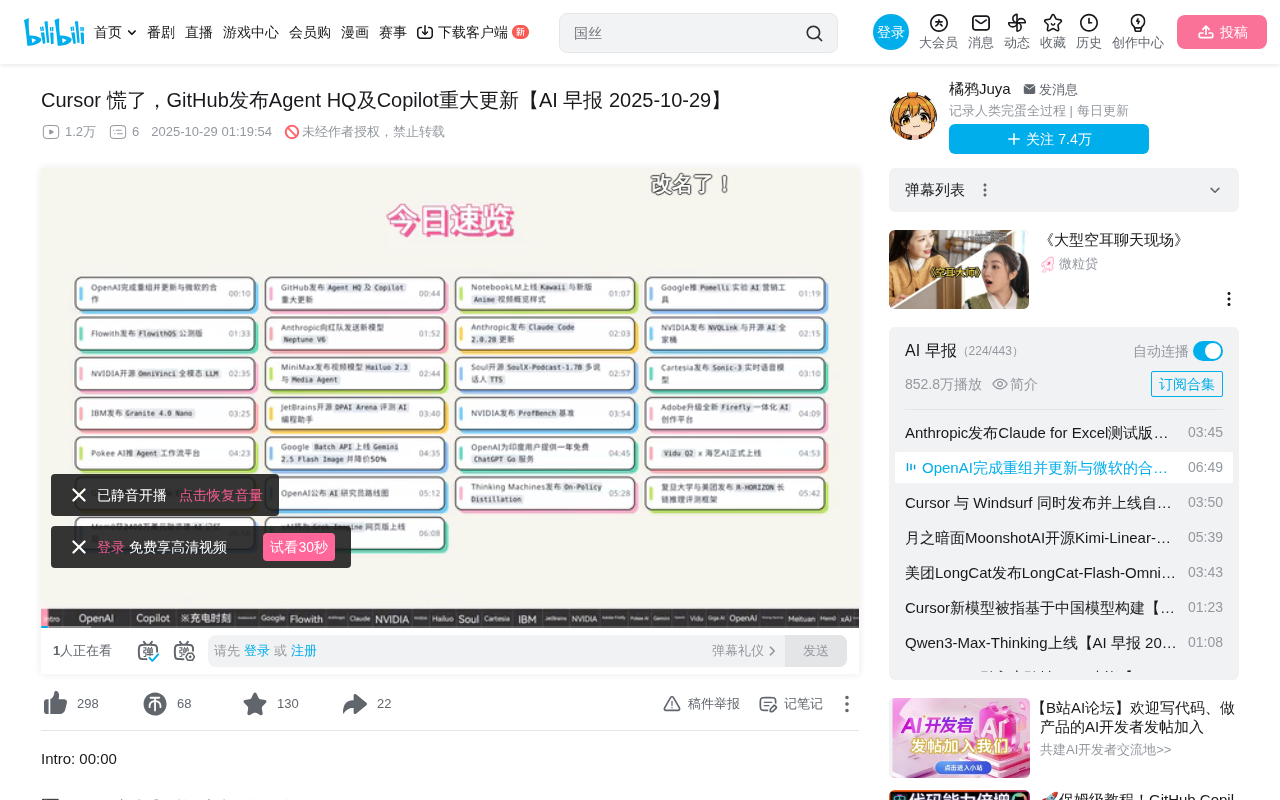
GitHub Agent HQ Launch: AI Coding Tools Enter the Era of Platform Competition
GitHub Universe unveils Agent HQ platform for unified coding agent management, Copilot upgrades with multi-model support. OpenAI completes restructuring, Anthropic tests new model, NVIDIA open-sources AI models.
 Tech Frontiers
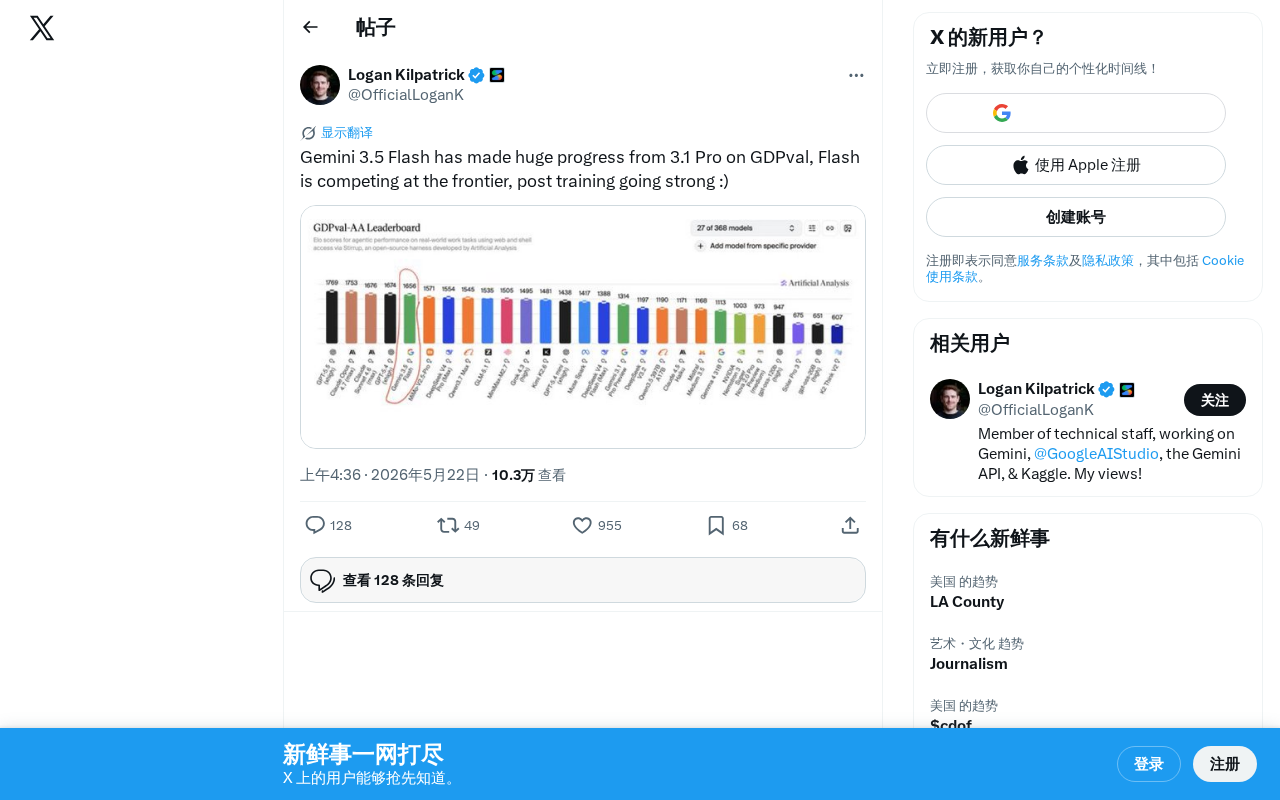
Gemini 3.5 Flash Achieves a Massive Leap on the GDPval Benchmark
Google Gemini 3.5 Flash surpasses Gemini 3.1 Pro on the GDPval benchmark. The lightweight Flash model leverages post-training techniques to approach frontier-level performance, redefining the balance between quality and cost.
 Tech Frontiers
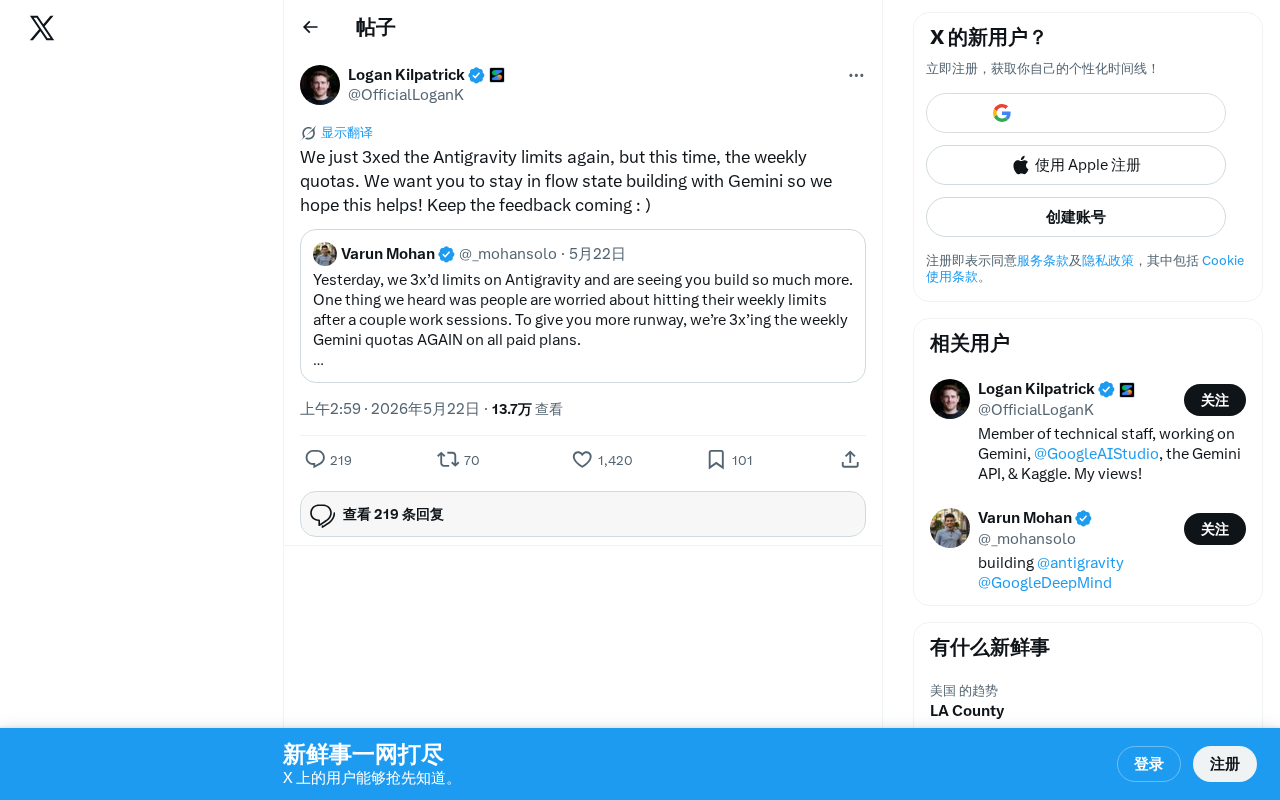
Google Gemini Antigravity Weekly Quota Tripled — AI Coding Without Limits
Google Gemini triples Antigravity weekly quotas following a prior daily quota boost. Analyzing the impact on developers and its strategic significance in AI coding.