Advanced Claude Code: 5 Skill Techniques for Building Efficient AI Workflows
Advanced Claude Code: 5 Skill Techniqu…
5 advanced Claude Code Skills to shift from writing code to building reusable AI workflows.
This article introduces 5 advanced Claude Code Skills — Prompt Optimizer, Deep Interview, Real Plan, Code Simplifier, and Skill Creator — that help users move beyond basic code generation to building structured, reusable AI collaboration workflows. Together they form a complete value chain from requirements clarification to experience preservation, significantly reducing rework and improving execution quality.
From Writing Code to Building Workflows: The Advanced Claude Code Mindset
Beginners use Claude Code to help them write code. Advanced users use Claude Code to help them build workflows first. That's the core difference between entry-level and advanced usage — it's not about the tool's capabilities, but about the sophistication of how you use it.
This article introduces 5 Claude Code Skills designed for advanced users. What they all have in common: they don't make Claude Code better at writing code — they make it better at understanding your goals and adapting to your processes.
Skill 1: Prompt Optimizer — Eliminating Vague Instructions
Many people aren't bad at using Claude Code — they're just too casual with their instructions. When you give a vague requirement, the AI has to guess your objective, fill in context, and piece together acceptance criteria. Every guess along the way risks drifting from your actual intent.
Prompt Optimizer's role is to structure your requirements before execution — it automatically fills in context, clarifies goal boundaries, and outputs a well-structured, high-quality prompt.
This touches on the core discipline of Prompt Engineering. Research shows that the same large language model can produce outputs that vary by several fold in quality depending on the prompt. Structured prompts typically include key elements such as role definition, task description, output format, constraints, and examples. Official documentation from both OpenAI and Anthropic repeatedly emphasizes that clear instruction structure is the number one factor in obtaining high-quality outputs. Prompt Optimizer essentially automates this methodology, allowing users to achieve expert-level instruction quality without manually mastering every prompt engineering technique.
Core value: Claude Code doesn't have to guess what you mean, making execution results more stable and predictable.
Skill 2: Deep Interview — Replace Rework with Follow-up Questions
The biggest fear when using Claude Code isn't that it writes slowly — it's that requirements weren't properly clarified before it started working. The result is usually endless revisions, which end up being less efficient than starting from scratch.
Deep Interview acts like an experienced product manager, asking a series of critical questions:
- What's the objective?
- Where are the boundaries?
- What does the user actually want?
- Are the key assumptions valid?
This design philosophy originates from Requirements Engineering in software development. According to IBM's classic research, approximately 85% of defects in software projects can be traced back to oversights during the requirements phase. Traditional requirements elicitation methods include user interviews, surveys, and prototype validation. Deep Interview condenses these methods into an AI-driven structured questioning process. This is analogous to Story Refinement in agile development — eliminating ambiguity through repeated clarification before any work begins, ensuring every key assumption has been verified.
Only after these critical assumptions are clarified does the formal execution phase begin. For complex requirements, running a Deep Interview session first can eliminate a significant portion of rework costs.
Skill 3: Real Plan — Plan Before You Act
Once tasks become complex, the most common problem is "making changes on the fly, creating more chaos with each iteration." Especially for high-risk operations like refactoring or cross-file modifications, diving in without a clear plan often leads to uncontrollable consequences.
Real Plan has Claude Code produce the following outputs first:
- Solution Design: Overall approach and architecture
- Execution Steps: Specific sequence of operations
- Risk Assessment: Potential failure points
- Verification Methods: How to confirm each step was executed correctly
Real Plan's philosophy aligns closely with Design Review and technical proposal review practices in software engineering. At major tech companies, any change involving multiple modules requires submitting an RFC (Request for Comments) or design document for team review before entering the coding phase. Real Plan brings this enterprise-level practice into individual development workflows. The risk assessment component is particularly noteworthy — it draws from FMEA (Failure Mode and Effects Analysis) methodology, systematically identifying potential failure points before execution, thereby significantly reducing the failure rate of complex refactoring efforts.
Only after you confirm the plan is sound does it proceed to formal execution. This Skill is especially suited for: code refactoring, cross-file batch modifications, or any task where you don't want the AI improvising.
Skill 4: Code Simplifier — Making Code Readable Again
AI-generated code has a universal problem: it works, but it's overly complex. Functions wrapping functions, abstractions layered on abstractions — it looks "professional" but is painful to maintain. Especially after many rounds of AI iteration, the code often becomes bloated beyond recognition.
This problem is academically known as "Accidental Complexity," a concept introduced by Fred Brooks in his classic paper No Silver Bullet, contrasted with "Essential Complexity." Essential complexity is the inherent difficulty of the problem itself, while accidental complexity is the extra burden introduced by tools, methods, or implementation choices. AI-generated code tends to produce accidental complexity because large language models favor generating "standard patterns" common in their training data, even when the specific scenario doesn't require that many layers of abstraction. The code smells defined by Martin Fowler in Refactoring — such as speculative generality, middle man, and long parameter lists — are exactly what Code Simplifier targets.
Code Simplifier's job is to:
- Remove unnecessary layers of encapsulation
- Merge duplicated logic
- Rewrite code so humans can actually read it
Best time to use it: After you've had the AI make many rounds of consecutive changes, running Code Simplifier as a cleanup pass is a critical step for maintaining code quality.
Skill 5: Skill Creator — Package Your Experience into Tools
This is the Skill that truly represents advanced-level usage. If you frequently repeat the same workflow — such as writing deployment scripts, running pre-release checks, or generating video copy — you shouldn't have to describe it to Claude Code from scratch every time.
Skill Creator lets you package that workflow into your own custom Skill. Next time, you simply invoke it, and Claude Code executes according to your habits and standards — no repeated communication needed.
Skill Creator essentially transforms tacit knowledge into explicit knowledge, which is the core mechanism of the SECI knowledge management model proposed by management scholar Ikujiro Nonaka. In traditional development, team experience is typically preserved through documentation, scripts, and CI/CD pipelines. Skill Creator takes this process to the AI collaboration layer — your work habits, quality standards, and process preferences are encoded as executable instruction templates. This is philosophically aligned with Infrastructure as Code, and could be called "Workflow as Skill."
In essence, Skill Creator turns your personal experience and workflows into reusable automation templates. This is the most efficient form of AI collaboration — not starting from zero every conversation, but letting the AI continuously learn your way of working.
Summary: From Tool User to Workflow Designer
The core logic behind all 5 Skills is consistent:
| Skill | Problem Solved | Core Value |
|---|---|---|
| Prompt Optimizer | Vague instructions | Improved execution precision |
| Deep Interview | Unclear requirements | Reduced rework costs |
| Real Plan | Chaotic execution | Lower risk for complex tasks |
| Code Simplifier | Bloated code | Long-term maintainability |
| Skill Creator | Repetitive processes | Turning experience into assets |
From a broader perspective, these 5 Skills form a complete AI collaboration value chain: from requirements clarification (Prompt Optimizer + Deep Interview), to execution planning (Real Plan), to quality assurance (Code Simplifier), to experience preservation (Skill Creator). This chain closely mirrors the classic PDCA cycle (Plan-Do-Check-Act) in software engineering, except that every stage is AI-assisted, and the human role shifts from executor to decision-maker and reviewer.
The fundamental difference between advanced users and beginners isn't how much code they've written — it's whether they've established a reusable, scalable AI collaboration workflow. If you've already mastered the basics of Claude Code, these 5 Skills are worth trying and internalizing one by one.
Related articles
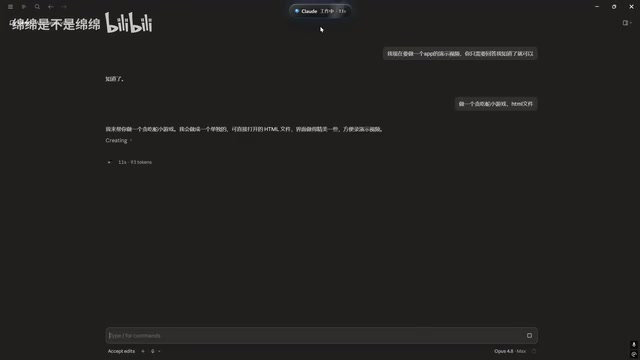
Claude Code Desktop Status Capsule: An Open-Source Widget for Real-Time AI Coding Status Monitoring
An open-source desktop status capsule that monitors Claude Code's idle, working, and completed states in real time, with multi-conversation management, memos, and music control for developers.

GPT-5.2 Codex vs Opus 4.5 Hands-On: A Comprehensive Comparison of Coding Ability, Speed, and Developer Experience
Hands-on comparison of GPT-5.2 Codex vs Opus 4.5 across frontend generation, physics simulation, 3D scenes, and code refactoring, with practical selection advice.
Deep Dive into the Three AI Programmin…
Deep Dive into the Three AI Programming Frameworks: The Right Way to Do Specification-Driven Development
Deep dive into the three frameworks of Specification-Driven Development (SDD) for AI programming: Blueprint, Execution Flow, and Change Records — solving the problem of AI code going off the rails.