AI Agent Development Learning Path: A Practical Guide from Zero to Commercial Deployment

A systematic guide to learning AI Agent development from scratch to commercial deployment.
This guide outlines a complete learning path for AI Agent development, from foundational concepts like LLMs, RAG, and Prompt Engineering to mastering frameworks such as LangChain, AutoGen, and CrewAI. It covers key enterprise scenarios including office automation, intelligent customer service, and business process automation, along with multi-Agent design patterns and practical advice on pricing, delivery, and commercialization.
Why AI Agent Is the Most Worthwhile Tech Direction to Learn Right Now
While most people are still using AI for simple conversations and text generation, AI Agent development has already become a core track for turning technology into revenue. Unlike traditional AI applications, Agents possess the ability to autonomously plan, invoke tools, and execute tasks — enabling them to truly solve complex enterprise-level problems.
The Fundamental Difference Between LLMs and AI Agents
A large language model (LLM) is essentially a text prediction system that predicts the next most likely token based on input context. An AI Agent builds on top of LLMs by adding three critical capabilities: perceiving the environment (retrieving external information via APIs), making plans (breaking complex tasks into executable steps), and taking action (calling tools to complete specific operations). This leap from "passive answering" to "proactive execution" is what fundamentally distinguishes Agents from ordinary AI chat applications. The ReAct (Reasoning and Acting) framework is currently the most widely used reasoning paradigm for Agents, enabling models to alternate between thinking and acting in a closed-loop feedback cycle.
From a market demand perspective, real-world scenarios such as office productivity, business automation, and intelligent customer service are experiencing explosive growth in Agent demand. Agent developers who can deliver on these scenarios are routinely earning five- to six-figure project revenues. The urgent need for enterprise digital transformation has created a severe shortage of talent with AI Agent development skills.
Breaking Down the Entry Barrier for AI Agent Development
Debunking Common Misconceptions
Many people have misconceptions about Agent development, believing it requires a deep computer science background or years of programming experience. In reality, with the maturation of mainstream frameworks like LangChain, AutoGen, and CrewAI, along with the standardization of major model APIs, the entry barrier for AI Agent development has dropped significantly.

Whether you're a complete beginner, a working technical professional, or a business practitioner, you can master the core skills of Agent development through a systematic learning path. What matters isn't how high your starting point is, but whether you've grasped the right learning methods and standardized development workflows.
Comparing Mainstream Agent Development Frameworks
LangChain is currently the most mature Agent framework in terms of ecosystem, offering core abstractions like Chain (chained invocations), Agent (autonomous decision-making), and Tool (tool integration), making it ideal for building single-Agent systems. AutoGen, developed by Microsoft Research, focuses on multi-Agent conversation and collaboration scenarios, supporting automated interactions between Agents and human-AI cooperation. CrewAI emphasizes role-playing and team collaboration patterns, allowing developers to define clear roles, goals, and backstories for each Agent — closely mirroring how real teams work. These three frameworks are not mutually exclusive; in practice, they are often combined in real projects.
Planning a Complete AI Agent Learning Path
A comprehensive AI Agent learning path typically includes the following stages:
- Foundation Theory Stage: Understand how large language models work, Prompt Engineering, RAG (Retrieval-Augmented Generation), and other core concepts
- Framework Mastery Stage: Get familiar with the usage methods and best practices of mainstream Agent development frameworks like LangChain and AutoGen
- Tool Integration Stage: Learn to connect external APIs, databases, search engines, and other tools to Agent systems
- Workflow Orchestration Stage: Master design patterns for multi-Agent collaboration, task decomposition, and execution
- Commercial Deployment Stage: Transform technical capabilities into deliverable commercial products
How RAG Technology Works
During the foundation theory stage, RAG (Retrieval-Augmented Generation) is a core technology that must be deeply understood. It addresses two critical pain points of large language models: knowledge cutoff dates and hallucination issues. The workflow consists of three steps: first, enterprise documents are converted into vectors via an Embedding model and stored in a vector database (such as Pinecone, Milvus, or Chroma); when a user asks a question, the system vectorizes the query as well and retrieves the most relevant document chunks through similarity search; finally, the retrieved content is injected into the Prompt as context, allowing the LLM to generate answers based on real data. This technology serves as foundational infrastructure for enterprise-grade Agent development — virtually every Agent that requires domain-specific knowledge relies on RAG to ensure output accuracy.
Core Enterprise AI Agent Application Scenarios

Office Automation Agents
Office automation is one of the highest-demand Agent application areas today. By developing Agents that can automatically handle emails, organize documents, generate reports, and manage schedules, you can help enterprises dramatically improve operational efficiency. A mature office automation Agent solution can often save small and medium-sized businesses the cost of several full-time employees.
Intelligent Customer Service Agents
Compared to traditional rule-based chatbots, intelligent customer service Agents powered by large models can understand complex contexts, handle multi-turn conversations, and even proactively identify users' latent needs. Developing and deploying intelligent customer service Agents is one of the scenarios where enterprises currently show the strongest willingness to pay.
Business Process Automation Agents
From data collection and analysis to decision-making recommendations, Agents can connect entire business chains end to end. Examples include product selection analysis Agents in e-commerce, risk control review Agents in finance, and content production Agents in marketing — all high-value commercial application areas.
Design Patterns for Multi-Agent Collaboration
In business process automation scenarios, the design of multi-Agent systems is particularly critical. Core design patterns include: Hierarchical, where a manager Agent assigns tasks to subordinate Agents; Sequential, where multiple Agents process tasks in a fixed order; and Debate, where multiple Agents propose different perspectives on the same problem and reach consensus through discussion. Taking content production as an example, a typical multi-Agent architecture might include: a Researcher Agent responsible for information gathering, a Writer Agent for drafting, an Editor Agent for quality review, and an SEO Agent for optimization suggestions. This division of labor significantly improves output quality and system reliability.
Key Advice for Going from Agent Development to Commercial Monetization
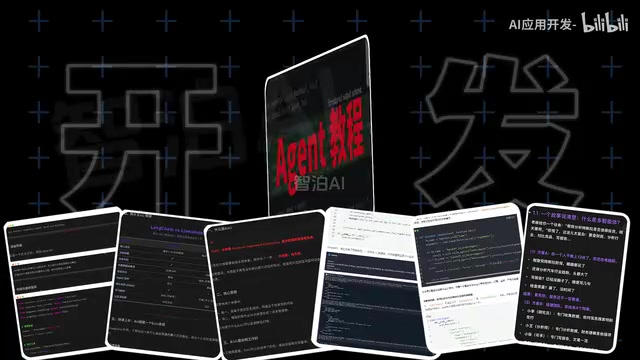
Let Real Projects Drive Your Learning
A learning approach oriented around real business scenarios yields the best results. Rather than spending excessive time grinding through theory, start from a specific business pain point and learn by doing. By deconstructing enterprise-level hands-on projects, each completed project will bring a qualitative improvement to both your tech stack and business acumen.
Establish a Standardized Agent Development Workflow
Developing commercial Agents is not a one-off creative exercise — it's a repeatable engineering practice. From requirements analysis, architecture design, development and testing to deployment and operations, establishing a standardized workflow is essential for batch delivery and scalable monetization.
Focus on Real-World Results, Not Technical Showmanship
The market has no shortage of flashy demos — what's missing are products that run reliably and truly solve problems. Throughout your learning journey, always measure your work against the standard of "Can this Agent operate stably in a real-world environment?" That's the only way to build genuine commercial competitiveness.
Pricing and Delivery Models for Agent Commercialization
Currently, there are three main business models for Agent projects in the market: custom development (charged per project, typically ranging from 20,000 to 200,000 CNY), SaaS products (charged monthly or per API call), and a hybrid consulting + implementation model. The key to pricing lies in quantifying the business value an Agent delivers — if a customer service Agent can replace three human agents per month (each earning 8,000 CNY/month), then an annual fee of 100,000–150,000 CNY offers a clear ROI advantage for the enterprise. When delivering, pay special attention to SLA (Service Level Agreement) definitions, including response accuracy, system availability, and data security guarantees.
Conclusion
AI Agent development is at the intersection of technological maturity and market explosion. For learners looking to seize this wave of technological opportunity, it's not too late to get started — but you need to choose the right learning path, aim for commercial deployment, and systematically build a complete skill set from theory to practice. Regardless of your technical background, with the right approach and consistent effort, you have the opportunity to turn technical value into commercial success on the AI Agent track.
Related articles
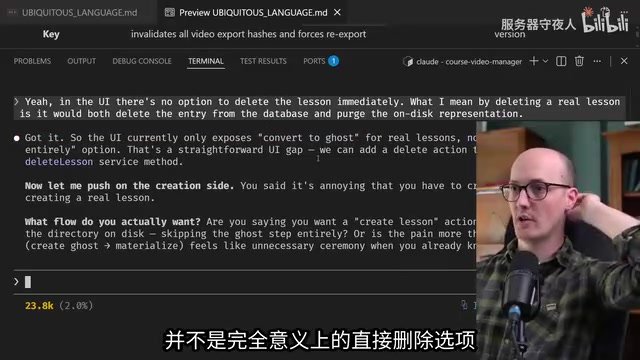
Claude Code Workflow in Practice: From Requirement Grilling to AFK Agent Auto-Coding
A detailed walkthrough of building real features with Claude Code: Grill Me requirement interrogation, auto-generated PRDs, AFK agent coding, and QA iteration loops with DDD and TDD strategies.

A Gen-Z Woman Making $1.5M/Month: Deconstructing the Growth Methodology Behind AI Apps
Gen-Z indie dev Nicole built 4 hit AI apps earning $1.5M/mo. Deep dive into her industrialized UGC engine, traffic testing system, and minimalist tech stack.
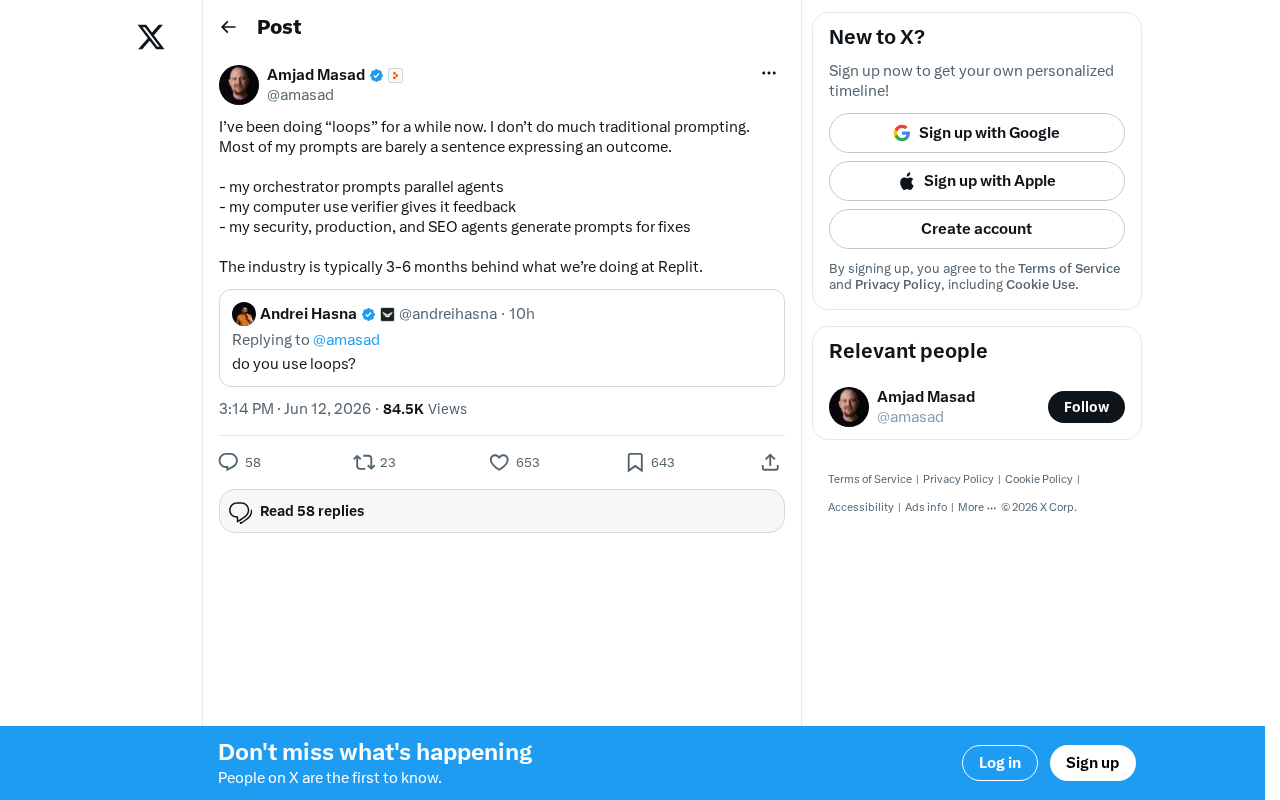
Replit's AI Loops Workflow Explained: Multi-Agent Collaboration Replaces Prompt Engineering
Deep dive into Replit's AI Loops workflow: how orchestrators, parallel agents, and Computer Use Verifiers build automated closed-loop systems through multi-agent collaboration.