AI Agent Development Learning Path: Breaking Down Core Competencies from Concept to Production

A practical guide to building real AI Agent development skills from concept to production deployment.
This article breaks down the core competencies needed for AI Agent development across three dimensions: task planning and decomposition, tool orchestration and call chain design, and memory management. It addresses common learning misconceptions — such as prioritizing frameworks over debugging and studying technology without business context — and outlines a structured four-phase learning path from fundamentals to production optimization.
The Common Struggle with Learning AI Agents
With the explosion of large language model technology, AI Agents have become one of the hottest technical domains today. Yet many learners discover an awkward reality after investing significant time: they can recite concepts perfectly but can't even build a single workflow that runs reliably when it comes to hands-on work.
This "learned but didn't really learn" dilemma reflects a structural problem in current AI Agent education — an overemphasis on theoretical frameworks at the expense of cultivating practical engineering skills.



The Core Competency Matrix for AI Agent Development
To truly master AI Agent development, you need to build a solid foundation across three core dimensions.
Task Planning and Decomposition
At its core, an AI Agent gives large language models the ability to make autonomous decisions and execute tasks. This requires developers to not only understand reasoning paradigms like the ReAct framework and Chain of Thought, but also to decompose complex business requirements into executable sub-task chains for the Agent.
The key points are:
- Define clear task boundaries to prevent the Agent from going off-track during multi-step tasks
- Design reasonable task dependencies and execution sequences
- Establish exception handling mechanisms so the Agent can autonomously roll back or retry when a step fails
Tool Orchestration and Call Chain Design
Tool Use is the core capability that distinguishes AI Agents from ordinary conversational models. However, tool call failures are among the most common issues in real-world development. Developers need to master the following:
- Precise tool descriptions: Ensuring the Agent accurately understands each tool's purpose, parameters, and return values
- Fault-tolerant call chain design: Handling scenarios like API timeouts, unexpected response formats, and insufficient permissions
- Multi-tool orchestration: Designing intermediate state passing when a task requires chaining multiple tools together
Agent Memory Management
The memory module is critical to whether an AI Agent can handle long conversations and complex contexts. Current mainstream memory architectures include three layers:
- Short-term memory: Managing and compressing the current conversation context
- Long-term memory: Retrieving historical interaction data stored in vector databases
- Working memory: Maintaining intermediate states during task execution
A poorly designed memory module causes the Agent to become "confused" after multiple interaction rounds — forgetting previous instructions, re-executing completed steps, or mixing up contexts from different tasks. These issues are especially fatal in production environments.
From Learning to Production: Common Misconceptions
During the AI Agent learning journey, many developers fall into several typical traps.
Misconception 1: Prioritizing Frameworks Over Debugging
Many learners spend enormous amounts of time studying API documentation for frameworks like LangChain, AutoGen, and CrewAI, while neglecting the most critical skill: debugging. In real projects, 80% of the time is spent debugging prompts and troubleshooting Agent decision anomalies.
The right approach: Start with the simplest single-Agent, single-tool scenario, gradually increase complexity, and ensure observability and debuggability at every step.
Misconception 2: Learning Technology in Isolation from Business Scenarios
Technical concepts like multi-agent collaboration, RAG augmentation, and Function Calling are castles in the air without concrete business scenarios. A truly valuable learning approach should follow these steps:
- Select a specific business scenario (e.g., customer service automation, data analysis assistant, code review Agent)
- Analyze the scenario's inputs, outputs, and constraints
- Design the Agent architecture and iterate on optimizations
- Produce a demonstrable project outcome
Misconception 3: Underestimating the Depth of Prompt Engineering
Prompt engineering is far more than writing a few instructions. In Agent scenarios, the System Prompt must precisely define the Agent's role, capability boundaries, decision rules, and output format. A single word difference can cause dramatic changes in Agent behavior — which is exactly why so many developers hit constant pitfalls when moving from demo to production.
What the Job Market Really Demands for AI Agents
Looking at the hiring market, companies' core requirements for AI Agent developers focus on the following areas:
- Engineering capability: Deploying prototype Agents as stable production services
- Diagnostic ability: Quickly identifying the root cause of abnormal Agent behavior
- Business understanding: Translating vague business requirements into technically executable Agent solutions
- Cost optimization awareness: Finding the right balance between performance and token consumption
High-paying positions absolutely do not test whether you can recite the principles of ReAct. Instead, they test whether you can clearly answer questions like: What's your strategy when an Agent's tool call fails? How do you determine task boundaries in multi-step tasks? How do you compress information when the memory module grows too large?
A Structured Learning Path for AI Agent Development
Based on the competency requirements outlined above, here's a recommended four-phase progressive approach:
- Foundation phase: Understanding LLM API calls, Prompt Engineering basics, and single-turn tool calling
- Intermediate phase: Multi-turn conversation management, multi-tool orchestration, and memory module design
- Hands-on phase: Select 2–3 business scenarios, build complete Agents from scratch, and deploy them
- Optimization phase: Performance tuning, cost control, and refining exception handling mechanisms
Each phase should produce runnable code and reviewable project experience, rather than stopping at reading documentation and watching tutorials.
Conclusion
AI Agent development is a classic case of "looks simple, turns out complex." The barrier to acquiring conceptual knowledge is low, but making an Agent run reliably in complex business scenarios requires solid engineering skills and extensive hands-on practice.
Rather than chasing "master it in seven days" promises, it's far better to start with a minimal viable Agent and gradually accumulate experience solving real problems. That's the right way to build a competitive edge in the AI Agent space.
Related articles

A Three-Month Roadmap to LLM Development: A Deep Dive into the Learning Path from Zero to Freelancing
A deep dive into the three-step LLM development learning path: from prompt engineering and RAG knowledge bases to AI Agent development, with realistic timelines for beginners and experienced developers.

Struggling to Deploy AI Agents? Engineering Is the Key to Going from Demo to Product
57% of projects have deployed AI Agents, but 40% will be killed. This article analyzes the engineering methodology for taking AI Agents from Demo to enterprise product, covering the full process from requirements to deployment.
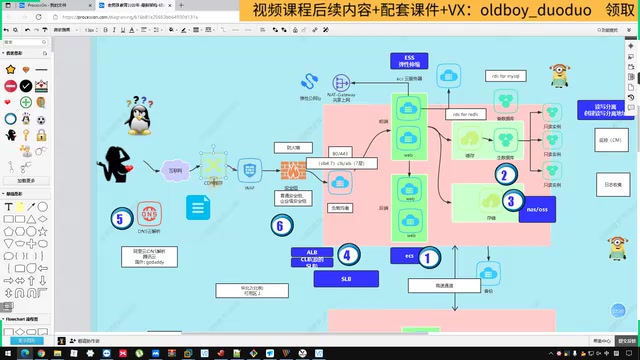
Complete Guide to Alibaba Cloud Website Architecture: The Full Request Path from DNS to Auto Scaling
A systematic guide to Alibaba Cloud website architecture covering DNS, CDN, WAF, CLB/ALB, ECS, Redis, NAS/OSS, and auto scaling along the full user request path.