AI Agent Development Learning Roadmap: A Complete Four-Stage Guide from Beginner to Practitioner
AI Agent Development Learning Roadmap:…
A four-stage roadmap for learning AI Agent development from fundamentals to production-ready projects.
This guide presents a systematic four-stage learning roadmap for AI Agent development: mastering core concepts (planning, memory, tool use), understanding design paradigms (ReAct, CoT), advancing to multi-agent collaboration and prompt optimization, and finally building real-world projects. It covers key frameworks like LangChain, CrewAI, and AutoGen, helping developers grow from beginners to skilled Agent builders.
Why Agent Development Is the Core Skill in the LLM Space
In the field of large language model application development, a clear trend is emerging: basic RAG (Retrieval-Augmented Generation) and simple API calls are no longer a core competitive advantage. What truly sets developers apart is the ability to independently develop intelligent Agents.
RAG (Retrieval-Augmented Generation) was the dominant paradigm for LLM applications in 2023, solving issues of outdated model knowledge and hallucinations by injecting retrieval results from external knowledge bases into the model's context. However, RAG is fundamentally reactive—it can only answer questions, not proactively execute tasks. Agents build upon RAG by adding planning and action capabilities. RAG can serve as a sub-module of an Agent (a knowledge retrieval tool), but an Agent's capabilities extend far beyond that.
The fundamental difference between Agents and traditional AI applications lies in this: Agents can autonomously plan tasks, invoke tools, and form closed loops to solve complex problems. Traditional AI applications typically follow a single-turn input-output pattern—the user asks, the model answers—and the entire process is stateless. The core characteristic of an Agent (intelligent agent) is autonomy—it can perceive its environment, formulate plans, execute actions, and adjust strategies based on feedback. This concept originally stems from the BDI (Belief-Desire-Intention) architecture in artificial intelligence. In recent years, with the emergence of models with strong reasoning capabilities like GPT-4, Agents have evolved from academic concepts into deployable engineering practices.
Whether you're seeking career advancement, taking on freelance projects, or building intelligent products, Agent development has become an essential hardcore skill.
This article outlines a systematic AI Agent development learning roadmap divided into four progressive stages, helping you grow from a complete beginner into a technical professional capable of independently developing Agent applications.
Stage One: Foundation — Mastering Core Agent Concepts
Learning Objectives
The core task of this stage is to build a solid theoretical foundation and understand the essence and basic composition of Agents.
Key Learning Content
- Core Agent Theory: Understanding what an intelligent agent is and how it differs from traditional programs
- Core Component Awareness: Familiarizing yourself with the role that Large Language Models (LLMs) play in Agents
- Three Fundamental Modules:
- Planning Module: How Agents decompose complex tasks into executable sub-steps
- Memory Module: How short-term and long-term memory work together
- Tool Invocation: How Agents interact with external APIs, databases, and other tools
Technical Details of the Planning Module
An Agent's planning capability primarily relies on the reasoning ability of large language models to achieve Task Decomposition. Common planning strategies include: top-down decomposition (breaking large goals into sub-goals layer by layer), search-based planning (such as Tree of Thoughts, searching for optimal solutions among multiple possible paths), and iterative planning (adjusting the plan while executing). The quality of planning directly determines whether an Agent can efficiently complete complex tasks, and it remains one of the most challenging aspects of current Agent development.
Engineering Implementation of the Memory Module
An Agent's memory system simulates human memory mechanisms. Short-term memory typically corresponds to the model's Context Window, storing immediate information about the current conversation and task. Long-term memory is implemented through vector databases (such as Pinecone, Milvus, ChromaDB) for persistent storage, saving historical interactions and learned experiences as embedding vectors that can be retrieved via semantic search when needed. Additionally, there's the concept of Working Memory, used to store intermediate states and reasoning chains during current task execution.
These concepts may seem simple, but the depth of understanding directly determines your ceiling in subsequent Agent development. It's recommended to read original papers and official documentation at this stage, rather than staying at a surface-level understanding.
Stage Two: Core Advancement — Mastering Agent Operating Principles and Design Paradigms
Learning Objectives
Upgrade from "understanding concepts" to "understanding principles"—master the operational logic and classic design patterns of Agents.
Key Learning Content
- Agent Action Principles: Deeply understand the reasoning process behind each decision an Agent makes
- Addressing Development Challenges: Learn to handle common challenges such as hallucination issues, context window limitations, and tool invocation failures
- Classic Agent Paradigms:
- ReAct (Reasoning + Acting): A paradigm where reasoning and action alternate
- CoT (Chain of Thought): A chain-of-thought reasoning pattern
- Other mainstream frameworks such as Plan-and-Execute
Deep Dive into the ReAct Paradigm
ReAct was proposed by Yao et al. in 2022. Its core idea is to have the model alternate between Reasoning and Acting. The specific flow is: the model first thinks about what to do (Thought), then executes an action (Action), obtains an observation result (Observation), and then continues thinking about the next step based on the observation. The advantage of this paradigm is that the reasoning process is interpretable and traceable, and strategies can be dynamically adjusted based on intermediate results. Compared to pure reasoning with CoT, ReAct adds the ability to interact with the external environment; compared to pure action-based methods, it adds explicit reasoning steps, reducing error rates.
Principles and Evolution of CoT (Chain of Thought)
Chain of Thought (CoT) was proposed by Wei et al. at Google Brain in 2022. By including intermediate reasoning steps in the prompt, it guides the model to reason step by step rather than giving a direct answer. CoT variants include: Zero-shot CoT (triggered simply by adding "Let's think step by step"), Self-Consistency (generating multiple reasoning paths and taking a majority vote), and Tree of Thoughts (extending linear reasoning into tree-based search). In Agent scenarios, CoT is primarily used to enhance the quality of planning and decision-making.
Addressing Hallucination and Tool Invocation Failures
Hallucination refers to the model generating content that seems plausible but is actually incorrect—particularly dangerous in Agent scenarios because incorrect reasoning can lead to incorrect actions. Mitigation strategies include: adding fact verification steps, restricting the model to only answer based on retrieved information, and setting confidence thresholds. Tool invocation failures require designing robust error handling mechanisms: retry strategies (exponential backoff), fallback plans (alternative paths when tools are unavailable), and exception feedback (returning error information to the Agent so it can adjust its strategy).
The key at this stage is to hands-on practice each paradigm, compare their performance differences across various task scenarios, and develop your own technical judgment.
Stage Three: Advanced Enhancement — Multi-Agent Collaboration and Output Optimization
Learning Objectives
Master multi-agent collaboration and output optimization techniques to transform your Agent from "it runs" to "it's useful."
Key Learning Content
- Multi-Agent Collaboration: Understanding how multiple Agents divide labor and cooperate, including role assignment, communication mechanisms, and conflict resolution
- Reinforcement Learning Basics: Understanding how to enable continuous Agent improvement through feedback mechanisms
- Prompt Tuning Techniques:
- Structured design of system prompts
- Best practices for few-shot learning
- Output format constraints and quality control
Architectural Patterns for Multi-Agent Collaboration
Multi-Agent System (MAS) design draws inspiration from the division of labor in human organizations. Common collaboration architectures include: hierarchical (a manager Agent assigns tasks to executor Agents), peer negotiation (multiple Agents reach consensus through dialogue), and pipeline (tasks are passed sequentially between Agents with different specializations). Typical open-source implementations include MetaGPT, which simulates role division in a software company, and CAMEL, which achieves autonomous collaboration between Agents through role-playing. The core challenges of multi-agent systems lie in communication efficiency, conflict resolution, and ensuring global consistency.
This stage determines whether the Agent you develop is a "toy" or a "tool." Prompt engineering often offers the highest return on investment as an optimization technique and is worth deep exploration.
Stage Four: Practical Implementation — Proving Your Agent Development Skills Through Projects
Learning Objectives
Integrate all acquired knowledge and complete 2-3 demonstrable Agent projects.
Recommended Project Directions
- Intelligent Decision Assistant: An Agent that can gather information, analyze pros and cons, and provide recommendations
- Office Automation Agent: Handling emails, organizing documents, generating reports, and other daily tasks
- Multi-Agent Collaboration System: Multiple Agents working together to complete complex workflows
Comparison of Mainstream Agent Development Frameworks
In practical development, choosing the right framework is crucial. LangChain is currently the most popular Agent development framework, offering rich tool integrations and chain-call abstractions, suitable for rapid prototyping. AutoGPT is an early autonomous Agent experimental project that demonstrated the possibility of Agents autonomously executing tasks in a loop, though with limited stability. CrewAI focuses on multi-agent collaboration scenarios, providing high-level abstractions for role definition, task assignment, and collaboration workflows. Additionally, there's Microsoft's AutoGen (emphasizing multi-Agent dialogue) and LangGraph (graph-based workflow orchestration). When choosing a framework, consider project complexity, team familiarity, and community activity holistically.
Key Points for Practical Development
Each project should fully run through the complete development → debugging → optimization pipeline:
- Requirements analysis and architecture design
- Core feature development and testing
- Edge case handling and exception recovery
- Performance optimization and user experience refinement
Completed projects can be directly added to your resume, serving as the most compelling proof when job hunting or taking on projects.
Learning Recommendations and Summary for Agent Development
Tips for Beginners
- Don't skip the fundamentals: Many people rush to use frameworks without understanding the underlying principles, leaving them unable to debug when problems arise
- Drive learning through projects: After completing each stage, immediately validate what you've learned with a small project
- Focus on mainstream frameworks: Frameworks like LangChain, AutoGPT, and CrewAI can significantly boost development efficiency
- Stay current with the frontier: The Agent field evolves extremely fast—maintain awareness of new papers and tools
Core Insight
The essence of Agent development is not about API-calling tricks, but about systems engineering thinking—how to decompose complex problems, how to design reliable automated workflows, and how to make sound decisions amid uncertainty. Mastering this way of thinking is what creates truly irreplaceable competitive advantage.
The sooner you systematically learn Agent development, the better positioned you'll be to seize opportunities in the AI application wave.
Related articles
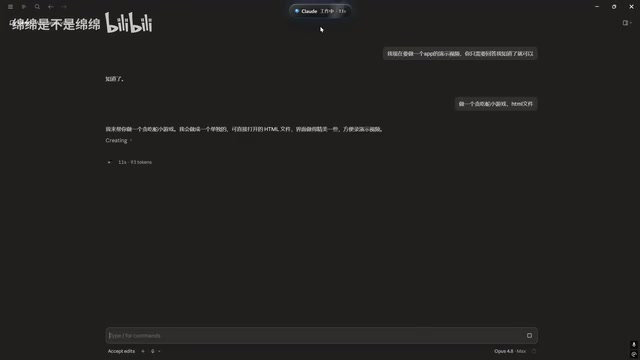
Claude Code Desktop Status Capsule: An Open-Source Widget for Real-Time AI Coding Status Monitoring
An open-source desktop status capsule that monitors Claude Code's idle, working, and completed states in real time, with multi-conversation management, memos, and music control for developers.

GPT-5.2 Codex vs Opus 4.5 Hands-On: A Comprehensive Comparison of Coding Ability, Speed, and Developer Experience
Hands-on comparison of GPT-5.2 Codex vs Opus 4.5 across frontend generation, physics simulation, 3D scenes, and code refactoring, with practical selection advice.
Deep Dive into the Three AI Programmin…
Deep Dive into the Three AI Programming Frameworks: The Right Way to Do Specification-Driven Development
Deep dive into the three frameworks of Specification-Driven Development (SDD) for AI programming: Blueprint, Execution Flow, and Change Records — solving the problem of AI code going off the rails.