AI Agent Development Learning Roadmap: A Complete Four-Stage Plan from Zero to Production
AI Agent Development Learning Roadmap:…
A four-stage roadmap for learning AI Agent development from LLM basics to multi-agent systems.
This article presents a complete four-stage learning roadmap for AI Agent development: mastering LLM fundamentals and API calls, understanding core paradigms like ReAct and CoT, building memory mechanisms with vector databases and tool calling, and implementing multi-agent collaboration patterns. It includes practical timeline estimates, framework comparisons, and hands-on project suggestions for each stage.
Introduction
With the rapid advancement of large model technology, AI Agents have become one of the hottest technical directions today. More and more companies are investing in Agent applications, and demand for related roles continues to surge. For developers looking to enter or transition into this field, a clear learning roadmap is essential.
This article outlines four stages of AI Agent development—from zero foundation to enterprise-level practice—helping you systematically plan your learning path and avoid unnecessary detours.
Stage One: Building the Foundation — LLM Core Logic and API Calls
Core Objectives
The focus of this stage is understanding the underlying working principles of Large Language Models (LLMs), including the Transformer architecture, attention mechanisms, tokenization, and other core concepts. You don't need to build a model from scratch, but you must understand how models "think."
The Transformer is a deep learning architecture proposed by Google in the 2017 paper Attention Is All You Need, which fundamentally transformed the field of natural language processing. Its core innovation is the Self-Attention mechanism, which allows the model to attend to information from all other positions in a sequence when processing each position, thereby capturing long-range dependencies. Compared to earlier RNN and LSTM architectures, Transformers support highly parallelized computation, dramatically improving training efficiency. All current mainstream large language models (the GPT series, Claude, LLaMA, etc.) are built on the Transformer architecture.
Tokenization is the process of converting natural language text into numerical sequences that models can process. Modern LLMs typically use subword tokenization algorithms (such as BPE and SentencePiece) to split text into subword units that fall between individual characters and complete words. For example, "unhappiness" might be split into the tokens "un", "happi", and "ness". Understanding tokenization is crucial for Agent development because it directly affects context window utilization efficiency, API call cost calculations, and prompt design strategies.
Key Skills Checklist
- Prompt Engineering: Master how to guide models toward high-quality outputs through carefully designed prompts—this is the foundation of all Agent development. Prompt engineering is more than just "asking good questions"; it involves system prompt design, few-shot example construction, output format constraints, role assignment, and many other techniques. It serves as the bridge connecting human intent with model capabilities.
- API Calls: Become proficient with the APIs of OpenAI, Claude, and major domestic models. Understand parameter tuning (temperature controls output randomness—higher values produce more creative outputs; top_p controls the sampling range and works in conjunction with temperature; max_tokens limits output length, etc.).
- Basic Programming Skills: Python is essential. Focus on mastering asynchronous programming (asyncio/aiohttp, since Agents frequently need to make concurrent calls to multiple APIs or tools) and JSON data handling (model input/output and Function Calling parameter passing all rely on JSON format).
This stage should take approximately 2–3 weeks, with the goal of independently completing an API-based conversational application.
Stage Two: Mastering Core Paradigms — Understanding the Agent's Thinking Loop
ReAct and CoT Frameworks Explained
This is the most critical stage in the entire learning roadmap. The core of an AI Agent lies in its "Think–Act–Observe" loop:
- ReAct (Reasoning + Acting): The Agent first reasons about and analyzes the problem, then decides what action to take, and finally observes the result before entering the next cycle. The ReAct framework was proposed by Princeton University and the Google Brain team in a 2022 paper. Its core idea is to interleave the reasoning capabilities of LLMs with the action capabilities of external tools. This paradigm solves the problem of pure reasoning models being prone to hallucinations and pure action models lacking planning ability. In practice, the Agent generates a thought process (Thought) at each step, then decides which tool to call (Action), and finally uses the tool's returned result (Observation) as input for the next reasoning step.
- CoT (Chain of Thought): Chain-of-thought reasoning that makes the model show its reasoning process, significantly improving completion quality on complex tasks. CoT was first proposed by Google in 2022. Research found that simply adding "Let's think step by step" to prompts or providing examples with reasoning steps could dramatically improve model performance on mathematical reasoning, logical analysis, and similar tasks. CoT is the theoretical foundation for the "Reasoning" component in ReAct.
Comparison of Mainstream Agent Development Frameworks
Current mainstream frameworks for Agent development include:
- LangChain: The most complete ecosystem with rich community resources, suitable for most developers getting started. LangChain provides a complete abstraction layer from prompt templates, model calls, and output parsing to Agent execution loops. Its LCEL (LangChain Expression Language) allows developers to compose complex AI workflows in a declarative manner.
- LlamaIndex: Excels in data indexing and RAG (Retrieval-Augmented Generation) scenarios. RAG is a key technology for solving LLM knowledge timeliness and accuracy issues. Its workflow involves splitting external knowledge base documents into chunks, converting them to vectors for storage, then using semantic retrieval to find the most relevant document chunks when a user asks a question, and injecting those chunks as context into the prompt so the model generates answers based on retrieved factual information. LlamaIndex provides rich out-of-the-box components for data connectors, index structures, and query engines.
- CrewAI / AutoGen: Frameworks focused on multi-agent collaboration, laying the groundwork for Stage Four.
During this stage, aim to deeply master at least one framework and understand the design philosophy of its Agent abstraction layer. Estimated time: 3–4 weeks.
Stage Three: Building Memory Mechanisms — Giving Agents Continuous Learning Capabilities
Three-Layer Memory Architecture
A truly practical Agent must have memory capabilities; otherwise, every conversation starts from a state of "amnesia":
- Short-term Memory: Context information from the current session, typically implemented through message history. Since LLMs have context window length limits (e.g., 128K tokens for GPT-4 Turbo, 200K tokens for Claude 3), short-term memory management requires strategies like information compression, summary generation, and sliding windows.
- Long-term Memory: Cross-session knowledge storage, commonly implemented using vector databases. Vector databases are database systems specifically designed for storing and retrieving high-dimensional vector data. Text information is converted into high-dimensional vectors (typically 768 or 1536 dimensions) through embedding models, and retrieval is performed by calculating cosine similarity between vectors to quickly find semantically similar content. Popular choices include Pinecone (cloud-hosted service), Milvus (open-source distributed solution), and ChromaDB (lightweight local solution).
- Working Memory: The intermediate state and temporary data of the Agent's current task, similar to information humans "hold in mind" when solving complex problems. Working memory is typically implemented through structured state objects containing the current task goal, completed steps, pending subtasks, and other information.
Tool Calling Capabilities
Beyond memory, Agents also need the ability to interact with the real world: search engines, database queries, file read/write operations, third-party API calls, and more. Function Calling is the core technology for implementing tool calls and the key step in an Agent's evolution from "chatbot" to "intelligent assistant."
Function Calling is a critical capability introduced by OpenAI in 2023, subsequently adopted widely by major model providers. The principle is that when making an API call, developers describe available functions (tools) and their parameters in JSON Schema format. If the model determines during reasoning that it needs to call a tool, it generates a structured function call request (including the function name and parameters) rather than a natural language response. The developer's application is responsible for actually executing the function and returning the result to the model for continued reasoning. This mechanism enables Agents to reliably interact with external systems and serves as the technical bridge from conversational AI to action-oriented AI.
Suggested Practice Project
At this stage, developing a smart customer service bot with memory is an excellent hands-on project. It comprehensively applies core skills including memory management, tool calling, and conversation strategies, helping you connect fragmented knowledge into a cohesive whole. Specifically, this project requires implementing: long-term memory storage for user profiles, short-term memory management for conversation history, tool calls for order inquiries/returns and exchanges, and personalized response strategies based on user behavioral history.
Stage Four: Multi-Agent Collaboration — Moving Toward Complex System Development
Three Common Collaboration Patterns
A single Agent has limited capabilities; complex tasks often require multiple Agents working together. This concept originates from the research traditions of distributed systems and Multi-Agent Systems (MAS), and has been revitalized in the AI domain. Common collaboration patterns include:
- Manager-Executor Pattern: One Agent handles task decomposition and scheduling while multiple Agents handle specific execution. This is similar to the microservices architecture concept in software engineering—the manager Agent needs task planning and resource allocation capabilities, while executor Agents focus on specialized abilities in their respective domains.
- Debate Pattern: Multiple Agents propose different viewpoints on the same problem and reach better solutions through debate. Research shows that this adversarial collaboration effectively reduces the biases and hallucinations of a single model, improving output accuracy and comprehensiveness.
- Pipeline Pattern: Agents process different stages of a task sequentially, progressively completing complex workflows. For example, in a content creation scenario, you could design a pipeline of "Research Agent → Outline Agent → Writing Agent → Review Agent," where each Agent's output serves as the next Agent's input.
Recommended Framework Selection
- AutoGen (Microsoft): Supports flexible multi-Agent conversations and collaboration, suitable for research and prototyping. AutoGen's core design philosophy is "conversable Agents"—each Agent can send and receive messages, supports Human-in-the-loop collaboration patterns, and facilitates debugging and controlling Agent behavior.
- CrewAI: Centered on role-playing, allowing clear definition of Agent roles, goals, and collaboration relationships. CrewAI borrows concepts from real-world team collaboration—developers can define each Agent's Role, Backstory, and Goal as if assembling a team, making multi-Agent system design more intuitive.
Project Practice Directions
At this stage, aim to complete 2–3 full projects, such as:
- Multi-Agent intelligent customer service system (frontline service Agent + specialist Agent + quality inspection Agent collaboration)
- Automated content creation pipeline (topic selection → research → writing → editing → SEO optimization multi-Agent pipeline)
- Data analysis Agent team (data cleaning Agent + statistical analysis Agent + visualization Agent + report writing Agent)
Learning Timeline and Practical Recommendations
Based on investing 2 hours per day, the overall timeline is approximately:
| Stage | Duration | Core Deliverable |
|---|---|---|
| Stage 1: Foundation | 2–3 weeks | API conversational app |
| Stage 2: Core Paradigms | 3–4 weeks | Single-Agent application |
| Stage 3: Memory Mechanisms | 3–4 weeks | Smart customer service with memory |
| Stage 4: Multi-Agent Collaboration | 3–4 weeks | Multi-Agent collaborative project |
Pragmatic Learning Advice
- Maintain realistic expectations: Claims like "go from beginner to highly sought-after in three months" are overly optimistic. Three months is enough to get started and build impressive projects, but enterprise-level development requires continuous accumulation of engineering skills, including system observability, error handling, cost control, security measures, and other production-environment essentials.
- Focus on concepts over APIs: Frameworks update extremely fast (LangChain has breaking changes almost weekly). Don't obsess over a specific framework's API details—focus on understanding the underlying design philosophy and architectural patterns. Once you understand core concepts like Agent Loop, Tool Use, and Memory Management, you can quickly get up to speed with any framework.
- Prioritize hands-on practice: Try writing code to implement every concept you learn. Building projects is far more effective than watching videos. Adopt a cycle of "learn a concept → write a minimal working example → expand into a small project."
- Leverage open-source resources: Quality Agent projects on GitHub are the best learning materials—read source code and participate in discussions. Recommended projects to follow include AutoGPT, BabyAGI, and MetaGPT, which demonstrate different Agent architecture design approaches.
Conclusion
AI Agent development is indeed a high-demand direction in today's tech landscape, but learning requires a step-by-step approach. The core thread across the four stages can be summarized as: Understand models → Master paradigms → Implement memory → Multi-agent collaboration. Building a solid foundation at each stage, combined with continuous project practice, is what truly develops the ability to solve real-world problems.
Whether you're a newcomer just getting into AI or a senior engineer looking to transition into Agent development, following this roadmap with steady progress will help you find your place in this rapidly evolving field.
Related articles
Anthropic London Developer Conference: Claude Model Upgrades, Enterprise Agent Platform, and Developer Tools Fully Evolved
Anthropic's first London Code with Claude event unveiled Opus 4.7, Mythos, Cloud Managed Agents, Claude Code Routines, and more for AI-assisted development.
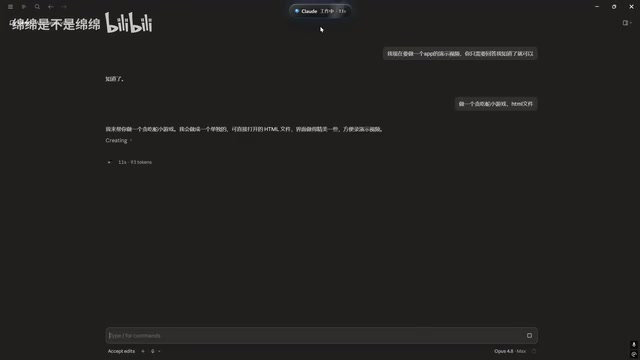
Claude Code Desktop Status Capsule: An Open-Source Widget for Real-Time AI Coding Status Monitoring
An open-source desktop status capsule that monitors Claude Code's idle, working, and completed states in real time, with multi-conversation management, memos, and music control for developers.
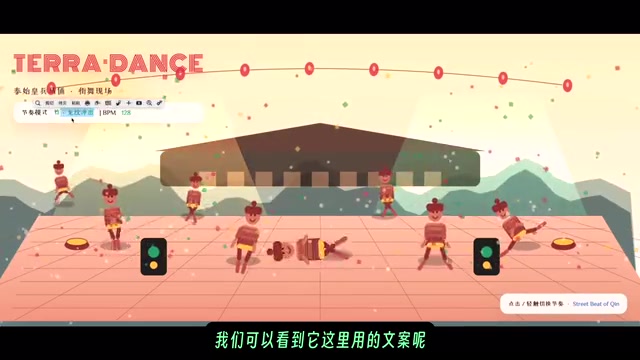
GPT-5.2 Codex vs Opus 4.5 Hands-On: A Comprehensive Comparison of Coding Ability, Speed, and Developer Experience
Hands-on comparison of GPT-5.2 Codex vs Opus 4.5 across frontend generation, physics simulation, 3D scenes, and code refactoring, with practical selection advice.