AI Agent Hands-On Learning Path: A Complete Guide from Beginner to Enterprise-Level Development
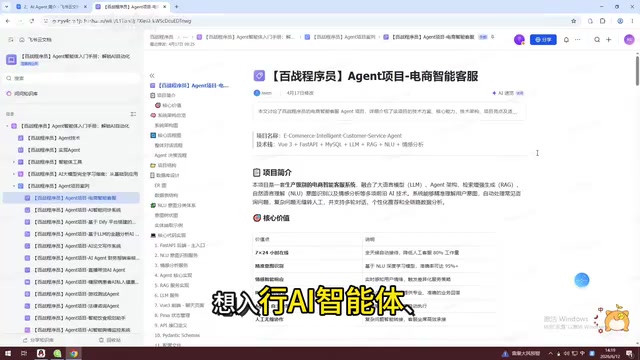
A complete learning roadmap for AI Agent development from beginner to enterprise-level with 28 hands-on projects.
This guide systematically outlines the AI Agent development learning path, covering the full technology stack from prompt engineering and RAG to multi-Agent collaboration and workflow orchestration. It provides a three-phase learning plan (beginner, intermediate, enterprise-level), recommends mainstream frameworks like LangChain, AutoGen, and CrewAI, and offers rational market analysis with practical career advice for developers entering the field.
Why You Should Pay Attention to AI Agent Development Now
As large language model capabilities continue to improve, AI Agents are transitioning from concept to real-world implementation. The evolution of LLMs from GPT-3 to GPT-4, Claude 3.5, Gemini, and beyond reflects not just growth in parameter scale, but more critically, significant improvements in reasoning ability, instruction-following capability, and context window size. Since 2024 in particular, breakthroughs in complex task decomposition, multi-step reasoning, and tool use have transformed AI Agents from academic concepts into engineering-ready technical solutions. Compared to traditional software development, Agent development roles currently face relatively less competition, yet enterprise demand is growing rapidly—making this a direction well worth focusing on for tech professionals.
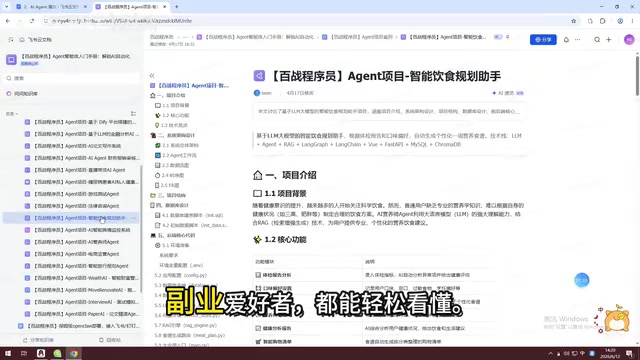
Recently, a content creator on Bilibili compiled a learning path containing 28 hands-on AI Agent projects, forming a complete skill progression from basics to advanced topics. This article will use that information as a foundation to outline the AI Agent learning framework and core technology stack, helping you establish a clear learning roadmap.
Comprehensive Breakdown of the AI Agent Core Technology Stack
Foundation Layer: Prompt Engineering
Prompts are the foundation of interacting with large models. Mastering structured prompt design, role assignment, Chain-of-Thought, and other techniques is a prerequisite for building any Agent system. Chain-of-Thought is a prompting strategy proposed by the Google Brain team in 2022. Its core idea is to guide the model to show intermediate reasoning steps before providing a final answer. This approach simulates the step-by-step thinking process humans use when solving complex problems, significantly improving model performance on mathematical reasoning, logical judgment, and similar tasks. Its variants include Tree-of-Thought and Graph-of-Thought, which are suited for scenarios requiring exploration of multiple reasoning paths. While this layer may seem simple, excellent prompt engineering can produce a qualitative leap in Agent output quality.
For beginners, it's recommended to start practicing with Zero-shot and Few-shot prompting, then gradually transition to more complex prompting strategies. Zero-shot prompting means asking the model to complete a task without providing any examples, testing the model's generalization ability. Few-shot prompting provides 2-5 input-output examples within the prompt to help the model understand the task format and expected output—one of the most commonly used techniques in practical development.
Core Layer: Agent Construction and Multi-Agent Collaboration
A single Agent is suitable for handling clear, single-task scenarios, while complex business requirements often need multiple Agents working together. Multi-Agent architecture involves task decomposition, role assignment, communication protocols, and other design patterns. Multi-Agent system design draws from distributed systems and organizational management theory. Common collaboration patterns include: Hierarchical (a manager Agent assigns tasks to executor Agents), Debate (multiple Agents analyze problems from different angles before reaching consensus), and Pipeline (Agents process different stages of a task sequentially). The choice between these patterns depends on task complexity, accuracy requirements, and latency tolerance.
Currently, the mainstream Agent development frameworks include:
- LangChain: The most complete ecosystem with rich community resources, ideal for rapid prototyping. Created by Harrison Chase in October 2022, LangChain has evolved into a complete ecosystem comprising the LangChain core library, LangSmith (observability platform), LangGraph (stateful multi-Agent orchestration), and LangServe (deployment tools). Its core abstractions include Chain, Agent, Memory, and Retriever, which standardize interfaces to abstract away differences between LLM providers, enabling developers to quickly combine various capability modules.
- AutoGen: Built by Microsoft, excelling in multi-Agent conversation and collaboration scenarios. Its design philosophy enables multiple Agents to collaborate on tasks through natural language dialogue, supporting human-AI hybrid interaction modes.
- CrewAI: Focused on role-based multi-Agent orchestration with a lower barrier to entry, building collaborative teams by defining each Agent's Role, Goal, and Backstory.
Framework selection should be based on specific project requirements and team technology stack considerations.
Tool Layer: Function Calling and External Integration
The key to giving Agents "hands-on capability" lies in Tool Use / Function Calling. Function Calling was first launched at scale by OpenAI in June 2023. Its essence is enabling large models to identify when external tools need to be called during response generation and output function names and parameters in structured JSON format. The model itself doesn't execute functions—the application layer receives the model's calling intent, actually executes it, then returns results to the model for final response generation. This design achieves decoupling between model reasoning capability and external system execution capability.
By defining tool interfaces, Agents can perform searches, calculations, API calls, database queries, and other operations—evolving from "can talk" to "can do." Tool calling capability is the watershed that distinguishes "chatbots" from "true intelligent agents" and is an essential skill in enterprise-level Agent development.
Knowledge Layer: RAG (Retrieval-Augmented Generation)
RAG (Retrieval-Augmented Generation) solves the problems of LLM knowledge cutoff and hallucination. Its core technical principle is converting text into high-dimensional vectors (typically 768 or 1536 dimensions) through Embedding models, storing them in vector databases, then using Approximate Nearest Neighbor (ANN) algorithms for efficient semantic similarity retrieval.
The complete RAG pipeline includes: document Chunking, vector Indexing, semantic Retrieval at query time, context Augmentation, and final Generation. By storing domain knowledge in vector databases, Agents first retrieve relevant documents before generating responses, significantly improving accuracy and expertise. Advanced RAG techniques also include hybrid retrieval (combining keyword and semantic search), Reranking, query rewriting, and other optimization strategies—these techniques are crucial for retrieval quality improvement in production environments.
RAG is one of the most common technical requirements in enterprise applications. Popular vector databases include Chroma (lightweight, suitable for prototyping), Pinecone (fully managed cloud service, suitable for production), and Milvus (open-source distributed solution, suitable for large-scale deployment).
Application Layer: Automated Workflow Orchestration
Chaining multiple Agent capabilities into end-to-end automated workflows is the ultimate form of AI Agent deployment. Whether it's a content generation pipeline, intelligent customer service system, or data analysis pipeline, workflow orchestration capability determines a project's actual business value. Key design considerations for workflow orchestration include: state management (data passing between nodes), conditional branching (dynamically adjusting flow based on intermediate results), parallel execution (improving overall throughput), and human-in-the-loop nodes (introducing human review at critical decision points).
Recommended Phased Learning Path for AI Agents
Phase 1: Zero-to-Beginner (1-2 weeks)
Start by understanding LLM API calls, learning basic prompt design, and completing a simple chatbot project. The focus at this stage is building intuitive understanding of how Agents work. Core concepts for understanding API calls include: token billing mechanisms (input and output billed separately), the Temperature parameter's control over output randomness, the difference between System Prompt and User Prompt, and implementing Streaming output.
Recommended Practice Projects:
- Build a basic chatbot by calling OpenAI or domestic LLM APIs
- Design prompt templates for different roles and compare their effects
Phase 2: Skill Building (3-4 weeks)
Gradually introduce tool calling and RAG technology. Try building a Q&A system with a knowledge base or an Agent capable of executing specific tasks. At this stage, you should start working with mainstream frameworks like LangChain, focusing on understanding the framework's core abstractions and learning to read framework documentation and source code to solve problems.
Recommended Practice Projects:
- RAG-based enterprise document Q&A system
- Information assistant with web search capabilities
Phase 3: Enterprise-Level Practice (4-8 weeks)
Tackle multi-Agent collaboration projects and complete automated workflows. Focus on error handling, performance optimization, cost control, and other engineering concerns—these are core evaluation points in interviews and actual work. From prototype to production, AI Agents face engineering challenges including: observability (how to trace each decision point in multi-step reasoning), cost control (token consumption budget management and caching strategies), latency optimization (streaming output, parallel calls), security protection (prompt injection attack defense, output content moderation), and reliability assurance (retry mechanisms, degradation strategies, hallucination detection). These issues are often overlooked in academic demos but are critical factors determining project success in enterprise deployment.
Recommended Practice Projects:
- Multi-Agent collaborative content creation pipeline
- End-to-end data analysis automation system
A Rational Analysis of the AI Agent Market
AI Agents are indeed a hot direction right now, with enterprise hiring demand growing continuously. However, it's important to view the following points rationally:
- Technical barriers are lowering, but engineering requirements remain high — Frameworks encapsulate underlying complexity, but system design, debugging, and optimization still require solid programming fundamentals. Python async programming, API design, and database operations in particular are used extremely frequently in Agent development.
- Implementation scenarios are becoming clearer — Intelligent customer service, data analysis, content generation, and code assistance are currently the best-validated application directions. In the intelligent customer service space specifically, several AI Agent startups have already achieved annual revenues exceeding 100 million yuan, proving the viability of the business model.
- Continuous learning is essential — Technology iterates extremely fast; today's best practices may be replaced by new solutions within six months. For example, certain RAG approaches widely used in early 2024 were partially superseded by more efficient long-context models by mid-year. Developers need to maintain sensitivity to technology trends.
For developers looking to transition or enter the field, a solid programming foundation combined with systematic mastery of the Agent technology stack is key to building competitiveness. It's also recommended to follow developments in Agent Evaluation methodology, as measuring Agent performance quality is a core challenge faced by both practitioners and enterprises.
Conclusion
AI Agent development is a technical direction that transforms LLM capabilities into actual product power. Mastering the complete technology stack from prompt engineering to multi-Agent orchestration, combined with hands-on experience in real business scenarios, is an effective path into this field.
The most important point: hands-on practice is far more valuable than staying in the theoretical learning phase. Choose a project that interests you and start building your first AI Agent today.
Related articles
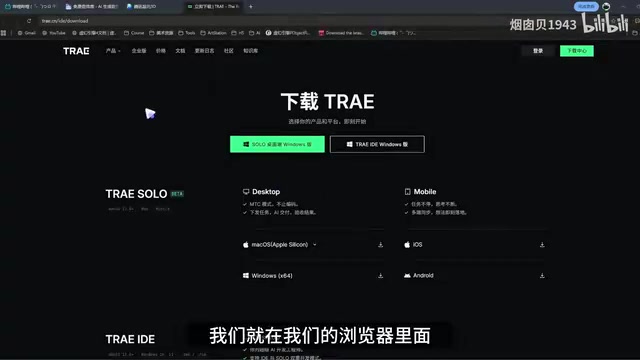
Building a 2D Shooter with Cocos + Trae: A Complete Zero-Code AI Programming Walkthrough
Learn how to build a Vampire Survivors-style 2D shooter using Cocos Creator and Trae CN with zero coding — from setup and design docs to AI code generation and debugging.
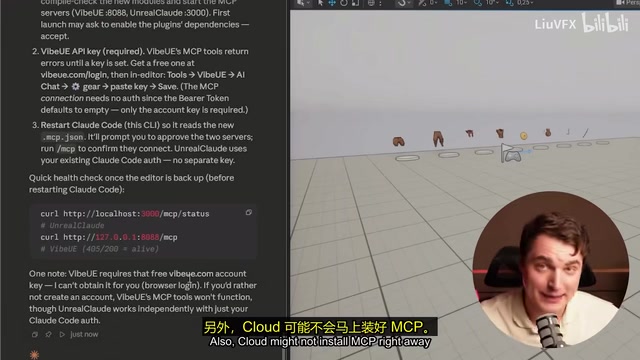
Claude Code Takes Over UE5: A Practical Guide to AI-Driven Game Development
A complete guide to Claude Code + UE5 collaboration using Unreal Cloud and VibeUE plugins for AI-assisted game development, with a 15-minute endless runner demo.

OpenAI CFO Sarah Fryer on How AI Is Reshaping Finance
OpenAI CFO Sarah Fryer shares real-world AI applications in finance teams, including investor relations GPTs, full-coverage auditing, tax automation, and career advice for the AI era.