OpenAI CFO Sarah Fryer on How AI Is Reshaping Finance

OpenAI CFO Sarah Fryer reveals how AI is transforming finance operations and reshaping careers.
OpenAI CFO Sarah Fryer shares how her 200-person finance team leverages AI to manage global operations for over 1 billion users. Key examples include a custom GPT for investor relations with real-time translation, AI-powered full-coverage auditing replacing traditional sampling, and automated global tax compliance. She emphasizes curiosity, adaptability, and kindness as essential skills for the AI era, and argues AI liberates finance professionals to focus on judgment, creativity, and human connection.
In a deep conversation at the OpenAI Forum, OpenAI Chief Financial Officer Sarah Fryer and University of California Chief Investment Officer Jagdeep Singh-Bhakar had a candid exchange about AI's transformation of the finance industry. From personal career journeys to real-world AI applications in financial operations, to career advice for the younger generation, this conversation painted a comprehensive picture of finance work in the AI era.
From Engineer to CFO: A Winding but Inspiring Career Path
Sarah Fryer's career trajectory is itself a masterclass in career planning. She grew up in Northern Ireland and originally studied materials science engineering, but entered the world of finance through an internship as a trainee accountant at Arthur Andersen. Arthur Andersen was once one of the world's Big Five accounting firms, alongside PricewaterhouseCoopers, Deloitte, Ernst & Young, and KPMG. However, after the Enron financial fraud scandal broke in 2001, Arthur Andersen was forced to dissolve in 2002 for its role in destroying audit documents, reducing the "Big Five" to the "Big Four" we know today. This event profoundly reshaped the global audit industry's regulatory landscape and gave rise to the U.S. Sarbanes-Oxley Act (SOX Act), which imposed extremely stringent requirements on internal controls over public company financial reporting. Sarah's early internship at Arthur Andersen happened to fall on the eve of this seismic industry shift.
She went on to work at McKinsey, served as a research analyst at Goldman Sachs, joined the finance team at Salesforce, became CFO at Square, CEO at Nextdoor, and ultimately became CFO of OpenAI.
She shared a pivotal career turning point: when she was confidently preparing to take on a CFO role, a recruiter told her bluntly — "You have no idea what a CFO actually does." While harsh, it became one of the most valuable pieces of advice in her career. She subsequently joined Salesforce, where she systematically learned the core skills of financial management under an outstanding CFO.
Sarah's advice to young people is refreshingly practical: don't be dazzled by titles, and don't make decisions based on others' expectations. "We're all the main character in our own movie — nobody is watching your movie." She recommends always paying attention to what foundational skills you're building along the way, what makes you happy, and what can sustain you financially — then finding a way to combine all three.
Three Core Competencies Finance Professionals Need in the AI Era
As a mother of two college students, Sarah frequently discusses AI's impact on future careers with her children. She distilled her thinking into three key words:
Curiosity comes first. She candidly admits that even at OpenAI, she regularly faces "moments of fear" — when colleagues mention a new tool or feature, she sometimes has no idea what they're talking about. But she chooses to lean into that discomfort. She shared an amusing example: when she first started using OpenAI's agent platform Codex and ran into problems, her assistant told her, "Just ask it to fix itself." Codex is OpenAI's AI coding agent platform, capable of autonomously executing code writing, debugging, and repair tasks in a cloud sandbox environment. The "ask it to fix itself" experience Sarah described is precisely Codex's core capability — it can independently diagnose errors, generate fixes, and verify results. And it actually worked. This ability to "let technology help you use technology" represents a paradigm shift from "humans using tools" to "tools autonomously solving problems" — a fundamentally different way of working.

Adaptability is equally critical. Sarah cited research from OpenAI's economics research team, noting that AI's impact on employment isn't black and white: some roles will indeed be replaced by agents (mostly repetitive, mechanical work), some roles will undergo profound transformation (her own CFO role, for instance, has become "unrecognizable" within a single year), and some roles will be entirely new professions we can't even imagine yet. Just as her grandmother working on a farm couldn't have imagined today's CFO role.
Kindness is her most surprising third keyword. She emphasized that in the AI era, genuine human connections become even more precious. "If you're a young student just entering the workforce, don't underestimate the power of doing something kind for someone along the way — it will come back to you in ways you can't imagine."
Real-World AI Applications in Finance
The most compelling part of the conversation was Sarah's detailed account of how AI is actually being used within OpenAI's finance team.
Investor Relations GPT: From Custom Models to Cross-Language Communication
About two years ago, Sarah's team started small, using ChatGPT and custom GPTs. Custom GPTs are a feature OpenAI launched in late 2023 that allows users to create specialized AI assistants on top of ChatGPT — users can upload proprietary knowledge base documents, set system instructions and behavioral styles, and build professional AI tools without writing any code. Sarah established quarterly hackathons, giving her team space to "slow down in order to speed up" — because the reason many people don't adopt new tools isn't that they don't want to, but that they're "too busy to learn."
A landmark case was the custom GPT they built for investor relations. The team fed all company presentations, due diligence materials, and other documents into ChatGPT, and carefully defined its "personality": fact-based, slightly sales-oriented but not pushy, maintaining high integrity, and if it doesn't know an answer, simply saying so.
This IR GPT demonstrated remarkable capabilities in practice. During an investor meeting in South Korea, the counterpart handed Sarah two pages of questions in Korean. She pulled out her phone, took a photo, and had the custom GPT translate and answer — all within seconds. She marveled, "We're just one step away from real-time bidirectional English-Korean conversation."
From Sample Auditing to Full-Coverage Review: AI Redefines Financial Controls

Sarah made a profound observation: traditional auditing relies on "sampling" — out of 1,000 invoices, only 10 are checked, because human resources and time are limited. This statistical sampling method is a cornerstone of modern auditing, with detailed provisions under International Standards on Auditing (ISA 530). Auditors determine sample sizes by assessing the risk of material misstatement, typically covering only 1%-5% of the total population. This means that even when an audit passes, there remains a statistical probability of undetected errors or fraud — the so-called "audit risk."
But in the "age of abundance" that AI brings, agents can check all 1,000 invoices. This fundamentally changes the logic of financial controls, dramatically improving accuracy and compliance. More importantly, AI full-coverage review doesn't just increase coverage — it can also identify anomalous correlations that human auditors would struggle to detect through pattern recognition. Examples include overlaps between supplier addresses and employee addresses, or systematic avoidance behavior where invoice amounts fall just below approval thresholds. For the Big Four accounting firms and internal audit departments, this represents the most significant methodological shift since the advent of Computer-Assisted Audit Techniques (CAATs).
The Tax Team's AI-Native Practices
Most surprisingly, the team at OpenAI that has most enthusiastically embraced AI is the typically conservative tax department. Given that 90% of OpenAI's weekly active users are outside the United States (with Africa being the fastest-growing continent), global tax compliance is an enormous undertaking. Africa's status as the fastest-growing market is closely tied to its status as the world's youngest population (median age around 19), rapidly rising mobile internet penetration, and the fact that English and French serve as official languages in many countries — lowering the barrier to using large language models. But this also creates massive tax compliance challenges — Africa's 54 countries each have different tax systems, digital services tax policies, and filing requirements. Many countries' tax systems still rely on paper forms or localized PDFs, and regulations change frequently.
Previously, tax staff had to manually visit each country's tax website, download forms, and fill in data — and these forms change subtly every year. Now, the entire process has been fully automated: AI automatically identifies form structures and pre-fills data, freeing the tax team to focus on verifying the accuracy of numbers and optimizing business strategy.
As Sarah put it: "You didn't go to college to learn how to fill out PDFs."
A 200-Person Team Managing Global Finance: AI-Driven Lean Operations
OpenAI has a global business with over 1 billion active users, yet its finance team numbers only about 200 people. This lean structure is enabled by deep AI integration, but Sarah emphasized that lean doesn't mean cutting back in every direction. On the contrary, she has expanded into areas like economic research and pricing that traditional CFOs rarely touch.
"I've never had an economics research team as a CFO before," she said, "but now it helps me combine my experience doing research at Goldman Sachs with the massive data OpenAI has access to, creating insights for investors, customers, and anyone who's curious."
The Unchanging Core of Fundraising: People Invest in People

When asked what hasn't changed in the fundraising process, Sarah's answer was concise and powerful: "People invest in people." She recalled her first meeting with Jagdeep, emphasizing that the breakthrough moment was simply "being in the same room together."
"Fundraising isn't just about getting capital. Capital matters for operations, but what matters more is the kind of people you surround yourself with. They don't just bring money — they bring mentorship, inspiration, and new possibilities."
Jagdeep confirmed this — his investment decision wasn't calculated by a ChatGPT model, but was made after personally experiencing Sarah's passion, curiosity, and genuine interest in UC's culture. OpenAI's recent $12.2 billion fundraise is the perfect illustration of this "human connection" principle. This round was one of the largest private fundraises in tech history, bringing OpenAI's valuation to approximately $300 billion, with investors including SoftBank, Microsoft, and multiple sovereign wealth funds and university endowments. Notably, this fundraise occurred during a critical period as OpenAI transitions from a nonprofit to a for-profit Public Benefit Corporation. As CFO, Sarah must strike a delicate balance between preserving OpenAI's mission-driven organizational culture and meeting investor return expectations — which further explains why she places such emphasis on the idea that "people invest in people."
AI Transformation Advice for Universities and Educational Institutions
Sarah offered three layers of advice for higher education institutions: First, let experimentation flourish — "let a thousand flowers bloom" and don't rush to impose strict rules. Second, make classrooms AI-native — don't treat AI as a cheating tool, but encourage students to use it just as they would any other learning resource. Finally, embrace interdisciplinarity — in the AI era, the most valuable programs may be those that cross traditional disciplinary boundaries.
She cited a powerful data point to counter the "AI will replace programmers" narrative: since ChatGPT's launch in 2022, the number of software engineers has actually grown by about 6%. What's really changed is that more people have gained the ability to write code — including Sarah herself, a materials science engineer who once programmed in COBOL and can now "code again." COBOL (Common Business-Oriented Language) was born in 1959 and is one of the earliest high-level programming languages, designed primarily by U.S. Navy Rear Admiral Grace Hopper and others for business data processing. Despite often being considered "outdated," an estimated 240 billion lines of COBOL code are still running worldwide, powering core banking systems, insurance claims processing, government benefit disbursements, and other critical infrastructure. During the U.S. COVID-19 pandemic in 2020, multiple states' unemployment benefit systems were paralyzed due to a shortage of COBOL programmers, highlighting the real-world importance of this "ancient" language. Sarah's personal journey from COBOL to "coding again" with AI perfectly traces the full arc of programming democratization — from a world where only professional engineers could write code, to one where anyone can collaborate with AI using natural language to complete programming tasks.
The core message of this conversation is clear and inspiring: AI isn't here to replace people — it's here to liberate them. It frees finance professionals from filling out PDFs and sample auditing so they can focus on work that truly requires human judgment, creativity, and empathy.
Related articles
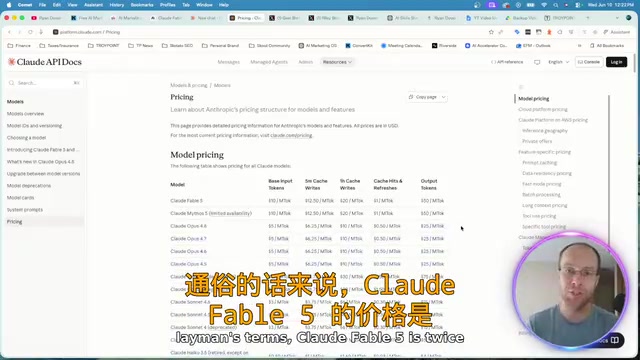
Claude Fable 5 Hands-On Review: Double the Price — Is It Worth It?
Hands-on comparison of Claude Fable 5 vs Opus 4.8 on landing page design and website rebuilds. Detailed API pricing analysis and practical advice on whether double the cost delivers double the value.
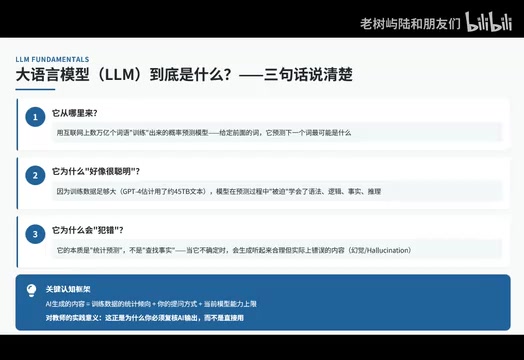
Introduction to AI Literacy: How Teachers Can Build a Systematic Cognitive Framework
A teacher's guide to AI literacy: from AI history and LLM fundamentals to the Agent era, build a systematic cognitive framework and master tool selection strategies.
The 4-Stage Roadmap for AI Application Development: A Career Transition Guide from Beginner to Senior Engineer
A 4-stage roadmap for AI application development: from Python and RAG basics to Agent cluster architecture, covering the core skills needed for career growth.