The 4-Stage Roadmap for AI Application Development: A Career Transition Guide from Beginner to Senior Engineer
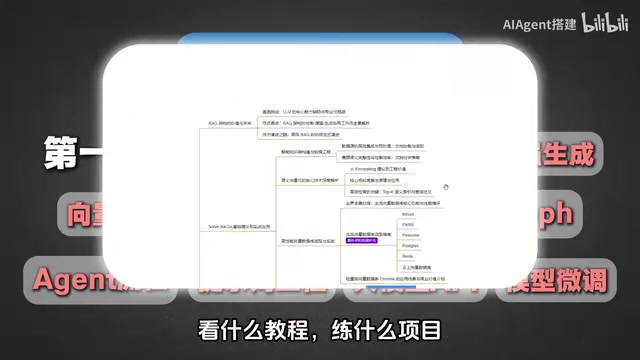
A practical 4-stage career roadmap for developers transitioning into AI application engineering.
This article breaks down a four-stage learning roadmap for AI application development, guiding traditional developers through the transition. Starting from Python, RAG, and LangChain fundamentals, it progresses through project orchestration, LLM optimization methodologies, and culminates in Agent cluster architecture design — covering the core skills, project experience, and engineering practices needed at each level.
AI Application Development Doesn't Require a PhD — But It Does Require a Clear Roadmap
Whenever people hear "AI," their first reaction is often about high academic barriers — master's degrees, PhDs, deep mathematical foundations. But if you open any job platform right now and search for "LLM application development" roles, you'll find a flood of positions starting at bachelor's degree with competitive salaries, all waiting to be filled.
The reason is straightforward: companies don't need researchers who can train a DeepSeek model from scratch. They need AI application engineers who can bring LLM capabilities into real business scenarios. This is an entirely different track from academic research. For developers with backgrounds in frontend, Java, testing, or DevOps, the transition path is much shorter than you might think.
Recently, a content creator on Bilibili shared a four-stage learning roadmap from AI beginner to high-paying professional — logically clear and well-structured. This article provides an in-depth breakdown and supplementary analysis of that roadmap to help you find the right entry point for your own journey.
Stage 1: Build a Solid Technical Foundation and Deliver Projects Independently (Target: Entry-Level)
The core goal of this stage is to master the foundational toolchain for AI application development, enabling you to independently build an AI project prototype.
Essential Languages and Core Tech Stack
- Python: The go-to language for AI development, with the most mature ecosystem. Nearly every major framework treats Python as a first-class citizen. Knowing Java or C++ is a bonus, but Python is mandatory.
- RAG (Retrieval-Augmented Generation): The most critical technical paradigm for enterprise AI applications today. Understanding how to inject external knowledge bases into LLMs is a fundamental skill for landing a job.
- Vector Databases: Milvus, Pinecone, Chroma, and others — the key infrastructure supporting RAG architectures.
- LangChain / LangGraph: Mainstream LLM application development frameworks that help you quickly orchestrate LLM call chains and build complex AI workflows.
- Agents and Prompt Engineering: Understand how Agents work and master the core techniques of Prompt Engineering.
- LLM API Integration and Model Fine-tuning: Become proficient in calling mainstream APIs like OpenAI and Qwen, and understand the basics of fine-tuning workflows.
Once you've mastered these prerequisites, you're already employable at entry-level positions. But as the creator pointed out, at this stage you're essentially an assembly-line worker — capable of getting things done, but lacking a holistic perspective and deeper thinking.
Stage 2: Master Project Workflow Orchestration and Become a Technical Lead (Target: Mid-Level)
Stage 1 solves the "can I do it" problem. Stage 2 tackles "how to do it well."
Develop End-to-End Project Thinking
This stage requires you to step beyond a single-task perspective and think about the complete lifecycle of an AI project from 0 to 1:
- AI Service Orchestration: How should Tools, Skills, and MCP services be designed, deployed, and scheduled? How do different services collaborate?
- Project Completeness: How do frontend interactions, backend logic, and AI services work together efficiently?
- Full-Process Control: From requirements analysis to architecture design to deployment, you need clear understanding and control over every phase.
A noteworthy trend is the rise of "AI-native companies." In these organizations, the execution-level work of programmers is becoming increasingly simple (AI-assisted coding is already quite mature). What's truly valuable is your architectural thinking and system design ability.
At this stage, you've become an indispensable technical backbone of your project team, and a mid-level salary follows naturally.
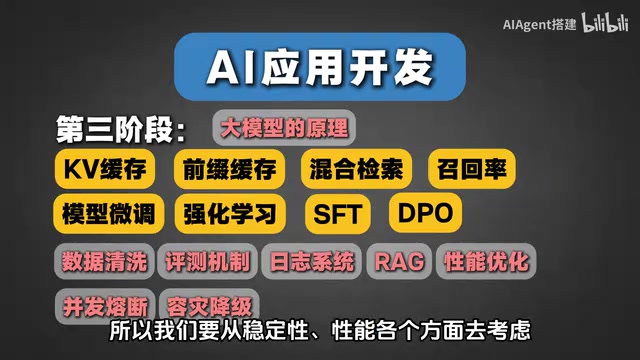
Stage 3: Dive Deep into LLM Principles and Master Optimization Methodologies (Target: Senior-Level)
Any AI project that runs stably for 2-3 years has grown through continuous iteration and optimization. And the prerequisite for optimization is — you must understand the underlying principles of large language models. Without understanding the principles, optimization is like a blind person feeling an elephant.

Performance Optimization
- Understanding and applying KV cache and prefix caching mechanisms
- Designing hybrid retrieval strategies to improve RAG recall rates
- End-to-end performance tuning of RAG and LLM pipelines
- Engineering practices for concurrency handling, circuit breaking, graceful degradation, and disaster recovery
Model Optimization
- Model Fine-tuning: Mainstream methods including SFT (Supervised Fine-Tuning), DPO (Direct Preference Optimization), and reinforcement learning
- Data Cleaning: The quality of fine-tuning data directly determines the model's final performance — this step is often underestimated
- Evaluation Mechanisms: How do you systematically ensure that LLM outputs meet business requirements? This is a high-frequency topic in recent enterprise interviews
Engineering Excellence
- Building logging systems and end-to-end distributed tracing
- Ensuring project quality across multiple dimensions: stability, performance, and availability
The core transformation at this stage: you're no longer just "someone who uses tools" — you're someone who understands why tools are designed the way they are and can choose the optimal solution for any given scenario. This capability is very easy for interviewers to identify.
Stage 4: Breaking Through to Top-Tier Compensation — Agent Cluster Orchestration (Target: Staff/Principal Level)
Stage 4 is where the real salary differentiation happens. The core requirement is to think from a technical director's perspective, orchestrating the architecture design and governance of Agent clusters.
Four Major Architectural Challenges
1. Agent Routing and Scheduling
When your system has dozens of MCP services, how do you achieve precise scheduling? Which services should Project A call? How do you route on demand? This requires designing an intelligent service discovery and routing mechanism — similar to a microservices gateway but significantly more complex.
2. Cross-Agent Unified Identity
Multiple Agents need to share user identity and entitlements. This is similar to unified authentication in microservices architectures, but in Agent scenarios it involves more dynamic permissions and context propagation challenges.
3. Observability Infrastructure
In complex call chains spanning multiple projects and clusters, how do you monitor failures in real-time, quickly pinpoint root causes, and resolve issues? This requires a comprehensive monitoring, alerting, and distributed tracing system.
4. Unified Authorization Center
With cross-cutting calls across multiple projects and MCP services, how do you establish a unified permission management system that precisely controls each project's access to specific services?
Each of these four problems represents deep architectural territory. Those who can systematically solve them naturally command top-tier compensation — and beyond.
The Biggest Enemy Isn't Lack of Ability — It's Failing to Take Action

The video includes a particularly sharp observation: many people get laid off not because they're lazy or lack awareness, but because they're perpetually discussing what the next big trend will be. As if whoever guesses correctly will seize the opportunity. In reality, this is just the most sophisticated form of avoiding execution.
This observation is spot-on. Many people want to transition into AI but remain stuck in the "thinking about learning" phase. What they actually want isn't an action plan — it's a guaranteed answer: "If I learn this, I'm guaranteed to earn X salary." As long as that answer isn't confirmed, they keep watching from the sidelines, never taking a single step forward.
The harsher reality is this: the person interviewing you this year might not fully understand AI themselves, but by next year, your interviewer will definitely be someone who has systematically studied AI. The window of opportunity is closing fast — the earlier you act, the greater your advantage.
Four-Stage Roadmap Summary and Action Items
The value of this four-stage roadmap lies in providing a clear capability layering model that shows you where you currently stand and where to go next:
| Stage | Target Level | Core Competency | Keywords |
|---|---|---|---|
| Foundation | Entry-Level | Master the toolchain, work independently | Python, RAG, LangChain |
| Engineering | Mid-Level | Understand full workflows, lead projects | Service orchestration, architecture design |
| Optimization | Senior-Level | Deep principles, continuous iteration | Fine-tuning, performance optimization, evaluation |
| Architecture | Staff/Principal | Orchestrate the big picture, design complex systems | Agent clusters, routing & scheduling |
Each layer builds on the one before it — there are no shortcuts. For developers considering a transition, here's the advice: Don't wait until your roadmap is perfect before starting. Begin with Python and RAG, learn by doing, and fill in the gaps through practice. The AI application development market is still in a talent shortage phase, but this window won't stay open forever.
Instead of spending time debating where the next big trend is, write your first RAG application today. Taking action itself is the best learning roadmap.
Related articles
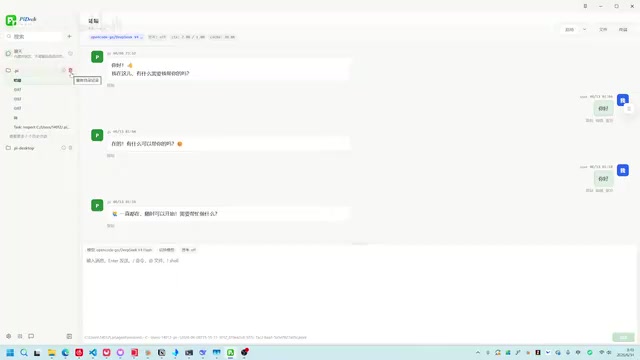
PiDeck 0.5.0 Released: Ten Versions in One Week, a Complete Overhaul of the Desktop AI Agent
PiDeck 0.5.0 completes the rebrand from PiDesktop, shipping 10 versions with ~100 changes in one week: design system overhaul, dark mode, LAN sharing, Git integration, and dual-layer proxy config.
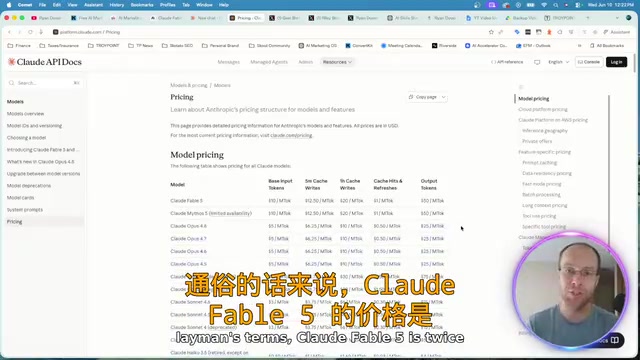
Claude Fable 5 Hands-On Review: Double the Price — Is It Worth It?
Hands-on comparison of Claude Fable 5 vs Opus 4.8 on landing page design and website rebuilds. Detailed API pricing analysis and practical advice on whether double the cost delivers double the value.
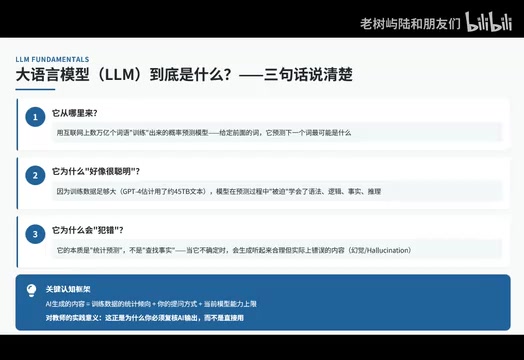
Introduction to AI Literacy: How Teachers Can Build a Systematic Cognitive Framework
A teacher's guide to AI literacy: from AI history and LLM fundamentals to the Agent era, build a systematic cognitive framework and master tool selection strategies.