Introduction to AI Literacy: How Teachers Can Build a Systematic Cognitive Framework
A foundational AI literacy course helping teachers build systematic understanding before adopting AI tools.
This article distills an AI literacy course for teachers, covering AI's 75-year history, how large language models work (and why they hallucinate), the global AI landscape and tool selection strategies, the paradigm shift to AI Agents, and practical guidelines for safe classroom use — empowering teachers to build a solid cognitive framework before diving into AI tools.
Introduction: Why Teachers Need a Foundational AI Cognition Course
In an era of ever-emerging AI tools, many teachers still perceive AI as "magical, powerful, but a bit scary." Approaching AI tools with such vague understanding leads to picking up a few scattered tricks at best, without ever building a systematic framework for judgment and critical thinking.
This is exactly the core argument made by an AI education trainer on Bilibili in their "Zero-to-One AI Introduction Course for English Teachers": Before learning how to write prompts or create courseware, you must first build a solid foundation of understanding. Only when your cognition is clear can tools truly serve you.
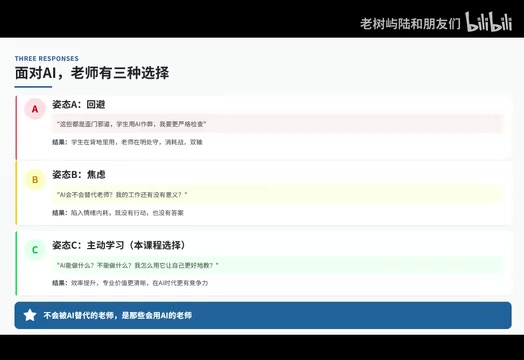
The course opens with three soul-searching questions: Did AI just appear out of nowhere? Will AI continue to develop at this pace? Will AI ultimately replace teachers? These three questions form the throughline of the entire course.
A Brief History of AI: 75 Years of Accumulation and 5 Years of Explosion
Key Milestones from Turing to Transformer
AI development is far from a recent phenomenon. As early as 1950, Alan Turing posed the question "Can machines think?" in his paper Computing Machinery and Intelligence. In 1956, the term "Artificial Intelligence" was officially coined at the Dartmouth Conference.
Several key milestones followed:
- 1997: IBM's Deep Blue defeated world chess champion Garry Kasparov — the first time AI beat a top human expert at a complex rule-based task
- 2012: The rise of deep learning — AI stopped relying on hand-coded rules and began learning and understanding new rules on its own
- 2017: The Transformer architecture was born — without it, there would be no ChatGPT, Claude, DeepSeek, ERNIE Bot, or any other large language model
- 2022: ChatGPT 3.5 was released, giving the general public their first experience of conversational AI
- 2024 to present: The Agent era begins — AI evolves from "answerer" to "executor"
In one sentence: AI spent 70 years accumulating within academia and industry, and only in the last 5 years has it truly entered everyday life — and the pace is still accelerating.
The Essence of Large Language Models: Explained in Three Sentences
It's a "Word Chain" Predictor
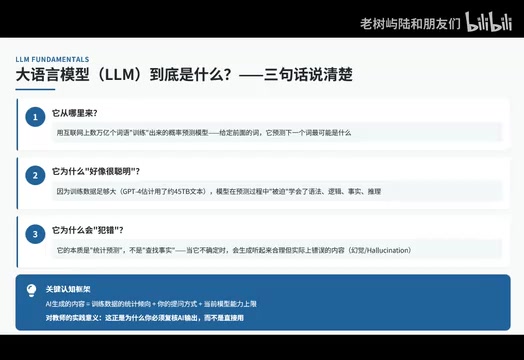
Large language models sound complex, but what they fundamentally do is quite simple — they learn from massive amounts of text and predict which word is most likely to come next in a given context. An intuitive analogy: A large language model is essentially playing a word chain game.
Why Is It So "Smart"?
To predict more accurately, the model acquires grammar, logic, common-sense reasoning, and even various stylistic patterns during training. This involves a key concept — Emergence.
Just as a single ant seems quite dumb, yet an ant colony can find food and fend off predators with remarkable intelligence. When a model reaches a certain scale, it exhibits intelligent capabilities far beyond expectations — a "1+1 far greater than 2" effect.
Why Does It Make Mistakes?
Large language models are fundamentally not "looking up facts" — they're "generating content that looks most like an answer." When the probabilistically predicted next passage looks closest to a "correct answer," the model outputs it without checking whether it's actually true. This is what's known as "Hallucination" — the machine confidently states falsehoods.
The most important takeaway for teachers: AI output looks like an answer, but that doesn't mean it's inherently correct. We cannot treat it as an authoritative conclusion — human verification is essential.
The Global AI Model Landscape and Tool Selection Strategies
The First Tier: Two Major Camps — US and China
The current first tier of global AI development has only two major players: the United States and China.
- OpenAI: Strongest overall capabilities
- Anthropic (Claude): Excels in safety and long-text processing
- Google (Gemini): Strong multimodal capabilities
- xAI (Grok): Strong real-time internet access and data search capabilities (backed by Elon Musk's X platform)
- Chinese players: DeepSeek, Kimi, and others are highly competitive
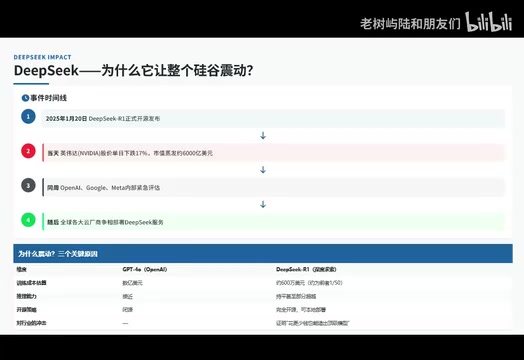
DeepSeek deserves special mention. What shook the global AI community wasn't just the release of a new model — it was the proof that you don't necessarily need astronomical budgets to build a high-quality large language model — with training costs at just one-fifth or even less of traditional approaches. This means more tools will be available to everyday users, and local deployment becomes much easier.
Core Principles for Tool Selection
The course emphasizes an important philosophy: Don't try to solve everything with one tool. Instead, work backward from the task scenario to find the best-fit tool.
Specific principles include:
- Work backward from your goal and task type to decide which tool to use
- Build judgment about different tools' capability boundaries through continuous use
- Pay attention to platform selection and data security when dealing with student information or institutional materials
- Start by mastering 2–3 primary tools, then gradually expand
The Agent Era: AI Evolves from Tool to Work Partner
A Paradigm Shift: From Q&A to Autonomous Execution
The course places special emphasis on a core transformation — AI Agents. Previously, using AI meant a back-and-forth Q&A pattern. With Agents, you give it a goal, and it independently breaks down the steps, calls upon tools, executes multi-step tasks, and returns the results.
Here's an education-relevant example: Previously, asking AI to help write homework feedback would only produce a text document. But in Agent mode, you can directly set a goal — "Read student data, identify common issues, generate a feedback framework, format it in Word, and create an Excel checklist" — and the Agent completes all steps at once and returns the results.
This means AI's role has shifted from a tool to a Digital Partner. For teachers, this represents both an opportunity and a new set of capability requirements.
Will AI Replace Teachers? A Balanced Answer
AI's Capability Boundaries
The course states clearly: AI will change teachers' working methods and structures and improve efficiency, but it won't replace teachers entirely.
The most essential aspects of education — attention to each living, breathing student, judgment about their developmental state, and the interactive relationship between teacher and student — are precisely what AI struggles to replicate.
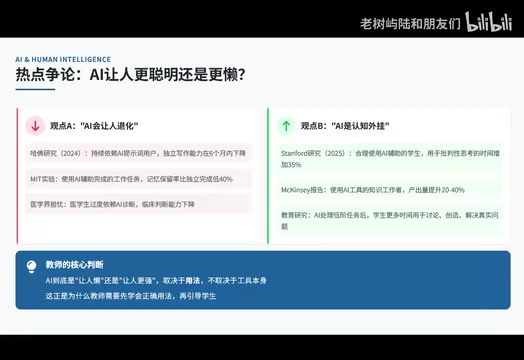
On the debate about whether AI makes people smarter or lazier, the course offers an incisive perspective: The key isn't the tool itself, but how you use it. If you let AI do all your thinking, you'll certainly become lazier. But if you delegate repetitive, execution-oriented tasks to AI and invest the saved time in deeper inquiry, aesthetic development, and cross-disciplinary thinking, you'll become stronger.
English Teachers' Unique Advantages
For English teachers specifically, AI brings several particularly favorable conditions:
- High compatibility: The most mature capabilities of large language models — language understanding, generation, translation, and paraphrasing — are a natural match for English teaching scenarios
- Standardized applicability: Stable frameworks like question types, exam syllabi, grammar rules, and expression training can all be made more efficient through AI
- Bilingual characteristics: You can ask questions in Chinese and have AI output English materials, or upload English content and have AI explain it in Chinese (though professional filtering and judgment by the teacher are still required)
Risk Baselines and Practical Recommendations for Using AI
Three Non-Negotiable Principles
- Any content intended for students must undergo manual review
- Any information involving privacy must be anonymized
- AI is an assistant and partner, not the final judge or the one accountable
How to Identify AI-Generated Content
- Structural features: Overly uniform and neat formatting, dense use of transition words, obviously templated
- Language features: Always opens with scene-setting, piles on adjectives, lacks vivid specific examples and natural imperfections
- Content features: Speaks in generalities, lacks real substance, clearly doesn't match the actual situation of your school or class
The course proposes a more valuable line of thinking: Rather than obsessing over how to detect AI cheating, think about how to design learning tasks that require genuine participation to complete.
Conclusion: Start Taking Action Now
Returning to the three opening questions, the answers are now clear: AI didn't appear out of nowhere (75 years of accumulation); AI's pace will only accelerate (AI is already self-iterating, 24/7); AI won't replace teachers, but it will replace those who refuse to understand and use AI.
The course concludes with the simplest possible action framework, encouraging teachers to test it immediately: "Who I am + What task I need help with + For which students + In what output format" — this itself is a structured prompt.
Tools change, but methodology matters more than tools. Capabilities are upgrading, but teachers' core value hasn't disappeared — through AI, we can amplify our abilities and reach higher levels of teaching excellence.
Related articles
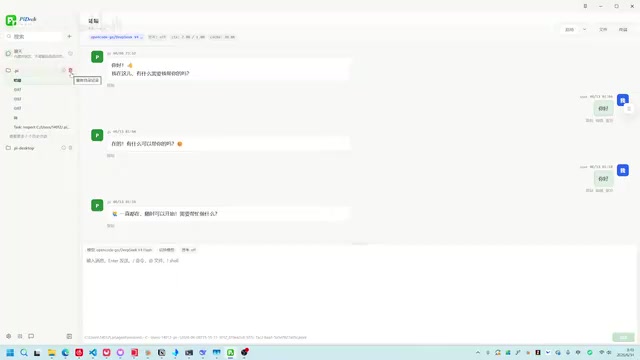
PiDeck 0.5.0 Released: Ten Versions in One Week, a Complete Overhaul of the Desktop AI Agent
PiDeck 0.5.0 completes the rebrand from PiDesktop, shipping 10 versions with ~100 changes in one week: design system overhaul, dark mode, LAN sharing, Git integration, and dual-layer proxy config.
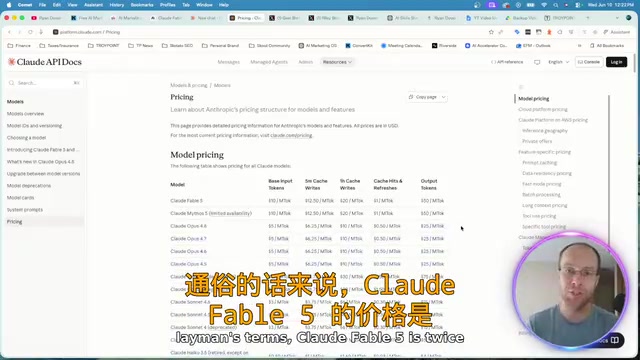
Claude Fable 5 Hands-On Review: Double the Price — Is It Worth It?
Hands-on comparison of Claude Fable 5 vs Opus 4.8 on landing page design and website rebuilds. Detailed API pricing analysis and practical advice on whether double the cost delivers double the value.
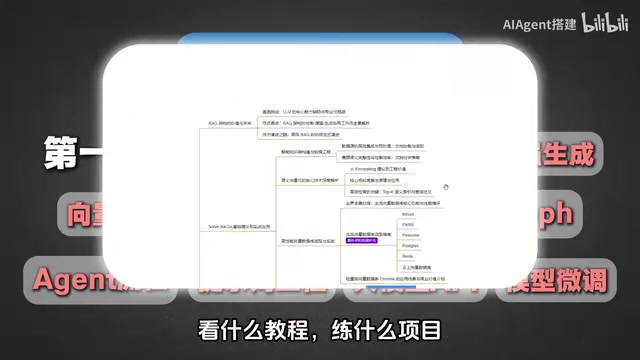
The 4-Stage Roadmap for AI Application Development: A Career Transition Guide from Beginner to Senior Engineer
A 4-stage roadmap for AI application development: from Python and RAG basics to Agent cluster architecture, covering the core skills needed for career growth.