AI Agent Learning Roadmap: A Four-Stage Plan from Zero to Hands-On

A four-stage roadmap to master AI Agent development from zero to hands-on in three months.
This article presents a structured four-stage learning roadmap for AI Agent development. Starting with LLM fundamentals and API calls, progressing through the ReAct paradigm and CoT reasoning, then tackling memory mechanisms and tool usage, and finally mastering multi-agent collaboration with frameworks like AutoGen and CrewAI. The project-driven approach helps beginners build practical Agent skills in approximately three months.
Want to get started with AI Agent development but don't know where to begin? This article lays out a clear four-stage learning roadmap to help beginners systematically master the core skills of AI Agents in about three months.
Why Learn AI Agents Now
AI Agents have moved beyond proof-of-concept into real-world deployment. From intelligent customer service to office automation, demand for talent who can develop and deploy AI Agents is surging. Unlike simple LLM API calls, Agents possess the ability to autonomously plan, use tools, and manage memory — representing the next stage of AI applications.
For learners looking to transition into or enter the field, the key question isn't "should I learn this" but "in what order should I learn it." Here's a proven four-stage learning path.
Stage 1: LLM Fundamentals and API Calls
This is the foundation of the entire AI Agent learning roadmap. There are two core tasks to complete at this stage:
Understand the underlying logic of large language models. You don't need to train a model from scratch, but you do need to grasp the basic principles of the Transformer architecture, tokenization mechanisms, context windows, and related concepts. This knowledge determines whether you can properly design Agent behavior later on.
The Transformer is a deep learning architecture proposed by Google in the 2017 paper Attention Is All You Need. Its core innovation is the Self-Attention mechanism, which allows the model to attend to all positions in the input simultaneously when processing sequential data, rather than processing step by step like previous RNN/LSTM architectures. This architecture became the cornerstone of virtually all modern large language models, including GPT, Claude, and Llama. Tokenization is the process of splitting natural language text into the smallest units a model can process. Common methods include BPE (Byte Pair Encoding) and SentencePiece. A single Chinese character typically corresponds to 1–2 tokens, while English words may be split into multiple subword tokens. The Context Window refers to the maximum number of tokens a model can process in a single pass — GPT-4 Turbo supports 128K tokens, and Claude 3.5 supports 200K tokens. Window size directly determines how much historical information an Agent can "see" and serves as a hard constraint when designing Agent memory strategies.
Master prompt engineering and API calls. Learn to precisely control model output using System Prompts, and become proficient in calling mainstream LLM APIs such as OpenAI and Claude. Start by building a simple chatbot, then gradually incorporate advanced prompting techniques like Few-shot and Chain-of-Thought.
A System Prompt is a special instruction sent to the LLM that defines the model's role, behavioral boundaries, and output format. It remains in effect throughout the entire conversation, essentially setting the Agent's "personality" and "operating manual." Few-shot Prompting involves providing a small number of input-output examples in the prompt so the model can learn by analogy — typically 3–5 examples can significantly improve output quality. Chain-of-Thought (CoT) prompting guides the model to "show its reasoning steps" rather than jumping straight to an answer by demonstrating the reasoning process in examples. This technique was proposed by Google in 2022 and improved accuracy by tens of percentage points on tasks like mathematical reasoning and logical analysis. The combined application of these techniques is a fundamental skill for building high-quality Agents.
This stage takes approximately 2–3 weeks, with the emphasis on hands-on practice rather than theoretical overload.
Stage 2: Core Agent Paradigms — ReAct and CoT
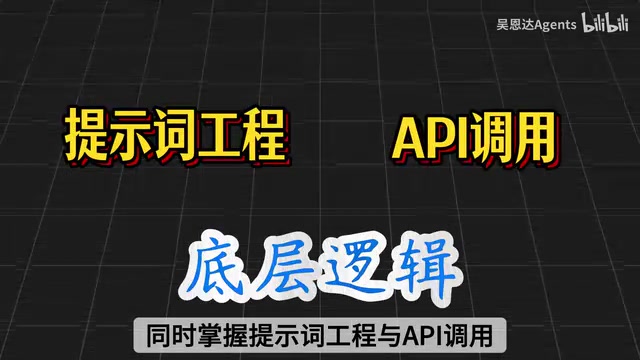
Now you enter the heart of the Agent domain. The learning focus at this stage is understanding how Agents "think":
The ReAct paradigm is currently the most mainstream Agent architecture. Its core is the "Think–Act–Observe" loop (Reasoning + Acting). The Agent first analyzes the current task, decides on the next action, executes it, observes the result, and then decides whether to continue. Understanding this loop is the foundation for building any complex Agent.
The ReAct paradigm was formally proposed by Princeton University and Google in a 2022 paper. Before this, LLM reasoning capabilities and action capabilities were studied separately — CoT focused on helping models "think clearly," while tool calling focused on helping models "get things done." ReAct's breakthrough was unifying both into an alternating loop: the model first generates a reasoning text (Thought), then decides to execute an action (Action), receives environmental feedback (Observation), and continues reasoning based on that feedback. This loop can repeat multiple times until the task is complete. This paradigm is powerful because it mimics the natural way humans solve problems — we don't plan every step in advance but adjust as we go. ReAct also laid the groundwork for more advanced Agent architectures like Plan-and-Execute and Reflexion.
CoT (Chain of Thought) reasoning gives Agents the ability to reason step by step, breaking down complex problems incrementally rather than trying to solve them in one shot.
At the framework level, it's recommended to start with LangChain or LlamaIndex, both of which provide mature Agent-building toolchains. Learn to use these frameworks to quickly build a basic Agent that can call search engines and execute code.
LangChain and LlamaIndex are the two most mainstream open-source frameworks in the current AI Agent development ecosystem, but they have different focuses. LangChain was created by Harrison Chase in late 2022 and is positioned as a general-purpose LLM application development framework, providing complete abstraction layers for Chains, Agents, Memory, and Tools — ideal for building Agent applications that require complex logic orchestration. LlamaIndex (formerly GPT Index), created by Jerry Liu, initially focused on data indexing and Retrieval-Augmented Generation (RAG), giving it a natural advantage in handling private data and building knowledge-base-driven Agents. In practice, the two are not mutually exclusive — many projects use LlamaIndex for the data retrieval layer and LangChain for Agent logic orchestration. Since 2024, LangChain has launched the lighter-weight LangGraph sub-project, specifically designed for building stateful multi-step Agent workflows, which is worth paying close attention to.
This stage takes approximately 3–4 weeks. The key is to internalize the paradigms until they become intuitive.
Stage 3: Memory Mechanisms and Tool Usage

An Agent without memory can only handle single-turn tasks. To make an Agent truly useful, you must solve the memory problem:
- Short-term memory: Context management for the current conversation, including storage and retrieval of conversation history
- Long-term memory: Knowledge accumulation across sessions, typically implemented using vector databases (e.g., Pinecone, Chroma)
- Tool-calling capabilities: Enabling the Agent to access real-world resources such as search engines, databases, and file systems
Vector databases are critical infrastructure for enabling long-term memory in AI Agents. The core principle is: an Embedding Model converts text into high-dimensional vectors (typically 768 or 1536 dimensions), where semantically similar texts are closer together in vector space. When an Agent needs to recall information, the query text is similarly converted into a vector, and an Approximate Nearest Neighbor (ANN) search is performed in the database to find the most semantically relevant historical records. Pinecone is a leading managed vector database offering out-of-the-box cloud services; Chroma is a lightweight open-source option suitable for local development and small-scale deployments; other choices include Weaviate, Milvus, and Qdrant. In practical Agent architectures, short-term memory is typically stored directly in an in-memory conversation buffer, while long-term memory is persisted to a vector database. A common design pattern is: when a conversation ends, the Agent automatically extracts key information and writes it to the vector database; when the next conversation begins, it retrieves relevant memories and injects them into the context, achieving continuity across sessions.
The recommended hands-on project for this stage is building an intelligent customer service bot with memory. It needs to remember users' past inquiries, retrieve answers from a knowledge base, and escalate to a human agent when it can't resolve an issue — this is a complete Agent capability validation scenario.
Stage 4: Multi-Agent Collaboration
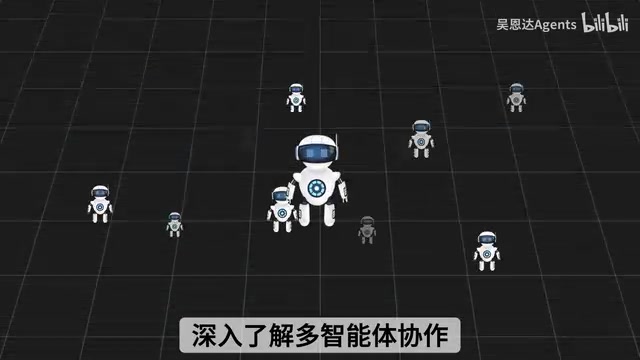
A single Agent has its limits. Multi-Agent collaboration is the solution for complex tasks. At this stage, you need to master:
Mainstream multi-agent frameworks such as AutoGen (Microsoft) or CrewAI. These frameworks provide standardized solutions for inter-Agent communication, task allocation, and result aggregation.
AutoGen is a multi-agent conversational framework open-sourced by Microsoft Research in 2023. Its core design philosophy is enabling multiple AI Agents to collaborate on tasks through natural language dialogue. AutoGen supports Human-in-the-Loop, allowing human review nodes to be inserted into Agent collaboration workflows — a critical feature for enterprise applications. In 2024, Microsoft released AutoGen 0.4, a major refactor that introduced an event-driven architecture and more flexible Agent communication protocols. CrewAI, created by Joao Moura, is an open-source framework with a design philosophy leaning toward "role-playing" — developers define a clear Role, Goal, and Backstory for each Agent, and Agents collaborate through task delegation and result sharing. CrewAI's API design is more concise and intuitive, with a lower learning curve, making it suitable for rapid prototyping. Other frameworks worth watching include OpenAI's Swarm (an experimental framework) and LangGraph's multi-Agent support. The entire multi-agent ecosystem is evolving rapidly.
Common collaboration patterns:
- Manager-Executor pattern: One Agent handles task decomposition and assignment while other Agents execute specific subtasks
- Debate pattern: Multiple Agents analyze the same problem from different perspectives, arriving at better solutions through discussion
- Pipeline pattern: Agents sequentially handle different stages of a task
It's recommended to complete 2–3 small projects for practice, such as a multi-Agent collaborative content generation system or an automated research assistant.
Learning Tips and Time Expectations
The core principle of this entire roadmap is project-driven learning. Each stage should produce tangible hands-on output rather than just reading documentation.
Suggested time allocation over three months: Stage 1 takes 2–3 weeks, Stage 2 takes 3–4 weeks, Stage 3 takes 3–4 weeks, and Stage 4 takes 2–3 weeks. This pace assumes 2–3 hours of effective study time per day.
It's important to note that the AI Agent field iterates extremely fast — frameworks and best practices update every few months. Mastering the underlying principles matters more than memorizing a specific framework's API, because paradigms don't change easily, but tools do.
Key Takeaways
Related articles
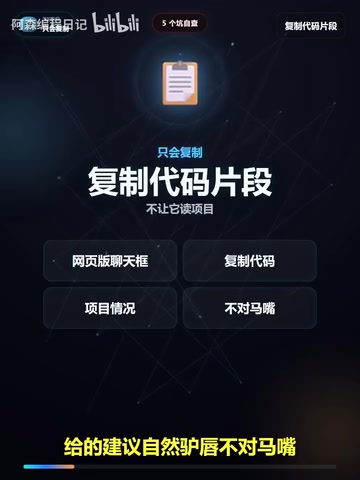
Five Common Claude Code Mistakes — How Many Are You Making?
Five common Claude Code mistakes developers make: copy-pasting code, skipping CLAUDE.md, inefficient prompting, ignoring docs, and poor context management — with fixes.
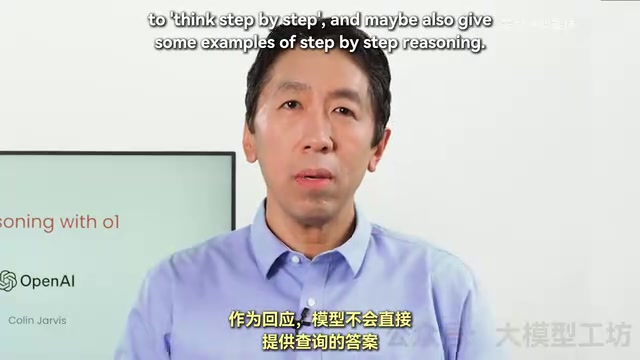
Andrew Ng's New Course Explained: A Practical Guide to Using OpenAI's O1 Reasoning Model
Deep dive into Andrew Ng and OpenAI's Reasoning with O1 course covering test-time scaling, new prompting paradigms, multi-model orchestration, and practical applications for developers.

Learning AI After College Entrance Exams: A Complete Path from Zero to Freelancing
How to efficiently learn AI skills during summer break after exams? A complete path from mastering prompts and hands-on projects to freelancing on platforms.