AI Agent + Vue 3 Full-Stack Development in Practice: Integrating the Coze Platform with Frontend Engineering

Fusing AI agents with frontend engineering to build a new paradigm for AI-driven web applications
This article analyzes the technical approach to integrating AI with frontend development: building AI agents through low-code platforms like Coze (requiring no coding), combined with modern frontend tech stacks like Vue3+TypeScript+Pinia for engineered deployment, enabling AIGC features such as copywriting and image generation. This "low-code agent + engineered frontend" combination pattern lowers the barrier to AI application development and represents a key direction for frontend developers to level up their skills.
Introduction: The Convergence of AI and Frontend Development
With the rapid advancement of large model technology, AI capabilities are permeating the frontend development landscape at an unprecedented pace. Traditional frontend developers are no longer just building pages and calling APIs — they now need to understand how to integrate AI agents into products to enable intelligent features like copywriting generation, image generation, and video generation.
Recently, a course project on Bilibili about "Innovation through the Fusion of AI and Frontend Development" has attracted attention. It demonstrates a learning path that combines AI agent development with frontend engineering practices. This article analyzes the technical integration approach of AI + frontend based on the project's architecture design and discusses its implications for developers.
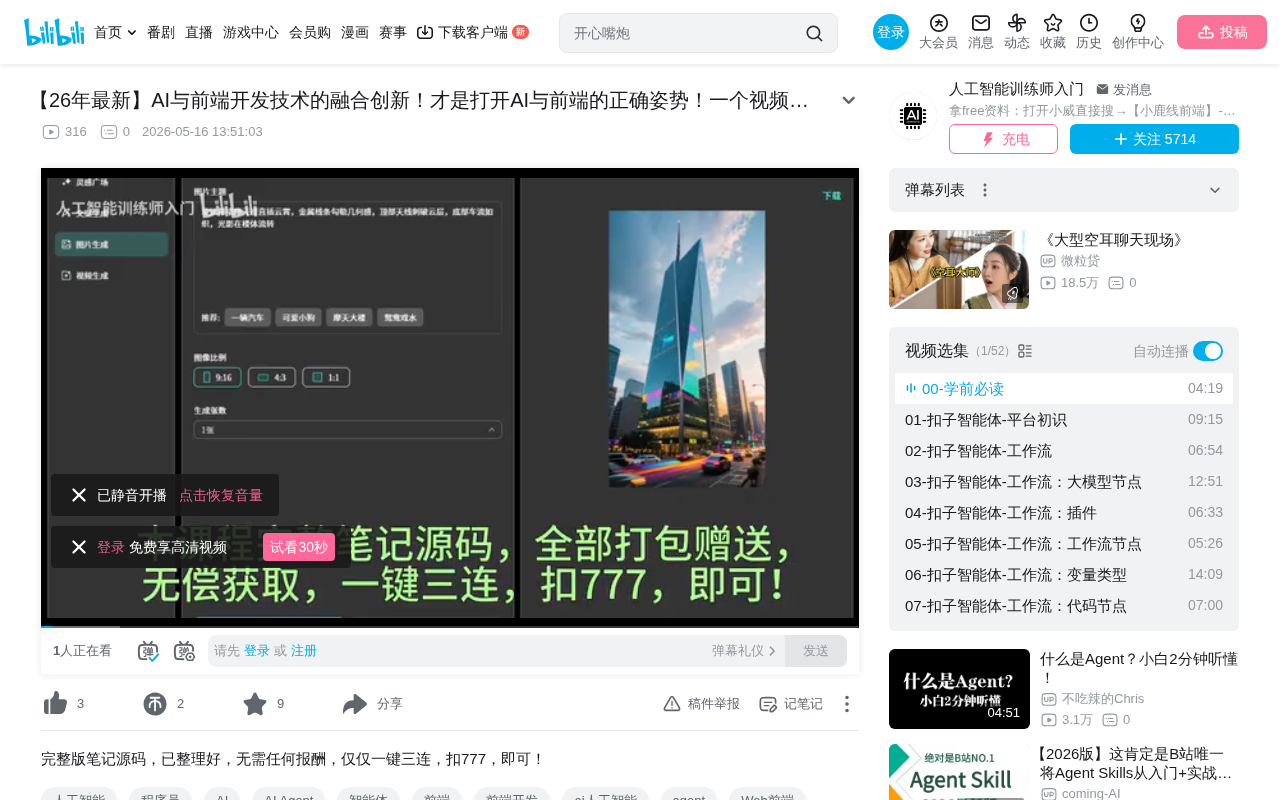
Project Architecture: A Dual-Module Design of Agent and Frontend
Agent Module: Built on the Coze Platform
The project's core architecture is divided into two major modules: the agent component and the frontend deployment component.
The agent module is built on the Coze platform. Coze is an AI application development platform launched by ByteDance in late 2023, with the core philosophy of enabling non-technical users to build complex AI applications. The platform connects to multiple large language models at its foundation (including the Doubao model, GPT series, etc.) and provides modular capabilities such as a plugin system, knowledge base, workflow orchestration, and database. Workflow is one of Coze's core concepts — it allows developers to define AI processing logic chains by dragging and dropping nodes, similar to process orchestration in low-code platforms but specifically optimized for AI scenarios, supporting conditional branches, loops, variable passing, and other programming logic. Similar platforms include Dify, FastGPT, and Langflow, which together form the current low-code ecosystem for AI application development.
According to the course, over 95% of the agent work requires no code writing, significantly lowering the barrier to AI application development.
Through the Coze platform, developers can:
- Configure and develop AI agents
- Design workflows required by the project
- Obtain API endpoints callable from the frontend
Frontend Module: A Modern Vue 3 Tech Stack
The frontend adopts a combination of mainstream technologies:
- Vue 3: Composition API with better TypeScript support
- TypeScript: Type safety for improved code quality
- Pinia: Next-generation state management solution
- Element Plus: Enterprise-grade UI component library
- Hooks: Best practices for logic reuse
Vue 3's Composition API offers significant advantages over the Options API when handling complex asynchronous logic typical of AI applications. Through custom Hooks (usually named useXxx), developers can encapsulate AI call logic, loading states, error handling, result caching, and more into reusable logical units. For example, a useAIGenerate Hook can encapsulate the complete logic of request initiation, streaming data concatenation, and abort control, reusable across multiple components. Pinia, as Vue 3's officially recommended state management library, removes the mutations concept from Vuex, supports more intuitive store definitions, and natively supports TypeScript type inference — making it ideal for managing global data like AI generation task queues, history records, and user preference settings.
This tech stack represents the standard configuration in the Vue ecosystem and offers strong practical value and career competitiveness for frontend developers.
Technical Analysis of Core Feature Modules
AI Copywriting Generation Implementation
The project's copywriting generation feature allows users to input topic keywords, and through the agent API, AI automatically generates corresponding copy. This type of feature has broad real-world applications, including marketing copy, product descriptions, and social media content.
From a technical implementation perspective, the key challenges the frontend needs to address include:
- Displaying streaming responses (typewriter effect)
- Request state management
- Formatted rendering of generated content
Streaming response is a critical technical implementation in AI copywriting generation. Large language models generate text token by token — if the frontend waits for the entire generation to complete before returning results, users might wait seconds or even tens of seconds. The Server-Sent Events (SSE) protocol allows the server to continuously push data fragments to the client. The frontend receives these fragments via the EventSource API or fetch's ReadableStream, progressively rendering them on the page to create a "typewriter effect" similar to ChatGPT. In Vue 3, developers typically need to combine reactive variables (ref/reactive) to update the DOM in real-time while handling edge cases like connection interruption, reconnection, and timeouts. Compared to WebSocket, SSE is lighter and natively supports HTTP/2 multiplexing, making it ideal for unidirectional data push scenarios.
Frontend Handling of AI Image and Video Generation
Beyond copywriting, the project also integrates image generation and video generation capabilities. This means the frontend needs to handle asynchronous generation of multimedia content, progress display, result preview, and other interaction logic — placing higher demands on asynchronous programming skills and UX design.
AI-Generated Content (AIGC) presents unique challenges to frontend architecture that differ from traditional web applications. First is the uncertainty problem: AI response times range from hundreds of milliseconds to tens of seconds, and the same input may produce different outputs, requiring the frontend to design elastic loading states and retry mechanisms. Second is content safety: AI may generate inappropriate content, requiring the frontend to cooperate with the backend for content filtering and moderated display. Third is cost control: each AI call consumes tokens, so the frontend needs to implement debouncing, caching, and quota alerts to prevent abuse. For image and video generation, there's also the asynchronous polling pattern — after the frontend initiates a generation request and receives a task ID, it periodically queries the task status until completion, requiring elegant progress feedback and timeout handling logic.
Learning Path Recommendations for Developers
Skill Development Directions for Frontend Developers
For frontend developers, the learning focus should be on:
- API Integration Skills: How to communicate with agent APIs and handle streaming data
- State Management: Using Pinia to manage complex states during AI generation
- TypeScript Practice: Defining appropriate types for AI-returned data
- UX Optimization: Loading states, error handling, and result presentation
Mastering the basic concepts of AI agents can add competitiveness to your resume, as more and more companies need frontend developers with AI product integration capabilities.
Core Competencies for AI Practitioners
For AI trainers or AI-focused practitioners, the core learning content lies in:
- Deep Usage of the Coze Platform: Agent configuration and workflow design
- Prompt Engineering: How to design effective prompts
- Basic Code Comprehension: Being able to read and write simple integration code
Prompt engineering is one of the most critical skills in current AI application development. Its essence is guiding large language models to produce desired outputs through carefully designed text instructions. Mainstream prompt design methods include: Role setting, Task description, Format constraints, Few-shot examples, and Chain-of-Thought reasoning. On platforms like Coze, prompt design directly determines the behavioral quality of agents. A good prompt not only clarifies the task objective but also sets boundary conditions, exception handling logic, and output quality standards. As model capabilities improve, prompt engineering is evolving toward more structured and testable approaches, with the emergence of prompt template libraries, A/B testing frameworks, and other engineering tools.
The course emphasizes that AI trainers don't need to dive deep into code details, but they need to understand basic logic at the code level, as real-world work may require writing simple scripts or configurations.
Industry Trends: A New Paradigm for Full-Stack AI Development
The Combination Pattern of Low-Code Agents + Engineered Frontend
This project's design philosophy reflects an important trend: AI application development is moving toward a combination pattern of "low-code agents + engineered frontend."
Traditional AI application development required deep machine learning expertise, but now through platforms like Coze and Dify, developers can quickly build the AI capability layer and devote more energy to product experience and business logic. This division of labor enables:
- Frontend developers to quickly integrate AI capabilities without training models
- AI practitioners to focus on agent design without mastering frontend engineering
- Significantly improved team collaboration efficiency
Capability Upgrade Directions for Frontend Developers
For today's frontend developers, mastering only traditional page development skills is no longer sufficient. Understanding how AI products work, being able to integrate various AI APIs, and possessing basic prompt design capabilities are becoming new competitive differentiators.
From a technical evolution perspective, the fusion of frontend and AI is not simply "calling APIs" — it requires targeted adaptations in interaction design, performance optimization, and error handling. For example, the uncertainty of AI-generated content and the unpredictability of response times both pose new challenges to frontend architecture design.
Conclusion
The innovative fusion of AI and frontend development is not a distant concept but an ongoing practice. By leveraging platforms like Coze to lower the AI development barrier and combining them with modern frontend tech stacks like Vue 3, developers can efficiently build AI-powered web applications. Whether you're a frontend developer or an AI practitioner, understanding this fusion paradigm will open new possibilities for your career development.
Related articles
 Tutorials
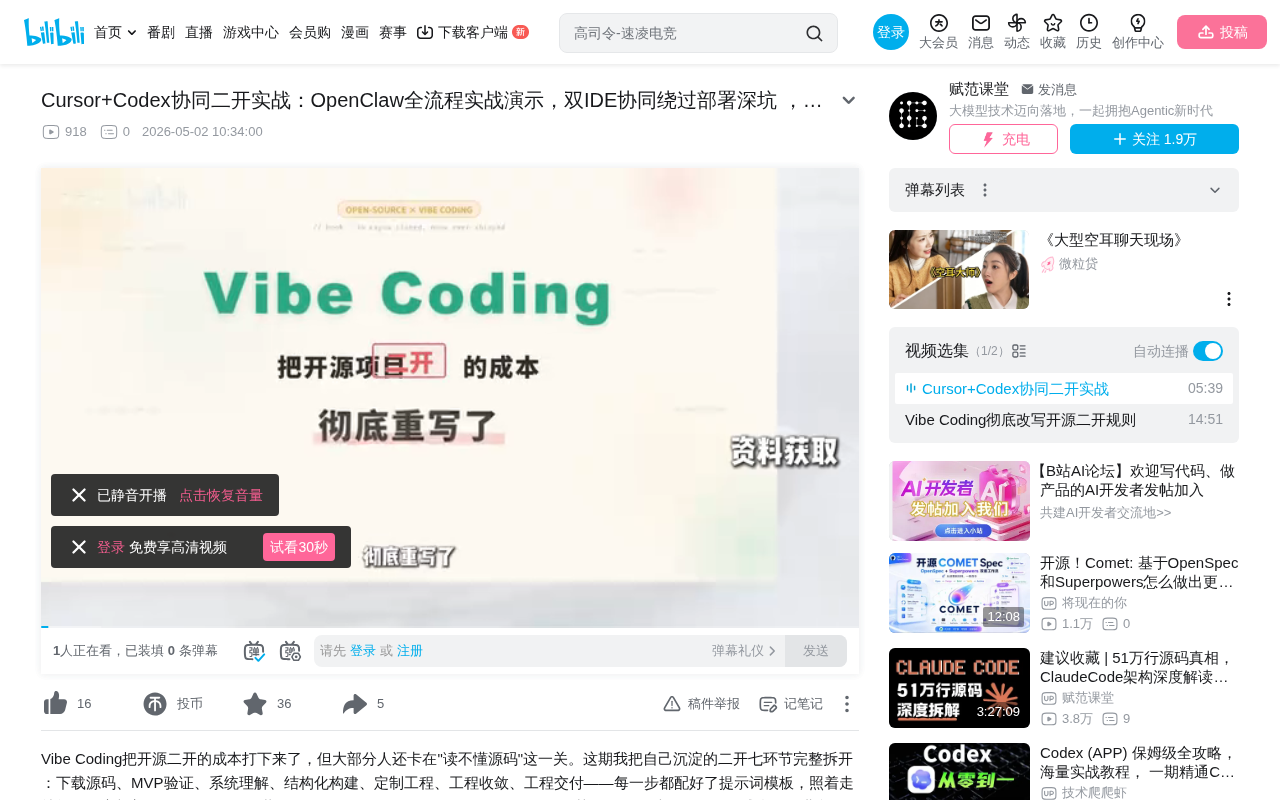
Cursor + Codex Dual-IDE Collaboration: A Practical Methodology for Open-Source Project Customization
A complete methodology for open-source project customization based on real-world experience, detailing the Cursor+Codex dual-IDE workflow, seven-stage process, MVP validation, and AI source code reading techniques.
 Tutorials
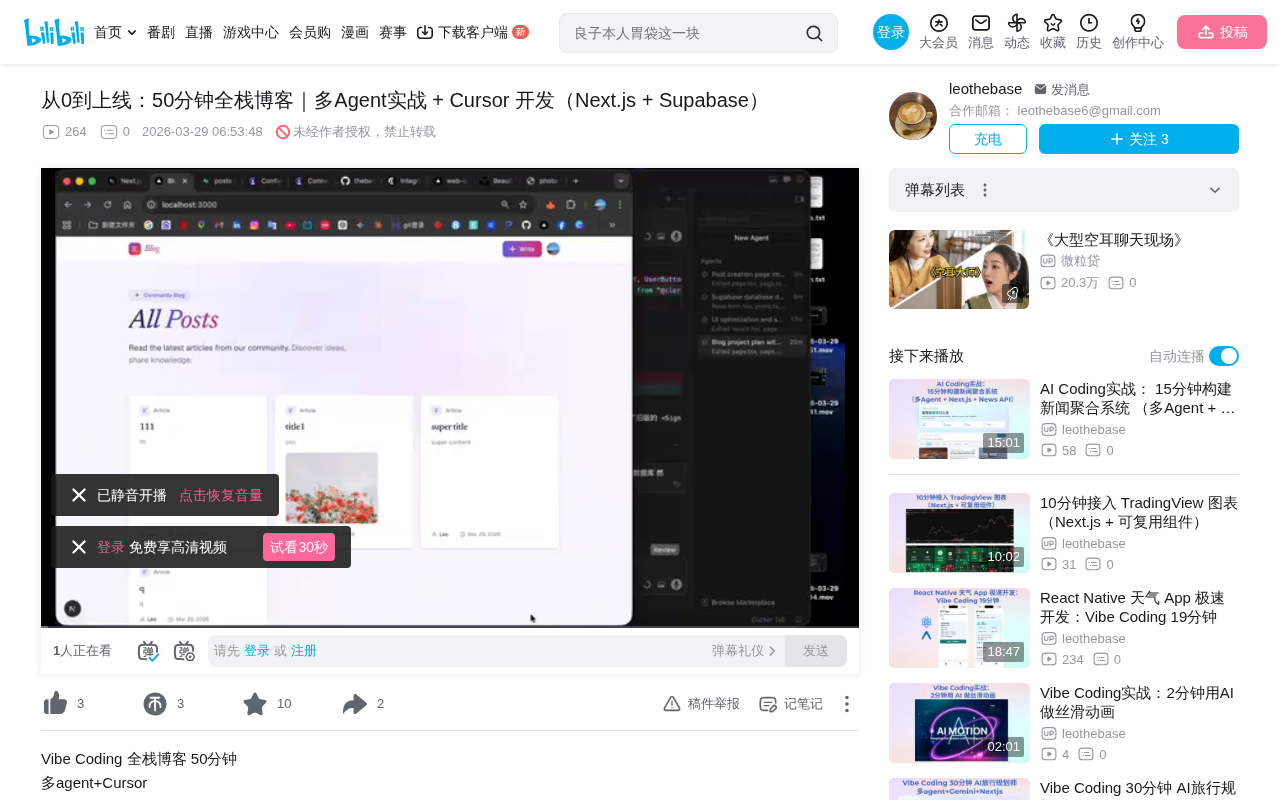
Cursor Multi-Agent in Practice: Building a Full-Stack Next.js Blog in 50 Minutes
Build a full-stack blog in 50 minutes using Cursor IDE's multi-Agent mode with Next.js, Clerk auth, and Supabase. Learn the 4-phase AI Agent workflow and key integration pitfalls.
 Tutorials
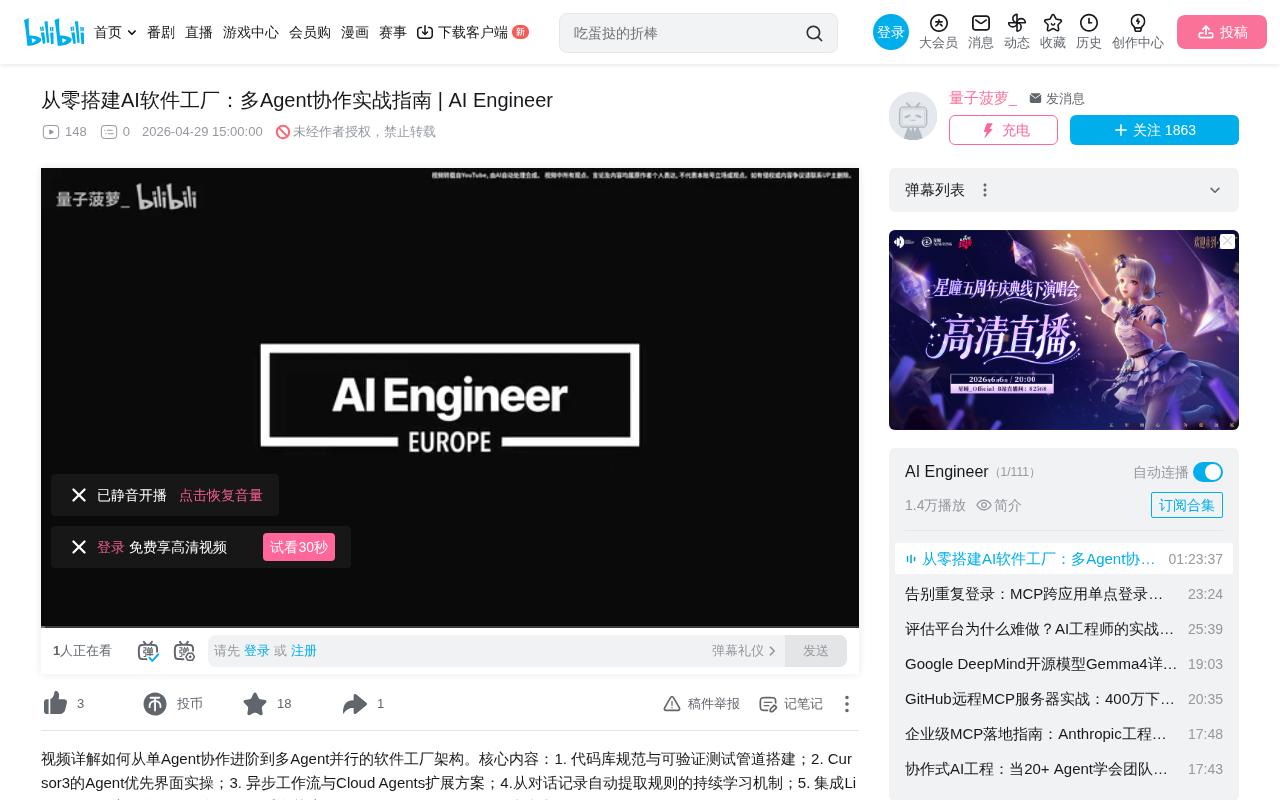
Building an AI Software Factory from Scratch: A Cursor Engineer's Hands-On Experience with Multi-Agent Collaboration
Cursor engineer Eric shares practical insights on building an AI software factory: automation levels, guardrail design, parallel Agent management, and scaling to 1000+ Agents for 24/7 development.