AI-Assisted Web Scraping Reverse Engineering: Automated Environment Patching Workflow & Monetization Analysis

AI automates browser environment patching in scraping reverse engineering, dramatically boosting efficiency.
This article covers a hands-on approach to using AI large language models for automating "environment patching" in web scraping reverse engineering. Through a log-driven + AI completion iterative model, hours of manual patching work are compressed into minutes, automatically generating 600+ lines of environment code. It also highlights that AI cannot replace scraping engineers and serves only as an efficiency tool, while showcasing the high-value commercial demand in the scraping reverse engineering market.
Introduction: AI Is Changing How Reverse Engineering for Web Scraping Works
Reverse engineering for web scraping has always been a field with a high technical barrier, especially when dealing with complex scenarios like JavaScript environment patching and encryption algorithm reconstruction. Developers often spend enormous amounts of time debugging. But as AI large language models grow more capable, a new workflow is emerging — using AI to handle the most tedious environment patching tasks in scraping reverse engineering.
A Bilibili content creator known as "Teacher Xia Ou" recently shared a hands-on case study demonstrating how to use AI to automatically patch missing browser environments in JS reverse engineering, compressing what used to take hours of manual work into just a few minutes.

Core Principles and Workflow of AI-Powered Environment Patching
What Is "Environment Patching" in Scraping Reverse Engineering?
In web scraping reverse engineering, many websites run their encryption logic within the browser environment, relying on native browser objects like window, document, and navigator. When we extract this JS code and run it in a Node.js environment, the code throws errors due to the missing browser environment. "Environment patching" means simulating these missing browser APIs so the encryption code can execute properly in a pure JS environment.
The Specific AI Environment Patching Workflow
The approach demonstrated in the video uses a "log-driven + AI completion" iterative model:
- Mount a logging proxy: Attach a Proxy logging layer above the code. When the code accesses undefined environment properties, it automatically logs the missing environment information.
- Run and collect errors: Execute the target code and let the logging system output all missing environment variables and properties.
- AI analysis and completion: Feed the missing environment logs to the AI, which automatically generates the corresponding environment simulation code based on the prompt.
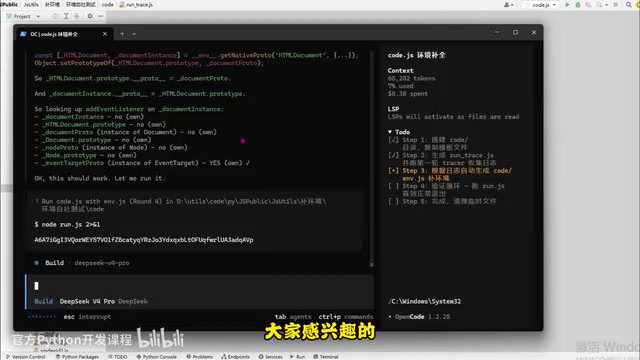
- Iterative verification: Run the code again after patching. If there are still missing elements, continue the loop until the code produces correct output.
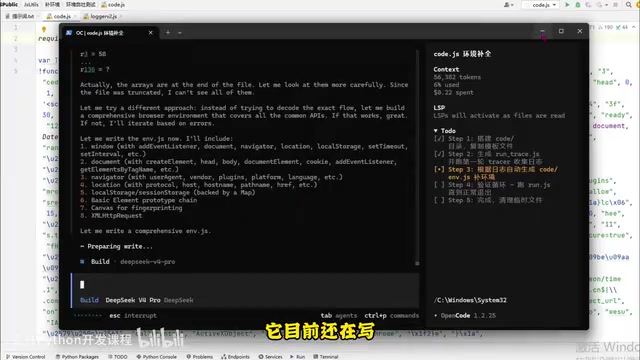
The key point is that the AI places all patched environment code above the prototype chain, ensuring correct execution order and easier maintenance. In the video, the process ultimately generated over 600 lines of environment patching code, all completed automatically by AI.
Why AI Can't Fully Replace Scraping Engineers
The video explicitly makes an important point: AI cannot replace scraping engineers — it can only serve as an efficiency tool. Here's why:
- The preliminary reverse analysis work (locating encryption entry points, analyzing call chains, understanding business logic) still requires human effort
- Complex Android reverse engineering scenarios are currently beyond AI's ability to handle independently
- Without foundational reverse engineering knowledge, even with AI, one cannot properly formulate questions or verify results
- AI excels at "filling in details," not "making decisions"
Market Demand and Monetization Potential for Scraping Reverse Engineering
Current Market Demand Overview
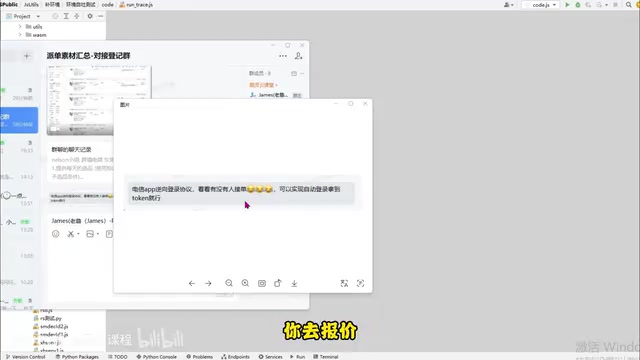
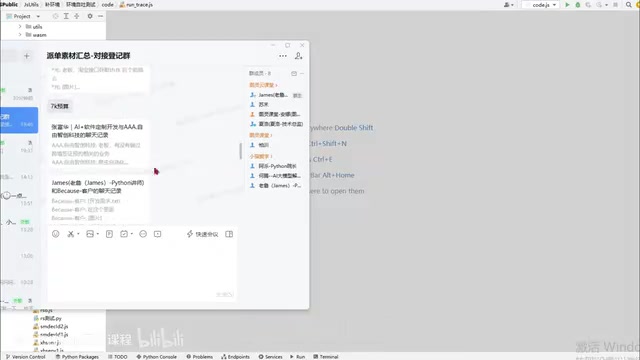
The video showcased numerous real commercial project orders spanning multiple domains:
| Project Type | Budget Range |
|---|---|
| APP login protocol (e.g., Shopee) | 5,000+ CNY |
| Qunar APP reverse engineering | 20,000–30,000 CNY |
| Taobao-related projects | 7,000 CNY |
| A knowledge community platform protocol | 50,000 CNY |
| Futures automated trading | 20,000 CNY |
| Cross-border e-commerce data | Priced by complexity |
Why Is Demand for Scraping Reverse Engineering Still Growing?
A seemingly contradictory but logical phenomenon: the rise of AI is actually driving growth in scraping demand. Reasons include:
- AI model training requires massive amounts of data, causing data collection demand to surge
- Accelerating enterprise digital transformation increases data integration needs
- The booming cross-border e-commerce industry makes multi-platform data synchronization essential
- Scraping use cases extend far beyond just "collecting data" — any automation involving API interaction falls within this domain
Technical Barriers Sustain High Project Prices
The video specifically emphasized that many projects "will scare you off once you understand the requirements" due to their extreme complexity. Core skills like Android reverse engineering, protocol analysis, and encryption algorithm reconstruction still require systematic study, which is precisely why project prices remain at high levels.
Practical Results and Tool Resources
Final Execution Results
After multiple rounds of AI-driven iterative patching, the encryption code that previously couldn't run successfully produced correct output. Throughout the process:
- AI automatically generated 600+ lines of environment patching code
- All patched code was properly placed above the prototype chain
- The final deliverable included two base files and one prompt (Scale) document
Prompt Design Is the Core Competitive Advantage
The key to this approach isn't the AI itself, but rather the prompt design. A well-crafted prompt can:
- Tell the AI how to interpret missing environment information from the logs
- Guide the AI to generate patching code in the correct format and location
- Ensure the generated code follows reverse engineering best practices
Conclusion: The Right Way to Combine AI + Scraping Reverse Engineering
The AI + scraping reverse engineering combination represents a pragmatic approach to technology application: not replacing humans with AI, but using AI to replace the repetitive work humans are least good at. Environment patching is exactly such a scenario — simple in logic but heavy in workload, making it perfectly suited for AI.
For developers looking to enter this field, the right learning path should be: first build a solid foundation in reverse engineering (JS reverse engineering, Android reverse engineering, protocol analysis), then learn to use AI tools for efficiency gains. Only by combining both can you achieve real competitive advantage in this field.
Related articles
 Tutorials
Cursor + Codex Dual-IDE Collaboration: A Practical Methodology for Open-Source Project Customization
A complete methodology for open-source project customization based on real-world experience, detailing the Cursor+Codex dual-IDE workflow, seven-stage process, MVP validation, and AI source code reading techniques.
 Tutorials
Cursor Multi-Agent in Practice: Building a Full-Stack Next.js Blog in 50 Minutes
Build a full-stack blog in 50 minutes using Cursor IDE's multi-Agent mode with Next.js, Clerk auth, and Supabase. Learn the 4-phase AI Agent workflow and key integration pitfalls.
 Tutorials
Building an AI Software Factory from Scratch: A Cursor Engineer's Hands-On Experience with Multi-Agent Collaboration
Cursor engineer Eric shares practical insights on building an AI software factory: automation levels, guardrail design, parallel Agent management, and scaling to 1000+ Agents for 24/7 development.