AI Coding Tool Subscription Showdown: How Much Do You Really Get for $20/Month?
Comparing AI coding subscriptions at $20/month: quota multipliers matter more than sticker price.
Most AI coding tools — Claude Code, Codex, Zhipu International — charge around $20/month, but the actual value varies wildly. This article breaks down quota multipliers (Zhipu Pro offers up to 15x Claude's base quota), real-world task performance, and model strengths to help light, moderate, and heavy developers pick the most cost-effective subscription.
AI Coding Tools All Cost $20/Month — So Which One Should You Pick?
AI coding tools are evolving faster than ever, and so are their subscription plans. From Claude Code to Codex, from Zhipu's international edition to various other AI tools, $20/month has become the de facto industry standard. But behind that identical price tag, the capabilities and usage quotas vary enormously. This article provides a hands-on, side-by-side comparison of the price-to-value ratio across major AI coding subscription services.
Overview of Major AI Coding Tool Subscription Prices
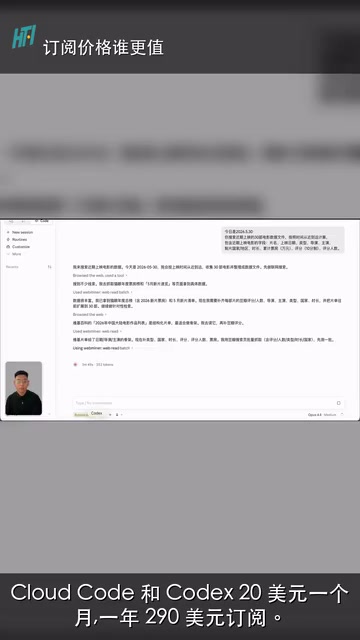
The most popular AI coding subscriptions currently cluster around the $20/month price point. Both Claude Code and Codex have adopted this pricing, offering a base usage quota for $20/month.
This $20/month price point didn't emerge by accident — it's a psychological anchor forged through market competition. OpenAI set the precedent with ChatGPT Plus at $20/month, and Anthropic's Claude Pro, Google's Gemini Advanced, and others quickly followed suit. Multiple factors shaped this price point: the inference costs of large language models (including GPU compute, electricity, and bandwidth) set a floor that providers need to cover, while $20 sits comfortably within the budget tolerance of individual developers and small teams — not so cheap that service quality suffers, and not so expensive that it scares off a large pool of potential users.
For annual subscribers, some platforms offer discounts. For example, certain services price annual subscriptions at 290 RMB, which works out to less than 25 RMB per month — significantly cheaper than the monthly plan.
However, the base tier's usage quota is typically just an entry-level allocation. Power users usually need to upgrade to higher tiers to sustain their daily development workload.
Claude Code vs. Codex: Two Different Technical Approaches
Before diving deeper into pricing, it's worth understanding the technical differences between these two core products. Claude Code is Anthropic's command-line AI coding tool, built on the Claude family of large language models. It excels at understanding the contextual relationships within complex codebases and supports code generation, debugging, and refactoring directly in the terminal. Its core advantage is an ultra-long context window (up to 200K tokens), enabling it to comprehend the structure of large projects in a single pass. Codex, originally OpenAI's code-generation product line optimized on GPT-series models, has since evolved into the programming capability integrated within ChatGPT and its API. The key difference in their technical approaches: Claude Code leans toward the "Coding Agent" paradigm, emphasizing autonomous completion of multi-step development tasks, while Codex focuses more on being a programming module within a general-purpose AI assistant, with particular strength in structured data processing and batch tasks.
Zhipu International Pro Subscription: Usage Quota Multiplier Is the Key Variable
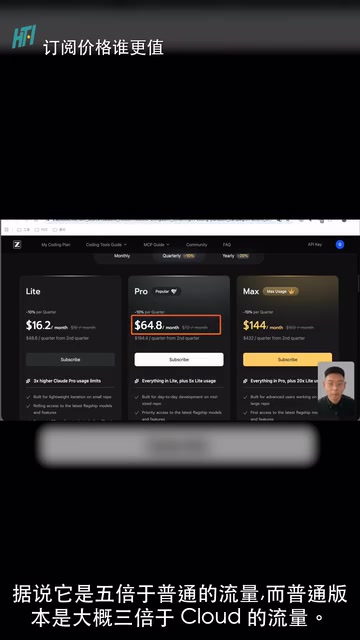
Among the various subscription plans, Zhipu's international edition Pro tier deserves special attention. Based on actual subscription experience, the Pro tier offers a promotional price — $81 for three months, roughly $27/month.
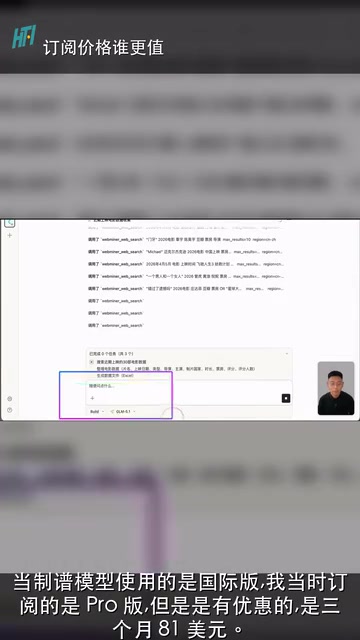
Zhipu AI is an artificial intelligence company incubated by a Tsinghua University technical team. Its core product, the GLM series of large models, was among the first domestic models to benchmark against GPT as a general-purpose LLM. The international edition targets the global market, differentiating itself from the domestic version (Zhipu Qingyan). Zhipu 5.1 is its latest-generation model, with significant improvements in code generation, mathematical reasoning, and multilingual understanding. Zhipu's international edition employs an aggressive pricing strategy — attracting developer users with usage quotas far exceeding competitors. This aligns with the broader "volume for market share" approach common among Chinese AI companies. Compared to OpenAI and Anthropic, which bear the high operating costs of U.S. data centers, domestic companies have a cost advantage in compute, which is the underlying economic logic enabling them to offer higher quota multipliers.
This price looks noticeably higher than the base tier, but the critical factor is the difference in usage quota multipliers:
- The Pro tier offers 5x the quota of the standard tier
- The standard tier offers roughly 3x the quota of Claude's base tier
- By extension, the Pro tier's quota is approximately 15x that of Claude's base tier
To understand "quota multipliers," you first need to grasp the token-based billing mechanism of large language models. A token is the basic unit of text processing for AI models — in English, each word corresponds to roughly 1–2 tokens, while in Chinese, each character typically maps to 1–2 tokens. Every interaction with the AI consumes tokens for both the input prompt and the output response. Token pricing varies dramatically across models — for example, GPT-4o's API costs about $2.50 per million input tokens, while more advanced models like Claude 3.5 Sonnet are even pricier. Subscription plans essentially bundle pay-per-use into a fixed monthly fee, and the "quota multiplier" directly reflects the total number of tokens a user can consume at a given price.
What does this multiplier difference mean in practice? For developers who frequently call on AI for code generation, debugging, and refactoring, a 15x quota gap directly determines whether you can work without restrictions for an entire month. Many users report that Claude's base tier quota runs out in less than two weeks under heavy use, while 15x the quota can comfortably cover a full month. A 15x quota difference means that one user might need to carefully ration the length of every prompt, while another can freely let the AI iterate and optimize without a second thought.

Real-World Task Performance: Completion Quality Matters Beyond Price
Price and quota are only part of the equation — actual task completion capability is equally critical.
Codex's Performance on Structured Tasks
Codex demonstrated solid capability on structured tasks. In one test, Codex successfully organized information for 30 movies, delivering satisfying results in data processing and content organization. If your development workflow involves batch processing of large amounts of structured data, Codex is a reliable choice.
Rapid Progress from Domestic Models
Domestic models like MiniMax are also iterating rapidly, completing corresponding test tasks in search and information synthesis. MiniMax was founded by Yan Junjie, former VP of SenseTime, and its product line spans text generation, speech synthesis, and video generation. In programming assistance, MiniMax's models excel at Retrieval-Augmented Generation (RAG), enabling real-time retrieval of the latest technical documentation and API references while generating code, which reduces the probability of "hallucinations" — AI-generated code that looks plausible but is actually incorrect.
The addition of newer model versions like Zhipu 5.1 further enriches the available options. Domestic models have an edge in Chinese-language comprehension and generally offer friendlier pricing. Additionally, domestic models provide more comprehensive support for commonly used Chinese tech stacks (such as WeChat Mini Program development and Alipay API integration) — areas where overseas models' training data tends to be relatively thin.
Subscription Recommendations by Usage Intensity
Considering price, quota, and actual capability holistically, here are specific recommendations for different user profiles:
Light Users: Less Than 1 Hour of Daily Use
The $20/month base tier of Claude Code or Codex is sufficient. There's no need to chase high quota multipliers — the base allocation can fully cover everyday code assistance needs.
Moderate Users: AI as a Primary Daily Development Tool
Consider Zhipu International's standard tier. With 3x Claude's quota, it offers significantly more headroom at a reasonable price.
Heavy Users: Round-the-Clock AI-Assisted Development
Zhipu Pro's 15x quota advantage shines brightest in this scenario. While the ~$27/month average price is slightly higher, the massive quota difference actually makes the per-call cost the lowest of all options.
Conclusion: Don't Just Compare Monthly Fees — Calculate the Unit Cost
When choosing an AI coding tool subscription, comparing monthly fees alone is meaningless. Only by weighing quota multipliers, model capabilities, and your specific use case together can you make a truly cost-effective decision.
To evaluate the real value of AI coding tools, the industry typically uses "developer time saved" as the core metric. According to GitHub's 2024 Developer Survey, developers using AI coding assistants see an average 55% increase in coding speed and a 15–30% reduction in code review time. If a developer's hourly rate is $50 and they save 2 hours per day through AI tools, the monthly labor cost savings amount to roughly $2,200 — far exceeding the cost of any subscription plan. Therefore, the real decision variable when choosing a subscription isn't the absolute monthly fee, but rather "which plan maximizes AI productivity gains for your specific use case." The hidden cost of workflow interruptions caused by exhausted quotas often far exceeds the explicit cost of upgrading your subscription.
Is $20/month worth it? The answer depends on how much you use it, how you use it, and whether your chosen plan actually matches your real-world needs. As competition intensifies, the value proposition across platforms will continue to improve, and users will have an ever-expanding range of choices.
Related articles
Mistral Le Chat Image Generation Review: Can It Replace Fable?
Mistral AI launches image generation in Le Chat, dubbed Le Chaton Fat. We analyze its capabilities, compare it with Fable, and explore the trend of AI chat platforms integrating image generation.

Testing DeepSeek's Safety Mechanisms: Multiple Jailbreak Attempts Successfully Blocked
An overseas security blogger systematically tested DeepSeek's jailbreak resistance using direct requests, rephrased prompts, and varied strategies. Results show robust intent recognition, consistent blocking, and context-aware safety mechanisms.
A Middle Schooler with Zero Coding Skills Built a Story-Driven Game with AI: Creativity Unshackled from Technical Barriers
A middle schooler with no coding experience used AI to build an interactive story game with branching choices and surreal alien adventures. We explore what this means for creative democratization.