AI Coin Flips Aren't 50/50: How World Models Are Changing the Future of AI

World models are teaching AI to understand physics, not just mimic what it sees in training data.
A coin-flip experiment across AI video generators reveals probability biases up to 70%, exposing a fundamental flaw: current generative models mimic statistical patterns rather than understanding physics. World models offer a solution by simulating 3D interactive physical environments, enabling AI to predict real-world outcomes. With advances like Google's Veo 3 OMNI and applications in gaming, robotics, and 4D content creation, world models are driving AI from surface-level imitation toward genuine physical understanding.
A Counterintuitive Experiment: AI's Coin-Flip Probability Bias
In the real world, flipping a coin gives you roughly a 50% chance of landing heads. That's common sense. But what if you flip a coin inside an AI-generated world — would the result still be 50%?
The team at Yingshi Jufeng (影视飓风) ran a fascinating experiment: they flipped coins hundreds of times across multiple AI video generation models, using identical prompts each time. The results were surprising — one model generated heads (the numbered side) roughly 70% of the time, and the other models showed similarly significant biases. The instructions given to the AI were "random," and the human act of clicking a button was random too, yet the generated outcomes deviated far from 50%.
This seemingly absurd little experiment actually reveals two fundamental problems facing generative AI today — and points toward a technological direction that's reshaping the entire tech industry: World Models.
Two Fatal Flaws in Current AI Video Generation
Flaw #1: It Can Fool Your Eyes, but Not the Laws of Physics
Over the past six months, AI-generated videos have become increasingly realistic — there are even "AI-generated videos of AI-generated videos." When it comes to distinguishing AI footage from real-world footage, humans are already losing the battle. But AI still has one fatal weakness: it doesn't understand real physical laws.
Generative AI works by extracting patterns from massive training datasets, but these "patterns" aren't actual physical laws — they're more like statistical tendencies the model has "painted" from the data. Take the coin flip as an example: in movies, advertisements, and everyday videos, shots clearly showing the heads side of a coin far outnumber those showing tails — this is what's known as data bias. What the AI learned isn't the physical fact that "a coin has equal probability of landing on either side," but rather the statistical feature that "the heads side appears more often in human-filmed coin videos."
Flaw #2: Enormous Computational Cost with No Guarantee of Quality
High-quality AI video generation consumes staggering computational resources. The once-hyped Sora 2 model (now discontinued) required roughly one full kilowatt-hour of electricity from servers to generate a single 10-second video, along with a corresponding amount of freshwater evaporated for cooling. Such exorbitant computational costs still can't guarantee physical correctness — clearly, this isn't a sustainable path.
World Models: From Mimicking Appearances to Understanding the Physical World
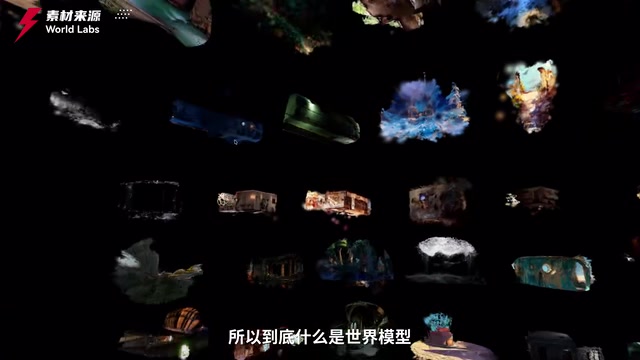
So is there a solution to these two problems? The answer is World Models.
What Is a World Model?
Put simply, a world model is an AI model capable of predicting "what will happen in the world after I take a certain action." Its workflow can be broken down into three steps:
- Observe the world: It knows this is a coin, understands its approximate weight, whether the two sides are balanced, the starting position of the toss, and what surface it will land on.
- Predict the future: This is the world model's core capability — it simulates countless possible physical trajectories of what might happen next.
- Judge and execute: Based on these imagined futures, it evaluates the outcomes of actions and then executes accordingly.
At its core, a world model is remarkably similar to human intuition. Before catching a ball, our brain instantly predicts the ball's trajectory. When pouring water, we naturally anticipate the direction of the flow. What world models aim to do is give AI this same intuitive understanding of the physical world.
World Models Generate Three-Dimensional, Interactive Worlds
Unlike traditional video generation models, world models don't produce two-dimensional sequences of video frames — they generate three-dimensional, interactive physical worlds. The Yingshi Jufeng team demonstrated generating a medieval fortress scene from a single sentence — complete with electronic lighting effects, marble floors, and ruin-style objects. You can spin around in this scene, dive down, and even interact with the world, just like in a video game.
Although the visuals are still relatively rough, the technology already demonstrates a preliminary ability to simulate three-dimensional physical worlds, significantly reducing the probability of the model producing "physics hallucinations."
Google OMNI: The Latest Advances in World Models
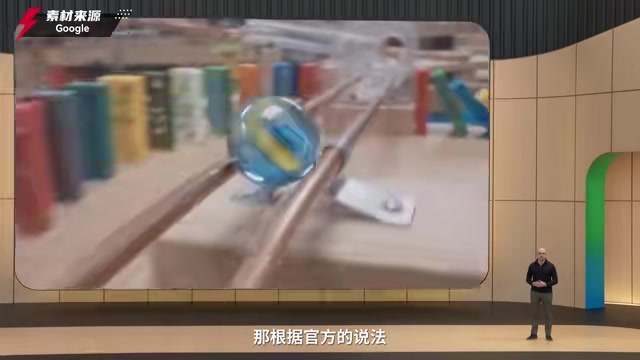
Google recently released Veo 3 OMNI, a video generation model that integrates world knowledge understanding. According to official statements, OMNI is a multimodal model that has learned mechanics, mathematics, and world history, bringing it very close to human-level cognition of the physical world.
Its physics simulation capabilities have noticeably improved — generated characters look more like real people, with less of the "uncanny valley" eeriness typical of previous AI videos. But what's truly impressive is its scene correction capability:
- A speaker's background can be replaced in real time
- The texture of a table being touched can be freely changed
- Objects held in hand can be swapped at will
- Even fluids and transparent objects are mapped and handled convincingly
This deep scene understanding and flexible correction ability is something previous AI video models have never demonstrated. However, OMNI is still fundamentally generating two-dimensional video. If free camera movement within 2D video becomes possible in the future, or if 3D world models achieve higher precision, all the pain points of AI video creation could be completely resolved.
Beyond Video: The Broader Potential of World Models
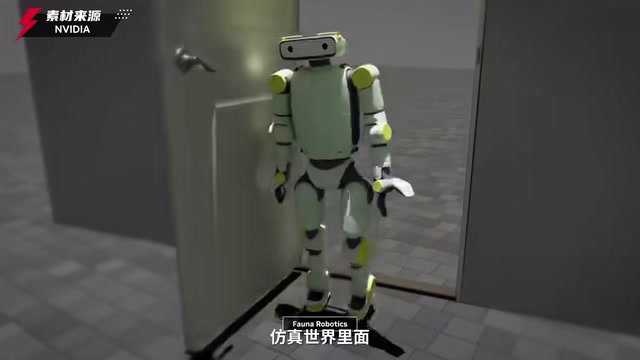
The value of world models extends far beyond video generation — they're showing disruptive potential across multiple fields.
Gaming: Endless Virtual Worlds
If a world can be generated without limits, it becomes an endless game. Scenes that previously took weeks to model can now be generated with a single computation. The impact of world models on the gaming industry will be transformative — from level design to open-world construction, development efficiency could improve by orders of magnitude.
Robot Training: Unlimited Trial and Error in Virtual Worlds
Drop a robot into a simulated world model, and it can knock over cups infinitely, fall down and get back up infinitely. Through this process, robots can learn what's heavy and light, high and low, near and far — their limb movements can become as natural as those of a real person with muscle tissue.
While robotic posture control is already quite impressive, there's still a gap between current capabilities and the highest expectations — and world models are the key technology for closing that gap.
4D Gaussian Technology: A Glimpse of Future Visual Experiences
The Yingshi Jufeng team shared a real-world case study: using 4D Gaussian technology, they filmed real actors and scenes with 250 cameras, then reconstructed everything through computational training to produce a 35-minute VR short film. In this film, viewers can move to any angle in the space to observe what's happening in the virtual world — they can watch the characters in front of them or walk away to examine other corners.
While this currently requires a massive amount of hardware to achieve, it showcases what visual experiences will look like once world models mature: If a single sentence could generate such a four-dimensional dynamic world in the future, the way content is created and consumed will undergo a fundamental transformation.
AI Coin Flips Will Eventually Approach 50%
Let's return to the original question. The reason AI coin flips don't land at 50% is fundamentally because current generative models don't understand the physical world — they're merely mimicking the statistical distributions in their training data. The emergence of world models aims to solve this problem at its root — making AI not just "look right" but be "physically correct."
Chip giants like Intel and NVIDIA are aggressively pushing the integration of NPUs with world models. Future AI PCs may not just be productivity tools but personal digital world simulators. In theory, in a few more years, flipping a coin in AI should yield results far more evenly distributed than today.
This isn't just a story about coins. It's about the profound transformation of AI evolving from "mimicking the appearance of the world" to "understanding the essence of the world." And this transformation is already underway.
Related articles
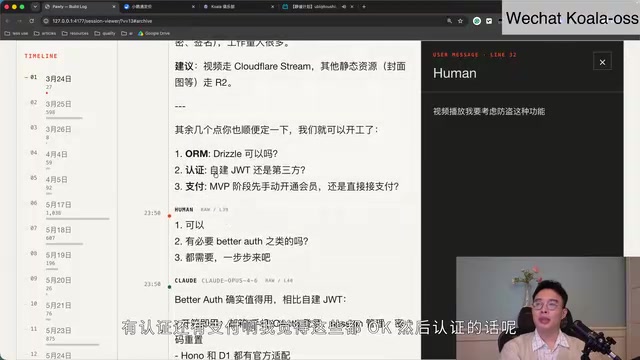
Vibe Coding in Practice: Replacing a ¥6,800/Year SaaS Platform for Under ¥1,000
A tech team used 26 hours of Vibe Coding to build a video membership platform, replacing a ¥6,800/year SaaS for under ¥1,000 in AI development costs.

Polymarket Caught Paying Creators to Post Fake Betting Videos: A Full Breakdown
Polymarket allegedly paid creators to record fake betting videos on clone websites, fabricating trading profits to attract users. A deep dive into the details, methods, legal risks, and industry impact.

Global Robotaxi Scorecard: How China Is Establishing Autonomous Driving Dominance
Based on TechCrunch's latest Robotaxi scorecard, a deep analysis of China's dominance in autonomous taxis covering commercialization scale, policy support, supply chain synergy, and U.S.-China competition.