AI Engineering in Practice: The Progression Path from Vibe Coding to Enterprise-Level Development
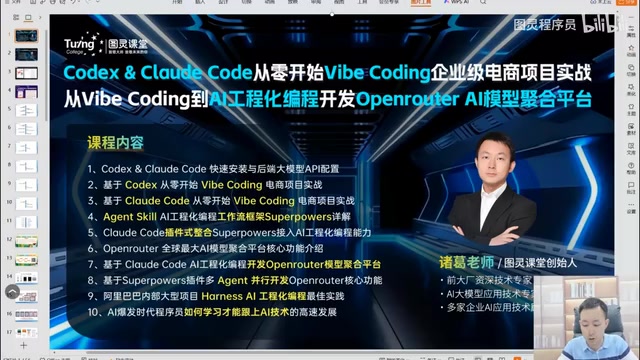
A practical guide to evolving from Vibe Coding to enterprise-grade AI engineering with Claude Code and Codex.
This article explores the progression from Vibe Coding (quick AI-assisted prototyping) to AI engineering for enterprise development. It covers the limitations of Vibe Coding, introduces the SuperPower plugin's skill pipelines for Claude Code, compares Claude Code vs Codex tool selection strategies, discusses backend model configurations using Chinese domestic models like Zhipu GLM, and reveals business insights about profitable AI ventures including model aggregation platforms.
Introduction: The Limitations of Vibe Coding and the Rise of AI Engineering
AI programming tools have evolved from "shiny new toys" into everyday productivity tools for developers. Claude Code, Codex, Cursor, and other tools keep emerging, but one core question continues to plague many developers—it's easy to write code with AI, but hard to build enterprise-level projects with AI.
A Chinese tech educator systematically broke down the complete path from Vibe Coding to AI engineering in a multi-hour live coding session, covering hands-on usage of Claude Code and Codex, as well as enterprise-level project development workflows. This article distills the core insights to help developers avoid common pitfalls.
What Is Vibe Coding? Where Are Its Limits?
The Basic Concept of Vibe Coding
Vibe Coding is a concept that emerged internationally in recent years. The core idea is simple: you just need to clearly describe the requirements in your head, and AI programming tools will generate the code for you. You don't need to write every line yourself, and you don't even need to be a professional programmer.
The term was first coined by Andrej Karpathy (former Tesla AI Director and OpenAI co-founder) in early 2025. He described a completely new way of programming: developers fully immerse themselves in the "vibe," relying on intuition and natural language conversation with AI, forgetting about the code itself. This concept quickly sparked heated discussion in the global developer community because it fundamentally challenges traditional software engineering's obsession with "precise control." The concept was rapidly adopted and commercialized, spawning numerous "zero-code development" training courses and tool products.
This approach generated significant discussion early on, with many product managers and non-technical bloggers claiming they could "replace programmers with AI." But reality quickly provided its answer.
The Three Ceilings of Vibe Coding
Three fatal problems with Vibe Coding have been clearly identified:
- Only capable of demo-level projects: Simple utility apps and small websites can be built quickly, but once business logic becomes complex, code quality drops dramatically.
- Unmaintainable code: AI-generated code often lacks architectural design. As the project grows, the code becomes a tangled mess that's impossible to iterate on.
- Bug fixing enters an infinite loop: Non-technical users can't precisely guide AI to fix deep-seated bugs, and projects easily get stuck at certain stages.
A typical example illustrates this: an early blogger (with a product manager background) used Vibe Coding to develop a simple "ring light" utility tool with extremely basic functionality—"probably just two sentences to get AI to whip it up." Projects like this are on a completely different level from real enterprise development.
Core insight: Vibe Coding is suitable for quickly validating ideas and building prototypes, but for high-concurrency, distributed, microservices-architecture enterprise projects, you must transition to AI engineering.
The microservices architecture mentioned here involves splitting a monolithic application into multiple independently deployed small services, each responsible for a single business function, communicating via APIs. This architecture is naturally suited for AI engineering for three reasons: First, each microservice has limited code volume, falling within the effective processing range of AI model context windows; Second, the interface contracts between services (such as OpenAPI specifications) provide AI with clear input/output constraints; Third, the independent deployment characteristic allows AI to develop and test service by service, reducing global complexity. This also explains why AI engineering emphasizes "modular development"—it essentially leverages microservices thinking to adapt to AI's capability boundaries.
AI Engineering: The Right Approach to Enterprise Development
From Single Tools to Complete Engineering Systems
The core philosophy of AI engineering is: it's not simply about having AI write code, but using a standardized engineering workflow to drive AI through the entire process from requirements analysis to deployment.
A key tool highlighted in this approach is a Claude Code plugin called SuperPower. This plugin has a built-in series of enterprise-level development Skills (skill pipelines) covering:
- Requirements analysis and decomposition
- Architecture design
- Modular development
- Testing and verification
- Deployment and launch
This system is similar to early SDD (Specification-Driven Development) but deeply integrates AI capabilities, allowing developers to use "Plan Mode" to have AI generate development plans first, then execute and verify step by step.
SDD (Specification-Driven Development) is a classic methodology in software engineering that emphasizes completing detailed specification documents before coding, including interface definitions, data models, and behavioral constraints. Its intellectual roots trace back to Formal Methods and Design by Contract. In the context of AI engineering, SDD's philosophy has been revitalized—AI needs explicit specifications as input to generate high-quality code, which aligns closely with SDD's "specification-first" principle. The difference is that in the AI era, SDD no longer requires manually writing lengthy specification documents; instead, structured Prompts and Skill pipelines automatically generate and execute specifications.
Progressive Comparison of Three AI Programming Development Modes
A very clear progression path has been designed, with each project going through three modes:
| Mode | Use Case | Characteristics |
|---|---|---|
| Vibe Coding | Quick prototypes, small tools | Results in minutes, but unmaintainable |
| Plan Mode | Medium-complexity projects | Claude Code/Codex Plan mode—plan first, execute second |
| SuperPower Engineering | Enterprise projects | Complete Skill pipeline, full coverage from requirements to launch |
This progressive design allows developers at different levels to find their entry point while clearly seeing the capability boundaries of each mode.
AI Programming Tool Selection: Claude Code vs Codex—How to Choose
Claude Code: Most Capable but High Account Ban Risk
Claude Code is the most widely used and most capable tool among professional programmers. It has a complete engineering system internally, with extensive optimizations for professional development.
Claude Code is a command-line AI programming tool launched by Anthropic, based on the Claude large language model. Its core features include direct access to the local file system, executing Shell commands, running tests, and long-context understanding (supporting a 200K token context window). Unlike traditional IDE plugins, Claude Code uses an Agent architecture that can autonomously plan multi-step tasks, read project structures, understand code dependencies, and proactively search documentation when necessary. Its Plan Mode allows AI to first generate a complete execution plan for developer review, then implement it step by step—this "Human-in-the-Loop" design is key to its engineering capabilities.
However, the problem is that Anthropic's (Claude's parent company) account banning policies are becoming increasingly strict, especially unfriendly to Chinese users. Many developers have had their Claude accounts banned multiple times, and recovery is extremely difficult, leading to reduced direct usage of the Claude model.
Anthropic's strict account controls stem from multiple factors: compliance pressure (as a company emphasizing AI safety, Anthropic has strict restrictions on usage regions and purposes); commercial strategy (preventing API abuse and resale); and geopolitical factors (US AI companies' service restrictions on Chinese users continued to tighten in 2024-2025). This phenomenon affects not only individual developers but also forces domestic enterprises to seek alternatives, objectively accelerating the rapid development of Chinese domestic large models in the code generation domain. Many developers adopt a hybrid architecture of "Claude Code framework on the frontend, domestic models on the backend" to mitigate risks.
Codex: A Practical Choice Catching Up Fast
Codex (by OpenAI) initially had a significant gap with Claude Code, but with the latest GPT version iterations and internal optimizations, its capabilities have improved dramatically. Both Codex's desktop client and CLI command-line interface can be used for development.
Backend Model Configuration Strategy
Due to the risks of using the Claude model, a practical backend model configuration is:
- Codex backend: Latest GPT version
- Claude Code backend: Connected to domestic Chinese models (primarily Zhipu GLM)
Zhipu AI is an AI company incubated by a Tsinghua University technical team, with its GLM series models based on the General Language Model architecture. GLM-4 and subsequent versions excel in code generation and logical reasoning, support a 128K context window, and have been extensively optimized for Chinese programming scenarios. Zhipu's advantages include: stable API service, no account ban risk, strong Chinese language understanding, and OpenAI-compatible API interface format, allowing developers to almost seamlessly integrate it into the backend of tools like Claude Code. In the domestic AI programming toolchain, Zhipu has become a de facto "infrastructure-level" model provider.
Regarding domestic Chinese large models, here's a tier ranking:
- Tier 1: Zhipu GLM (best overall experience)
- Tier 2: MiniMax, Kimi, Xiaomi Mimo
- Best value: DeepSeek (solid capabilities, extremely low price)
- Viable options: Alibaba Tongyi, Tencent Hunyuan
Business Insights in the AI Space: Who's Actually Making Money?
An insightful business analysis reveals that the real money in AI isn't in consumer-facing AI applications (products like Doubao, Tencent Yuanbao are all losing money). Instead, three directions are profitable:
- Computing power and hardware: Chips, memory, semiconductors—stock prices have "skyrocketed"
- Token-selling API services: API interfaces from companies like Zhipu, Tencent, and other major players
- Model aggregation platforms: Middleware services like OpenRouter that aggregate multiple models
OpenRouter is an AI model aggregation routing platform that wraps APIs from dozens of model providers including OpenAI, Anthropic, Google, and Meta into a unified standard interface—developers only need to connect to one API to call all models. Its business model adds a small service fee (typically 5-15%) on top of original API prices while providing value-added services like load balancing, failover, and usage analytics. This "middleware" model is highly profitable because it solves three major pain points for enterprise customers: multi-model management complexity, single-vendor lock-in risk, and cross-regional compliance issues. Similar domestic platforms include SiliconFlow and others.
Reportedly, some teams running AI model aggregation platforms (similar to OpenRouter wrapper sites) with only a dozen people are generating annual revenue of 100-200 million RMB. This is also why building an "AI model aggregation platform" makes an excellent enterprise-level practice project—it has both commercial value and covers core technical points of enterprise development.
Enterprise Practice: AI Engineering at Alibaba
Alibaba is systematically implementing AI engineering internally. While details are limited, several key points are noteworthy:
- Alibaba is already systematically promoting AI engineering internally
- Their system shares similarities with Claude Code's engineering approach
- The entire workflow from requirements to deployment is being progressively AI-powered
This means AI engineering isn't a "party trick" for individual developers—it's becoming the standard development paradigm at major tech companies. From an industry trend perspective, this transformation reflects an escalation in software development efficiency competition—when AI can handle 80% of routine coding work, a company's core competitiveness will shift to architecture design capability, requirements understanding ability, and AI collaboration efficiency. Whoever can integrate AI engineering into their team workflow faster will gain significant advantages in delivery speed and per-capita efficiency.
Conclusion: Core Recommendations for AI Programming Advancement
For developers looking to go deeper in AI programming, here are the core recommendations:
- Don't stay at the Vibe Coding stage: It's a great way to get started, but it's not the destination
- Master the AI engineering mindset: Learn to use Plan Mode and Skill pipelines to drive AI development
- Tools can change, methodology stays: Whether using Claude Code or Codex, the core is an engineering-oriented development workflow
- Pay attention to backend model selection: Model capability is the primary determinant of AI programming effectiveness
- Traditional IDEs are being phased out: If tools like IntelliJ don't embrace AI, "the bell is already tolling"
The competition in AI programming has essentially evolved from "can you use the tools" to "can you build enterprise-level products with AI." Developers who master engineering methodologies will hold an absolute advantage in this transformation.
Related articles

Claude Code Desktop Hands-On: Transparent Context Window & CC Switch for Compute Freedom
Hands-on review of Claude Code Desktop's transparent context window, multi-project heatmap, efficiency panel, and CC Switch open-source routing gateway for model freedom.

New Book Breakdown: "Claude Code in Practice: The Way of Harness Engineering" — Master AI Programming Engineering in Ten Chapters
Deep breakdown of the new book on Claude Code engineering, covering Harness concepts, four-layer architecture, five-layer memory, sub-agents, hooks, MCP protocol, and CI/CD integration.
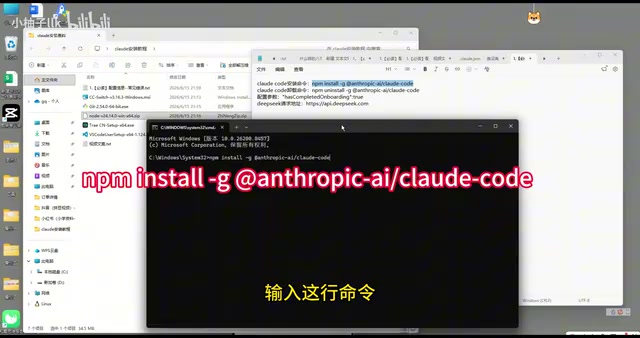
Claude Code Installation Guide: Complete Tutorial for Connecting to the DeepSeek Model
Step-by-step guide to installing Claude Code and connecting it to DeepSeek V4 Pro via CC Switch proxy, covering setup, API configuration, and troubleshooting.