AI Full-Stack Development Architecture: A Three-Layer Progressive Path from Prototype to Production

A three-layer architecture guide for AI full-stack development from prototype to production.
This article outlines a complete AI full-stack development architecture across three progressive layers: Node.js + TypeScript + Monorepo for engineering foundations, Docker-based CI/CD for deployment, and AI application engine design covering Prompt Engineering, RAG, and orchestration. It also breaks down interview expectations at junior, mid-senior, and expert levels, with practical advice for integrating AI into existing projects.
Why Has AI Full-Stack Development Become a Must-Ask Interview Topic?
In current frontend and full-stack development interviews, one question is appearing with increasing frequency: "Have you ever built a product using AI?" Whether for junior or senior positions, AI-related project experience has shifted from a nice-to-have to a must-answer topic.
Many developers are caught off guard by this question — not because they lack technical ability, but because they've never systematically thought about how to integrate AI into their development workflow. This article takes a Node.js full-stack development perspective and outlines a complete path for AI full-stack development, covering everything from environment setup and engineering architecture to AI application engine design.
The Three-Layer Technical Architecture of AI Full-Stack Development
The entire AI full-stack development technology system can be understood through three progressive layers: the foundational engineering layer, the deployment and delivery layer, and the AI application layer.
Layer 1: Node.js + TypeScript + Monorepo Engineering Architecture
For developers with Node.js experience, the essential combo to master right now is Node.js + TypeScript + Monorepo. This isn't just about technology choices — it reflects an engineering-first mindset.
-
TypeScript provides type safety, which is especially important in AI applications. When you're handling various model inputs/outputs, Prompt templates, and RAG retrieval results, the type system helps you avoid a massive number of runtime errors. TypeScript's type system plays an even more critical role in AI full-stack development than in traditional web development. AI applications involve extensive processing of unstructured data — the JSON structures returned by LLM APIs may vary across model versions, RAG retrieval results contain complex nested structures with similarity scores and document metadata, and variable interpolation in Prompt templates requires strict type constraints. Without the protection of a type system, this data is extremely prone to hard-to-trace runtime errors as it passes through multiple layers. TypeScript features like generics, union types, and type guards can catch these potential issues at compile time, dramatically reducing debugging costs in AI applications.
-
Monorepo architecture solves the common code reuse problem in AI full-stack projects. Frontend interfaces, backend APIs, AI service orchestration, and shared type definitions — all these modules can collaborate efficiently under a Monorepo, avoiding the version synchronization nightmare that comes with multi-repo setups. Monorepo (single code repository) is a strategy of managing multiple related projects within the same version control repository, already adopted at scale by companies like Google and Meta. In AI full-stack projects, the type definitions needed when the frontend calls AI interfaces, the utility functions used by the backend when processing Prompts, and the configuration schemas for AI service orchestration — all this cross-module shared code can be directly referenced through workspaces in a Monorepo, without needing to publish npm packages. Mainstream Monorepo tools like Turborepo, Nx, and pnpm workspace provide capabilities such as incremental builds, task orchestration, and dependency graph analysis, ensuring that build efficiency doesn't significantly degrade even as the project scales.
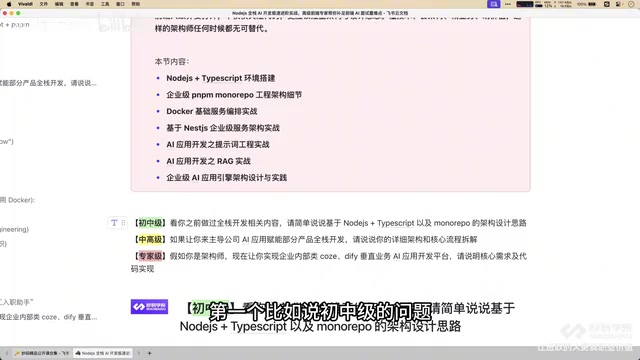
Layer 2: Docker-Based CI/CD Orchestration and Deployment
Between prototype and production launch, there's more than just code — there's a complete delivery pipeline. Docker-based CI/CD orchestration is the critical bridge for pushing AI applications from development to production environments.
Containerized deployment is particularly important for AI applications: model services, vector databases, API gateways, and frontend applications — each component can be independently containerized and managed through orchestration tools. This architecture not only facilitates horizontal scaling but also ensures team collaboration and environment consistency.
The deployment complexity of AI applications far exceeds that of traditional web applications. A typical AI full-stack project might include: model services running LLM inference (e.g., vLLM, Ollama), vector databases storing vector embeddings (e.g., Milvus, Qdrant, Weaviate), preprocessing services handling document parsing, backend services providing APIs, and frontend applications. These components have vastly different runtime environment requirements — model services may need GPU drivers, while vector databases require specific memory configurations. Docker completely isolates and standardizes each component's runtime environment through containerization, while Docker Compose or Kubernetes provides declarative orchestration capabilities, allowing developers to define the entire system's topology, network communication, and resource limits in a single configuration file.
Layer 3: AI Application Engine Architecture Design
This is the most critical part of the entire technical architecture, encompassing three key modules:
-
Prompt Engineering: How to design, manage, and optimize Prompt templates. Prompt engineering is far more than just "writing a good prompt" — it has evolved into a systematic set of engineering practices. Core techniques include: Few-shot Learning (guiding model output format through examples), Chain-of-Thought (guiding the model to reason step by step), role setting (System Prompt defining model behavior boundaries), and output format constraints (JSON Mode, Function Calling). At the engineering level, Prompts need version management, A/B testing, and effectiveness evaluation (through automated evaluation frameworks like Promptfoo). In enterprise applications, Prompts are typically stored as templates that support variable injection and conditional rendering, similar to frontend template engines. Prompt management and optimization directly impact AI application output quality and cost control.
-
RAG (Retrieval-Augmented Generation): How to build knowledge bases and combine them with LLMs to enable intelligent Q&A based on private data. RAG is the core technical paradigm for solving LLM "hallucination" problems and enabling private knowledge Q&A. Its workflow consists of two phases: the offline indexing phase, where enterprise documents are processed through text chunking and vector embedding before being stored in a vector database; and the online retrieval phase, where user questions are first vectorized, the most relevant document fragments are retrieved from the vector database, these fragments are injected as context into the Prompt, and then the LLM generates an answer. Key technical challenges in RAG include: chunking strategy selection (fixed-length vs. semantic chunking), embedding model selection, retrieval algorithm optimization (hybrid retrieval, re-ranking), and effective utilization of the context window. Compared to fine-tuning models, RAG's advantages lie in real-time data updates, lower cost, and better explainability.
-
AI Application Engine Orchestration Architecture: How to design an extensible engine that supports multi-step, multi-model task orchestration. The orchestration engine is the core component of AI application development platforms like Coze, Dify, and LangFlow. At its essence, it's a Directed Acyclic Graph (DAG) execution engine. Each node represents an atomic operation — which could be an LLM call, knowledge base retrieval, code execution, HTTP request, or conditional judgment; edges define data flow direction and execution order. The engine needs to implement topological sorting to determine execution order, support parallel branches to improve efficiency, handle conditional routing for dynamic workflows, and manage data passing between nodes (typically through shared context or a message bus). Advanced features also include: streaming output support (SSE/WebSocket), execution state persistence (supporting checkpoint resumption), timeout and retry mechanisms, and runtime observability (logging, distributed tracing).
Many interviewees, when asked "How is an AI application engine implemented?", cannot clearly explain the execution details of the orchestration engine. This is precisely the dividing line between ordinary developers and architecture-level developers.
Interview Question Breakdown Across Three Levels
This technical architecture corresponds to interview assessment points at different levels. Understanding the progressive relationship between these questions helps clarify your learning direction.
Junior/Mid-Level Interviews: Engineering Implementation of Full-Stack Development
Typical question: "You've done full-stack development in previous projects — how exactly did you do it?"
This level assesses your understanding of modern full-stack engineering. Simply knowing how to write Node.js isn't enough — interviewers expect to hear how you use TypeScript to ensure code quality, how you use Monorepo to manage multi-module projects, and how you design a reasonable project structure.
Mid/Senior-Level Interviews: AI-Powered Transformation in Business Scenarios
Typical question: "If you were tasked with leading the intelligent transformation of a product at your company, how would you approach it?"
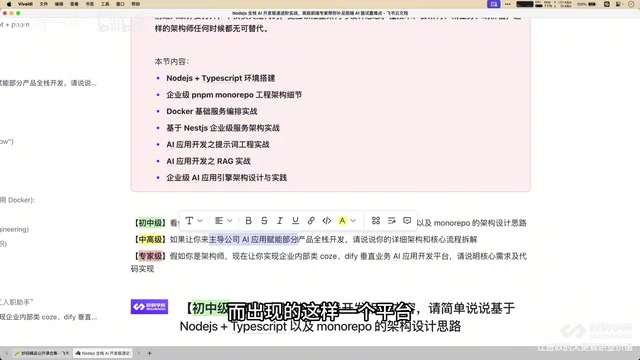
There's a crucial mindset shift here: Don't underestimate the product you're currently working on. Many developers feel that working on admin dashboards means there's "nothing impressive to talk about." But the truth is, as long as a product is still running and creating value for the company, there are always business processes that can be optimized with AI.
The key is whether you can identify specific AI implementation points within business workflows:
- Can form-filling steps be enhanced with AI-assisted auto-completion?
- Can data review processes use AI for initial screening?
- Can customer service tickets leverage RAG for intelligent responses?
- Can report analysis use LLMs to generate natural language summaries?

Presenting these specific intelligent implementations as your key business challenges is far more convincing than talking about "virtual lists" or "large file uploads" — topics that have been done to death. The core interview strategy is to align with the business, align with current trends, and align with today's mainstream tech stack.
Expert-Level Interviews: Architecture Design of AI Application Development Platforms
Typical question: "If you were asked to design an AI application development platform similar to Coze/Dify, how would you do it?"
This question assesses architect-level system design capabilities. Coze is an AI application development platform launched by ByteDance, while Dify is one of the most active LLM application development frameworks in the open-source community. Both provide visual workflow orchestration, knowledge base management, model integration, and other capabilities that enable non-technical users to build AI applications. Understanding the architecture design of such platforms means you need to be able to articulate:
- Orchestration Engine Design: How to define nodes, edges, and execution flows, supporting conditional branches, loops, parallel execution, and other control logic. This design shares similarities with workflow engines (like Temporal and Airflow), but AI-specific scenarios require support for streaming output, token billing, model fallback, and other special requirements.
- Engine Execution Details: From user input to final output — how data flows between nodes, how exceptions are handled, and how state is managed. You need to consider how long-running LLM calls avoid blocking the overall flow, and how to achieve observability of the execution process.
- Extensibility Design: How to support custom nodes, plugin mechanisms, and multi-model integration. Good architecture should follow the Open-Closed Principle, using abstract interfaces and registration mechanisms so that new capabilities can be integrated without modifying core engine code.
This requires not only deep understanding of AI applications but also solid software architecture fundamentals.
Practical AI Full-Stack Advice for Developers
Go Beyond Code — Develop Architectural Thinking
This is a point that's been repeatedly emphasized yet still overlooked by many: If you only ever focus on code, it's very difficult to improve your architectural thinking and design thinking, and your salary will struggle to make significant leaps.
Coding ability is the foundation, but in the AI era, what matters more is:
- Architectural Thinking: Can you design systems that are extensible and maintainable?
- Business Insight: Can you identify AI application opportunities within business processes?
- Technology Selection Ability: Can you make sound choices among the many AI tools and frameworks available? The current AI development ecosystem offers an extremely rich selection of frameworks — LangChain and LlamaIndex for LLM application orchestration, Vercel AI SDK focused on frontend AI integration, and Semantic Kernel for enterprise scenarios. Vector databases include Pinecone (cloud-managed), Milvus (open-source distributed), Chroma (lightweight), and other options with different positioning. Whether you can make sound judgments based on project scale, team capabilities, and performance requirements is the core manifestation of technology selection ability.
Start AI Practice from Your Current Project
You don't need to start a brand-new AI project from scratch. Go back to the product you're currently working on, carefully examine every business process, and find the most suitable entry point for introducing AI — then go deep. This is more convincing than any demo project.
In practice, the easiest AI scenarios to start with typically include: building a RAG Q&A system based on existing documents (moderate technical barrier, clear business value), using LLM APIs for text generation/summarization/classification (low calling cost, quick results), and integrating AI assistance into existing forms or search features (significant user experience improvement). When choosing an entry point, prioritize scenarios where data is already available, results are easy to quantify, and core business risks are not involved.
Build a Complete Technical Loop from Prototype to Production
From environment setup to engineering architecture, from Docker deployment to AI application engines — make sure you can run through the complete pipeline from prototype to production. What interviewers value most isn't how many new technologies you've used, but whether you can turn an idea into a truly running product.
A complete technical loop means you need to pay attention to the ongoing operations after your AI application goes live: cost monitoring for model calls (token consumption tracking), continuous evaluation of output quality (establishing evaluation datasets and automated evaluation pipelines), closed-loop collection of user feedback (for optimizing Prompts and knowledge bases), and system observability (latency monitoring, error rate alerting, call chain tracing). These production-grade engineering practices are the key difference between "can write a demo" and "can deliver a product."
Summary
AI full-stack development isn't an unreachable concept — at its core, it's about combining traditional full-stack development capabilities with AI application skills. Node.js + TypeScript + Monorepo provides the engineering foundation, Docker + CI/CD ensures the delivery pipeline, and Prompt Engineering + RAG + Orchestration Engine forms the AI application core. Mastering this complete technical architecture will put you in a proactive position in the AI era, whether you're facing interviews or delivering real projects.
Key Takeaways
Related articles

The AI Industry's Psychological Warfare: Narrative Manipulation, Ecosystem Lock-In, and the Endgame
Behind the AI industry's relentless product launches and narrative building lie deeper battles over data monopolies, ecosystem lock-in, and expectation management. A deep dive into the psyop phenomenon.
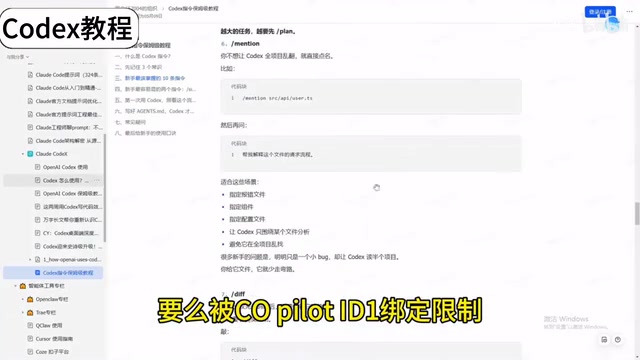
ByteDance Codex Chinese Manual: An In-Depth Guide to AI-Powered Programming
In-depth analysis of the ByteDance Codex Chinese Manual covering multi-language support, prompt standards, context management, and practical templates for AI programming.

ChatGPT Codex Now Rolls Over Unused Resets: AI Coding Finally Free from Quota Interruptions
OpenAI introduces reset rollover for ChatGPT Codex — unused quota no longer expires. Learn how this update eliminates quota anxiety and reshapes AI coding competition.