ByteDance Codex Chinese Manual: An In-Depth Guide to AI-Powered Programming
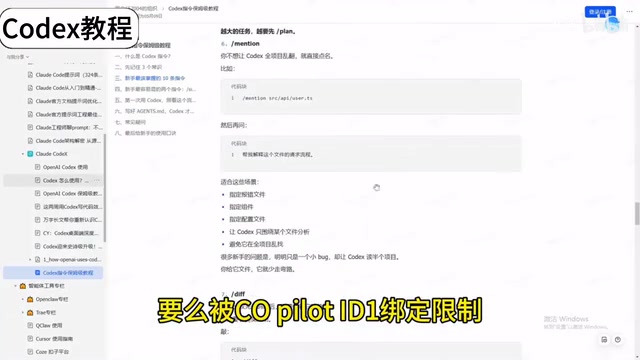
A deep dive into ByteDance's Codex Chinese Manual for systematic AI-powered programming.
This article provides an in-depth analysis of the ByteDance Codex Complete Chinese Manual, a systematic guide designed for Chinese developers to master AI programming. It covers the manual's core advantages including multi-language support without IDE lock-in, integrated code generation and debugging workflows, prompt engineering best practices, context management, and full-process practical templates for real-world development scenarios.
Why Do We Need a Systematic AI Programming Manual?
AI programming tools are everywhere today — from GitHub Copilot to various code generation assistants, developers seem to have plenty of options. But in reality, the pain points are far from resolved. Many people jump on the AI coding bandwagon only to find themselves either locked into a specific IDE or overwhelmed by scattered, fragmented knowledge.
The current AI programming tool market has formed a multi-layered landscape. GitHub Copilot, built on the OpenAI Codex model, was the first AI coding assistant to achieve large-scale commercial adoption. Amazon CodeWhisperer focuses on AWS ecosystem integration, while Google's Gemini Code Assist is deeply tied to Google Cloud. On the Chinese side, major tech companies like ByteDance, Baidu, and Alibaba have all launched their own code-focused large language models. These tools all share the same underlying technology — large language models (LLMs) pre-trained and fine-tuned on massive code corpora to enable code completion, generation, and explanation. Despite the abundance of tools, the core challenge for developers remains unchanged: the lack of a systematic methodology for using them effectively.
Struggling with English documentation, dealing with disorganized knowledge, slow onboarding, and frequent pitfalls — these issues prevent many developers from unlocking the true value of AI programming. Against this backdrop, a comprehensive, Chinese-language, practice-oriented manual tailored for domestic developers becomes especially important.
The "ByteDance Codex Complete Chinese Manual," which has recently gained traction in the programming community on Bilibili, was created to address exactly these problems. Unlike the generic introductory content found online, it focuses on practical implementation and is specifically designed for the Chinese development environment.
What Are the Core Advantages of ByteDance Codex?
Multi-Language Support with No IDE Lock-In
Compared to GitHub Copilot's deep integration with specific IDEs like VS Code, ByteDance Codex offers significantly more flexibility. It supports multiple programming languages, and developers aren't locked into any particular development environment — they can freely choose their toolchain based on project requirements.
IDE (Integrated Development Environment) lock-in is a common pain point in the AI programming tool space. The technical reason behind this is that AI tools need to access cursor position, file context, project structure, and other information through the IDE's API to provide accurate suggestions. For example, GitHub Copilot initially only supported VS Code before gradually expanding to JetBrains IDEs and Neovim, though feature completeness still varies across platforms. IDE-agnostic solutions typically work through standalone API interfaces or command-line tools, allowing developers to invoke AI capabilities in any environment. This is particularly crucial for teams that need to switch flexibly between different tech stacks.
This is especially practical for developers who work across multiple projects and programming languages. Whether your primary language is Python, Java, or any other mainstream language, you can get started quickly.

Integrated Code Generation and Debugging
Many AI programming tools only handle "code generation," leaving debugging and optimization entirely to the developer. ByteDance Codex bridges code generation and debugging into a unified workflow, which significantly reduces the time cost of context-switching during actual development.
In traditional development workflows, coding and debugging are two relatively independent phases, requiring developers to frequently switch between editors and debugging tools. When AI programming tools unify these two stages, it means the model can not only generate code but also analyze runtime errors, interpret stack traces, pinpoint logical defects, and suggest fixes. This relies on the model's deep understanding of program semantics rather than simple pattern matching. The core value of an integrated workflow lies in creating a "generate-execute-feedback-correct" closed loop, similar to the concept of continuous integration in software engineering, which significantly shortens development iteration cycles.
Breaking Down the Manual's Core Content
This Chinese manual has a solid content structure, covering the complete journey from beginner to practitioner:
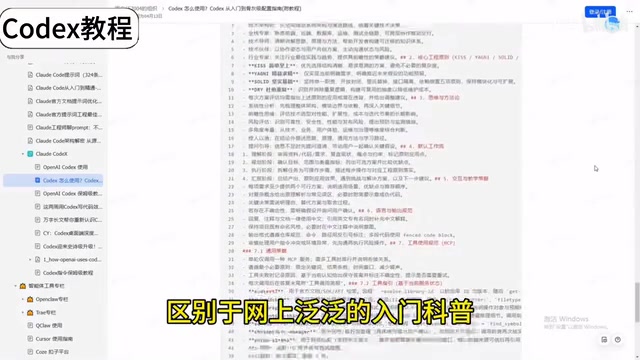
Instruction Standards and Context Management
The manual provides detailed guidance on writing high-quality prompt instructions and managing context information. This is the most easily overlooked yet most impactful factor in AI programming output quality.
Prompt engineering refers to the technique of carefully designing input instructions to guide large language models toward producing high-quality output. In AI programming scenarios, prompt quality directly determines the accuracy and usability of generated code. A good programming prompt typically needs to include: a clear functional description, input/output specifications, programming language and framework constraints, and boundary condition explanations. Context management involves maintaining the model's understanding of the project background across multiple conversation turns, including effective communication of existing code structure, dependency relationships, coding standards, and other information. Research shows that structured prompts can improve the first-pass success rate of code generation by over 40%, which is why the manual places this content in a central position.
Many of the high-frequency issues developers encounter when using AI programming tools — such as "code errors" and "low generation efficiency" — often stem not from the tool itself, but from imprecise instructions and missing context information. The manual provides systematic solutions for these pain points.
Full-Process Practical Templates
The most practically valuable part of the manual is its collection of full-process templates, ranging from simple function writing to small-scale project development. These templates can be copied and used directly, dramatically lowering the barrier to entry.
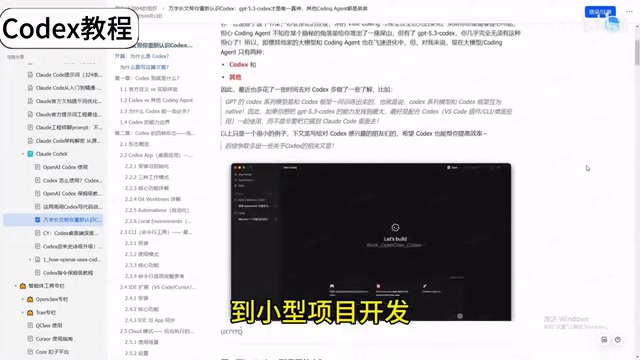
Specifically, the manual covers the following practical scenarios:
- Basic function writing: Quickly generate commonly used utility functions to reduce repetitive work
- Code debugging and optimization: Use AI to locate bugs and optimize performance bottlenecks
- Small-scale project development: A complete workflow from requirements analysis to code implementation
- Common error handling: Templates for diagnosing and fixing frequently encountered errors
This template-based practical design philosophy essentially borrows from the concept of "design patterns" in software engineering — abstracting recurring problem scenarios into reusable solutions. Developers don't need to figure out the best way to collaborate with AI from scratch every time. Instead, they can quickly get started based on proven templates and then adjust and optimize according to specific needs.
Adapted for the Chinese Development Environment
Another highlight of this manual is its thorough consideration of the practical circumstances facing Chinese developers. It helps users avoid common pitfalls related to network access and compliance issues, requires no paid subscriptions, and doesn't require a VPN — significantly lowering the barrier to entry.
Who Is the ByteDance Codex Chinese Manual For?
Based on the manual's positioning and content, its target audience is quite broad:
- Students: Templates can be directly applied to course projects and graduation theses for rapid project completion
- Working developers: Boost daily coding efficiency, reduce repetitive work, and focus energy on core logic
- Freelancers: Accelerate project delivery with AI programming to improve freelancing efficiency
- AI programming beginners: Follow a systematic learning path to avoid the inefficiency of fragmented learning
A Balanced View: The Manual's Value and Limitations
It's worth noting that no manual is a silver bullet. The core value of the ByteDance Codex Chinese Manual lies in lowering the entry barrier and providing a systematic practice framework. However, truly improving your AI programming skills still depends on your own programming fundamentals and continuous practice.
It's important to recognize that AI code generation tools still have some inherent limitations: models may produce "hallucinations" — generating seemingly reasonable but actually nonexistent API calls or incorrect logic. For complex system architecture design and highly customized business logic, AI's comprehension capabilities remain limited. Additionally, the security and intellectual property implications of AI-generated code are ongoing topics of industry discussion. Therefore, code review and testing verification remain essential steps when using AI programming tools.
For developers who already have extensive AI programming experience, the manual's foundational content may offer limited value. But for those just getting started with AI programming or stuck in a cycle of fragmented learning, this systematic Chinese-language resource is definitely worth exploring.
In an era of rapidly evolving AI programming tools, having a clear methodology and practical framework is far more valuable in the long run than blindly chasing the latest tools. As a classic principle in software engineering states: tools will keep changing, but problem-solving mindsets and systematic engineering methodologies are a developer's most enduring competitive advantage.
Key Takeaways
Related articles
AI Full-Stack Development Architecture: A Three-Layer Progressive Path from Prototype to Production
A detailed guide to AI full-stack development architecture covering Node.js+TypeScript+Monorepo engineering, Docker CI/CD deployment, and AI engine design with interview tips.

The AI Industry's Psychological Warfare: Narrative Manipulation, Ecosystem Lock-In, and the Endgame
Behind the AI industry's relentless product launches and narrative building lie deeper battles over data monopolies, ecosystem lock-in, and expectation management. A deep dive into the psyop phenomenon.

ChatGPT Codex Now Rolls Over Unused Resets: AI Coding Finally Free from Quota Interruptions
OpenAI introduces reset rollover for ChatGPT Codex — unused quota no longer expires. Learn how this update eliminates quota anxiety and reshapes AI coding competition.