AI Fully Automated Talking-Head Short Video Production: From Editing to Publishing in Just 5 Minutes
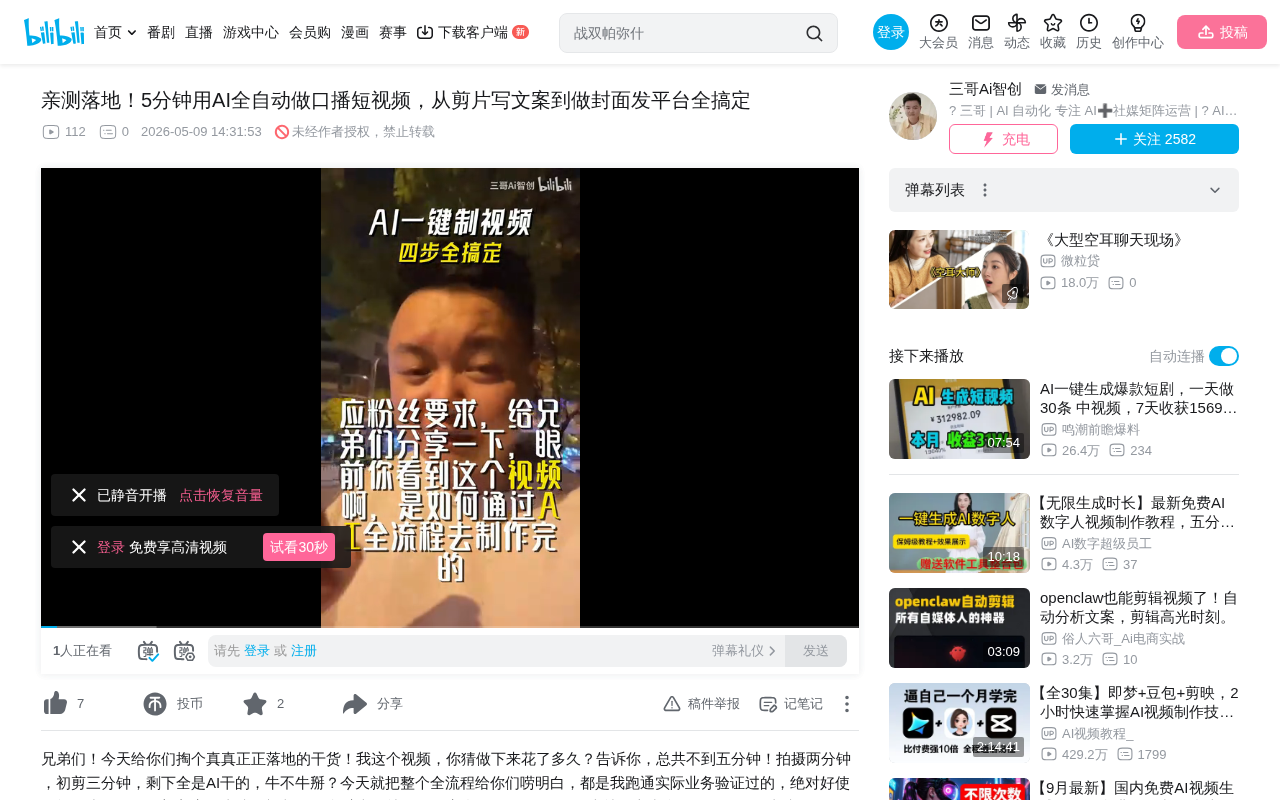
AI workflow compresses talking-head video production from filming to multi-platform publishing into 5 minutes.
A Bilibili creator shared a battle-tested fully automated AI workflow for talking-head videos: humans only spend 5 minutes on filming and rough cutting, while video packaging, platform-specific copy generation, thumbnail creation, and scheduled publishing are all automatically triggered by AI Agents through Feishu Bitable, achieving an unattended pipeline from production to distribution.
The Efficiency Revolution in Talking-Head Video Production
For short video creators, the production workflow for talking-head videos is often tedious and time-consuming — filming, editing, adding subtitles, writing copy, creating thumbnails, and publishing across multiple platforms all require significant effort. A Bilibili content creator shared a fully automated AI workflow that has been validated in actual business operations, compressing the entire talking-head video production and publishing process to under 5 minutes.
The core philosophy of this solution: humans are only responsible for filming and rough cutting (about 5 minutes), while all subsequent tasks — video packaging, copywriting, thumbnail creation, and scheduled publishing — are handled entirely by AI Agents.
Complete Workflow Breakdown: Four Core Steps
Step 1: Filming and Rough Cut (The Only Manual Step)
The only step requiring human involvement in the entire workflow is filming and initial editing. Filming takes about 2 minutes, and the rough cut is kept under 3 minutes. Once this step is complete, the rough-cut video is uploaded to a Feishu Multidimensional Table (Bitable), and all subsequent processes are triggered automatically.
The Multidimensional Table serves as the "central dispatcher" for the entire automation workflow — inputs and outputs from each step are passed and stored through it. Feishu Bitable is an online collaborative database tool provided by ByteDance's Feishu (Lark) platform, similar to Airtable or Notion Database. It not only offers traditional spreadsheet data storage capabilities but, more critically, supports automation triggers — when a field changes (such as a new file upload), it can automatically trigger preset workflow actions. This event-driven architecture makes it naturally suited as a dispatch center for multi-step automation workflows, where each step's output serves as the next step's input, forming a data pipeline. Compared to traditional automation tools like Zapier or Make, Bitable's advantage lies in combining data storage and process triggering into one system, reducing integration complexity between systems.
Step 2: AI Agent Automatically Creates Video Packaging
Once the rough-cut video is uploaded to the Multidimensional Table, it automatically triggers an AI Agent. This Agent is responsible for adding text overlays to the top and bottom of the talking-head video — the title bars, subtitle bars, and other visual elements commonly seen in talking-head videos.

Text packaging for talking-head videos is a standardized production step in the short video industry, typically including a top title bar (summarizing the video's core message to attract viewer retention), a bottom subtitle bar (displaying spoken content in real-time to improve completion rates), and possibly corner badges, progress bars, and other auxiliary elements. Research shows that talking-head videos with text packaging have an average completion rate 20-30% higher than plain talking-head videos, because text information can convey content value in muted browsing scenarios. In traditional production, these overlays need to be manually added using templates and keyframe animations in tools like CapCut or Premiere, taking at least 10-15 minutes per video, while AI Agents can complete this in seconds through preset templates and automatic video content recognition.
The AI Agent referred to here is an AI program with autonomous decision-making and execution capabilities. Unlike simple AI conversations, Agents can perceive their environment, formulate plans, and invoke external tools to complete complex tasks. In this workflow, each Agent is a specialized execution unit: the video packaging Agent calls video editing APIs to add text layers; the copywriting Agent uses a large language model (LLM) to understand video content and output structured copy; and the thumbnail Agent may combine image generation or template rendering capabilities to produce cover images. These Agents are typically built on Agent development platforms like Coze or Dify, implementing specific functions through prompt engineering and Function Calling without writing code from scratch.
The entire packaging process is fully automated. Once the Agent finishes processing, it re-uploads the packaged video to the Multidimensional Table, triggering the next step.
Step 3: Cross-Platform Copy Auto-Generation
After the packaged video is uploaded to the Multidimensional Table, the system automatically generates publishing copy covering all platforms. "All platforms" here includes Douyin (TikTok China), Kuaishou, Xiaohongshu (RED), Video Account (WeChat Channels), and other mainstream short video platforms.
The key highlight: AI generates differentiated main titles, subtitles, and publishing copy tailored to each platform's characteristics. Since each platform has different content tones and recommendation mechanisms, the copy is adjusted accordingly rather than simply cross-posting the same draft.
Different short video platforms have significantly different recommendation algorithms and user behaviors: Douyin favors strong hook openings and trending topic hashtags; Xiaohongshu emphasizes search SEO and product-recommendation tone, requiring keywords in titles; Kuaishou's community atmosphere leans more authentic and down-to-earth; Video Account is deeply integrated with WeChat's social ecosystem, where share-driven virality is an important traffic source. Therefore, the same video should have different title, description, and tag strategies across platforms. In traditional workflows, operations staff need to manually rewrite copy for each platform — one of the most time-consuming aspects of multi-platform operations. AI can generate differentiated content adapted to each platform's tone in one pass through preset platform-characteristic prompts.
Step 4: AI Automatically Creates Thumbnails
After copy generation is complete, another Agent automatically creates video thumbnails based on the main title and subtitle. Once thumbnails are created, they're also uploaded to the Multidimensional Table. At this point, all materials needed for publishing — video, copy, and thumbnail — are fully prepared.
The Last Mile: API-Automated Scheduled Publishing
When the Multidimensional Table has gathered all publishing information, the system achieves automated scheduled publishing through API interfaces. The creator set the publishing time to around 8 PM based on their followers' active hours.
Achieving automated publishing through APIs (Application Programming Interfaces) essentially simulates the manual upload operations on each platform's backend. Some platforms like Douyin Open Platform and Video Account Assistant provide official content publishing APIs, allowing developers to programmatically upload videos, set titles and descriptions, and schedule publishing times. For platforms that don't provide official APIs, RPA (Robotic Process Automation) tools may be needed to simulate browser operations. The value of scheduled publishing lies in precisely targeting each platform's peak traffic periods (typically 7-10 PM) to maximize initial content exposure — this is particularly critical during the cold-start phase of algorithmic recommendations.
This means that from filming completion to multi-platform publishing, creators barely need to do anything else — the entire second half of the process runs automatically in the background.
Technical Architecture Summary
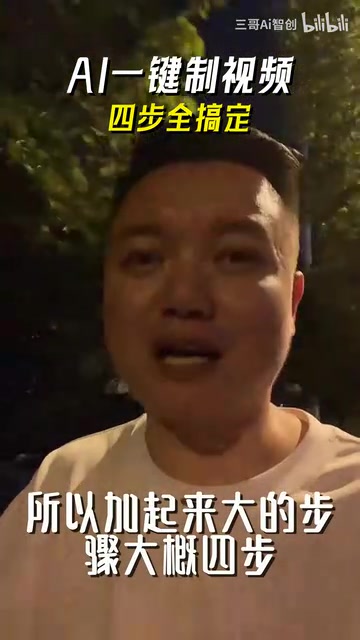
From a macro perspective, this system contains 4 major steps:
- Talking-head video packaging → Completed automatically by AI Agent
- Cross-platform copy generation → Completed automatically by AI Agent
- Thumbnail creation → Completed automatically by AI Agent
- Scheduled publishing → Completed automatically via API
If we break down the intermediate data transfers and Multidimensional Table upload/trigger steps, the entire workflow has approximately 6-7 sub-steps. The core tech stack includes: Feishu Bitable (data hub), multiple AI Agents (execution units), and API automation (publishing endpoint).
This architecture is essentially a lightweight event-driven microservices system — the Multidimensional Table plays the dual role of message queue and database, each AI Agent responds to events as an independent microservice and produces results, and finally content is published externally through an API gateway. This design pattern is known as the "Orchestration Pattern" in enterprise software architecture, except here low-code tools replace traditional code development, significantly lowering the barrier to entry.
Practical Value and Applicable Scenarios
The greatest value of this solution is that it has been validated in actual business operations, rather than remaining at a conceptual level. It's particularly relevant for the following types of creators:
- Knowledge bloggers who need to update talking-head content at high frequency
- MCNs or personal brands operating across multiple platforms that need differentiated distribution
- Creators who want to focus their energy on content creation rather than technical operations
Building this system requires a certain technical threshold — involving AI Agent configuration, Feishu Bitable automation workflow design, API integration, and more. However, once built, the marginal cost of subsequent operations is virtually zero, truly achieving a "build once, benefit continuously" automation effect. From an ROI perspective, assuming a creator publishes one talking-head video daily across 4 platforms, the traditional workflow requires at least 1-2 hours of post-production and operations time per video. After automation, only 5 minutes of filming and rough cutting is needed, saving approximately 45-60 hours of repetitive labor per month. This time can be reinvested into topic planning and content quality improvement, creating a positive feedback loop.
Key Takeaways
- The complete AI workflow compresses talking-head video production from filming to publishing into 5 minutes, with humans only handling filming and rough cutting
- Feishu Bitable serves as the data hub, connecting multiple AI Agents to fully automate video packaging, copy generation, and thumbnail creation
- The system generates differentiated titles and copy for different short video platforms rather than simple cross-posting
- Multi-platform scheduled auto-publishing is achieved through API interfaces, forming a complete unattended publishing pipeline
- This solution has been validated in real business operations and is suitable for talking-head content creators who need high-frequency updates
Related articles
 Tutorials
Cursor + Codex Dual-IDE Collaboration: A Practical Methodology for Open-Source Project Customization
A complete methodology for open-source project customization based on real-world experience, detailing the Cursor+Codex dual-IDE workflow, seven-stage process, MVP validation, and AI source code reading techniques.
 Tutorials
Cursor Multi-Agent in Practice: Building a Full-Stack Next.js Blog in 50 Minutes
Build a full-stack blog in 50 minutes using Cursor IDE's multi-Agent mode with Next.js, Clerk auth, and Supabase. Learn the 4-phase AI Agent workflow and key integration pitfalls.
 Tutorials
Building an AI Software Factory from Scratch: A Cursor Engineer's Hands-On Experience with Multi-Agent Collaboration
Cursor engineer Eric shares practical insights on building an AI software factory: automation levels, guardrail design, parallel Agent management, and scaling to 1000+ Agents for 24/7 development.