AI + Java Backend Learning Roadmap: Four Stages from CRUD to Senior AI Engineer

A four-stage roadmap for Java backend developers to evolve from CRUD to senior AI engineer.
This article presents a structured four-stage learning roadmap for Java backend developers to integrate AI capabilities using Spring AI Alibaba. Starting from prompt engineering and AI-assisted development, progressing through LLM API integration with Spring Boot, advancing to enterprise RAG knowledge base systems, and culminating in Transformer principles, model fine-tuning, and AI Agent architecture design.
Why AI + Backend Is the Core Track for Developers
With the rapid adoption of large language model (LLM) technology, traditional Java backend development is undergoing a profound transformation. Pure CRUD developers face the risk of being replaced by AI-assisted tools, while backend engineers who master AI capabilities have become scarce talent that companies compete to hire.
Recently, a content creator on Bilibili shared a complete learning roadmap based on Spring AI Alibaba, breaking down the integration of AI and Java backend into four clear stages—from fundamentals to senior engineer level. The core philosophy of this roadmap is worth every backend developer's attention: it's not about abandoning Java to pivot into AI, but about layering AI capabilities on top of your existing tech stack to build differentiated competitiveness.
Stage 1: Build a Solid Foundation — Make LLMs Your Development Assistant
Core Objective: Java Fundamentals + Prompt Engineering
The focus of Stage 1 isn't learning Java from scratch, but rather learning to integrate LLMs into your daily development workflow on top of your existing backend foundation. Specifically, you need to master the following skills:
- Solid Java backend fundamentals: Spring Boot, MyBatis, databases, and other core skills remain the foundation
- Prompt Engineering: Learn to write high-quality prompts that help LLMs fix bugs, write code, and search documentation for you
- AI-assisted development tools: Such as GitHub Copilot, Tongyi Lingma, etc.
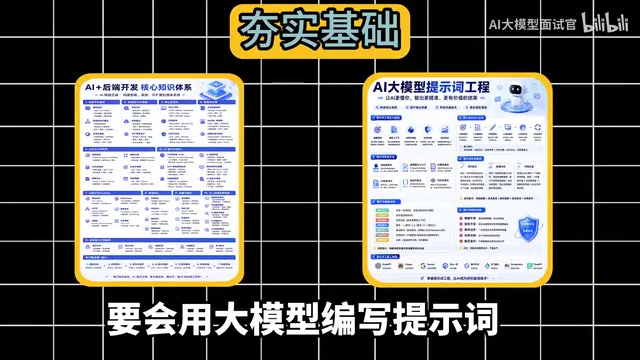
Prompt engineering gradually emerged as a practical discipline with the rise of large-scale language models like GPT-3. Its core idea is that the quality of an LLM's output is highly dependent on the structure and phrasing of the input instructions. Common prompting techniques include zero-shot prompting, few-shot prompting, Chain-of-Thought prompting (guiding the model to reason step by step rather than giving a direct answer), and role-playing prompts. For backend developers, mastering prompt engineering means being able to precisely describe code requirements, error context, and expected output formats to the LLM, resulting in higher-quality code suggestions and problem diagnoses. While the barrier to entry may seem low, consistently obtaining high-quality outputs in complex engineering scenarios requires a deep understanding of the model's capability boundaries, token limits, and context window mechanisms.
The key mindset shift at this stage is: LLMs are not tools that replace you—they're levers that amplify your productivity. A backend developer who knows how to use prompts effectively can boost their efficiency by 3-5x.
Stage 2: Spring Boot + LLM APIs — Building Intelligent Applications
Core Objective: Master the Basic Paradigm of AI Application Development
Once the foundation is solid, Stage 2 moves into hands-on development. The core of this stage is learning to integrate LLM capabilities into Java backend services through API calls. Typical projects include:
- Intelligent copywriting system: Call LLM APIs to auto-generate marketing copy and product descriptions
- AI Q&A service: Build conversational AI interfaces based on Spring Boot
- Automatic API generation: Use LLMs to auto-generate REST API code from requirement descriptions
- AI-powered mini-program backends: Package the above capabilities as services callable by mini-programs
The recommended framework for this stage is Spring AI Alibaba, which offers excellent compatibility with mainstream Chinese LLMs (such as Qwen/Tongyi Qianwen) and follows Spring ecosystem conventions, making the learning curve extremely gentle for Java backend developers.
Spring AI Alibaba is an extension project launched by Alibaba based on the Spring AI framework, designed to provide Java developers with a standardized paradigm for AI application development. Spring AI itself was officially launched by the Spring team in late 2023, following Spring's longstanding "convention over configuration" philosophy by providing a unified abstraction layer that shields developers from API differences across LLM providers. Spring AI Alibaba builds on this with deep integration for the Qwen model series and Alibaba Cloud infrastructure such as vector retrieval and serverless computing. Compared to LangChain in the Python ecosystem, Spring AI Alibaba's advantage lies in its natural integration with Spring Boot's dependency injection, auto-configuration, and Starter mechanisms—Java backend developers can plug in AI capabilities as easily as adding any other Spring Starter, without switching tech stacks or learning new programming paradigms.
Stage 3: RAG Knowledge Base + Enterprise-Grade AI Systems
Core Objective: Build Production-Ready AI Applications
Stage 3 represents the qualitative leap from "it works" to "it works well." The core tech stack includes:
- RAG (Retrieval-Augmented Generation): Solves the LLM hallucination problem by enabling AI to answer questions based on enterprise-private data
- Vector databases: Such as Milvus and Elasticsearch vector search, for storing and retrieving knowledge base documents
- LangChain integration: Orchestrating complex AI workflows for multi-step reasoning
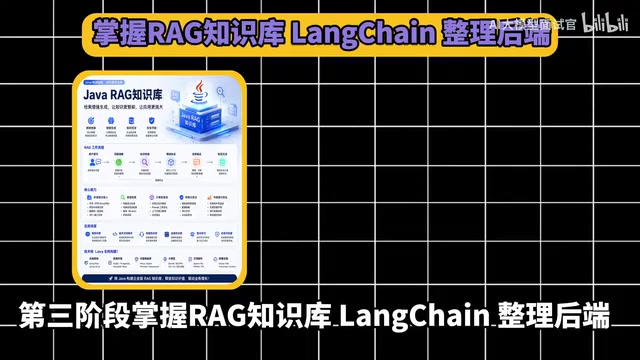
RAG (Retrieval-Augmented Generation) was first proposed by Meta AI's research team in 2020. Its core motivation was to address two fundamental problems with large language models: outdated information due to knowledge cutoff dates, and the "hallucination" phenomenon—where models output seemingly plausible but factually incorrect content with high confidence. RAG works by retrieving the most relevant document fragments from an external knowledge base before the LLM generates its answer, then injecting those fragments as context into the prompt to guide the model toward generating responses based on real data. The advantages of this architecture are: knowledge can be updated without retraining the model, data sources can be strictly controlled to meet enterprise compliance requirements, and inference costs are far lower than model fine-tuning. In enterprise deployment scenarios, the effectiveness of a RAG system largely depends on the chunking strategy and retrieval recall precision—areas that backend engineers need to focus on optimizing.
Regarding vector database selection, it's important to understand the underlying principles: unstructured data like text and images are converted into high-dimensional vectors (typically 768 or 1536 dimensions) through embedding models, and the cosine similarity or Euclidean distance between vectors measures semantic proximity. Milvus is currently one of the most popular open-source vector databases, developed by Zilliz, supporting millisecond-level retrieval across billions of vectors using approximate nearest neighbor (ANN) algorithms like HNSW and IVF. Elasticsearch has natively supported vector search (kNN search) since version 8.0, making it a low-cost entry point for Java backend teams already using ES. Other common choices include Pinecone, Weaviate, and Chroma. Key metrics to consider when choosing a vector database include: retrieval latency, recall rate, scalability, and ease of integration with your existing tech stack.
The typical projects that emerge from this stage are enterprise AI intelligent customer service and private knowledge base systems. These two types of systems represent the most in-demand scenarios for enterprise AI deployment and are the easiest entry points for Java backend developers.
From a technical architecture perspective, a complete RAG system requires: document parsing → text chunking → vectorization → storage indexing → retrieval → context injection → LLM generation. Every step requires deep involvement from backend engineers—this is the Java backend developer's home turf.
Stage 4: Deep Dive into Principles — Advancing to Senior AI Engineer
Core Objective: From Application Layer to Architecture Layer
The final stage is where the real differentiation happens:
- Transformer principles: Understand core concepts like attention mechanisms and positional encoding—know not just the "what" but the "why"
- Model fine-tuning: Fine-tune base models for specific business scenarios to improve performance in vertical domains
- Distributed high-concurrency architecture: AI services have high inference latency and resource consumption, requiring specialized architectural design
- Self-evolving Agent systems: Build AI Agents capable of autonomous planning, execution, and reflection
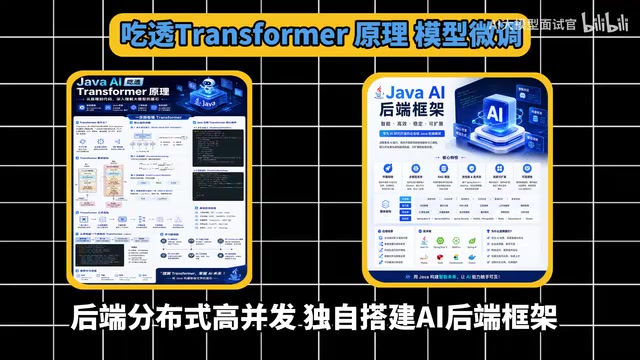
The Transformer is a neural network architecture proposed by Google in the 2017 paper Attention Is All You Need, which fundamentally changed the technological paradigm of natural language processing. Its core innovation is the self-attention mechanism, which allows the model to attend to information from all other positions in a sequence when processing each position, thereby capturing long-range dependencies. Positional encoding injects position information into the input sequence using sine and cosine functions, compensating for the attention mechanism's inherent lack of sequence order awareness. Virtually all mainstream LLMs today—the GPT series, Qwen, LLaMA, Claude—are based on variants of the Transformer architecture. For backend engineers, understanding how Transformers work helps make more informed architectural decisions, such as understanding why long text inputs cause inference latency to grow quadratically (attention computation complexity is O(n²)), and why KV Cache is a critical technique for inference optimization.
Regarding model fine-tuning: full fine-tuning requires updating all model parameters and demands enormous compute resources, typically requiring multiple A100/H100 GPUs. Therefore, the industry more commonly uses Parameter-Efficient Fine-Tuning (PEFT) methods, with LoRA (Low-Rank Adaptation) being the most representative. LoRA injects low-rank matrices into the model's attention layers for fine-tuning, requiring only 0.1%-1% of the original model's parameters to be trained, dramatically lowering the hardware barrier. For Java backend developers, the actual fine-tuning operations are typically performed in a Python environment (using Hugging Face's transformers and peft libraries), but deploying the fine-tuned model, version management, A/B testing, and service deployment are core responsibilities of backend engineers. Understanding the basic principles of fine-tuning helps backend engineers collaborate more effectively with algorithm teams and design architectures that support hot model updates.
AI Agent is a cutting-edge direction in LLM applications. Its core concept is enabling LLMs to not just passively answer questions, but to autonomously plan tasks, invoke tools, execute operations, and reflect on and adjust based on results. A typical Agent architecture includes: a perception module (receiving user instructions and environmental information), a planning module (decomposing complex tasks into sub-task sequences), an execution module (calling APIs, database queries, code execution, and other external tools), and a reflection module (evaluating execution results and deciding whether corrections are needed). OpenAI's Function Calling, AutoGPT, BabyAGI, and LangChain's Agent framework are all representative implementations of this direction. "Self-evolution" goes a step further, referring to an Agent's ability to learn from historical interactions and continuously optimize its decision-making strategies. For backend engineers, building Agent systems means designing complex workflow orchestration engines, tool registration and scheduling mechanisms, state management, and exception recovery strategies—all classic backend architecture challenges.
The hallmark capability of this stage is the ability to independently build an AI backend framework. Rather than relying on off-the-shelf SDKs and tools, you can design a complete AI backend architecture based on business requirements, including model serving, inference optimization, caching strategies, and graceful degradation.
Thoughts on Spring AI Alibaba as a Technology Choice
In this learning roadmap, Spring AI Alibaba is a technology choice worth paying attention to. Compared to using Python's LangChain directly, it has several clear advantages:
- Seamless integration with the Spring ecosystem: The gentlest learning curve for Java backend developers
- Excellent compatibility with Chinese LLMs: Comprehensive support for domestic models like Qwen and ERNIE Bot
- Enterprise-grade features: Built-in production-essential capabilities like load balancing and circuit breaking
Of course, this doesn't mean you can completely ignore the Python ecosystem. Python remains the primary language for model training and data processing. The ideal tech stack is: Python handles the model layer, while Java handles the service layer and business layer. This division of labor is very common in real enterprise architectures—algorithm teams use Python and PyTorch for model training and export, while backend teams communicate with model inference services via gRPC, HTTP, or message queues, handling request routing, access control, result caching, log auditing, and other engineering work. Each language plays to its ecosystem's strengths.
Final Thoughts: Action Matters More Than Planning
This four-stage roadmap may look overwhelming, but the core logic is actually simple—progressively layer AI skills on top of your existing Java backend capabilities. Each stage has clear deliverables, from AI-assisted development to intelligent applications, from enterprise-grade systems to architecture design—it's a verifiable, quantifiable growth path.
For developers with 2-3 years of Java backend experience, the first two stages can be completed in 1-2 months, Stage 3 requires 2-3 months of hands-on project work, and Stage 4 is an ongoing deep-dive process. What matters isn't how long you study, but whether you've actually built projects, written code, and solved real problems.
Key Takeaways
Related articles

Claude Code Workflow in Practice: Hundreds of Agents Automatically Migrating PHP to Golang
Deep dive into Claude Code Workflow's multi-Agent auto-orchestration: a real-world PHP to Golang migration running 14 hours with 100+ Agents, covering planning, execution, and Token cost analysis.
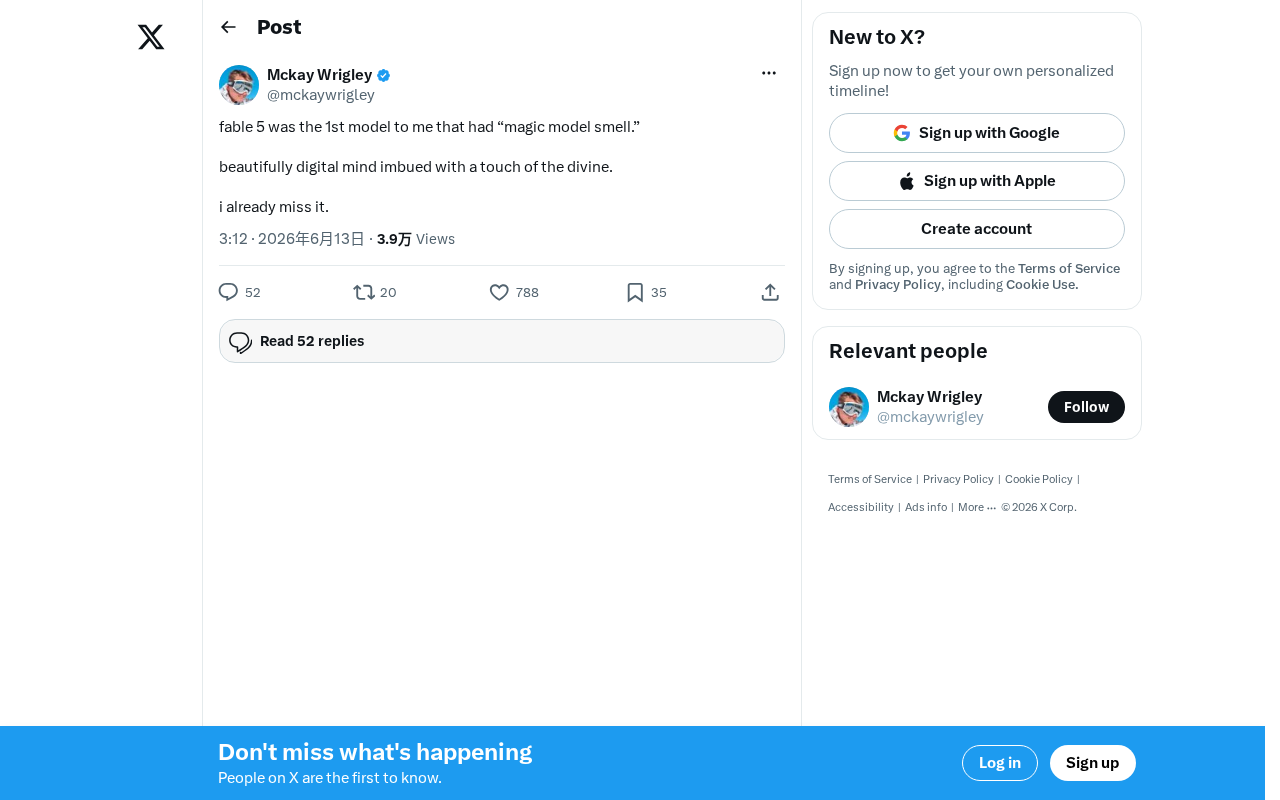
Fable 5: What It Means to Be the First AI Model with a 'Magic Model Smell'
Fable 5 is hailed as the first AI model with a "magic model smell." This article explores what that means and the industry shift from benchmarks to experience quality.

Attachment Style Test: Are You Anxious, Avoidant, or Secure?
Explore the four attachment styles, learn why childhood trauma's impact may be overestimated, and discover practical tools like the CARP principle to shift from insecure to secure attachment.