AI Large Language Model Learning Roadmap: A Complete Guide from Zero to Project Implementation
AI Large Language Model Learning Roadm…
A complete guide to learning AI large language models from zero to project implementation.
This article provides a systematic learning roadmap for AI large language models, covering five core modules: foundational awareness, prompt engineering, RAG knowledge base construction, AI Agent development, and model fine-tuning. It includes beginner-friendly learning paths, common misconceptions to avoid, and practical advice for building real-world projects.
Why Now Is the Best Time to Learn AI Large Language Models
The AI large language model industry is in an exceptionally unique window period — where rapidly maturing technology coexists with a severe talent shortage. According to multiple recruitment data sources, AI-related positions generally offer 30%-100% higher salaries than traditional IT roles, and the talent gap for professionals with LLM application development skills continues to widen.
This means that whether you're looking for career advancement, cross-industry transition, or entering the field from scratch, systematically learning LLM skills right now is a high-ROI choice. This article outlines a complete learning roadmap from building foundational understanding to commercial project implementation, helping you find a clear growth path.
Five Core Modules for Learning Large Language Models
Module 1: Core Capability Awareness of Large Models
When learning any technology, the first step is to establish the right cognitive framework. Large models are not omnipotent black boxes — understanding their capability boundaries is crucial. The core content to master at this stage includes:
- Basic principles of large models: Understand the Transformer architecture, the basic concepts of pre-training and fine-tuning. You don't need to derive mathematical formulas, but you should understand "why large models can do what they do."
Transformer is a deep learning architecture proposed by the Google team in the 2017 paper Attention Is All You Need. Its core innovation is the Self-Attention mechanism, which allows the model to attend to information at all positions in the input simultaneously when processing sequential data, rather than processing step by step like previous RNN/LSTM architectures. This parallelized design not only dramatically improves training efficiency but also enables the model to capture long-range dependencies. Modern large language models (such as the GPT series) primarily use the decoder portion of the Transformer, generating text token by token through autoregressive methods.
Pre-train & Fine-tune is the core training paradigm of current large models. During the pre-training phase, the model learns general patterns of language on massive unlabeled text (typically trillions of tokens) through the task of predicting the next word, acquiring broad world knowledge and language capabilities. The fine-tuning phase further trains the model on small-scale labeled data for specific tasks or domains, adapting it to particular application scenarios. The advantage of this paradigm is that expensive general knowledge learning is completed once, and subsequent adaptation to different tasks requires only minimal data and computational resources.
- Differences between mainstream models: What are the characteristics and applicable scenarios of GPT series, Claude, Gemini, and domestic models like DeepSeek and Qwen?
- Capabilities and limitations: Hallucination issues, context window constraints, boundaries of reasoning ability, etc.
Regarding hallucination, this is a core challenge that must be confronted in LLM applications. Hallucination refers to large models generating content that appears reasonable but is actually incorrect or fabricated. The root cause lies in the fact that large models are essentially probabilistic language models — they predict the most likely next word based on statistical patterns rather than retrieving facts from a reliable knowledge base. Hallucinations are divided into factual hallucinations (fabricating non-existent facts) and faithfulness hallucinations (contradicting given context). Currently, the industry mitigates this problem through RAG, fact-checking chains, confidence calibration, and other methods, but it cannot be completely eliminated. Understanding this limitation is a prerequisite for correctly using large models.
The goal of this stage is to enable you to quickly determine "should I use a large model" and "which model should I use" when facing specific requirements.
Module 2: Prompt Engineering
Prompt engineering is the highest ROI skill in LLM application development. Good prompts can multiply the quality of model outputs several times over, and this skill requires absolutely no programming background.
Core techniques include:
- Role setting and task decomposition: Defining the model's behavior patterns through system prompts
- Few-shot and Chain-of-Thought: Using examples and reasoning chains to improve accuracy on complex tasks
Chain-of-Thought (CoT) is a prompting technique proposed by Google's research team in 2022. Its core idea is to guide the model to show intermediate reasoning steps in the prompt rather than directly giving the final answer. Research shows that when models are asked to "think step by step," accuracy significantly improves on tasks involving mathematical reasoning, logical judgment, and multi-step problems. This is because explicit reasoning chains help the model decompose complex problems into manageable sub-steps, reducing errors from leap-of-logic reasoning. CoT variants include Zero-shot CoT (simply adding "let's think step by step") and Few-shot CoT (providing examples with reasoning processes). Mastering this technique allows you to dramatically improve model performance on complex tasks without modifying any code.
- Structured output control: Getting the model to output results in specified formats (JSON, Markdown, etc.)
- Enterprise-level prompt templates: Standardized prompt design for scenarios like customer service, copywriting, and data analysis
Prompt engineering has the lowest entry barrier but a very high ceiling — it's recommended to invest sufficient time in repeated practice.
Module 3: RAG Knowledge Base Construction
RAG (Retrieval-Augmented Generation) is currently the most mainstream technical solution for enterprise LLM deployment. It solves the core pain points of large models having "outdated knowledge" and "lacking private data." The basic idea of RAG is: before the large model generates an answer, it first retrieves information fragments relevant to the user's question from an external knowledge base, provides this information as context to the model, thereby enabling the model to generate answers based on real data rather than relying solely on knowledge learned during training.
Learning RAG requires mastering:
- Document parsing and chunking strategies: How to process unstructured data like PDFs, Word documents, and web pages into knowledge fragments usable by models
- Vector database usage: Selection and operation of mainstream vector databases like Milvus, Chroma, and FAISS
Vector databases are database systems specifically designed for storing and retrieving high-dimensional vectors. In RAG scenarios, text is converted into high-dimensional vectors (typically 768-1536 dimensions) through embedding models. These vectors encode the meaning of text in semantic space — semantically similar texts are closer together in vector space. During retrieval, the user query is also converted into a vector, and the most relevant document fragments are quickly found through Approximate Nearest Neighbor (ANN) algorithms. Compared to traditional keyword retrieval, vector retrieval can understand synonyms, paraphrases, and semantic associations, dramatically improving recall quality. When choosing a vector database, consider factors like data scale, query latency, and whether persistent storage is needed — FAISS is suitable for lightweight local experiments, Chroma for rapid prototyping, and Milvus for production-grade large-scale deployment.
- Retrieval strategy optimization: Methods to improve retrieval quality such as hybrid retrieval, reranking, and query rewriting
- End-to-end RAG system construction: The complete pipeline from data ingestion to Q&A output
RAG is one of the most frequently appearing technical requirements in enterprise recruitment — mastering this skill is extremely advantageous for job seeking.
Module 4: AI Agent Development
AI Agent is one of the hottest technical directions today. Unlike simple conversations, Agents can autonomously plan tasks, call tools, and execute multi-step operations. Think of an Agent as "a large model with hands and feet" — the large model provides thinking and decision-making capabilities, while tool calling gives it the ability to interact with the external world.
Key learning content:
- Agent architecture design: Mainstream Agent frameworks like ReAct and Plan-and-Execute
ReAct (Reasoning + Acting) is an Agent framework jointly proposed by Princeton and Google in 2022. It interleaves reasoning and acting: the model first thinks and analyzes the current state, then decides what action to take, observes the action result, and then proceeds to the next round of thinking. This "think-act-observe" loop simulates how humans solve problems. Compared to pure reasoning approaches, ReAct can obtain real-time information through interaction with the external environment; compared to pure acting approaches, it reduces blind trial-and-error through explicit reasoning. Plan-and-Execute adopts a different strategy: first formulate a complete plan, then execute step by step, suitable for scenarios where the task structure is relatively clear. Understanding the design philosophy of these architectures helps you choose the most appropriate Agent pattern in real projects.
- Tool calling (Function Calling): Enabling large models to call APIs, operate databases, and execute code
- Multi-Agent collaboration: Design patterns for multiple Agents working together to complete complex tasks
- Mainstream framework practice: Using frameworks like LangChain, LlamaIndex, and AutoGen
Agent development requires some programming foundation (primarily Python), but the entry difficulty is far lower than traditional algorithm development.
Module 5: Model Fine-tuning and Commercial Project Implementation
When general-purpose models cannot meet specific scenario requirements, fine-tuning becomes necessary. The learning focus at this stage is:
- Efficient fine-tuning methods like LoRA/QLoRA: Completing model customization with fewer computational resources
LoRA (Low-Rank Adaptation) is a parameter-efficient fine-tuning method proposed by Microsoft in 2021. Its core idea is that the weight change matrix during model fine-tuning has low-rank properties, so it can be decomposed into the product of two smaller matrices. For example, for a d×d weight matrix, LoRA only trains two small matrices of size d×r and r×d (where r is much smaller than d, typically 4-64), reducing trainable parameters from d² to 2dr. QLoRA further introduces 4-bit quantization on top of this, making it possible to fine-tune models with billions of parameters on consumer-grade GPUs (such as a single 24GB graphics card). These two techniques have dramatically lowered the hardware barrier for model customization, enabling individual developers and small-to-medium enterprises to have customized AI models.
- Dataset construction: How to prepare high-quality training data
- Evaluation and deployment: The complete workflow for evaluating fine-tuning results and deploying models to production
Through complete commercial project implementation (such as intelligent customer service systems, document Q&A platforms, automated workflows, etc.), all modules are connected together to form a portfolio that can be included on your resume.
Learning Path Recommendations and Pitfall Avoidance Guide
Recommended Path for Complete Beginners
- Days 1-2: LLM awareness + Prompt engineering (no programming required)
- Days 3-4: Python basics + API calling introduction
- Days 5-6: RAG knowledge base construction hands-on practice
- Day 7 and beyond: Agent development + Fine-tuning + Project implementation
If you invest 6-8 hours of focused study per day, you can make the leap from zero to independently building a simple RAG application within one week. However, truly solid technical skills require continuous project accumulation and iteration.
Common Misconceptions in LLM Learning
- Misconception 1: You must master algorithms to do LLM development. In reality, LLM application development and algorithm research are two different paths — the former emphasizes engineering capabilities and scenario understanding. Algorithm research focuses on how to make models themselves better (e.g., improving attention mechanisms, designing new training objectives), while application development focuses on how to leverage existing model capabilities to solve real problems. The required skill stacks differ significantly — application developers don't need to deeply understand the mathematical derivations of backpropagation, but they need profound understanding of business scenarios.
- Misconception 2: Only studying theory without doing projects. The LLM field changes extremely fast — only through actual projects can you truly master skills.
- Misconception 3: Trying to learn everything at once. It's recommended to first go deep in one direction (such as RAG or Agent), then expand horizontally.
A Rational Perspective on the AI Learning Boom
While AI large models are indeed the most promising technical direction today, learners should remain rational. Many "crash courses" and "guaranteed employment" programs on the market suffer from excessive marketing. Truly valuable learning should focus on:
- Whether there are complete hands-on projects, rather than pure theoretical lectures
- Whether the code is runnable and reproducible in your own environment
- Whether the content is updated promptly — in the LLM field, three months is an era
Ultimate learning outcomes depend on personal investment and depth of practice. Choosing a learning resource with a complete content framework and accompanying hands-on code is far more important than chasing trending courses.
Conclusion
AI large model application development is a rare "low barrier, high reward" technical direction. From prompt engineering to RAG, Agent, and fine-tuning, each module has a clear learning path and practical application scenarios. The key is to start early, practice hands-on, and iterate continuously. Rather than watching and hesitating, start your first project in one module right now.
Related articles
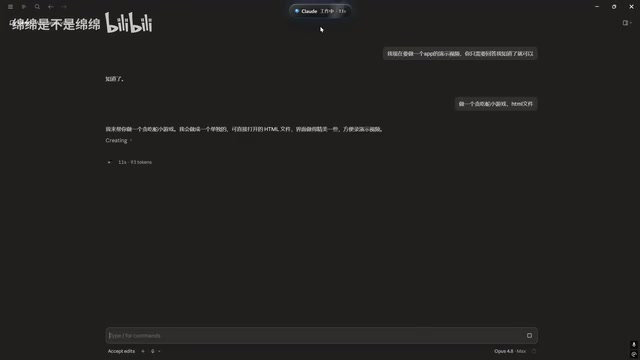
Claude Code Desktop Status Capsule: An Open-Source Widget for Real-Time AI Coding Status Monitoring
An open-source desktop status capsule that monitors Claude Code's idle, working, and completed states in real time, with multi-conversation management, memos, and music control for developers.

GPT-5.2 Codex vs Opus 4.5 Hands-On: A Comprehensive Comparison of Coding Ability, Speed, and Developer Experience
Hands-on comparison of GPT-5.2 Codex vs Opus 4.5 across frontend generation, physics simulation, 3D scenes, and code refactoring, with practical selection advice.
Deep Dive into the Three AI Programmin…
Deep Dive into the Three AI Programming Frameworks: The Right Way to Do Specification-Driven Development
Deep dive into the three frameworks of Specification-Driven Development (SDD) for AI programming: Blueprint, Execution Flow, and Change Records — solving the problem of AI code going off the rails.