AI-Powered Frida Reverse Engineering: Efficient Packet Capture in One Shot

AI+Frida enables efficient mobile app packet capture and protocol reverse engineering
This article explains how traditional packet capture tools face challenges like SSL Pinning and anti-detection mechanisms, and proposes a new approach using Frida dynamic instrumentation combined with AI assistance. By decompiling with JADX to obtain source code, letting AI analyze encryption logic and auto-generate Hook scripts, plaintext data is intercepted directly before encryption — achieving protocol reverse engineering in just four steps.
The Dilemma of Traditional Packet Capture
In the field of mobile application reverse engineering, packet capture has always been a core technique for analyzing network protocols. However, traditional packet capture solutions are facing increasingly severe challenges.
When it comes to packet capture, most people immediately think of proxy-layer tools like Charles or Fiddler. These tools are essentially HTTP/HTTPS proxy servers that intercept traffic by inserting a Man-in-the-Middle between the client and server. For HTTPS traffic, a self-signed CA certificate needs to be installed on the device so the proxy can decrypt TLS-encrypted content. But the reality is that modern apps have increasingly strict proxy detection — proxy-layer packet capture gets identified almost instantly. Modern apps widely adopt SSL Pinning technology, which hardcodes the server certificate fingerprint within the application and rejects any TLS connection with an unexpected certificate. Additionally, apps check system proxy settings, VPN interface status, and even use the NetworkInfo API to determine whether the current network is being forwarded through a proxy, refusing to send requests or returning fake data when packet capture behavior is detected.
More advanced solutions like APPF (Application-Layer Packet Capture Framework), while powerful, are cumbersome to configure, highly invasive, and far from a silver bullet.
So how do we achieve truly efficient packet capture? The answer is: Frida + AI.
Why Choose Frida
Frida's Core Advantages
Frida is a dynamic instrumentation tool whose core philosophy is to inject code directly at runtime, hook target functions, and intercept data streams at the lowest level. Its underlying implementation is based on Dynamic Binary Instrumentation (DBI) technology. On the Android platform, Frida attaches to the target process via the ptrace system call, then injects a shared library (frida-agent) that embeds the V8 JavaScript engine. Once injection is complete, user-written JS scripts execute within the target process's address space, with direct access to process memory, the ability to replace function implementations, and read register values. For Java-layer hooking, Frida leverages internal interfaces provided by the Android Runtime (ART), modifying method entry points to redirect calls to user-defined callback functions.
Compared to traditional packet capture tools that can only intercept data at the network layer, Frida can penetrate any level of the application:
- Bypass encryption: Intercept plaintext directly before encryption or after decryption
- Hook anything: Whether it's custom protocols or encrypted heartbeat packets, everything can be captured at the lowest level
- Extremely flexible: Implement arbitrary logic through JavaScript scripts
This in-process execution approach allows Frida to intercept data before it reaches the network layer, completely independent of network proxies, fundamentally circumventing proxy detection issues.
With AI assistance, Frida's barrier to entry is significantly lowered. Hook scripts that previously required deep understanding of smali code and Java decompilation can now be automatically generated by AI based on decompilation results.
Countering Anti-Detection: Modified Frida Builds
Of course, Frida has its Achilles' heel — anti-Frida detection by major tech companies. Major apps typically deploy multi-layered Frida detection mechanisms: the first layer scans the process's /proc/self/maps file looking for characteristic library names like frida-agent.so; the second layer checks whether the default Frida communication port (27042) is open; the third layer scans memory for Frida signature strings like "LIBFRIDA"; the fourth layer uses inline hook detection to verify whether the first few bytes of critical functions have been modified to jump instructions.
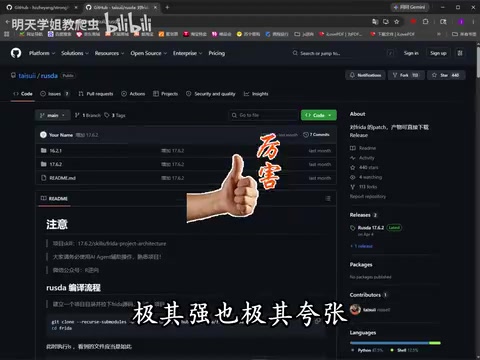
For these situations, two recommended modified projects are:
- Rashda: Powerful anti-detection bypass capabilities
- Chunga: Equally strong anti-detection evasion capabilities
These projects evade detection through techniques such as renaming shared libraries, randomizing communication ports, erasing memory signature strings, and using more covert hooking methods (such as modifying virtual function tables instead of inline patching). Their anti-detection capabilities are remarkably strong, able to handle Frida detection mechanisms in most mainstream apps.
AI-Assisted Reverse Engineering Workflow
Step 1: Information Gathering and Packing Analysis
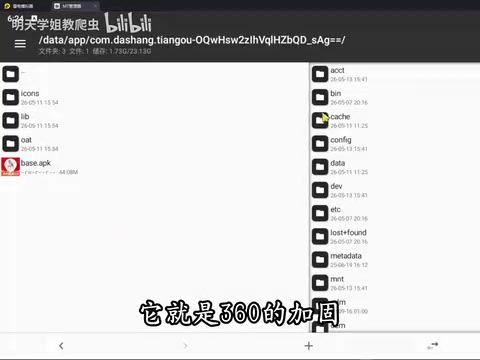
Taking a target app as an example, the first step is to analyze what packing/hardening product the target application uses. App hardening (also called packing) is a code protection technique, with mainstream solutions including 360 Jiagu, Bangbang, iJiami, etc. The basic principle of hardening is to encrypt or transform the original DEX files (Dalvik Executable files containing the application's Java/Kotlin bytecode), which are then dynamically decrypted and loaded in memory by the shell program (loader) at runtime. This means directly decompiling the APK only reveals the shell code, not the actual business logic.
After scanning with specialized tools, if it shows "not hardened," the analysis is relatively straightforward. If hardening is detected (e.g., 360 Jiagu), unpacking is required first. The core approach to unpacking is to dump the complete DEX file from memory after it has been decrypted and loaded. Common unpacking tools include Frida-DEXDump, FART (an active-invocation unpacker based on ART modifications), etc., which leverage the timing points when the ART virtual machine loads classes to obtain decrypted code.
Step 2: Decompilation to Obtain Source Code
Use JADX to decompile the APK and fully restore the Java source code. JADX is currently one of the most mainstream Android decompilation tools — it can convert DEX bytecode directly into readable Java source code rather than intermediate smali assembly language. Compared to the earlier dex2jar+JD-GUI workflow, JADX provides better code restoration quality and an integrated GUI interface.
JADX supports deobfuscation mapping, cross-reference analysis, string search, and other features that are particularly important for reverse-analyzing network request logic — analysts can quickly locate network layer code by searching for URL strings, HTTP method calls, etc., and then trace parameter encryption and signing processes. The decompiled content is exported as a JAR compressed file containing the application's core business logic code.
Step 3: AI Generates Hook Scripts
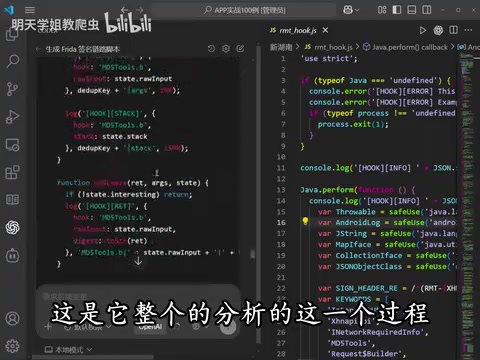
This is the most critical step in the entire workflow — feeding the decompiled source code to AI, letting it analyze the encryption logic and automatically generate Frida Hook scripts.
AI (such as GPT-4, Claude, and other large language models) can identify common encryption patterns when analyzing decompiled code, such as AES/RSA encryption calls, HMAC signature calculations, custom encoding algorithms, etc. AI determines the optimal hook points based on function signatures, parameter types, and call chains — typically selecting the input parameters of encryption functions (to obtain plaintext) and output parameters (to obtain ciphertext), as well as network request construction functions (to obtain complete request parameters).
AI accomplishes the following:
- Analyzes encryption functions and network request logic in the code
- Identifies critical hook points (such as plaintext parameters before encryption)
- Generates complete JavaScript Hook scripts
- Explains what information the script can extract
The generated Frida scripts typically use Java.perform() as a wrapper, obtain target class references via Java.use(), then replace the target method's implementation using the implementation property. The new implementation prints parameters before calling the original method, achieving transparent data interception.
Step 4: Execution and Verification
Inject the AI-generated JS script into the target process via command line. The typical operation uses the command frida -U -f com.target.app -l hook.js, where -U indicates connecting to a USB device, -f specifies launching the target application in spawn mode (ensuring hooking begins from the very start of the application), and -l loads the specified JS script file.
In actual testing, once the script starts, those previously encrypted heartbeat packets and parameter payloads are fully exposed — captured in plaintext. The console outputs the parameter values and return values in real-time each time the target function is called, including request URLs, request body plaintext, signature calculation inputs and outputs, and other critical information.
Core Methodology: Tracing Encryption Logic from Plaintext
The essence of this AI+Frida workflow lies in:
Tracing encryption logic backward from plaintext parameters — this is the core approach to protocol-level reverse engineering.
The traditional approach is to first understand the encryption algorithm and then attempt decryption, which often requires the reverse engineer to possess cryptography knowledge, be able to identify algorithm types, find keys, understand padding modes and block modes, and other details — time-consuming and error-prone. Frida's approach is to intercept data directly before encryption occurs, completely bypassing the challenge of "cracking encryption." The essence of this approach is to reduce the problem from "cryptanalysis" to "code location" — as long as you find where the encryption function is called, you can simultaneously obtain both plaintext and ciphertext, and even directly extract encryption keys.
The addition of AI further lowers the technical barrier for writing Hook scripts, making the entire process efficient and reproducible. Even when facing code obfuscated by ProGuard or R8 (where variable names and method names are replaced with meaningless short characters), AI can infer the actual purpose of functions by analyzing code structure, API call patterns, and data flow.
Summary
Compared to complex MCP configurations or traditional packet capture solutions, Frida's command-line direct injection approach is indeed more efficient and straightforward. Combined with AI's ability to automatically generate Hook scripts, even encrypted protocols can be quickly broken through. The entire workflow can be summarized as:
- Tool scanning for hardening status
- JADX decompilation to obtain source code
- AI analysis to generate Hook scripts
- Frida command-line injection and execution
Four steps to achieve a full-chain breakthrough from encryption to plaintext — this is the new paradigm of reverse engineering in the AI era. The core value of this methodology lies in compressing what originally required days or even weeks of reverse analysis into just a few hours, while lowering the technical barrier from "senior security researcher" to "engineer with basic development skills," greatly improving the efficiency and accessibility of protocol analysis.
Related articles
 Tutorials
Cursor + Codex Dual-IDE Collaboration: A Practical Methodology for Open-Source Project Customization
A complete methodology for open-source project customization based on real-world experience, detailing the Cursor+Codex dual-IDE workflow, seven-stage process, MVP validation, and AI source code reading techniques.
 Tutorials
Cursor Multi-Agent in Practice: Building a Full-Stack Next.js Blog in 50 Minutes
Build a full-stack blog in 50 minutes using Cursor IDE's multi-Agent mode with Next.js, Clerk auth, and Supabase. Learn the 4-phase AI Agent workflow and key integration pitfalls.
 Tutorials
Building an AI Software Factory from Scratch: A Cursor Engineer's Hands-On Experience with Multi-Agent Collaboration
Cursor engineer Eric shares practical insights on building an AI software factory: automation levels, guardrail design, parallel Agent management, and scaling to 1000+ Agents for 24/7 development.