AI Programming Learning Roadmap: A Complete Six-Stage Guide from Beginner to Expert

A six-stage roadmap from zero-code beginner to advanced AI programming practitioner.
This guide breaks down AI programming mastery into six progressive stages: starting with zero-code platforms to build confidence, mastering professional tools like Cursor and Claude Code, developing systematic methodologies for prompt engineering and context management, learning advanced patterns like SDD and Agent Engineering, building real projects of increasing complexity, and finally pursuing targeted deep dives based on specific needs.
Introduction: AI Programming Is More Than Just "Chatting to Write Code"
Many people still think of AI programming as simply "opening an AI platform, describing what you need, and getting a small tool built in minutes." Sure, the barrier to entry for AI programming is now so low that anyone can do it. But when you try to tackle more complex projects, problems pile up fast—AI misunderstands your requirements, fixing one bug spawns three new ones, and the project becomes increasingly unmaintainable.
Chatting alone simply can't sustain a real project. So what do you actually need to learn to truly master AI programming? One content creator broke down the AI programming learning roadmap into six stages, from zero experience to advanced practice, forming a clear growth path. This article provides an in-depth breakdown of that roadmap.
Stage One: Zero-Code Start—Just Build Something
The core of this stage boils down to one sentence: Just build something first. It doesn't matter if you don't understand technology or can't read code—making something that works is a victory.
First, you need to understand some basic concepts: what Web Coding is, what large language models are, and what Tokens are. Then jump straight in—open a zero-code AI platform (like Bolt, v0, etc.), type in your requirements, watch AI generate code for you, quickly build a functional website, and even publish it online with one click.
After completing your first project, you'll discover that the essence of AI programming is: Describe requirements → Multi-turn dialogue → Iterative optimization → Verify and fix → Repeat the cycle. That sense of accomplishment is the best motivation for learning. But reaching this point only puts you ahead of 50% of learners.
Stage Two: Master Professional AI Programming Tools
Zero-code AI platforms have limited capabilities. To build more complex projects, you need more professional AI programming tools. The three most mainstream tools currently are:
- Cursor: An AI code editor based on VSCode that supports one-click switching between various mainstream models, with excellent code reading and review experience
- Codex: An AI programming tool from OpenAI with strong programming and productivity capabilities, offering great value for money
- Claude Code: A terminal-based AI programming tool with the strongest ability to handle complex tasks, though with a slightly higher learning curve
Beginners should start with Cursor or Codex—get comfortable with the visual interface first, then try Claude Code later. You don't need to learn every tool—pick one or two and master them deeply, because regardless of which tool you choose, the things you need to learn are transferable, including: basic usage, core features, extensions and enhancements, tips and tricks, and custom configuration.
More than the tools themselves, the extension capabilities you provide to AI tools are worth investing time in. For example, MCP (Model Context Protocol) lets AI connect to external services, and Agent Skills let AI quickly learn specific capabilities—all of which dramatically improve AI's working efficiency. Master these, and you'll be ahead of 70% of learners.
Stage Three: Methodology Framework—Build Projects Fast and Stable
Knowing how to use tools isn't enough—you also need a systematic methodology to build projects that are both fast and stable.
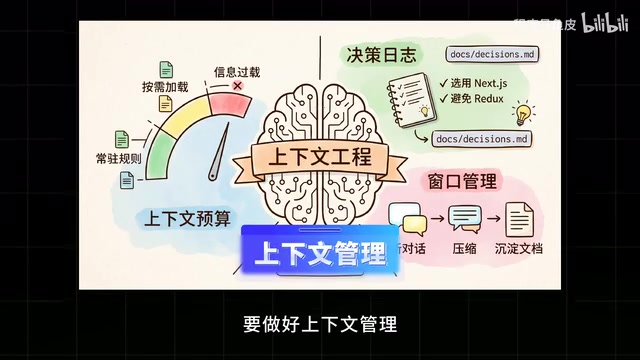
Requirements Analysis and Prompt Engineering
Before letting AI start working, you need to think through and break down "what to build" clearly. Then use prompt engineering to communicate requirements clearly to AI, employing various techniques to ensure AI accurately understands your intent.
Context Management
When developing complete projects, you need proper context management—providing AI with sufficient background information so it follows conventions and better understands your project. This is a step many people overlook but is extremely critical.
Bug Troubleshooting and Version Control
If AI writes buggy code, you need to know bug troubleshooting routines, learn how to describe bug information to AI, and collaborate with AI on fixes. If AI breaks the project, you can use Git version control to roll back to a working version with one click—don't let AI go down a dead-end path.
Code Review and Deployment
If you're collaborating with a team, you need to string together the individual skills into a standardized project development workflow. Pay special attention: Always review AI-generated code yourself before using it. After the project is complete, use cloud servers or deployment hosting platforms to make your work accessible to others.
Stage Four: Advanced AI Programming Patterns
As projects grow more complex, simple Web Coding won't cut it anymore. You need to understand more AI programming patterns:

- SDD (Spec-Driven Development): Write requirements as specification documents first, then have AI implement them accordingly, keeping requirements, code, and documentation consistently aligned
- Agent Engineering: You serve as the commander, orchestrating AI agents to do the work while you only handle review and acceptance
- Harness Engineering: Build a complete working environment for AI that includes rules, execution capabilities, and feedback mechanisms, letting it run fast and stable
- Loop Engineering: You only need to set the goal, and with the help of automation systems, AI will autonomously loop through discovering tasks, executing, and verifying until the goal is achieved
Each pattern is worth trying hands-on. You'll develop your own judgment about which pattern fits which scenario, without blindly following others. Master these core skills and methodologies, and you'll be ahead of 80% of learners.
Stage Five: Project Practice Is the Best Teacher
To truly learn AI programming well, the most important thing is to continuously build real projects. The learning path can progress by difficulty:
- Small Tools Stage: Build small utility websites you'll actually use—no database needed—like image compression tools, watermark removal tools, etc.
- Full-Stack Application Stage: Challenge yourself with full-stack applications that include frontend, backend, database, and user authentication, benchmarking against commercial products
- Commercialization Stage: Integrate AI large models, connect third-party payment systems, and try promotion and monetization
Typical hands-on projects include: AI trending topics monitoring tool, AI universal video downloader and summarizer, AI document translation SaaS platform, AI gamified learning mini-program, etc. Being able to build complete products like these on your own puts you ahead of 90% of learners.
Stage Six: Targeted Deep Dives and Continuous Evolution
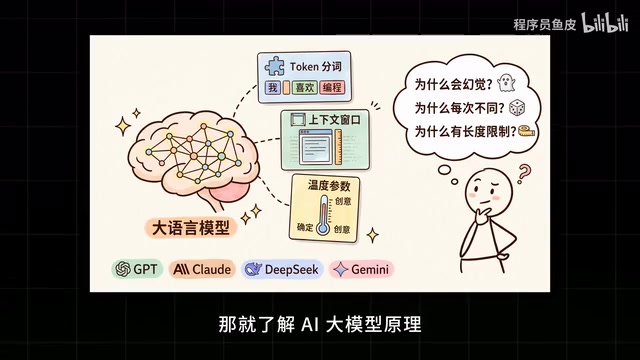
Once you can proficiently use AI programming to develop and deploy projects, the next step is targeted deep learning based on specific problems you encounter:
- Cost Management: If you feel AI programming burns through too many Tokens, specifically study optimization strategies
- Programming Fundamentals: If you want to better guide and review AI-generated code, build up your programming technical foundation
- AI Principles: If you want to interview for AI-related positions, learn about large model principles
- Product Thinking: If you want your work to deliver more value, study product thinking and monetization
On Anxiety and Learning Pace
The AI programming field changes extremely fast—best practices from a few months ago may already be outdated. But you don't need to obsessively track every new model and every new tool—model benchmarks and tool comparisons are things many content creators are doing for you. You just need to check summaries periodically.
But don't just sit on the sidelines either. The methodologies and thinking patterns you learn now will be useful when learning new tools and new patterns later—nothing is wasted. Personally experiencing the evolution of AI models and tools gives you a deeper sense of AI's development rhythm.
Conclusion
This six-stage learning roadmap, from zero-code beginnings to advanced engineering practice, builds a complete AI programming capability growth system. The core logic is crystal clear: first build something to establish confidence, then use professional tools to boost efficiency, next apply methodologies to ensure quality, then use advanced patterns to handle complex scenarios, and finally continuously evolve through ongoing practice and targeted learning.
In this era of rapidly advancing AI, maintaining a learning mindset and curiosity is the most important ability. Rather than anxiously chasing every new tool, it's better to solidly progress through each stage and invest more time in hands-on practice.
Related articles
Klue Hacked: Data Breach Exposes Huntress, HackerOne, and Other Major Security Companies
Market research firm Klue was hacked, exposing data from Huntress, HackerOne, Jamf, Recorded Future, and Tanium. Analysis of supply chain attack risks and third-party risk management strategies.
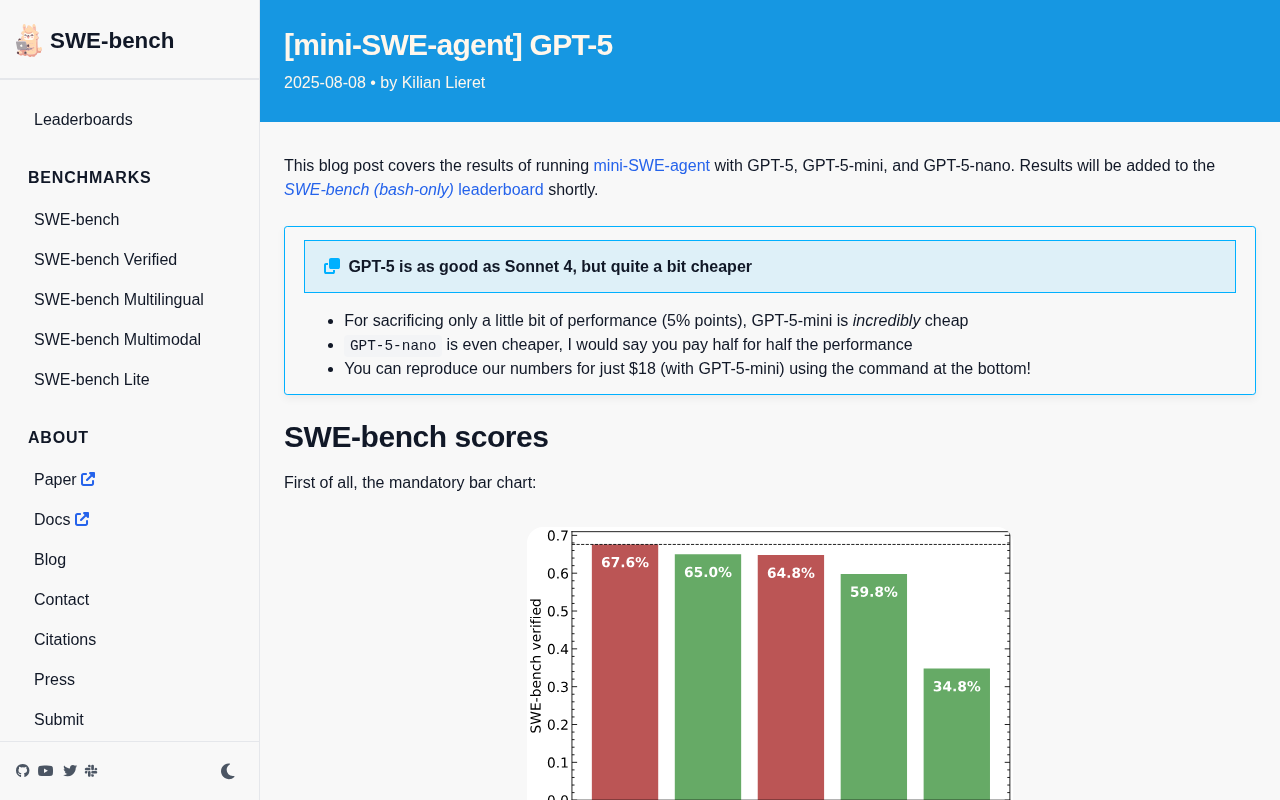
GPT-5 SWE-bench Evaluation: GPT-5-mini Crushes the Competition on Cost-Effectiveness vs Claude Sonnet 4
mini-SWE-agent's GPT-5 series evaluation on SWE-bench shows GPT-5 matches Claude Sonnet 4, while GPT-5-mini loses only ~5 points at less than 1/5 the cost.
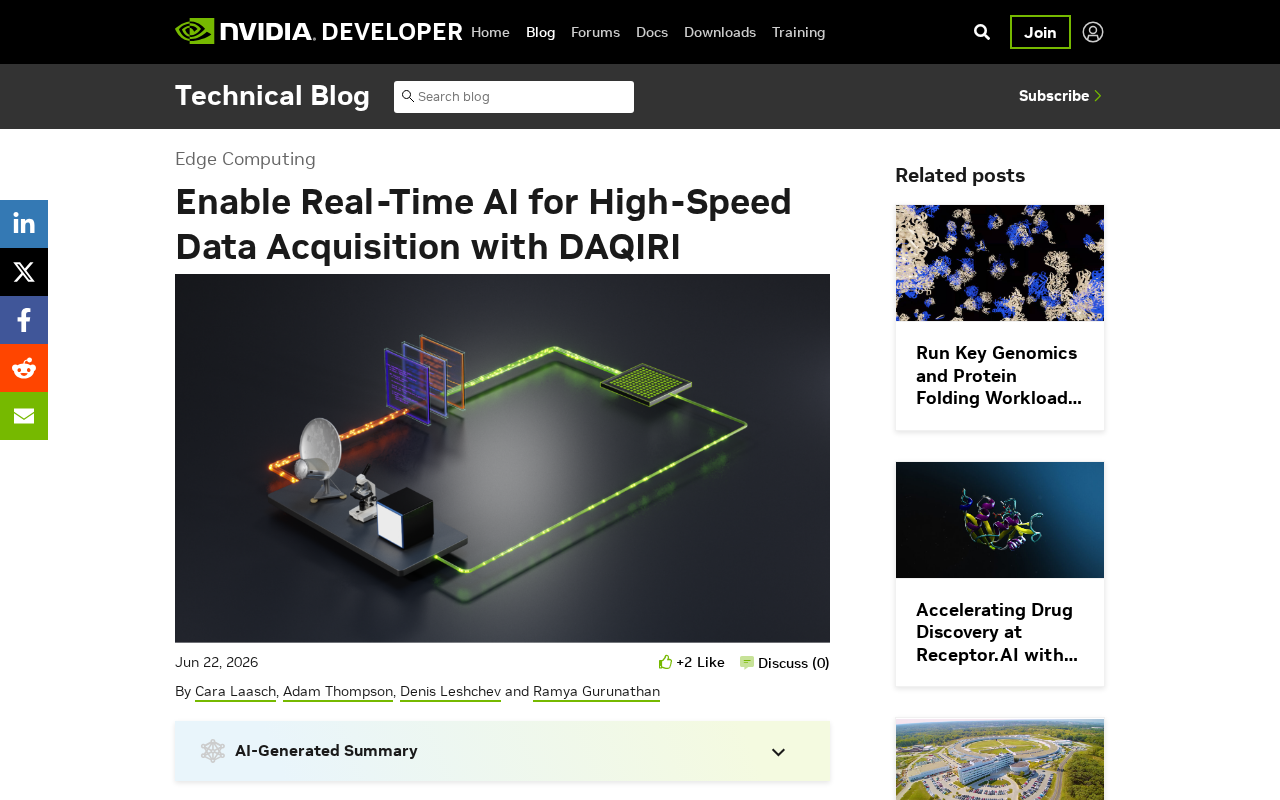
DAQIRI Platform Explained: Deep Integration of High-Speed Data Acquisition and Real-Time AI Inference
Deep dive into how the DAQIRI platform embeds NVIDIA GPU-accelerated computing into high-speed data acquisition pipelines, enabling real-time AI inference for industrial inspection, scientific experiments, and autonomous driving.