DAQIRI Platform Explained: Deep Integration of High-Speed Data Acquisition and Real-Time AI Inference
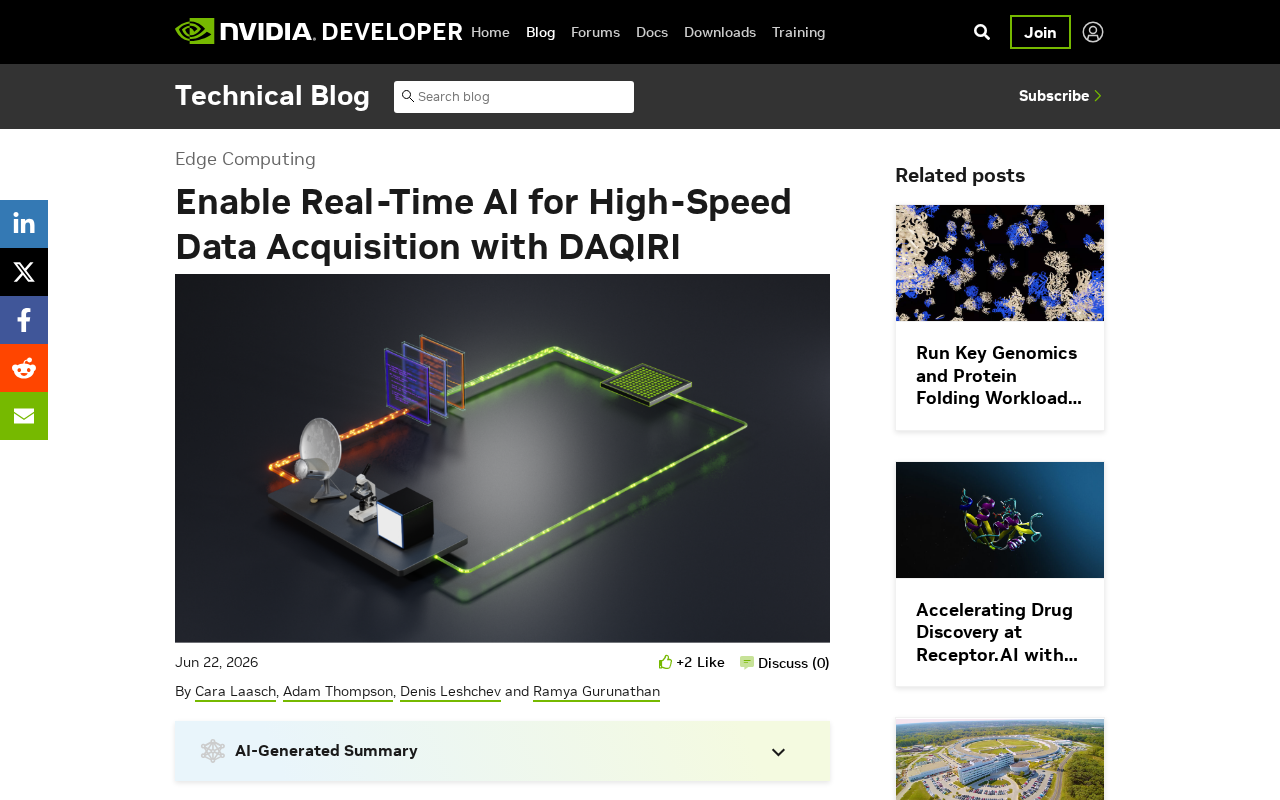
DAQIRI fuses high-speed data acquisition with GPU-accelerated real-time AI inference for instant analysis.
DAQIRI is a platform that deeply integrates NVIDIA GPU-accelerated computing into high-speed data acquisition pipelines, transforming the traditional serial workflow of acquire-store-analyze into a parallel "analyze as you acquire" paradigm. Using GPUDirect RDMA, TensorRT streaming inference, and programmable data pipelines, it achieves microsecond-to-millisecond latency for applications in industrial quality inspection, scientific research, and autonomous driving.
Introduction: AI's Bottleneck Isn't the Algorithm — It's Data Acquisition
In 2020, AlphaFold2 revolutionized the field of drug discovery. But few noticed that behind this breakthrough was a reliance on approximately 170,000 protein structure data points accumulated by scientists since 1971. AlphaFold2, developed by the DeepMind team, won the CASP14 (Critical Assessment of protein Structure Prediction) competition in 2020 by an overwhelming margin, achieving prediction accuracy comparable to experimental determination for the first time. Its training data primarily came from the Protein Data Bank (PDB), a global open database created by Brookhaven National Laboratory in 1971, gradually built over half a century by structural biologists worldwide using X-ray crystallography, nuclear magnetic resonance, and cryo-electron microscopy techniques. This case profoundly illustrates a pattern: breakthrough AI achievements are often built upon decades of data infrastructure development. This fact reveals a deep industry pain point: The upper limit of an AI model's capability often depends not on the algorithm itself, but on the quality and speed of data acquisition.
In industrial IoT, scientific experiments, autonomous driving, and other fields, high-speed Data Acquisition (DAQ) systems can generate millions of data points per second. A DAQ system is a combination of hardware and software that converts analog signals from the physical world into digital signals for recording. A typical system includes sensors/transducers, signal conditioning circuits, analog-to-digital converters (ADC), and digital bus interfaces. Modern high-speed DAQ systems can achieve sampling rates of several GS/s (billions of samples per second), commonly found in particle accelerator detectors, 5G base station signal analysis, and ultrasonic medical imaging. However, the traditional data processing workflow — acquire first, store second, analyze offline last — can no longer meet the demands of real-time decision-making. The bottleneck of traditional DAQ systems lies in the I/O bandwidth limitations of data transfer from ADC to host memory to storage devices, as well as the CPU's serial processing architecture being insufficient for massive parallel data streams. The DAQIRI platform, recently featured on the NVIDIA Developer Blog, was created precisely to solve this critical bottleneck.
What Is DAQIRI: High-Speed Data Acquisition Meets Real-Time AI Inference
DAQIRI is a platform that deeply integrates high-speed data acquisition with real-time AI inference. Its core philosophy is clear: Stop making data "wait" to be analyzed — instead, complete AI processing at the very moment data is generated.
Traditional high-speed data acquisition systems face several core challenges:
- Data deluge: Modern sensors and instruments can generate GB-level data per second, which traditional CPU processing architectures struggle to digest in real time
- Latency sensitivity: In manufacturing quality inspection, medical monitoring, and similar scenarios, millisecond-level delays can mean product defects or patient risk
- Storage pressure: Storing high-speed data streams in their entirety is extremely costly, but not storing them risks losing critical information
DAQIRI achieves the transformation from a serial "acquire-store-analyze" model to a parallel "analyze as you acquire" model by embedding NVIDIA GPU-accelerated computing directly into the data acquisition pipeline.
DAQIRI's Architecture Design and Technical Principles
DAQIRI's architecture design reflects several key engineering decisions, each directly impacting the system's real-time processing performance:
GPU Direct Data Streaming
Data flows directly from acquisition hardware into GPU memory, avoiding the data copy overhead from CPU memory to GPU memory found in traditional architectures. This design dramatically reduces data transfer latency and is the foundation for achieving microsecond-level response times.
The technical foundation for this is NVIDIA's GPUDirect technology suite, particularly GPUDirect RDMA (Remote Direct Memory Access). In traditional architectures, data from external devices must first pass through system memory (CPU RAM), then be copied to GPU video memory via the PCIe bus — a process involving multiple memory copies and CPU interrupts that introduces significant latency. GPUDirect RDMA allows third-party PCIe devices (such as network cards and FPGA acquisition cards) to write data directly to GPU video memory, bypassing the CPU and system memory, reducing data transfer latency from tens of microseconds to single-digit microseconds. This technology was originally designed for GPU communication between high-performance computing clusters and has since been extended to data acquisition, network packet processing, and other real-time scenarios.
Streaming Inference Engine
Based on inference optimization tools like NVIDIA TensorRT, DAQIRI supports real-time model inference on continuous data streams. Unlike batch processing mode, the streaming inference engine can continuously process uninterrupted data input, ensuring every data point is analyzed in a timely manner.
TensorRT is a high-performance deep learning inference optimizer and runtime engine developed by NVIDIA. It converts trained models into highly optimized inference engines through techniques such as Layer Fusion, precision calibration (supporting FP16/INT8 quantization), Kernel Auto-Tuning, and dynamic tensor memory management. The key difference between streaming inference and traditional batch inference is that batch processing requires waiting to accumulate sufficient data before processing it all at once, while streaming inference uses sliding window or per-sample processing mechanisms where inference computation is triggered as soon as data arrives. This requires the inference engine to have extremely low startup overhead and deterministic latency performance, with NVIDIA's CUDA Streams and asynchronous execution mechanisms providing the underlying support.
Programmable Data Pipelines
Users can flexibly define complete pipelines for data preprocessing, feature extraction, model inference, and post-processing. This modular design allows developers to quickly build customized real-time AI processing chains based on specific business requirements.
This architecture enables the system to complete AI analysis simultaneously as data arrives, compressing end-to-end latency to the microsecond-to-millisecond range.
Core Application Scenarios for DAQIRI
Industrial Manufacturing and Quality Inspection
On high-speed production lines, products pass through inspection stations at rates of tens or even hundreds per second. Traditional rule-based inspection systems can only identify predefined defect patterns, while DAQIRI-powered real-time AI inference can:
- Perform real-time defect classification on images captured by high-speed cameras
- Conduct anomaly detection on vibration sensor data to predict equipment failures in advance
- Perform multi-sensor data fusion analysis for more precise quality determination
Traditional industrial vision inspection systems are based on manually programmed rules such as edge detection operators, template matching, and threshold segmentation. These methods have limited adaptability to lighting changes, product deformation, and novel defect types, and each new defect type requires engineers to rewrite detection logic. Deep learning methods (such as convolutional neural networks) can automatically learn defect features from labeled data and generalize to unseen defect variants. However, deploying deep learning models on high-speed production lines faces severe latency constraints: for a production line running at 600 parts per minute, the inspection time window per part is only 100 milliseconds, requiring the entire process of image acquisition, preprocessing, model inference, and result output to be completed within this timeframe. DAQIRI's GPU direct connection and streaming inference architecture is designed precisely to meet this stringent requirement.
For manufacturers pursuing zero-defect rates, the leap from sampling inspection to full real-time inspection represents a qualitative transformation in quality control capability.
Scientific Research and Experimental Data Processing
As the AlphaFold2 case demonstrates, scientific discovery increasingly depends on real-time processing of large-scale data. In particle physics experiments, gene sequencing, astronomical observation, and other fields, DAQIRI's real-time AI capabilities can help researchers identify valuable signals during experiments rather than spending weeks on offline analysis after experiments conclude.
Particle physics experiments represent one of the most extreme scenarios for real-time data processing needs. Taking CERN's Large Hadron Collider (LHC) as an example, proton beams cross and collide every 25 nanoseconds, with detectors generating approximately 1PB of raw data per second. Due to storage and processing limitations, the LHC employs a multi-level Trigger System that filters out approximately 1/400 of events at the hardware level (Level-1) with microsecond-level latency, then further filters through software (High-Level Trigger). Embedding AI models into the trigger system can enable smarter event selection, reducing the loss rate of valuable physics signals — this is precisely the potential application direction for DAQIRI-type technology in fundamental science.
This "analyze while experimenting" paradigm has the potential to significantly shorten research cycles and accelerate the transformation from data to discovery.
Autonomous Driving and Robotic Perception
The LiDAR, cameras, and radar on autonomous vehicles generate GB-scale data per second. DAQIRI's low-latency processing capability is crucial for achieving safe and reliable real-time perception and decision-making.
A typical L4 autonomous vehicle is equipped with 6-12 cameras, 1-5 LiDARs, 5-6 millimeter-wave radars, and ultrasonic sensor arrays, generating 4-20GB of raw data per second. LiDAR generates approximately 1-3 million 3D point cloud data points per second, while cameras output high-resolution images at 30-60fps. The perception system must complete multi-sensor data time synchronization, coordinate transformation, object detection, semantic segmentation, and multi-object tracking within 50-100 milliseconds to provide timely environmental understanding for the planning and decision-making module. Any perception latency exceeding 200 milliseconds in high-speed driving scenarios could pose safety risks, making low-latency real-time AI processing a rigid requirement for autonomous driving systems.
In the robotics field, real-time processing of multi-modal sensor data is equally a prerequisite for achieving precise manipulation.
Technical Advantages: From Post-Hoc Analysis to Real-Time Data-Driven
Over the past decade, "data-driven" has become a consensus across industries. But most organizations' "data-driven" approach remains post-hoc analytical — data is collected, stored, cleaned, and then analyzed hours or even days later. The real-time AI data acquisition paradigm represented by DAQIRI advances "data-driven" to a new stage: Decisions happen at the same moment data is generated.
The significance of this transformation goes beyond speed improvement — it represents a fundamental shift in decision-making models:
- From reactive response to proactive prevention: Real-time anomaly detection can trigger intervention before problems escalate
- From sampling analysis to full-volume analysis: GPU acceleration makes AI analysis of every single data point possible, eliminating the need for sampling
- From human judgment to automated decision-making: Low-latency AI inference can directly drive actuators, achieving closed-loop automated control
DAQIRI's Position in the NVIDIA AI Ecosystem
DAQIRI doesn't exist in isolation — it's an important component of NVIDIA's complete AI ecosystem spanning from chips to software, from training to inference. Combined with NVIDIA's GPU hardware, CUDA programming model, TensorRT inference optimization, and various industry SDKs, DAQIRI provides developers with an end-to-end solution from data acquisition to AI deployment.
CUDA (Compute Unified Device Architecture) is a parallel computing platform and programming model launched by NVIDIA in 2006, allowing developers to write GPU parallel programs directly using languages like C/C++. After nearly 20 years of development, the CUDA ecosystem has formed a complete technology stack from low-level drivers to upper-layer application frameworks: cuDNN provides deep learning primitive acceleration, cuBLAS provides linear algebra operations, NCCL provides multi-GPU communication, and Triton Inference Server provides model serving deployment. This vertically integrated ecosystem means DAQIRI can seamlessly invoke optimization capabilities at each layer, while developers work within a unified CUDA ecosystem, avoiding the complexity and performance losses of cross-platform integration.
The advantage of this ecosystem integration is that developers don't need to constantly switch between different vendors' toolchains — they can complete the entire workflow from model training, optimization, to real-time deployment on a unified technology stack.
Future Outlook and Industry Reflections
The maturation of real-time AI data acquisition technology may give rise to entirely new application scenarios — innovations that were previously impossible because "data processing was too slow." For example:
- Real-time personalized medicine: Dynamically adjusting treatment plans based on patients' real-time physiological data
- Adaptive intelligent manufacturing: Production lines automatically adjusting process parameters based on real-time quality data
- Real-time scientific discovery: AI automatically identifying new phenomena during experiments and adjusting experimental directions
Of course, real-time AI also brings new challenges: How can model reliability be guaranteed in high-speed scenarios? How should responsibility be defined when real-time automated decisions go wrong? How can data security and privacy be safeguarded in real-time processing pipelines? These questions require joint exploration by the technical community and industry.
The speed of data acquisition determines AI's reaction speed, and AI's reaction speed determines what problems we can solve. The real-time AI data acquisition paradigm represented by DAQIRI is opening a door to a smarter, more agile world.
Key Takeaways
Related articles

NVIDIA ACE SDK: On-Device AI Inference for Intelligent Game NPC Companions
Deep dive into NVIDIA ACE Game Agent SDK's integration with Unreal Engine 5, exploring how on-device AI inference enables low-latency, privacy-safe intelligent NPC dialogue and behavior.
Sakana AI Launches Marlin: An AI Agent…
Sakana AI Launches Marlin: An AI Agent That Autonomously Completes Strategic Research in 8 Hours
Sakana AI launches Marlin, its first commercial product — an autonomous strategic research assistant that completes deep research in 8 hours, targeting finance, consulting, and think tanks.
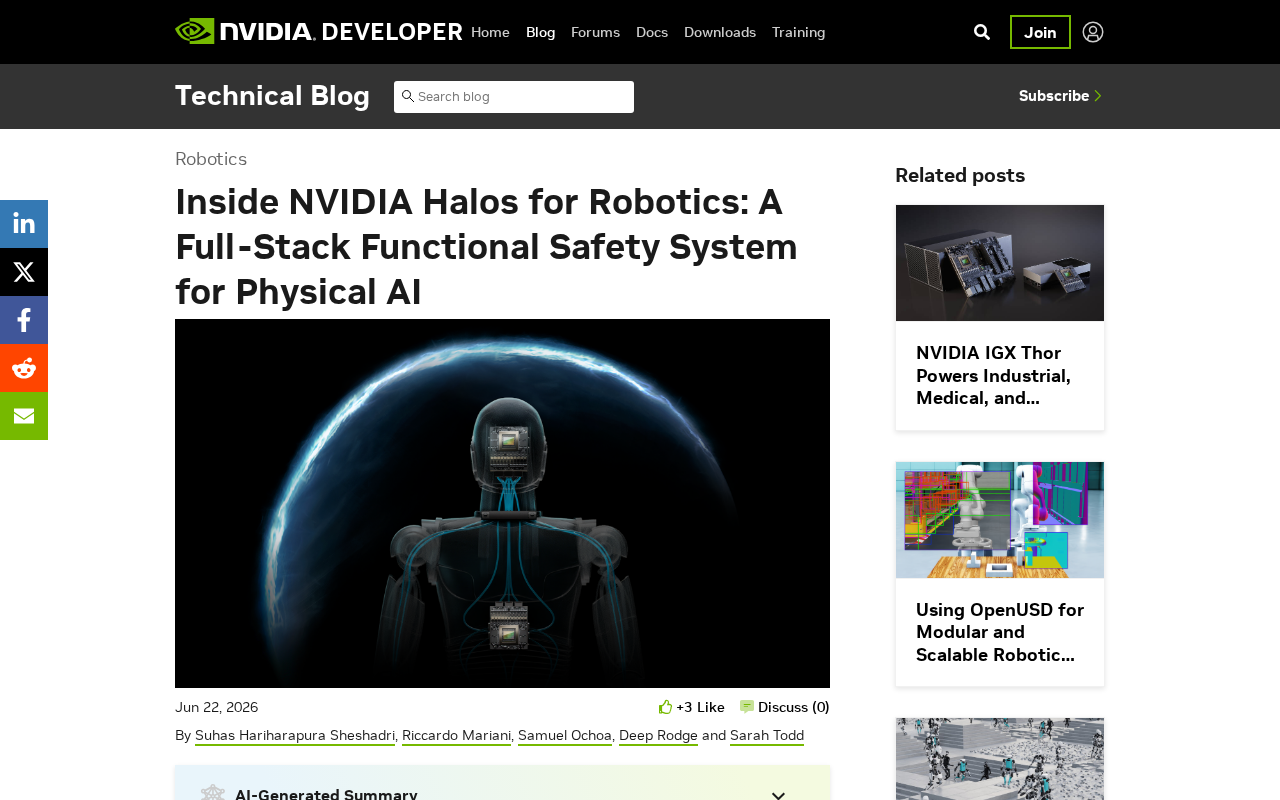
NVIDIA Halos Explained: Full-Stack Functional Safety System Architecture for Physical AI Robots
Deep dive into NVIDIA Halos for Robotics' full-stack functional safety architecture, covering hardware redundancy, safety runtime, behavior monitors, and how safety envelopes constrain AI uncertainty for scalable physical AI deployment.