AI Website Building Guide: Tools and Methods for Creating Business Websites with Zero Code
AI Website Building Guide: Tools and M…
AI website building tools are disrupting traditional web development by drastically lowering technical and cost barriers.
Traditional web development profits from information asymmetry, with high costs and low efficiency. Today, AI tools like Tongyi Lingma and OpenCloud can generate complete website frameworks in minutes through natural language, with AI involvement expected to exceed 70% of all websites. However, AI website building isn't a silver bullet — prompt engineering skills, post-launch operations, and brand differentiation still require human input, and basic costs like domains and servers remain. The core value lies in transforming high upfront costs into low ongoing subscriptions, making it ideal for SMBs and solo entrepreneurs.
The Pain Points of Traditional Website Building: Money Spent, Efficiency Lost
If you've ever hired a web development agency to build a business website, the following scenario will sound familiar: first comes the quote, then the requirements discussion, followed by endless revisions — at least two to three weeks of back and forth. By the time the site finally goes live, the bill reveals extra charges for domain renewal, server hosting, SSL certificates, and SEO optimization. A seemingly simple business website ends up costing thousands or even tens of thousands of yuan.

The core problem with this model is: web agencies don't sell technology — they sell information asymmetry. Information Asymmetry is a classic concept in economics, systematically described by Nobel laureate George Akerlof in his 1970 paper The Market for Lemons. In the web development industry, this asymmetry manifests across three dimensions: technical language barriers, tool selection knowledge, and maintenance cost awareness. You don't know the actual costs of mainstream website builders like WordPress or Webflow, nor the market prices for SSL certificates, CDN acceleration, or database hosting — giving agencies enormous pricing freedom. You have ideas in your head but don't know how to express them in technical language, don't know which tools to choose, and don't know how to maintain things after launch. These knowledge gaps are the real profit source of the traditional web development industry.
The emergence of AI tools is essentially a knowledge democratization movement — compressing years of accumulated technical knowledge into natural language interfaces that anyone can use. And now, AI website building tools are eliminating this information gap at an astonishing pace.
The Current AI Website Building Market: Over 70% of Websites Now Involve AI
According to industry data, approximately 60% of small and medium-sized businesses have started using AI website building tools, and the proportion of websites involving AI is expected to exceed 70%. This isn't a distant trend — it's happening right now.

What does this mean? It means the business model of the traditional web development industry is being fundamentally disrupted. When an ordinary person with no coding skills can generate a complete website in minutes by describing their needs in natural language, spending tens of thousands on a custom-built website is becoming increasingly hard to justify.
Comparison and Practical Analysis of Mainstream AI Website Building Tools
Tongyi Lingma: Natural Language-Driven Full-Stack Website Building
Alibaba's Tongyi Lingma integrates multiple top-tier models, with its biggest highlight being natural language interaction. You simply say something like "Build me a website for an educational institution," and it can automatically complete the basic configuration of frontend pages, backend logic, and databases in a very short time.
The technical logic behind this is worth understanding: Tongyi Lingma's core tech stack is built on the fusion of Large Language Models (LLM) and code generation capabilities. It converts users' natural language requirements into structured technical specifications through Prompt Engineering, then the code generation model outputs corresponding HTML/CSS/JavaScript frontend code, backend API logic, and database Schema definitions. "Full-stack website building" means simultaneously covering three technical layers: frontend (user interface), backend (business logic and data processing), and database (data storage).
More importantly, it's deeply integrated with the Alibaba Cloud ecosystem. The generated code can directly work with Function Compute (FC), Object Storage Service (OSS), ApsaraDB RDS, and other services, supporting one-click deployment. For businesses already using Alibaba Cloud services, this is essentially a zero-migration-cost solution.
OpenCloud: A Localized Solution Prioritizing Data Security
If you have high data privacy requirements, local offline tools like OpenCloud are worth considering. Their core advantage is: data stays offline, and the source code is entirely yours.

This touches on an increasingly important topic in enterprise digitalization — Data Sovereignty. In today's SaaS-dominated landscape, most cloud-based website builders store users' website content, visitor data, and even business logic on the service provider's servers, which may involve compliance risks under data protection laws. Localized solutions run AI inference and code generation entirely on the user's local device, fundamentally eliminating the possibility of data leakage. From a technical architecture perspective, these tools typically use quantized lightweight models (such as GGUF format model files), making it possible to run on ordinary consumer hardware.
This means you don't need to worry about enterprise data being uploaded to third-party servers — all generated code and content runs locally. For industries handling sensitive information (such as finance, healthcare, and legal), the appeal of this approach is obvious. "Source code is entirely yours" also means there's no Vendor Lock-in risk — businesses can freely migrate and customize without being tied to a platform, which is particularly critical for organizations with long-term technical development needs.
Where Are the Real Barriers in AI Website Building?
While AI website building tools are already very powerful, this doesn't mean "one click produces a perfect website." In practice, there are several areas that require attention:
The Quality of Your Requirements Determines Output Quality
No matter how smart the AI is, it needs clear instructions. "Make me a nice website" versus "Build me a website for an educational institution targeting K12 parents, with three core modules: course showcase, online booking, and faculty introduction" — these two descriptions produce vastly different results.
The core skill here is Prompt Engineering — it has evolved from a niche technical concept into a foundational productivity skill for the AI era. In AI website building scenarios, high-quality prompts typically need to include: target user profiles (e.g., "K12 parents aged 25-40"), core functional modules (course showcase, online booking, etc.), visual style references (clean and professional / lively and friendly), technical constraints (mobile responsiveness, loading speed requirements), and content structure preferences. Research shows that structured prompts can improve the usability of AI output by 3-5x compared to vague descriptions. For ordinary users, mastering the four-part prompt framework of "role setting + scenario description + specific requirements + constraints" is a practical path to rapidly improving AI website building efficiency. Learning to write good prompts is the first lesson in using AI website building tools effectively.
Post-Launch Operations Cannot Be Ignored
Building the website is just the first step. Ongoing content updates, SEO optimization, and security maintenance are equally important. The good news is that many AI tools are beginning to cover these areas, though the current level of automation still has room for improvement.
Brand Differentiation Still Requires Human Input
AI-generated websites excel at templated designs, but if you need highly customized brand visuals and interactive experiences, you'll still need design sensibility and adjustment skills.

A Realistic Perspective: AI Website Building Is Not a Silver Bullet
It's worth noting that "zero-budget website building" isn't entirely accurate. Understanding the real cost structure of AI website building helps you make more rational decisions. A complete website launch involves the following fixed costs: domain registration (domestic .com domains cost about 60-80 yuan per year); server or hosting fees (shared hosting runs a few hundred yuan per year, cloud servers range from tens to hundreds of yuan per month depending on configuration); SSL certificates (Let's Encrypt offers free certificates, while commercial certificates range from hundreds to thousands of yuan); and potential CDN costs. AI website building tool subscriptions themselves range from free to several hundred yuan per month. Compared to the tens of thousands typically charged upfront by traditional agencies, AI website building transforms the cost structure from "high upfront investment" to "low ongoing subscription," which better suits the cash flow management of small and medium-sized businesses and significantly reduces the cost of experimentation.
Similarly, "completing frontend, backend, and database configuration in one minute" refers more to generating the basic framework — a truly production-ready enterprise website still requires subsequent content population and detail refinement.
But what is undeniably true is that AI website building is dramatically lowering both technical and cost barriers. For budget-constrained small businesses and solo entrepreneurs, this is a direction worth serious consideration.
Final Thoughts
The transformation of the web development industry isn't a question of "whether it will happen" — it's already happening. Rather than debating the merits of traditional versus AI approaches, it's better to explore and experiment with these tools early to find the solution that best fits your business scenario. After all, the value of technology isn't in how advanced it is, but in how many real problems it can solve for you.
Key Takeaways
- By 2025, over 70% of websites are expected to involve AI, fundamentally transforming the traditional web development industry
- Tools like Alibaba's Tongyi Lingma support natural language-driven full-stack website building, generating frontend and backend frameworks in under a minute
- Local offline tools like OpenCloud address data sovereignty concerns through localized AI inference, avoiding vendor lock-in risks
- The real barriers in AI website building lie in prompt engineering skills, post-launch operations, and brand differentiation design
- AI website building transforms the cost structure from high upfront investment to low ongoing subscription, though basic costs for domains and servers still apply
Related articles
 Tutorials
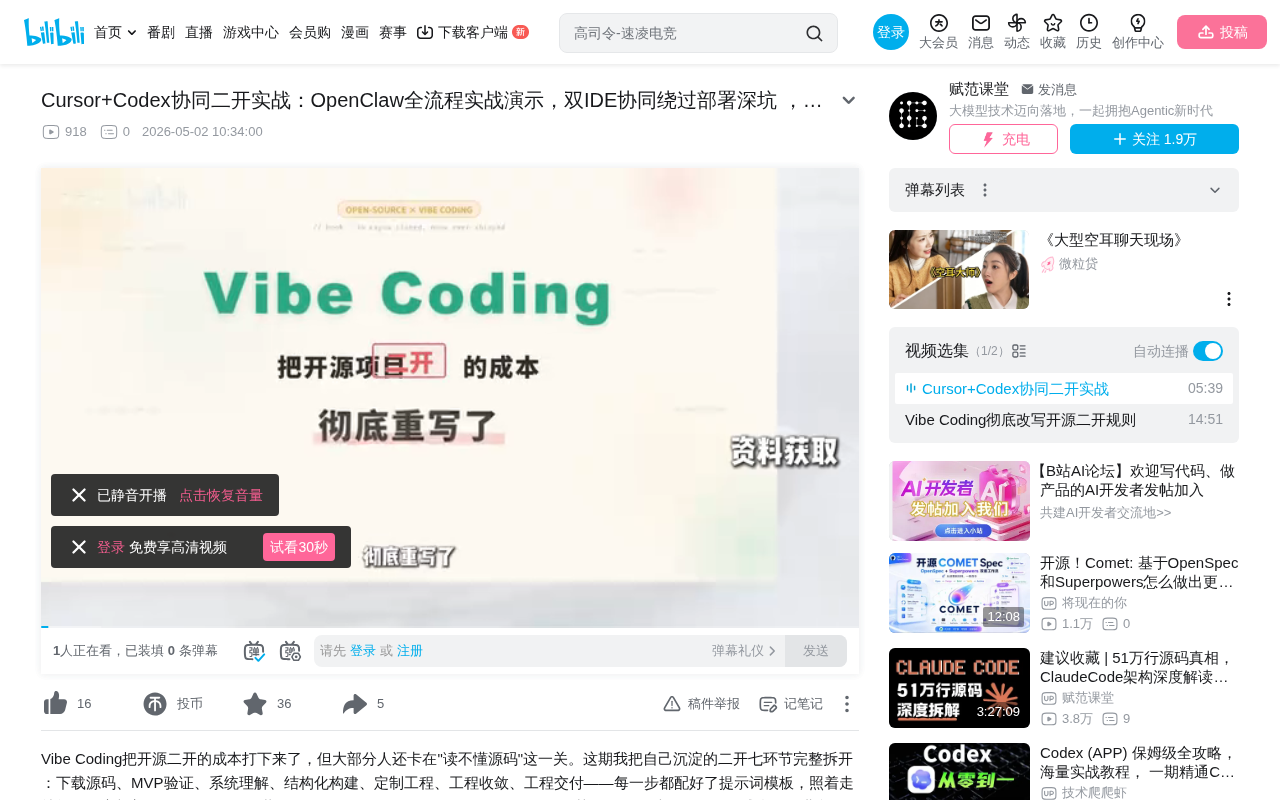
Cursor + Codex Dual-IDE Collaboration: A Practical Methodology for Open-Source Project Customization
A complete methodology for open-source project customization based on real-world experience, detailing the Cursor+Codex dual-IDE workflow, seven-stage process, MVP validation, and AI source code reading techniques.
 Tutorials
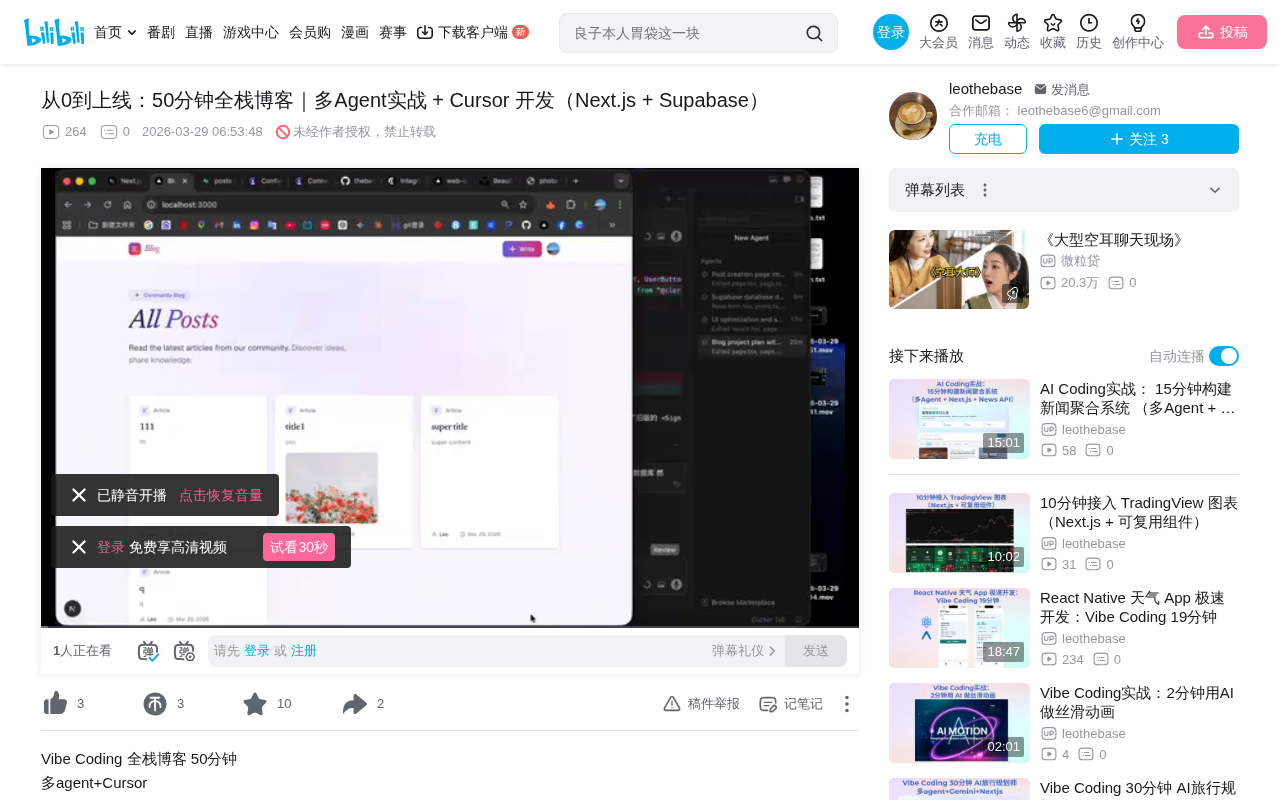
Cursor Multi-Agent in Practice: Building a Full-Stack Next.js Blog in 50 Minutes
Build a full-stack blog in 50 minutes using Cursor IDE's multi-Agent mode with Next.js, Clerk auth, and Supabase. Learn the 4-phase AI Agent workflow and key integration pitfalls.
 Tutorials
Building an AI Software Factory from Scratch: A Cursor Engineer's Hands-On Experience with Multi-Agent Collaboration
Cursor engineer Eric shares practical insights on building an AI software factory: automation levels, guardrail design, parallel Agent management, and scaling to 1000+ Agents for 24/7 development.