AI Weekly: Kimi K2.6 Tops Open-Source Rankings, Qwen 3.6 and Google TTS Launch Together

A week of dense AI releases as open-source models systematically catch up to and surpass closed-source rivals.
The past week saw a wave of major AI releases: Moonshot AI's Kimi K2.6 topped open-source rankings with exceptional long-horizon agentic capabilities; Anthropic launched Opus 4.7 and Claude Design for building interactive prototypes through conversation; Alibaba released the Qwen 3.6 series and Happy Oyster 3D world generator; Google unveiled an emotion-controllable TTS model. Meanwhile, open-source tools like Ternary Bonsai enabling 1.58-bit models on mobile devices flourished, pushing the open-source vs. closed-source competition to new heights.
The past week brought a flurry of major releases in the AI space. From Moonshot AI's Kimi K2.6 claiming the top spot on open-source model rankings, to Anthropic's Claude Design challenging Figma, to Google releasing an emotion-controllable TTS model, and Alibaba rolling out the Qwen 3.6 series — the competition between open-source and closed-source is reaching a fever pitch. This article provides a systematic overview of the most noteworthy AI developments this week.
Kimi K2.6: The New King of Open-Source Models
Moonshot AI released Kimi K2.6, which immediately claimed the top position on global open-source model rankings, dethroning Zhipu AI's GLM 5.1. Even more remarkably, K2.6 doesn't just dominate other open-source models — it goes head-to-head with closed-source giants like GPT 5.4, Claude Opus 4.6, and Gemini 3.1 Pro on top-tier benchmarks including SWE Bench Pro, deep search Q&A, and Humanity's Last Exam, frequently coming out on top.
K2.6's true breakthrough lies in agentic endurance. It possesses "long-horizon coding" capabilities, autonomously executing over 4,000 tool calls and running continuously for more than 12 hours on complex DevOps and frontend tasks without hallucinating or losing track of objectives. Additionally, it supports spawning 300 parallel sub-agents at once, generating over 100 files from a single prompt, and seamlessly writing complex dynamic frontends with WebGL shaders and Three.js elements.
Model weights are already available on Hugging Face, and users can also test it directly in Kimi's chat and agent modes. This marks a qualitative leap in agentic capabilities for open-source models.
Anthropic's Double Strike: Opus 4.7 and Claude Design
Opus 4.7: A More Autonomous Flagship Model
Anthropic released Claude Opus 4.7, with the core upgrade being high autonomy. Users no longer need to micromanage step-by-step as with 4.6 — they can hand off entire broad workflows to the model. On the vision front, it can now process images wider than 2,500 pixels, triple the resolution of the older model, which is revolutionary for UI design and agentic computer use.
However, it's worth noting that while Opus 4.7 excels in coding and creative writing, it actually regresses in areas like business management, finance, and sports. If you work deeply in these specific domains, sticking with 4.6 for now may be the better choice.
Claude Design: The Designer's "Panic Button"
Anthropic launched Claude Design, leveraging Opus 4.7's vision model to let users build fully interactive prototypes, wireframes, and presentations simply by conversing with Claude. It supports inline annotation-based UI refinement, custom sliders for real-time spacing and color adjustments, and can even point to codebases or upload brand files to automatically lock in design systems. Finished designs can be exported directly to Canva, PowerPoint, or seamlessly handed off to Claude Code for building the final product.
Alibaba's Triple Launch: The Qwen 3.6 Ecosystem in Full Swing
Qwen 3.6 35B A3B: Maximum Efficiency MoE Model
Alibaba released Qwen 3.6 35B A3B, a Mixture of Experts (MoE) model with 35 billion total parameters but only 3 billion active at any given time, making it extremely efficient. It dominates competitors in its weight class on autonomous coding, advanced reasoning, competitive mathematics, and complex multimodal tasks, making it an ideal engine for agentic workflows. The model is fully open-source with weights available on Hugging Face (approximately 72GB).
Qwen 3.6 MAX Preview: Taking Aim at Industry Giants
Shortly after, Alibaba announced the Qwen 3.6 MAX preview. This model decisively beats Claude 4.5 Opus and GLM 5.1 on demanding coding benchmarks like SWE Bench Pro and Terminal Bench. It also introduces a Preserve Thinking feature that keeps the model's reasoning context active throughout long multi-turn conversations. However, this MAX model is currently closed-source proprietary software, accessible only through Alibaba Cloud API or Qwen Studio.
Happy Oyster: A Real-Time Interactive 3D World Generator
Alibaba's ATH Lab released Happy Oyster, an open-world model similar to Google's Genie 3, allowing users to create 3D worlds that can be interacted with and explored in real time. You can generate various characters — riding horses, paragliding, skateboarding, or even flying on dragons — and further guide scenes through text prompts.

Google Gemini 3.1 Flash TTS: An Emotion-Controllable Voice Revolution
Google released Gemini 3.1 Flash TTS, potentially the most expressive text-to-speech model available today. Its core innovation turns users into "vocal directors" — emotion tags can be embedded directly into text prompts for precise control over mood, pacing, and intonation.
The model natively handles complex non-verbal sounds like sighs, panic, and laughter, producing extremely natural and expressive output that easily matches or surpasses the latest ElevenLabs versions. It fully supports over 70 languages with a massive library of high-quality default speakers. It's currently available for free testing through the Gemini API or Google AI Studio.
Open-Source Tools in Full Bloom
NVIDIA Lyra 2.0: Lightweight 3D World Building
NVIDIA released Lyra 2.0, an open-source 3D world creation tool that solves the "spatial amnesia" problem of AI-generated environments by converting standard video into explorable 3D spaces via Gaussian splatting representations. At just 131MB, it runs on most standard hardware, and generated 3D environments can be exported directly to NVIDIA's simulation platform for robot training.

Ternary Bonsai: 1.58-Bit Models Running AI on Phones
This is one of the most technically groundbreaking releases of the week. Ternary Bonsai is a family of 1.58-bit language models where each weight is reduced to just three values (1, 0, or -1), making them approximately 9x smaller than standard 16-bit models. The 8B model requires only 1.7GB of memory, runs at over 100 tokens per second on standard GPUs, and can even run on mobile chips. It beats models like Mistral and LLaMA 3.1 on multiple reasoning and coding benchmarks.
HyperFrames: An Open-Source Powerhouse for AI Video Creation
Agent open-sourced the HyperFrames framework, a video generation tool designed specifically for AI agents. Unlike Remotion which requires complex React code, HyperFrames lets AI agents write standard HTML to render perfect MP4 videos, with native support for advanced animations like GSAP and Lottie, all under the Apache 2.0 license.
Motive Video 2: A Small but Mighty Video Generator
This is a diffusion Transformer video generator with only 2 billion parameters — roughly 7x smaller than Alibaba's HunYuan — trained in under 100,000 GPU hours. Despite being 10x smaller in scale, it performs nearly on par with the top open-source model WAN 1.22 on the VBench benchmark.

Other Notable Releases
- Tencent HY World 2.0: A multimodal world model that creates interactive 3D spaces from text, images, or video clips, with output directly importable into Unity or Unreal Engine
- OpenAI GPT-Rosalind: A reasoning model specifically for life sciences research, connecting to over 50 scientific databases to accelerate drug discovery
- WildDat3D: Precise 3D bounding box detection on iPhone using standard cameras
- OpenGame: The first fully open-source agent framework designed for end-to-end web game creation
- Anagen: Creates rigged 3D assets with full animation support from a single image
- Adobe Token Relight: Real-time 3D lighting control for 2D photos
Conclusion: Open-Source Is Winning This Race
Looking across this week's releases, a clear trend is emerging: open-source models are systematically closing the gap with closed-source models, and even surpassing them in certain domains. Kimi K2.6's breakthrough in agentic capabilities, the comprehensive rollout of the Qwen 3.6 series, and Ternary Bonsai's technical innovation enabling models to run on phones all demonstrate the vibrant vitality of the open-source ecosystem.
That said, the closed-source camp isn't standing still either — Anthropic's Claude Design is redefining design workflows, and Google's TTS model sets a new bar for expressiveness. This competition between open-source and closed-source ultimately benefits the entire AI ecosystem and every developer.
Related articles
 Tech Frontiers
GitHub Agent HQ Launch: AI Coding Tools Enter the Era of Platform Competition
GitHub Universe unveils Agent HQ platform for unified coding agent management, Copilot upgrades with multi-model support. OpenAI completes restructuring, Anthropic tests new model, NVIDIA open-sources AI models.
 Tech Frontiers
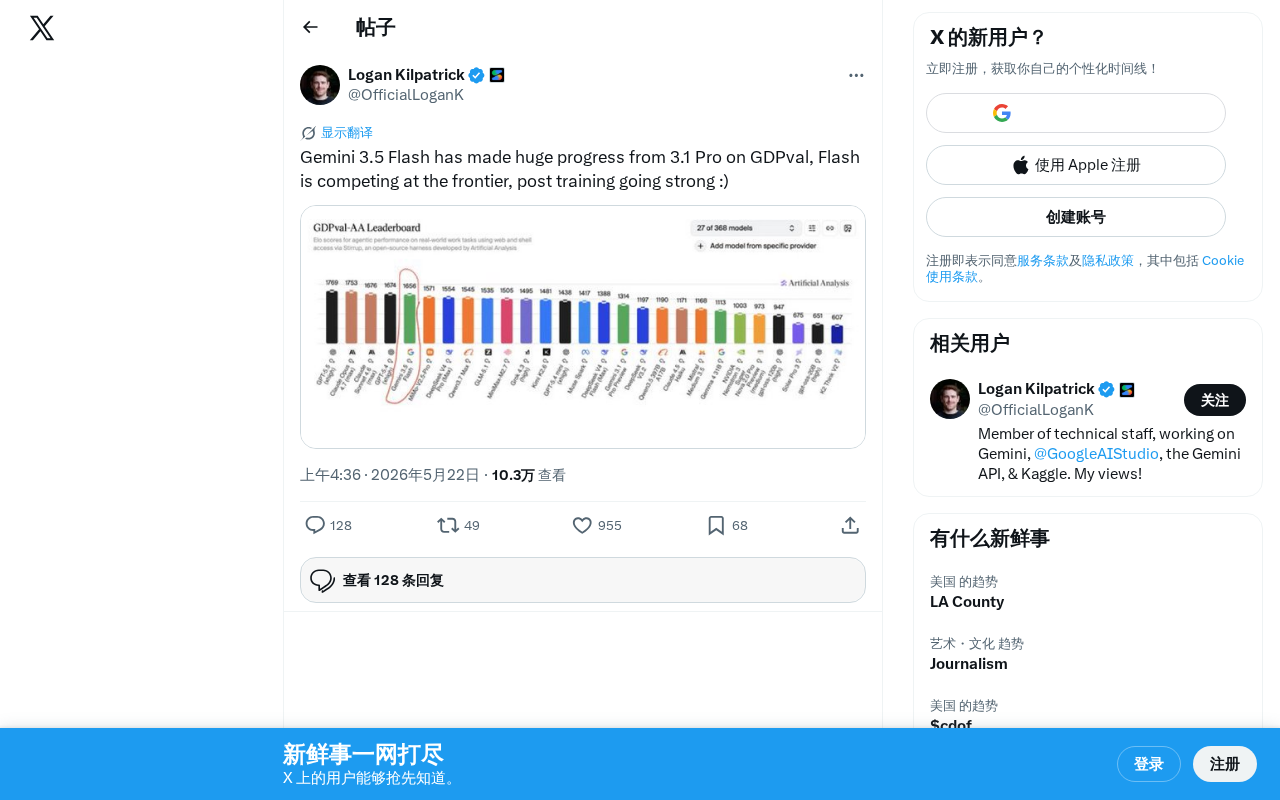
Gemini 3.5 Flash Achieves a Massive Leap on the GDPval Benchmark
Google Gemini 3.5 Flash surpasses Gemini 3.1 Pro on the GDPval benchmark. The lightweight Flash model leverages post-training techniques to approach frontier-level performance, redefining the balance between quality and cost.
 Tech Frontiers
Google Gemini Antigravity Weekly Quota Tripled — AI Coding Without Limits
Google Gemini triples Antigravity weekly quotas following a prior daily quota boost. Analyzing the impact on developers and its strategic significance in AI coding.