Anthropic Open-Sources Financial Agent Suite: 10 Agents Covering the Full Investment Banking Workflow
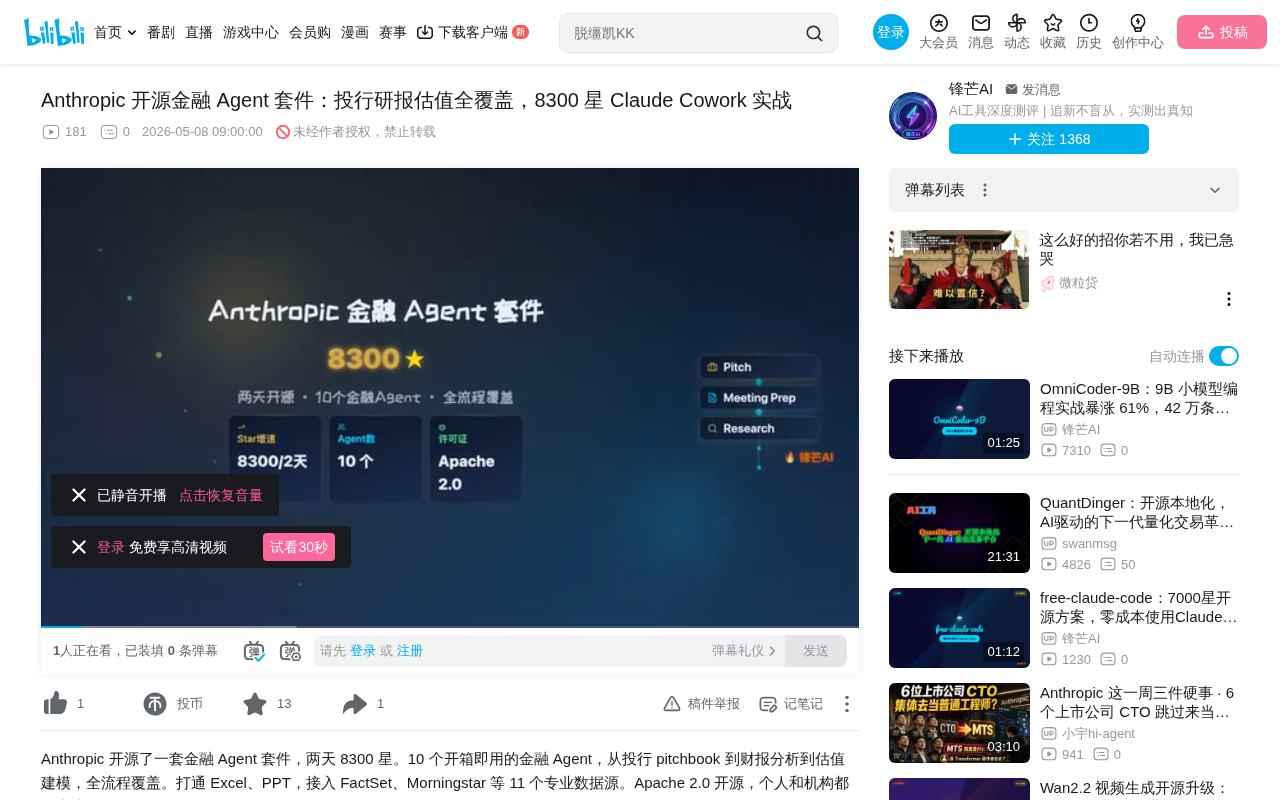
Anthropic open-sources 10 specialized financial Agents covering core investment banking workflows.
Anthropic has open-sourced a toolkit containing 10 specialized financial Agents covering core scenarios including investment banking Pitchbook creation, earnings analysis, and KYC screening. The suite integrates with the full Office suite for cross-application context coherence, connects to 11 professional data sources including FactSet and S&P Capital IQ via the MCP protocol for real-time data, and is released under the Apache 2.0 license — embodying the "open-source code, closed-source model" business strategy. Due to its highly structured nature, finance may become the first vertical sector where AI Agents achieve large-scale deployment.
Anthropic open-sourced a financial Agent suite yesterday that racked up 8,300 stars on GitHub in just two days. This isn't another chatbot — it's 10 financial Agents that actually get work done, covering core workflows for finance professionals from investment banking Pitchbook creation to earnings analysis to valuation modeling. As a Claude Cowork plugin, it's released under the Apache 2.0 open-source license, making it accessible to both individual researchers and institutions.
10 Ready-to-Use Financial Agents
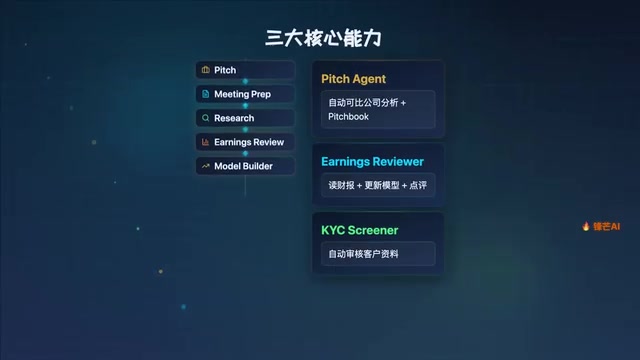
What makes this toolkit stand out is that it's not a general-purpose AI assistant. Instead, it breaks down specific financial industry work scenarios into 10 specialized Agents, each corresponding to a distinct business function:
- Banking Pitch Agent: Automatically runs comparable company analysis and generates investment banking Pitchbooks
- Earnings Reviewer: Reads earnings reports, updates financial models, and writes commentary
- KYC Screener: Automatically reviews client documentation and completes compliance screening
To understand the value of these Agents, you need to understand the professional context they address. A Pitchbook (investment banking pitch material) is the core deliverable of investment banking, typically containing industry analysis, comparable company valuations, financial projections, and deal recommendations. Producing a complete Pitchbook often takes an analyst team several days. The most time-consuming component is Comparable Company Analysis (Comps) — screening peer companies, collecting financial metrics, calculating valuation multiples, and creating comparison charts. This is precisely the type of task with the highest degree of structure, making it ideal for AI automation. KYC (Know Your Customer) is a legal compliance obligation for financial institutions, stemming from Anti-Money Laundering (AML) and Counter-Terrorism Financing (CFT) regulatory requirements. Under FATF (Financial Action Task Force) international standards, financial institutions must conduct due diligence on customer identity, source of funds, and nature of business. KYC process automation has long been an important track in RegTech, as manual review is not only inefficient but also faces challenges in consistency and auditability.
This design philosophy is worth noting. Rather than building a "can chat about anything but masters nothing" general Agent, they've gone deep into each specific scenario. The most time-consuming parts of an investment banking analyst's daily work — data collection, comparable analysis, report writing — happen to be exactly the repetitive, structured tasks that AI Agents excel at. With 10 Agents each handling their own domain, together they form a complete financial workflow pipeline.
Full Office Suite Integration with Seamless Context
Finance professionals live in Excel and PowerPoint. The second highlight of this toolkit is its direct integration with the full Office suite: build financial models in Excel, generate reports in PowerPoint, with data syncing automatically — no more copying and pasting back and forth.

More critically, Claude maintains contextual coherence across all applications. This means valuation calculations completed by the Agent in Excel can be directly referenced in PowerPoint reports without manual data transfer. This solves a long-standing pain point in financial work: information fragmentation and distortion as it flows between different tools.
In traditional workflows, analysts need to pull data from terminals, build models in Excel, write analysis in Word, and create presentations in PowerPoint — every step is manual, and every copy-paste operation can introduce errors. By connecting these steps, Agents not only improve efficiency but more importantly reduce the risk of human error.
11 Professional Data Connectors: Real-Time Data Driving Financial Decisions
The value of financial Agents is highly dependent on data quality. This toolkit connects to 11 professional data sources through the MCP (Model Context Protocol):
- FactSet
- S&P Capital IQ
- Morningstar
- PitchBook
- And several other financial data platforms

To understand the value of this design, you need to understand two layers of context.
About the data sources themselves: FactSet, S&P Capital IQ, and Morningstar are the three core data platforms in global finance, with subscription costs typically ranging from thousands to tens of thousands of dollars per user per year — standard infrastructure for investment banks and asset managers. PitchBook specializes in private equity and venture capital data, covering the funding history and valuation information of millions of private companies. These platforms provide not just real-time market quotes but also historical financial data, analyst forecasts, M&A transaction records, and other structured information essential for professional financial analysis. Traditionally, analysts had to manually log into each platform to export data and then consolidate it into Excel models — a time-consuming and error-prone process.
About the MCP protocol: MCP (Model Context Protocol) is an open standard protocol launched by Anthropic in November 2024, designed to solve the fragmented integration problem between large language models and external data sources/tools. Before MCP, every AI application needed to develop separate adapters for different data sources, creating massive redundant "M×N integration" problems. MCP simplifies this to an "M+N" pattern by defining a unified client-server communication specification — data providers only need to implement an MCP server once, and AI applications only need to implement an MCP client once, enabling interoperability. This design philosophy is similar to how the USB interface standardized the hardware ecosystem. MCP has already gained support from mainstream development tools including Block, Replit, and Zed, and is becoming important infrastructure for the AI tool ecosystem.
In this financial Agent suite, the MCP protocol serves as a "universal adapter," allowing Agents to interface with different data vendors' APIs in a unified manner. This dramatically reduces integration costs and leaves room for adding more data sources in the future.
This is critically important. One of the biggest limitations of large language models is the timeliness of training data — models know information only up to their training cutoff date, while financial decisions require real-time market data. Through the MCP protocol, Agents access the latest market quotes, financial data, and industry information rather than outdated content from training sets.

Open-Source Strategy and Industry Impact
This toolkit is fully open-sourced under the Apache 2.0 license and supports two usage modes:
- Claude Cowork Plugin: Install and use immediately, ideal for quick exploration
- Claude Code CLI: Suited for developers seeking deep customization and integration
Apache 2.0 is one of the most popular licenses for enterprise-grade open-source projects. Its core feature is allowing commercial use, modification, and proprietary distribution, with the only requirement being retention of the original copyright notice. Unlike GPL-family licenses, Apache 2.0 doesn't require derivative works to be open-sourced, making it more enterprise-friendly. Notably, Apache 2.0 also includes explicit patent grant clauses, providing additional legal protection for commercial users — particularly important for compliance-sensitive financial institutions.
From Anthropic's perspective, open-sourcing the financial Agent suite is a shrewd move that exemplifies the current mainstream AI company strategy of "open-source code, closed-source model" — open-sourcing the toolchain to expand the ecosystem while monetizing core reasoning capabilities (Claude API) through paid API calls, forming a classic "razor and blades" business model. The financial industry is data-sensitive with high compliance requirements, and institutional clients often need private deployment. Open-source code lets institutions audit, customize, and self-host, eliminating concerns about "black boxes" while firmly binding users to the Claude ecosystem.
From an industry trend perspective, finance may be one of the first industries where Agents achieve real production deployment. The reason is simple: financial work is highly structured, data-driven, and process-defined, and practitioners have a strong willingness to pay for efficiency gains. Investment banking analysts work 80-100 hours per week, with a large portion of that time spent on data transfer and formatting — exactly where Agents deliver the most value.
A Sober Assessment: Challenges and Limitations of Financial Agents
Of course, we need to stay rational. Financial Agents face several real-world challenges:
- Extremely high accuracy requirements: The financial domain has an extremely low tolerance for error — a single wrong number could lead to losses of millions of dollars. Agent outputs still require human review
- Compliance and regulation: Financial regulatory requirements vary enormously across jurisdictions, and automated Agent decisions must comply with local laws
- Data source costs: Professional data sources like FactSet and Capital IQ are expensive in their own right — Agents lower the barrier to use, not the cost of data
Nevertheless, the release of this toolkit marks an important milestone for AI Agent deployment in vertical industries. It's no longer a proof of concept — it's a productivity tool that can be directly embedded into real workflows.
Key Takeaways
- Anthropic open-sources 10 specialized financial Agents covering core business scenarios including investment banking Pitchbooks, earnings analysis, and KYC screening
- Full Office suite integration enables cross-application context coherence, solving efficiency pain points around data transfer and formatting in financial work
- Connects to 11 professional data sources including FactSet and S&P Capital IQ via the MCP protocol, ensuring Agents use real-time market data
- Released under the Apache 2.0 open-source license, supporting both Claude Cowork plugin and Claude Code CLI usage modes
- Due to its highly structured and data-driven nature, the financial industry may become the first vertical sector where AI Agents achieve large-scale production deployment
Related articles
 Tech Frontiers
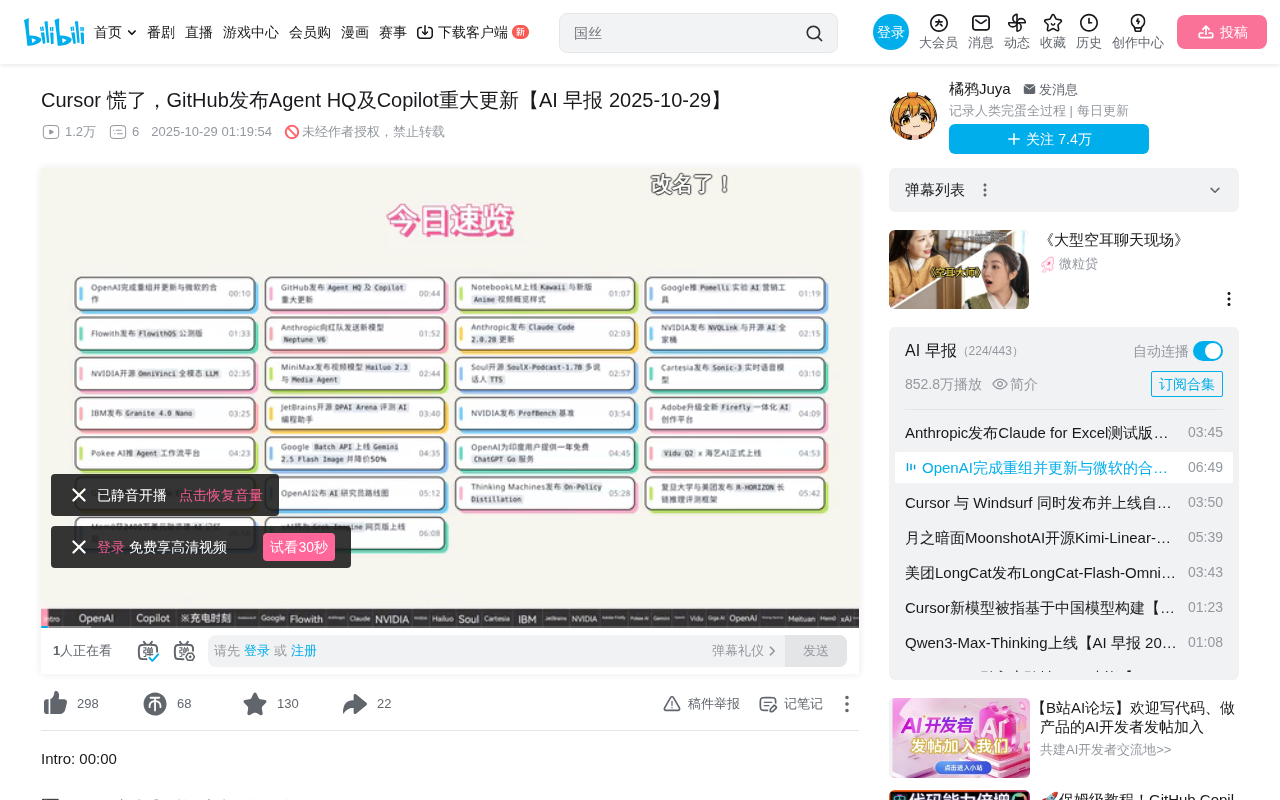
GitHub Agent HQ Launch: AI Coding Tools Enter the Era of Platform Competition
GitHub Universe unveils Agent HQ platform for unified coding agent management, Copilot upgrades with multi-model support. OpenAI completes restructuring, Anthropic tests new model, NVIDIA open-sources AI models.
 Tech Frontiers
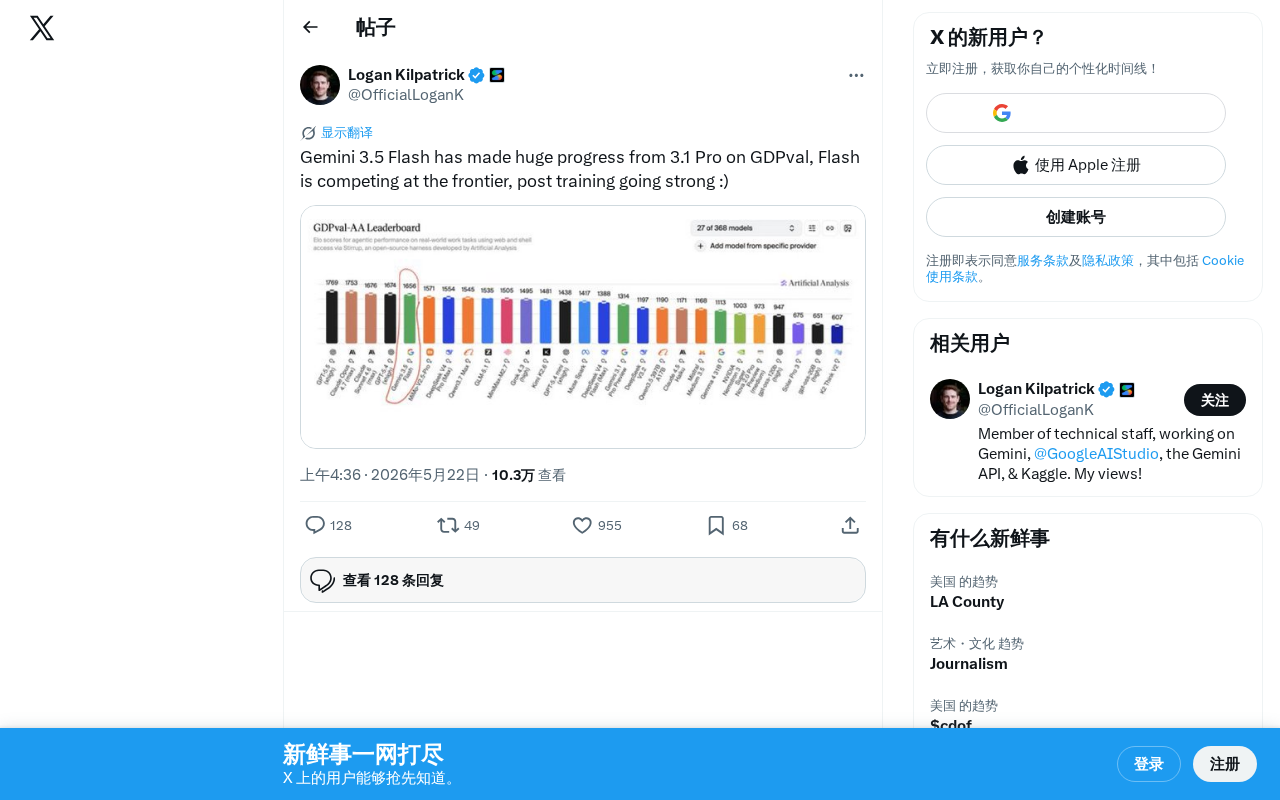
Gemini 3.5 Flash Achieves a Massive Leap on the GDPval Benchmark
Google Gemini 3.5 Flash surpasses Gemini 3.1 Pro on the GDPval benchmark. The lightweight Flash model leverages post-training techniques to approach frontier-level performance, redefining the balance between quality and cost.
 Tech Frontiers
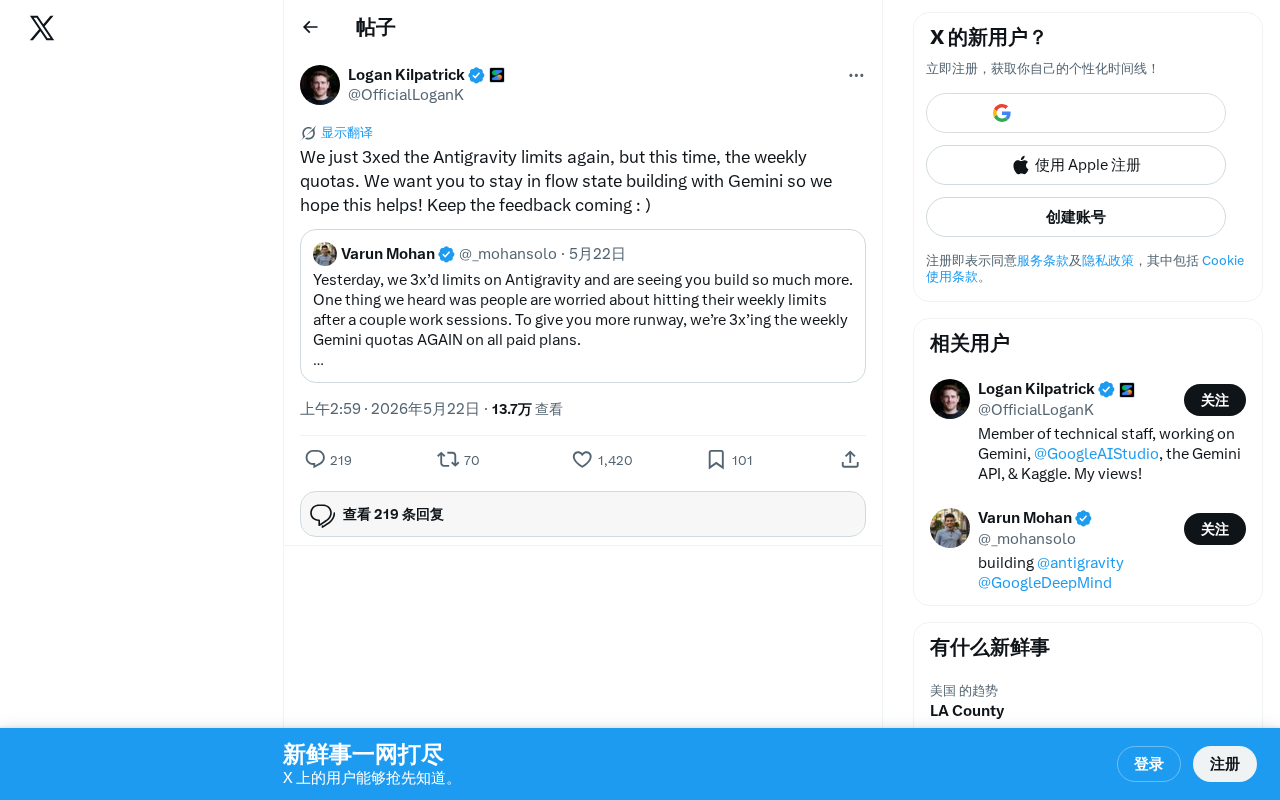
Google Gemini Antigravity Weekly Quota Tripled — AI Coding Without Limits
Google Gemini triples Antigravity weekly quotas following a prior daily quota boost. Analyzing the impact on developers and its strategic significance in AI coding.