Apple Design Award 2026 Revealed: An In-Depth Look at All 12 Winning Apps

Apple reveals 2026 Design Award winners, honoring 12 diverse apps and games for design excellence.
Apple announced the 2026 Apple Design Award winners during WWDC 2026, honoring 12 apps and games. Winners span gaming, utilities, sports, and transit, with visual styles ranging from minimalism to cyberpunk. Both the official NBA app and multiple indie developer works were selected, showing Apple values platform integration in major apps while encouraging creative differentiation in niche products.
Overview
Apple officially announced the 2026 Apple Design Award (ADA) winners during WWDC 2026. This annual award recognizes apps and games that demonstrate excellence in design, innovation, and technical implementation, making it one of the most prestigious developer honors in the Apple ecosystem.
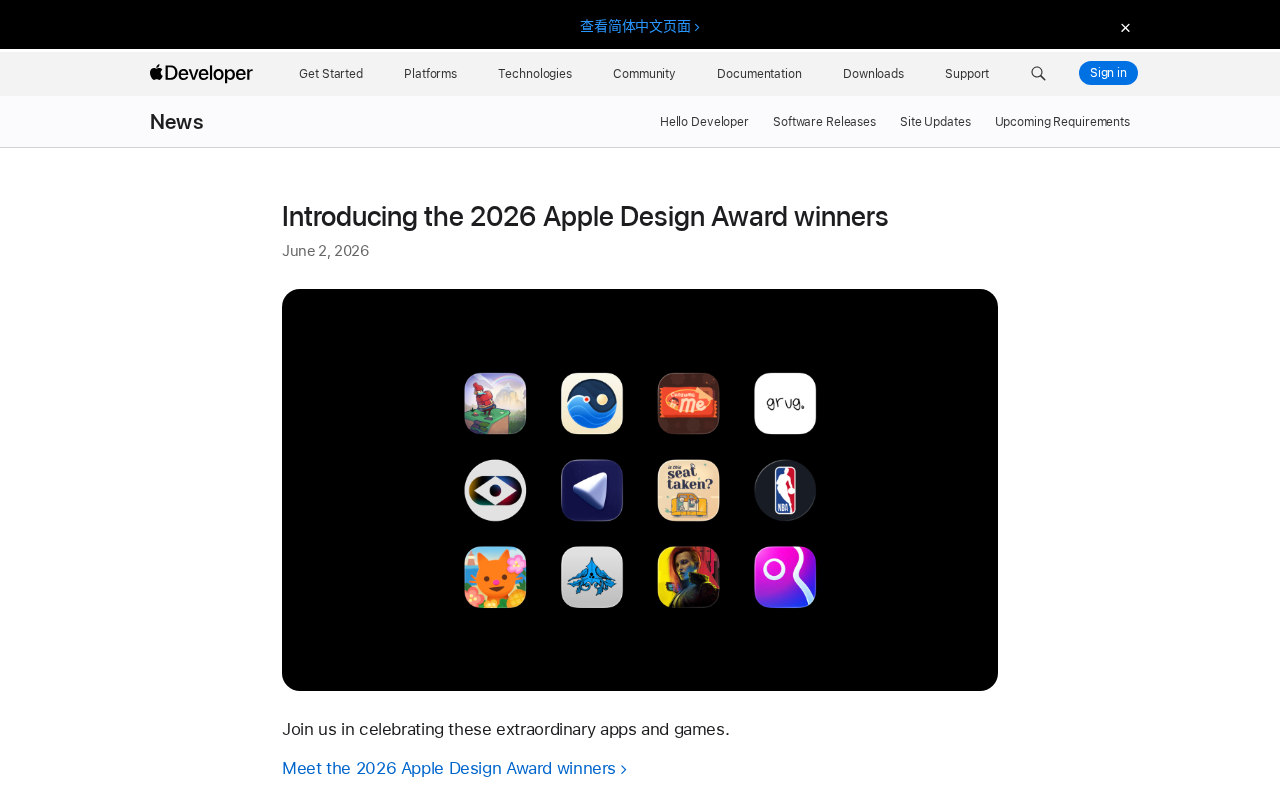
From the array of winning app icons revealed this year, the awarded works span gaming, utilities, social, sports, and more, showcasing the diversifying trends in Apple ecosystem app design.
The Significance of the Apple Design Award
The Highest Design Honor in the Apple Ecosystem
Since its inception in 1996, the Apple Design Award has been a coveted prize for developers worldwide. Winning not only signifies Apple's official recognition of product design quality but also brings tremendous visibility and download boosts to the app. Many past winners have gone on to become industry benchmarks.
Looking back at ADA's 30-year history, this award's influence far exceeds that of typical industry accolades. Early winners include classics like Delicious Library (2005), products that went on to profoundly shape aesthetic standards across the entire software design industry. Notably, many ADA-winning teams were later acquired directly by Apple—for example, the team behind the Dark Sky weather app, whose technology was ultimately integrated into the native iOS Weather app. The ADA jury comprises members of Apple's design team and the App Store editorial team. The review process is strictly confidential, and winners are typically revealed in a dedicated segment following the WWDC keynote. Each winner receives an iconic physical trophy—a precision-machined cube with an embedded Apple Logo, whose manufacturing craftsmanship itself embodies Apple's design philosophy.
Apple typically evaluates winning works across the following dimensions:
- Innovation: Whether the app employs unique technical solutions or interaction methods
- Visuals and Graphics: Whether the interface aesthetics are outstanding
- Interaction: Whether the user experience is smooth and natural
- Delight and Fun: Whether it delivers surprise and enjoyment to users
- Inclusivity: Whether it considers the needs of diverse user groups
- Social Impact: Whether it creates a positive impact on society
Among these, "Inclusivity" and "Social Impact" are two important dimensions added after Apple's major overhaul of the ADA evaluation system in 2020, reflecting the tech industry's growing emphasis on Accessibility and Tech for Good principles. Regarding inclusivity, Apple pays particular attention to whether apps support VoiceOver screen reading, Dynamic Type, Switch Control, and other assistive features, as well as whether interface color schemes accommodate users with color vision deficiencies. The Social Impact category focuses on whether apps make a positive contribution to issues like mental health, environmental protection, and educational equity. The establishment of these two dimensions has transformed ADA from a purely aesthetic design award into a comprehensive evaluation that also considers technological ethics.
Trends Observed in Winning Works
From the 12 winning app icons announced this year, several noteworthy trends emerge:
Games remain a dominant category: The icon array features multiple games with distinctive styles, including a puzzle game with geometric terrain and sprite characters, as well as a cyberpunk-styled title, reflecting Apple's continued emphasis on gaming creativity. Cyberpunk as a visual and narrative style originated in 1980s science fiction literature, epitomized by William Gibson's Neuromancer. In game design, this style is typically characterized by neon lighting, high-contrast colors (especially magenta and cyan combinations), fractured urban landscapes, and human-machine fusion visual elements. On Apple platforms, cyberpunk-styled games often fully leverage OLED screens' high contrast ratios and HDR display capabilities to deliver visually striking effects—one reason such works tend to stand out in design awards.
A stage for indie developers: From the minimalist hand-drawn style icon of "grug" to the chocolate wrapper-inspired design of "Consume Me," it's clear that creative works from independent developers hold an important place in the selection. The rise of indie developers in the Apple ecosystem is one of the most significant industry trends of the past decade. Since the App Store launched in 2008, it has provided individual developers and small teams with unprecedented global distribution channels. Apple has supported indie developers through multiple initiatives in recent years: the App Store Small Business Program reduces commission from 30% to 15% for developers earning under $1 million annually; the annual Swift Student Challenge at WWDC provides a showcase platform for student developers; and the App Store editorial team regularly curates features like "Indie Game Spotlight" recommendations. On the tooling front, SwiftUI's introduction has dramatically lowered the barrier to cross-platform development, enabling individual developers to simultaneously target iPhone, iPad, Mac, Apple Watch, and Apple Vision Pro. These factors collectively contribute to indie developers' consistently impressive showings in top-tier awards like ADA.
Diverse design languages: From minimalism to illustration styles, from 3D geometry to hand-drawn textures, the visual styles of winning works span an enormous range, indicating that Apple doesn't favor a single design paradigm but rather encourages diverse design exploration.
Notable Winning Apps
NBA Official App Selected
You might not have noticed, but the official NBA app appears among the winners. As a major sports application, its selection likely relates to recent innovations in real-time data visualization, personalized experiences, or integration of Apple platform features.
Major sports apps like NBA have achieved significant breakthroughs in real-time data visualization in recent years, relying on deep integration of multiple Apple platform core technologies. First is the ActivityKit and Live Activities framework, which allows apps to display live game scores and key data on the Lock Screen and Dynamic Island. Second are the RealityKit and ARKit frameworks, enabling users to view players' three-dimensional movement trajectories and shot heat maps through augmented reality. On Apple Vision Pro, sports apps can further leverage spatial computing capabilities to present game statistics as immersive 3D charts in the space surrounding the user. Additionally, the Core ML machine learning framework is used for real-time game trend prediction and generating personalized highlight reels. The combined application of these technologies has evolved sports apps from simple information display tools into immersive viewing experience platforms.
This also demonstrates that ADA doesn't exclusively favor niche indie apps—large commercial applications have equal opportunity to earn recognition.
Innovative Transit App
Among the icons, an illustration-style app labeled "is this seat taken?" stands out. Judging from its public transit scene design, this appears to be an innovative app related to public transportation, perhaps offering a unique solution for improving the commuting experience.
Takeaways for Developers
Each year's Apple Design Award serves as a compass for the developer community. From this year's winners, the following key insights can be distilled:
- Icon design is the first impression: Without exception, all 12 winning apps feature icons with extremely high recognizability and design quality. In the Apple ecosystem, app icon design is far from simple artwork—it requires adherence to strict technical specifications and design guidelines. Apple's Human Interface Guidelines provide detailed icon requirements: iOS icons use a 1024×1024 pixel master, from which the system automatically generates variants at various sizes. Icons use a uniform superellipse (Squircle) corner radius—a mathematical curve between a circle and a square, pioneered by Apple's industrial design team and used to this day. On a design philosophy level, Apple encourages icons to have "instant recognizability"—meaning users can locate their target instantly among a full screen of apps. Excellent icons typically follow several principles: single focal point (avoiding too many elements), appropriate color contrast, avoiding text (since it becomes unreadable when scaled down), and maintaining good visual performance on both light and dark backgrounds.
- Differentiation is key: In a market of millions of apps, a unique creative angle matters more than technical complexity
- Platform feature integration: Fully leveraging the hardware and software capabilities of the Apple ecosystem is an important factor in earning official recognition
- User experience reigns supreme: Regardless of app scale, outstanding user experience remains the core evaluation criterion
Conclusion
The Apple Design Award announcement once again proves that the Apple ecosystem remains one of the world's most vibrant platforms for app innovation. Whether you're an indie developer or part of a large team, achieving excellence in design and experience gives you a chance to earn this honor. For developers everywhere, studying the design philosophies and implementation approaches of these winning works is an excellent path to elevating your own product quality.
Related articles
 Tech Frontiers
GitHub Agent HQ Launch: AI Coding Tools Enter the Era of Platform Competition
GitHub Universe unveils Agent HQ platform for unified coding agent management, Copilot upgrades with multi-model support. OpenAI completes restructuring, Anthropic tests new model, NVIDIA open-sources AI models.
 Tech Frontiers
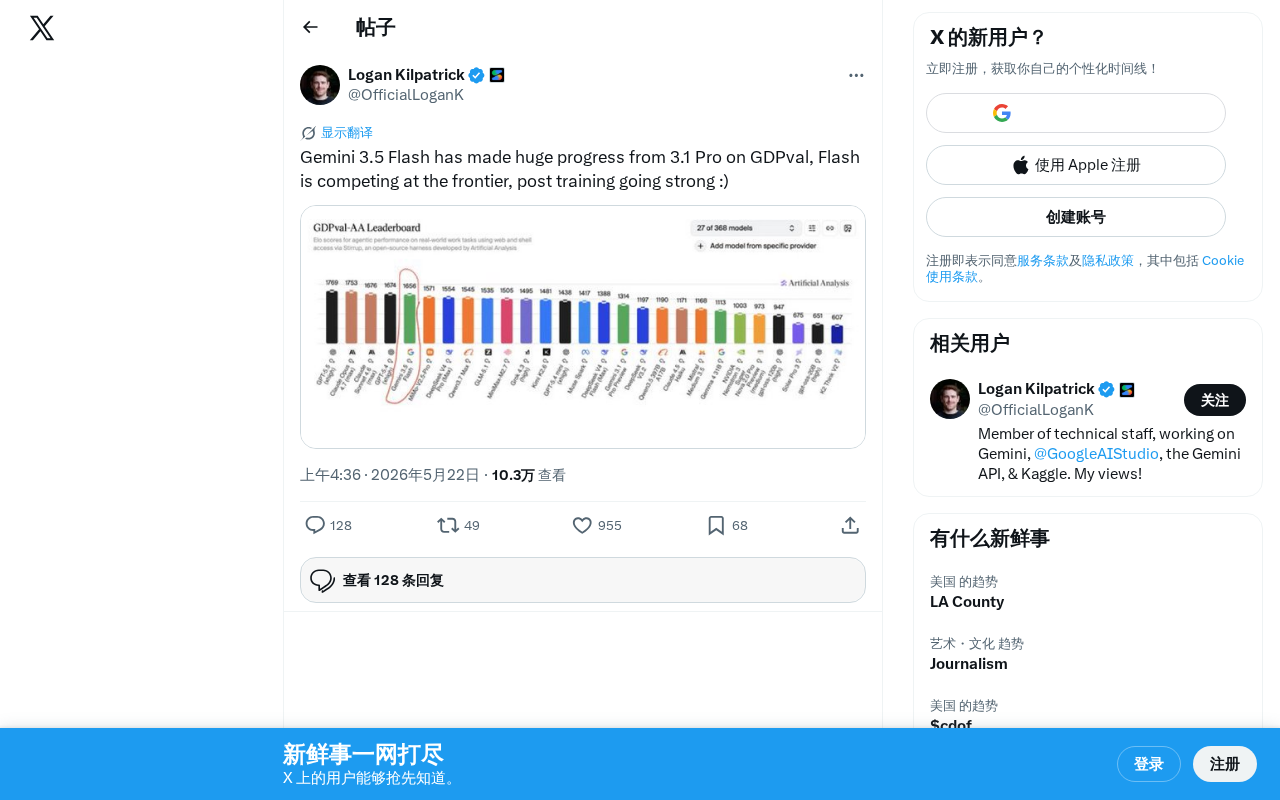
Gemini 3.5 Flash Achieves a Massive Leap on the GDPval Benchmark
Google Gemini 3.5 Flash surpasses Gemini 3.1 Pro on the GDPval benchmark. The lightweight Flash model leverages post-training techniques to approach frontier-level performance, redefining the balance between quality and cost.
 Tech Frontiers
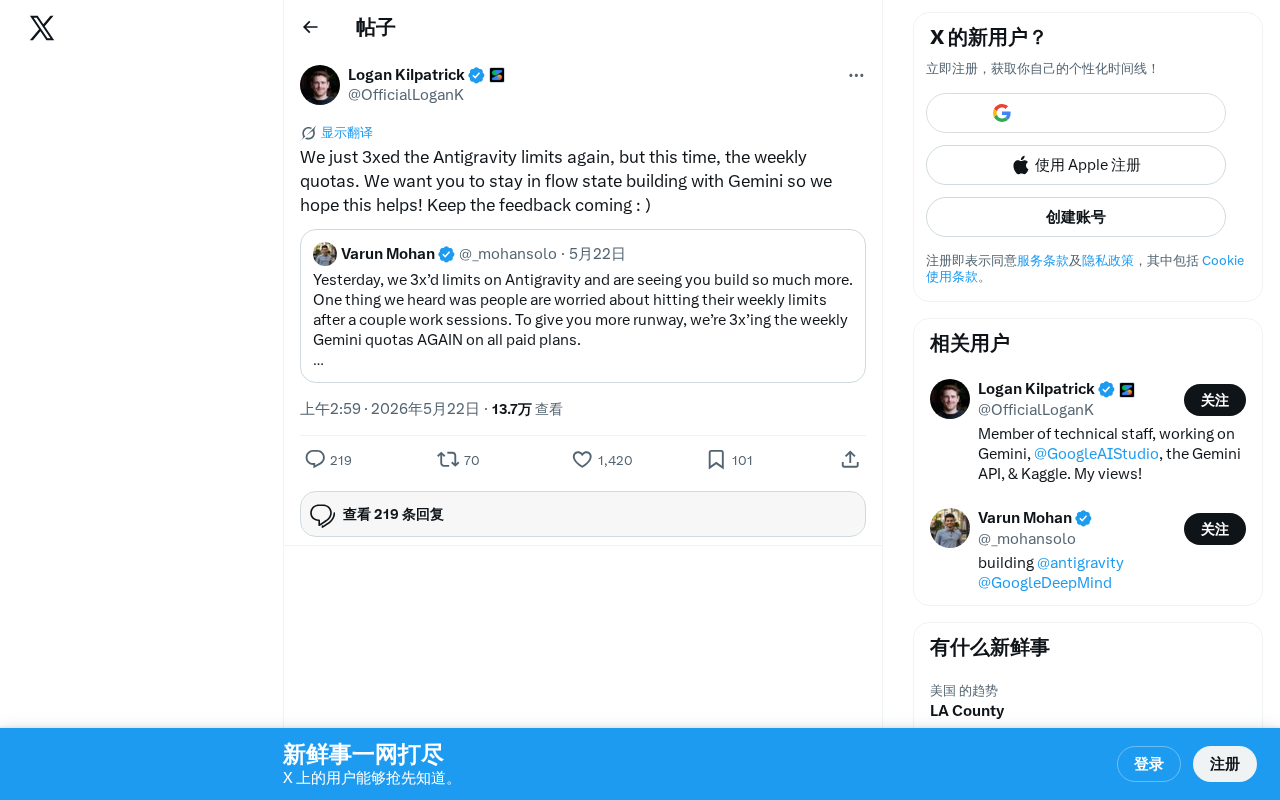
Google Gemini Antigravity Weekly Quota Tripled — AI Coding Without Limits
Google Gemini triples Antigravity weekly quotas following a prior daily quota boost. Analyzing the impact on developers and its strategic significance in AI coding.