Apple Opens WWDC26 Developer Survey: How to Participate and Share Your Feedback
Apple launches WWDC26 developer survey to gather feedback on the conference and shape future directions.
Apple has officially opened its WWDC26 developer survey, inviting developers worldwide to share their thoughts on the conference experience, technical sessions, and AI-focused content including Apple Intelligence. The feedback will directly influence future WWDC planning and Apple's platform strategy, particularly around on-device AI capabilities, developer APIs, and AI development tools.
Apple Invites Developers to Participate in WWDC26 Feedback Survey
Apple has officially launched its WWDC26 (Worldwide Developers Conference) developer survey, inviting developers around the world to share their thoughts and suggestions about this year's event. This initiative continues Apple's tradition in recent years of valuing developer community feedback, with the goal of continuously improving the conference experience and content quality.
Survey Background and Significance
The Evolution of WWDC
WWDC (Worldwide Developers Conference) is Apple's most important annual developer event, with a history dating back to 1983 — when Apple held its inaugural conference in Monterey, California, with just a few hundred attendees focused on software development for the Macintosh platform. Over the following four decades, WWDC has grown from a small technical workshop into one of the most influential annual events in the global tech industry. For a long time, WWDC was held in-person at convention centers in San Francisco or San Jose, with tickets often selling out within minutes. In 2020, due to the global COVID-19 pandemic, Apple transitioned WWDC to a fully online format for the first time, delivering content through carefully produced pre-recorded videos and online Labs. This shift unexpectedly expanded the conference's reach — millions of developers worldwide could participate for free, no longer constrained by venue capacity or steep travel costs. In recent years, Apple has gradually reintroduced some in-person activities, hosting special Developer Days at Apple Park, creating a hybrid model with online content as the primary format supplemented by in-person experiences. After each conference, Apple collects genuine developer feedback through surveys, and this data directly influences the content planning and format adjustments for the next edition.
The Value of Developer Feedback
For Apple, the developer survey is far more than a simple satisfaction questionnaire — it carries multiple layers of strategic significance:
- Content Optimization: Understanding which technical topics attract the most attention and which Sessions need adjustments in depth and breadth
- Format Iteration: Evaluating the effectiveness of the hybrid online/offline model and optimizing the developer participation experience
- Ecosystem Insights: Tracking shifts in developer interests to gauge technology trends across the entire Apple ecosystem
It's worth noting that Apple's developer feedback mechanisms extend well beyond the annual post-WWDC survey. During day-to-day development, Apple enables developers to submit bug reports and feature requests directly to engineering teams through the Feedback Assistant system, provides technical discussion spaces via Apple Developer Forums, and offers one-on-one technical support through Developer Technical Support (DTS). The WWDC survey represents the most strategically significant component of this multi-layered feedback system, as it directly relates to Apple's platform strategy direction for the coming year.
This Year's WWDC AI Highlights
The Continued Evolution of Apple Intelligence
Looking at the overall direction of this year's WWDC, Apple's AI initiatives are undoubtedly the most closely watched focus area. Since its debut at WWDC 2024, Apple Intelligence has become a core pillar of Apple's cross-platform strategy. Unlike OpenAI, Google, and other companies that primarily rely on cloud-based large models, Apple has adopted a unique hybrid architecture: a significant portion of AI inference tasks are completed directly on-device, powered by the Apple Neural Engine built into iPhones, iPads, and Macs. For more complex tasks requiring greater computational power, processing is handled in the cloud through Apple's proprietary Private Cloud Compute. The core design principle of Private Cloud Compute is that even when running in the cloud, user data is neither stored nor exposed to Apple, striking a balance between AI capability and privacy protection — a key differentiator that sets Apple apart from its competitors.
From the expansion of Apple Intelligence features to AI enhancements across developer toolchains, Apple is deeply integrating artificial intelligence capabilities into its entire platform ecosystem.
Developer feedback on these AI-related topics will directly influence Apple's future investment priorities in the following areas:
-
The degree to which on-device AI capabilities are further opened up. On-device AI refers to running machine learning models directly on user devices rather than sending data to the cloud for processing. The Neural Engine in Apple devices is a dedicated machine learning accelerator chip, first introduced with the A11 Bionic and now capable of tens of trillions of operations per second (TOPS) in the latest M-series and A-series chips. Through Apple's Core ML framework, developers can deploy trained machine learning models to run on-device, achieving millisecond-level inference responses while avoiding network latency and privacy risks. With the launch of Apple Intelligence, the scale and capability of models running on-device have significantly increased, and the developer community is keenly watching how much Apple will open these underlying AI capabilities to third-party apps via APIs.
-
The design philosophy and usability of developer APIs. Apple's developer API ecosystem has undergone profound transformation in recent years — from the imperative UIKit to the declarative SwiftUI, and from traditional Siri integration methods to the more flexible App Intents framework. In the AI era, the App Intents framework is particularly important: it allows third-party apps to expose their functionality to the system in a structured way, enabling Siri and Apple Intelligence to understand and invoke these capabilities for intelligent cross-app collaboration. The usability and expressiveness of API design directly determine developer adoption speed and the richness of the Apple Intelligence ecosystem.
-
The prioritization of AI development tool improvements. This includes AI-assisted coding capabilities integrated into Xcode, enhancements to model training tools like Create ML, and potentially a new generation of AI debugging and performance analysis tools.
Implications for the Developer Community
Apple's ongoing practice of maintaining two-way communication with developers through surveys is something the entire industry can learn from. Across the tech industry, Google collects feedback through post-I/O developer surveys and the Android Developer Summit, and Microsoft incorporates extensive interactive feedback sessions during Build while maintaining daily communication with developers through GitHub Issues. However, Apple's survey mechanism is renowned for its systematic approach and its direct influence on subsequent decision-making. Apple has repeatedly referenced improvements made "based on developer feedback" during WWDC Keynotes — for example, numerous SwiftUI API optimizations and Xcode Cloud feature adjustments have been directly driven by developer survey data.
In an era of rapid AI iteration, close collaboration between platform providers and developers has become more important than ever. The real-world implementation of AI capabilities is highly dependent on developers integrating them into specific application scenarios, and the pain points and opportunities developers discover during actual integration are things platform providers cannot fully anticipate from within their labs. Genuine developer feedback helps platform providers allocate resources more precisely, while developers can indirectly influence the platform's technology roadmap by participating in surveys.
How to Participate in the WWDC26 Developer Survey
Interested developers can participate by filling out the questionnaire through the official survey link provided by Apple. The survey typically covers evaluations of the overall conference experience, feedback on specific technical Sessions, and expectations and suggestions for future events. Based on past years, the survey usually includes both rating scales and open-ended text fields — the former for quantitatively assessing satisfaction with various aspects, and the latter encouraging developers to describe their experiences and suggestions in their own words. Apple typically opens the survey window within a few weeks after the conference concludes, and developers are encouraged to fill it out while their impressions are still fresh.
Developers are encouraged to take this survey seriously — it's not just an opportunity to express personal opinions, but an important channel for participating in the co-creation of the Apple ecosystem as a developer. Every piece of genuine feedback has the potential to influence the content design of the next WWDC and the evolution of Apple's developer tools.
Key Takeaways
Related articles

A Three-Month Roadmap to LLM Development: A Deep Dive into the Learning Path from Zero to Freelancing
A deep dive into the three-step LLM development learning path: from prompt engineering and RAG knowledge bases to AI Agent development, with realistic timelines for beginners and experienced developers.

Struggling to Deploy AI Agents? Engineering Is the Key to Going from Demo to Product
57% of projects have deployed AI Agents, but 40% will be killed. This article analyzes the engineering methodology for taking AI Agents from Demo to enterprise product, covering the full process from requirements to deployment.
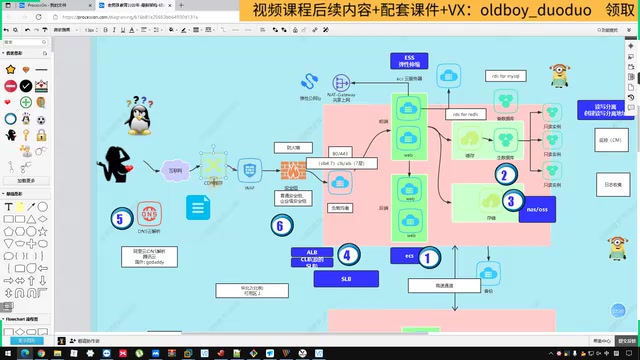
Complete Guide to Alibaba Cloud Website Architecture: The Full Request Path from DNS to Auto Scaling
A systematic guide to Alibaba Cloud website architecture covering DNS, CDN, WAF, CLB/ALB, ECS, Redis, NAS/OSS, and auto scaling along the full user request path.