Beginner's Guide to Skills: Packaging Repetitive Workflows as AI Skill Packs

Skills encapsulate repetitive AI workflows into reusable, one-trigger units.
A Skill isn't a simple prompt template—it's a complete multi-step workflow packaged into a reusable unit. This article covers two methods for installing ready-made Skills (GitHub repositories and MPX commands), demonstrates how to create your own Skill using skill-creator (with a daily review example), and emphasizes that Skills should be continuously optimized through an iterative cycle of use → discover issues → add rules → test again.
What Is a Skill? It's More Than Saving Prompts
If you're already using AI frequently but find yourself copying and pasting the same set of requirements every time—specifying format, tone, and order when organizing documents, or saying "first summarize, then analyze, and finally give recommendations" during reviews—then you need to understand a concept: Skill (skill pack).

Many people confuse Skills with prompt templates. A prompt template just saves a sentence, but the real value of a Skill lies in: it encapsulates a stable workflow process.
To understand this distinction, you first need to understand the limitations of Prompt Engineering. Prompt Engineering refers to the technique of guiding AI to generate desired outputs through carefully designed input text. Traditional prompt templates are typically optimizations for single interactions—like "Please summarize the following content in a professional tone." The concept of Skills originates from the "encapsulation" philosophy in software engineering, packaging multi-step interaction logic, context management, and output constraints into a callable unit. This is similar to abstracting repetitive code into functions in programming—you don't need to rewrite the logic every time; you just pass in parameters to get standardized output. In the AI tool ecosystem, the emergence of Skills marks users evolving from "writing a good prompt" to "designing a reliable AI workflow."
What you're actually repeating is often not a single sentence, but an entire process. For example: read materials → analyze using a fixed framework → output results → provide next-step recommendations. This isn't something a single prompt can cover—it's a complete workflow.
Core concept: A Skill is not a prompt repository. A Skill is a reusable workflow.
When Should You Turn Something Into a Skill?
The criteria are very simple: If you've repeated a set of requirements more than three times, it's worth encapsulating as a Skill.
Write the rules clearly, fix the steps, specify the output format, and from then on you only need one sentence to trigger it—the AI will execute according to that workflow.
Installing Ready-Made Skills: Two Mainstream Methods
For beginners, the best entry path is to first install a ready-made Skill, understand how it's recognized and invoked, and then start building your own.
Method 1: Install from a GitHub Repository
Many Skills are hosted in GitHub repositories. GitHub is the world's largest code hosting platform and has gradually become a distribution channel for AI tool configuration files. In the Skill ecosystem, developers host Skill definition files (usually in Markdown or YAML format) in GitHub repositories, and other users can install them by cloning the repository or directly referencing links. Skill collections maintained by organizations like Entropic are similar to "official repositories" in package managers, providing verified, high-quality Skills. This open-source distribution model lowers the barrier to entry—users don't need to design workflows from scratch and can quickly gain productivity tools by standing on the shoulders of community contributors.
The process is very straightforward:
- Find the target repository (e.g., Entropic's Skill collection)
- Navigate to the folder and find the Skill you need (e.g., skill-creator)
- Copy the repository link
- In Cursor, simply say "Help me install this Skill" and paste the link
- After installation completes, re-enter Cursor
- Confirm successful installation via the slash command (/skill)
Here's a particularly useful Skill recommendation: skill-creator, which helps you quickly create your own Skills later.
Method 2: Install via MPX Command
Some repositories provide one-click installation commands. MPX (typically referring to a variant of npx or similar package execution tool) is a command-line tool in the Node.js ecosystem that allows users to run remote packages directly without global installation. In the Skill installation scenario, an MPX command essentially executes a remote script that automatically handles downloading, parsing, and placing Skill files. When choosing Project-level installation, Skill files are stored in the current project's .cursor/rules or similar directory; when choosing Global installation, they're stored in the user-level configuration directory, shared across all projects. This layered design borrows from npm's local/global installation logic, allowing users to flexibly manage Skill collections for different scenarios.
Using the recently popular "Skills collection for real engineers" as an example:
- Copy the MPX installation command provided by the repository
- Open the terminal and paste to run
- Select the Skill you want to install (Gurimi is recommended)
- Choose the installation location: Project (current project only) or Global (available everywhere)
- Confirm the installation
Tip: If you'll use a Skill across multiple projects, choose Global installation; if only a specific project needs it, choose Project.
How to Invoke Installed Skills?
Different tools have slightly different invocation methods. Taking Cursor as an example—it's an AI-native code editor based on VS Code, developed by Anysphere, with deep integration for AI conversations built in, supporting quick invocation of preset functions via Slash Commands. When users install a Skill, Cursor injects the Skill's definition file as part of the System Prompt into the AI conversation context, meaning the AI will automatically follow the rules and processes defined in the Skill when responding. Slash commands are essentially a shortcut trigger mechanism, similar to Bot commands in Slack or Discord, allowing users to activate specific workflows without memorizing complete instructions.
Specific invocation methods:
- In Cursor: Type a slash (/) to bring up the list of installed Skills
- In other environments: You may need to type a dollar sign ($) to bring them up
You can also invoke them using natural language, such as saying "Help me create a Skill," and the system will automatically match it to skill-creator for execution.
Build Your Own Skill
The really fun part about Skills is that you can encapsulate your own high-frequency needs. Here's a practical example to demonstrate—a Daily Review Skill.
Define Your Fixed Process
Suppose you want AI to follow this process every time it helps you review:
- First summarize what happened today
- Extract the most valuable experience worth keeping
- Point out one area for improvement
- Provide one minimal action you can start tomorrow
Previously you had to explain this every time; now you just turn it into a Skill.
Creation Process
Invoke the previously installed skill-creator and enter the instruction:
"Help me create a daily review Skill. When I say 'help me review,' you need to analyze my journal following a fixed process: first summarize what happened today, then extract experiences worth keeping, then point out areas for improvement, and finally give me a minimal action suggestion for tomorrow."
After execution, the system will generate a Skill named daily-review. From then on, you just need to open a new window, invoke this Skill, input the day's journal content, and it will output the review results following the preset process.
Iterating on Skills: Don't Aim for Perfection on the First Try
Many beginners think a Skill needs to be perfect from the start, but in reality a Skill is a workflow that requires continuous adjustment. This iterative approach essentially follows the "rapid iteration, continuous improvement" principle from Agile Development. In software engineering, this is called the PDCA cycle (Plan-Do-Check-Act). Applied to Skill design, it means you don't need to consider all edge cases in the first version. Every real use is a "test," and when you find output doesn't meet expectations, you add constraints like fixing a bug. The advantage of this methodology is that it optimizes based on real feedback rather than assumptions, avoiding the trap of Over-engineering. As usage increases, the Skill will gradually converge to the state that best fits your personal work habits.
The correct process is:
Use → Discover issues → Add rules → Test again
For example, if you find the action suggestions are too grand and not specific enough, you can directly adjust the Skill:
"The final action suggestion must be small enough—ideally something you can start within ten minutes."
The system will update the Skill, and the next time it's invoked, it will execute according to the new rules. This gradual optimization is the correct way to use Skills—iterate with real tasks to make them increasingly aligned with your actual needs.
Summary and Action Items
Three core takeaways from today:
- The essence of Skills: Not a reusable prompt, but a reusable workflow
- Installation methods: Install from GitHub repositories, or use MPX commands for one-click installation
- Key to creating your own Skills: Clearly state when to trigger, what steps to follow, and what to output
Your Minimal Action
Find the one thing you most frequently ask AI to do repeatedly, and package it into a Skill. It could be:
- Daily review
- Reading notes organization
- Fitness record analysis
- Weekly report generation
- Content breakdown and rewriting
You don't need to make it complex from the start. First find the smallest process you repeat most often, build it, test it with real tasks, then gradually add rules. That's the complete path from getting started with Skills to making them truly useful.
Related articles
 Tutorials
Cursor + Codex Dual-IDE Collaboration: A Practical Methodology for Open-Source Project Customization
A complete methodology for open-source project customization based on real-world experience, detailing the Cursor+Codex dual-IDE workflow, seven-stage process, MVP validation, and AI source code reading techniques.
 Tutorials
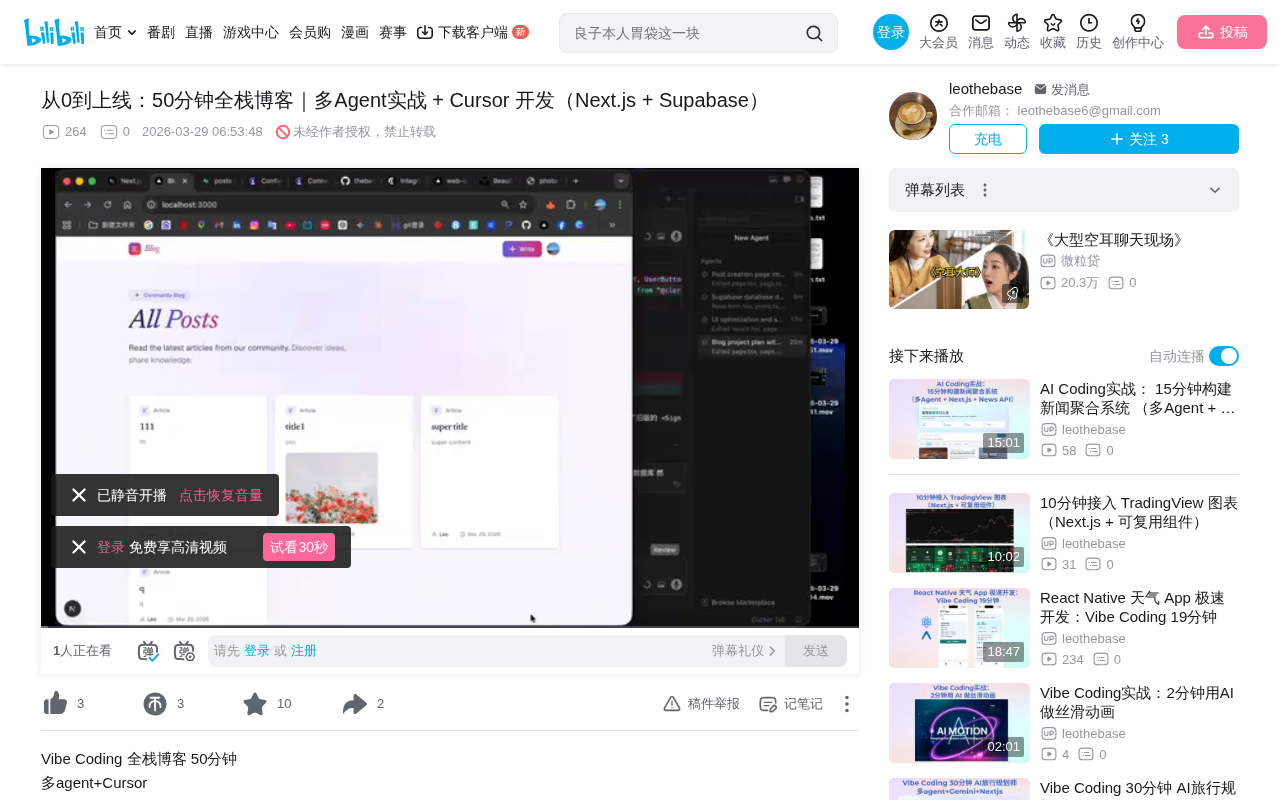
Cursor Multi-Agent in Practice: Building a Full-Stack Next.js Blog in 50 Minutes
Build a full-stack blog in 50 minutes using Cursor IDE's multi-Agent mode with Next.js, Clerk auth, and Supabase. Learn the 4-phase AI Agent workflow and key integration pitfalls.
 Tutorials
Building an AI Software Factory from Scratch: A Cursor Engineer's Hands-On Experience with Multi-Agent Collaboration
Cursor engineer Eric shares practical insights on building an AI software factory: automation levels, guardrail design, parallel Agent management, and scaling to 1000+ Agents for 24/7 development.