Beginner's Guide to Vibe Coding: Turn Ideas into Products with AI — No Coding Experience Required

Vibe Coding lets non-programmers build software products by describing ideas to AI in natural language.
Vibe Coding is a new approach to software development where you use natural language to tell AI what you want, and it generates working code — no programming skills needed. Coined by Andrej Karpathy in 2025, it democratizes development by removing the need to understand architecture, programming languages, or implementation details. Top tools include Cursor, Claude Code, and OpenAI's Codex, each suited for different use cases from visual editing to autonomous cloud development.
What Is Vibe Coding?
Recently, a concept called "Vibe Coding" has been rapidly gaining traction in the tech world. In simple terms, it's an entirely new approach to software development — you don't need to learn any programming language. You just tell the AI what you want in plain natural language, and it turns your ideas into a working product.
This concept was first coined by Andrej Karpathy — former Tesla AI Director and OpenAI co-founder — in February 2025. He described his experience using AI for programming on social media: fully immersed in the "vibe," no longer reviewing code line by line, but completing development through natural language conversations with AI. The concept quickly sparked widespread discussion in the tech community because it touches on a core question about the democratization of software development — does programming have to be a specialized skill reserved for the few? Looking at the historical arc, programming languages themselves have undergone a continuous process of abstraction — from machine code to assembly language to high-level languages — and each level of abstraction has enabled more people to participate in software development. Vibe Coding can be seen as the latest extension of this trend, with natural language becoming the highest-level "programming language."
The core philosophy of Vibe Coding can be summed up in three "no need to's":
- No need to think about architecture: In traditional development, software architecture and technology selection are domains that only professional engineers can navigate. Vibe Coding bypasses this entirely. In traditional software development, architectural design is the skeleton of the entire project — engineers need to decide whether to use a monolithic or microservices architecture, which database to choose (relational like MySQL or non-relational like MongoDB), which web framework to use (React, Vue, or Angular), how to handle frontend-backend separation, and a whole series of other technical decisions. These choices directly impact the project's maintainability, scalability, and performance, and typically require years of engineering experience to make sound judgments. Vibe Coding lets AI handle these decisions automatically, hiding the complexity of technology selection behind a natural language interface.
- No need to learn programming languages: Python, JavaScript — none of that is required. Natural language is your programming language.
- No need to worry about underlying implementation: You only need to focus on "what I want," not "how to build it."
Vibe Coding is made possible by breakthrough advances in large language models (LLMs) in the domain of code generation. These models are trained on massive open-source code repositories (such as billions of lines of code on GitHub) and have learned to map natural language descriptions to concrete code implementations. Key technologies include: contextual understanding (grasping user intent rather than literal meaning), state persistence across multi-turn conversations (remembering previous requirements and modifications), and cross-file code consistency maintenance. This is fundamentally different from earlier code auto-completion tools — those only predicted the next line of code, whereas current AI coding tools can understand the semantics of an entire project and generate complete functional modules.

An Analogy to Understand Vibe Coding
If the description above still feels a bit abstract, think of it this way: when you're writing a poem or painting a picture, do you stop to research what brand the pen is or what material the paper is made of? Of course not. You just focus on the creative process itself — conceiving, expressing, refining.

Vibe Coding transforms software development into exactly this kind of process: With the power of AI, programming is no longer a technical chore — it becomes a low-friction creative process, like writing poetry or painting. You just describe the features you want through a chat window, and AI takes care of the rest.
Can Beginners Learn Vibe Coding? What Can You Build?
This course has a very clear positioning — it's a "Vibe Coding 101" designed for people with absolutely no technical background. The course is divided into three parts:
- Understanding Vibe Coding: What it is and why it's worth learning
- Getting Started Guide: A learning path for those with zero technical background, and what you can accomplish afterward
- Hands-On with Tools: Recommended tools for Vibe Coding (such as Claude Code, Codex, Cursor, etc.), along with a hands-on project to build a mobile web page
The course also sets a very concrete practical goal: guiding students to build a mobile web page with AI that they can open and view directly on their phones. This "learn it, use it" approach is genuinely effective at building confidence for beginners. In the world of entrepreneurship and product development methodology, the Lean Startup philosophy emphasizes rapidly building a Minimum Viable Product (MVP), putting it in front of the market for validation, and iterating based on feedback. Traditionally, even the simplest MVP required weeks of development time and significant costs, forcing many non-technical founders to invest substantial resources before they could even validate their ideas. Vibe Coding compresses MVP construction time from weeks to hours or even minutes, dramatically reducing the cost of trial and error from idea to product. This means product managers, designers, and operations professionals can independently build product prototypes and complete market validation before committing formal development resources.
Comparison of Mainstream Vibe Coding Tools
Here are the main Vibe Coding tools currently available:
-
Cursor: An AI-powered code editor based on VS Code, suitable for users with some ability to read code. Developed by Anysphere, Cursor is a deeply modified version of Microsoft's open-source editor VS Code. It retains VS Code's rich plugin ecosystem and familiar interface while deeply integrating multiple large language models at its core. Cursor's key features include: Tab-key smart completion (predicting entire code blocks based on context), inline editing (selecting code and describing modifications in natural language), and Agent mode (AI autonomously completing multi-step development tasks). Its advantage lies in providing a visual code editing environment where users can intuitively see AI-generated code and fine-tune it, making it especially suitable for Vibe Coding users who want to gradually understand code logic.
-
Claude Code: A command-line AI coding tool from Anthropic, excelling at holistic management of complex projects. Claude Code runs directly in the terminal environment and can autonomously read project files, understand codebase structure, execute commands, and make iterative modifications. Unlike graphical editors, Claude Code is more like an AI engineer stationed on your computer — you describe your requirements, and it independently analyzes existing code, plans the implementation approach, writes code, runs tests, and even automatically debugs when it encounters errors. It's particularly strong at refactoring large codebases and implementing complex features end-to-end, because it can maintain contextual consistency across the entire project scope. For Vibe Coding scenarios, Claude Code's advantage is that users barely need to get involved in technical details — they just need to continuously clarify and adjust requirements through conversation.
-
Codex (OpenAI): OpenAI's coding agent that can automatically execute development tasks. This refers to the cloud-based coding agent launched in 2025 (not the earlier Codex model). It's an autonomous coding agent that runs in a cloud sandbox environment. After users submit development tasks through the ChatGPT interface, Codex automatically completes the entire workflow — code writing, dependency installation, test execution — in an isolated cloud environment, ultimately presenting results as reviewable code changes. Its unique feature is support for parallel processing of multiple tasks — you can submit several feature requests simultaneously, and Codex will develop them in parallel across different sandboxes. This asynchronous "submit task, await results" workflow makes the Vibe Coding experience feel more like "managing an AI development team."
These AI coding tools each have different strengths, but the core logic is the same: users describe requirements, and AI writes the code.
A Realistic View of Vibe Coding's Limitations
It's worth noting that while Vibe Coding dramatically lowers the barrier to development, it doesn't mean it can fully replace professional development. For simple personal projects, prototype validation, and small utility tools, it's genuinely a powerful and efficient tool. But for enterprise-grade applications that demand high performance and high security, traditional engineering skills remain indispensable.
Enterprise-grade applications still require traditional engineering capabilities because they face multi-dimensional complexities that Vibe Coding currently struggles to handle. First, there's security — systems involving user privacy data and financial transactions require rigorous security audits and penetration testing, and AI-generated code may contain hard-to-detect security vulnerabilities (such as SQL injection, XSS cross-site scripting attacks, etc.). Second, there's performance optimization — when a system needs to support millions of concurrent users, the execution efficiency of every line of code matters, requiring deep understanding of underlying runtime mechanisms. Additionally, enterprise systems typically involve complex business logic, multi-team collaboration, long-term maintenance, and compliance requirements — all of which exceed the reliable handling range of current AI coding tools. Therefore, Vibe Coding is better suited as a complement to professional development rather than a replacement.
For beginners with no technical background, the greatest value of Vibe Coding is this: it lets you quickly turn the ideas in your head into visible, usable products — without spending months or even years learning programming fundamentals. As AI tools continue to mature, this is truly a trend worth embracing.
Key Takeaways
Related articles
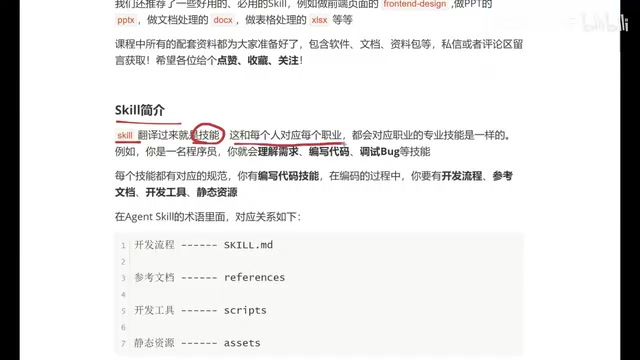
Beginner's Guide to Agent Skills: Structure Breakdown & Custom AI Skill Development
A deep dive into Agent Skill's core concepts and internal structure, covering skill.md, references, scripts, and assets with a restaurant poster Skill example.
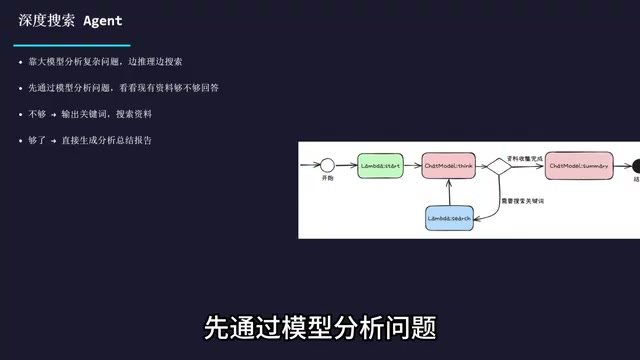
Complete Guide to Commercial AI Agent Development: From Requirements Analysis to Production Deployment
Complete guide to commercial AI agent development from scratch, covering requirements analysis, architecture design (ReAct framework, deep search, intent recognition), hands-on Coze platform implementation, workflow creation, and production deployment.
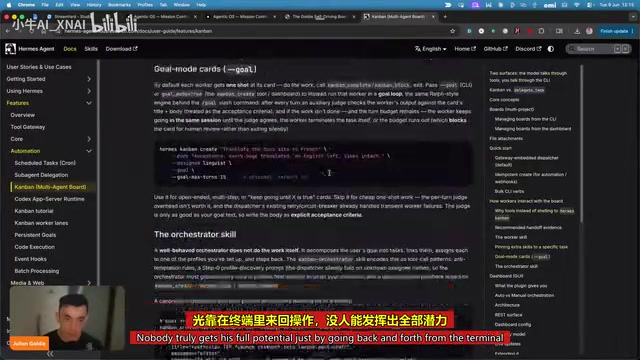
Hermes AI Kanban: A Five-Layer Autonomous Architecture for Fully Automated Delivery from Idea to Finished Product
Deep dive into Hermes Kanban 2.0's five-layer autonomous architecture covering intelligent planning, human approval gates, multi-agent execution, and Obsidian integration for fully automated delivery.