Bolt Now Supports Expo: The Era of Zero-Code Native App Development Has Arrived
Bolt Now Supports Expo: The Era of Zer…
Bolt officially supports zero-code native iOS and Android app development, breaking beyond Web App limitations.
AI zero-code tool Bolt has announced support for native iOS and Android app development, using the Expo (React Native) framework to enable one codebase running on both platforms. Future plans include integrating EAS cloud services for fully automated workflows from development to app store listing, though the current phase still requires manual packaging via EAS Client. This update redefines the capability boundaries of zero-code development and will accelerate competition among AI programming tools in the native app space.
From Web Apps to Native Apps: A Major Leap
As a star product in the zero-code AI development tool space, Bolt has been helping countless non-technical users rapidly build applications. However, until now, all applications built through Bolt were essentially Web Apps—accessible only through browsers, unable to appear on phone home screens or access device hardware capabilities like true native applications.
To understand this limitation, we need to clarify the fundamental difference between Web Apps and native applications. A Web App is essentially a web-based application running in a browser engine, relying on the HTML, CSS, and JavaScript tech stack, accessed via URLs, and unable to be directly installed on device home screens. Its biggest limitation is that access to device hardware capabilities is strictly restricted by the browser's sandbox mechanism—it cannot access Bluetooth, NFC, background push notifications, local file systems, or other deep system APIs. Native Apps, on the other hand, are compiled directly into device-executable binary code, capable of fully accessing all APIs provided by the operating system, with significant advantages in performance, user experience, and feature completeness. They can also be listed on app stores for broader distribution.
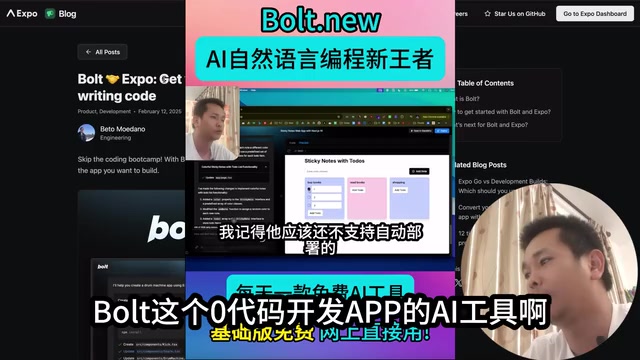
This limitation has been completely broken in the latest update. Bolt has officially announced support for zero-code development of native iOS and Android applications. For users hoping to leverage AI to build truly store-ready Native Apps, this is undoubtedly a milestone announcement.
Technical Approach: The Powerful Combination of Bolt + Expo
Why Expo?
Bolt's core approach to native app development is the integration of the Expo framework. Expo is one of the most mature development platforms in the React Native ecosystem, significantly simplifying the cross-platform native app development workflow. From this, we can infer that Bolt's underlying tech stack is React Native—currently the most mainstream cross-platform native development framework.
React Native was open-sourced by Meta (formerly Facebook) in 2015 and is one of the most widely used cross-platform mobile development frameworks globally. It allows developers to write code using JavaScript and React syntax, with the framework mapping UI components to actual native controls at runtime (rather than WebView), achieving near-native performance and experience while maintaining cross-platform code reuse. Compared to competing solutions like Flutter (Dart) and Xamarin (C#), React Native's biggest advantage lies in its massive JavaScript ecosystem and lower learning curve for frontend developers—which is also a key reason Bolt chose this tech stack.
Expo is not an independent programming language or framework, but rather a complete development platform built on top of React Native. It solves the most painful environment configuration issues in native React Native development—traditional React Native projects require developers to locally install Xcode, Android Studio, various SDKs, and emulators, a process that is tedious and error-prone. Expo abstracts away this complexity through its Managed Workflow, providing a unified development server, standardized native module libraries (expo-camera, expo-location, etc.), and cloud build capabilities. For AI code generation scenarios, Expo's standardization is particularly important—it gives AI-generated code higher predictability and consistency.
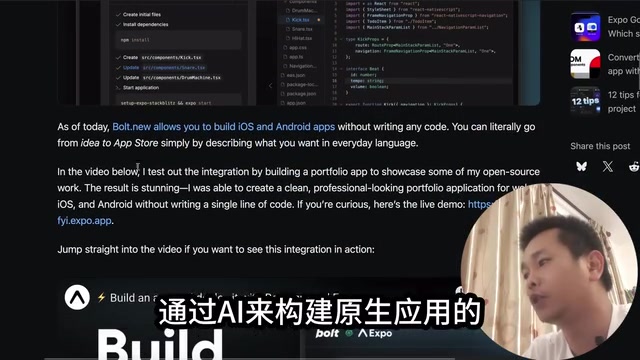
Choosing Expo as the technical foundation offers several notable advantages:
- One codebase, dual-platform deployment: Simultaneously generates iOS and Android native applications
- Rich native modules: Access to camera, GPS, push notifications, and other device capabilities
- Mature ecosystem: Extensive existing plugins and community support
- Simplified build process: Lowers the barrier from code to installable application
Future Integration with EAS for Fully Automated Deployment
The Bolt team has revealed that the next step is to integrate Expo's EAS (Expo Application Services) technology. EAS is a cloud-based DevOps service suite launched by Expo in 2021, consisting of three core modules: EAS Build (cloud compilation of iOS/Android installation packages, enabling iOS app builds without a local Mac environment), EAS Submit (automated submission to App Store Connect and Google Play Console), and EAS Update (hot update service that allows pushing JavaScript-layer code updates without resubmitting for review). The introduction of EAS Build is particularly revolutionary—previously, building iOS apps required owning a Mac computer and a valid Apple Developer account. EAS fully cloudifies this process, dramatically lowering the hardware barrier for cross-platform development.
Once integration is complete, users will be able to complete the entire workflow from development to store listing directly within the Bolt platform—including automatic deployment to the iOS App Store and Google Play Store.
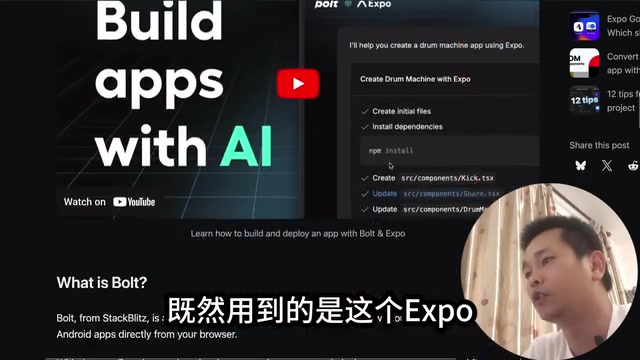
This means the future workflow could look like this: Users simply describe the desired app in natural language → Bolt automatically generates the code → One-click build and submission to app stores, all without writing a single line of code.
Current Usage Workflow
It's important to note that the fully automated EAS deployment feature is not yet fully available. In the current phase, the user workflow consists of two steps:
- Complete app development in Bolt: Generate complete application code through AI conversation
- Package and deploy via EAS Client: Export the generated code and use Expo's EAS toolchain to complete building and store listing
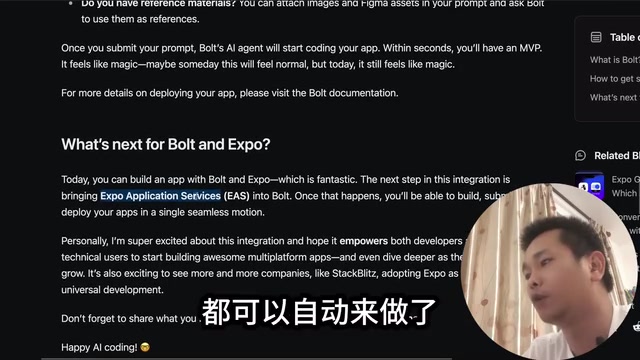
Although the second step still requires some manual operation, the overall complexity has been dramatically reduced compared to traditional native app development workflows. For users with basic technical backgrounds, this process can be completed independently.
Industry Impact and Outlook
New Boundaries for Zero-Code Native App Development
The significance of Bolt's update goes beyond feature expansion—it redefines the capability boundaries of zero-code development. Looking back at the evolution of zero-code and low-code tools, three distinct development phases emerge: The first phase (early 2010s), represented by Wix and Squarespace, focused on visual construction of static websites and landing pages; the second phase (2015-2020), represented by Bubble and Webflow, began supporting dynamic web applications with databases and business logic; the third phase (2023 to present), represented by Bolt, Lovable, and Cursor, where the introduction of AI large language models enabled a qualitative leap in code generation capabilities, with tools extending toward more complex application types. The addition of native mobile app development marks a new critical point in this evolution—AI tools are systematically encroaching on technical domains that were previously accessible only to professional engineers.
Now, this barrier is being rapidly lowered by AI tools. It's foreseeable that Bolt's competitors (such as Lovable, Replit, etc.) will soon follow with similar capabilities, and the entire AI programming tool space will enter a new battleground of native app development.
Implications for Developers and Entrepreneurs
For independent developers and early-stage entrepreneurs, this change brings tangible benefits:
- Further reduced MVP validation costs: Rapidly build native app prototypes to validate market demand
- More convenient cross-platform coverage: No need to separately learn Swift and Kotlin; generate dual-platform apps in one go
- Shifted focus: Developers can devote more energy to product design and user experience rather than underlying technical implementation
Of course, for complex commercial-grade applications, AI-generated code still has room for improvement in performance optimization, security, and maintainability. But as a tool for rapid validation and small-scale app development, the Bolt + Expo combination has already demonstrated exciting potential.
Key Takeaways
- Bolt officially supports native iOS and Android app development, breaking through the previous limitation of only building Web Apps
- The underlying technical approach uses the Expo framework (React Native), enabling one codebase to run on both platforms
- Future integration with Expo EAS services will enable fully automated workflows from development to App Store and Play Store listing
- In the current phase, users still need to manually complete packaging and deployment through EAS Client
- This update redefines the capability boundaries of zero-code development and will accelerate competition among AI programming tools in the native app space
Related articles
 Tech Frontiers
GitHub Agent HQ Launch: AI Coding Tools Enter the Era of Platform Competition
GitHub Universe unveils Agent HQ platform for unified coding agent management, Copilot upgrades with multi-model support. OpenAI completes restructuring, Anthropic tests new model, NVIDIA open-sources AI models.
 Tech Frontiers
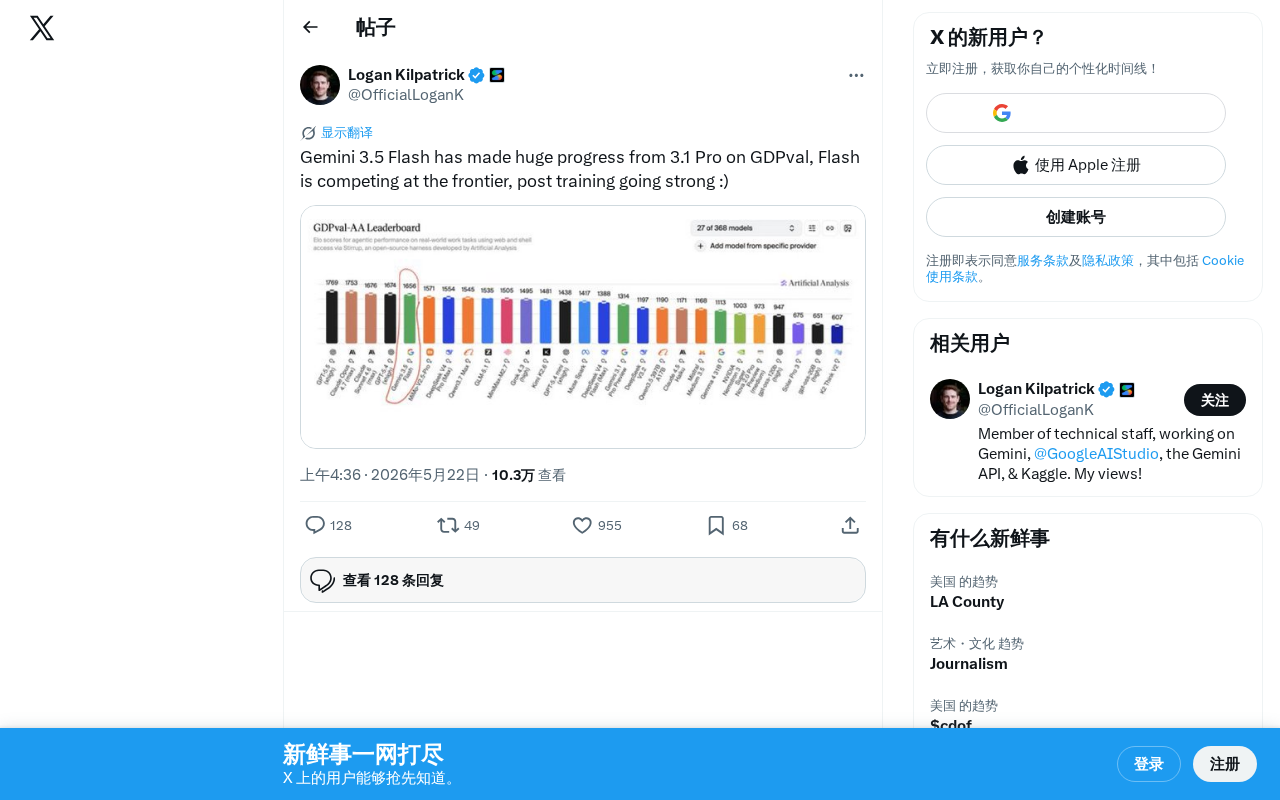
Gemini 3.5 Flash Achieves a Massive Leap on the GDPval Benchmark
Google Gemini 3.5 Flash surpasses Gemini 3.1 Pro on the GDPval benchmark. The lightweight Flash model leverages post-training techniques to approach frontier-level performance, redefining the balance between quality and cost.
 Tech Frontiers
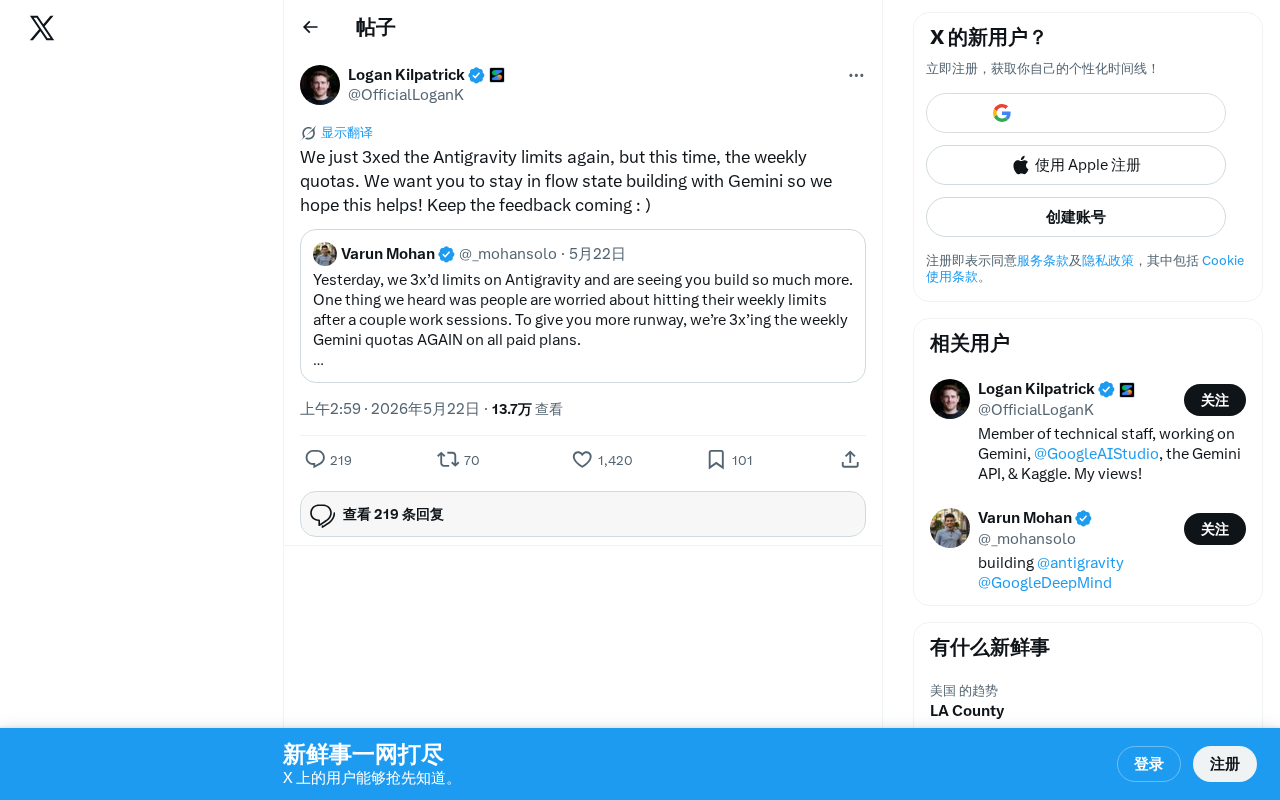
Google Gemini Antigravity Weekly Quota Tripled — AI Coding Without Limits
Google Gemini triples Antigravity weekly quotas following a prior daily quota boost. Analyzing the impact on developers and its strategic significance in AI coding.