Build an App in 30 Minutes with Zero Code: A Complete Hands-On Walkthrough Using the AI Tool Tusi

A creator builds a complete mobile app in 30 minutes using only natural language and the AI tool Tusi.
A Bilibili creator demonstrates how to build BOOSTi — a boss personality test app — in under 30 minutes without writing a single line of code, using the AI development tool Tusi. The article walks through the entire process from natural language requirements to finished installable app, explores the underlying LLM technology, and reflects on how AI tools are shifting the development barrier from coding ability to clear communication of ideas.
From Idea to Finished Product: AI Makes App Development Accessible to Everyone
"I have a great idea — I just need a programmer" — this used to be the frustrated refrain of countless people. But now, a Bilibili creator has proven through action: without writing a single line of code, using only conversational dialogue, you can build a fully installable mobile app in just 30 minutes.
The app he built is called "BOOSTi" — a boss personality tester inspired by a simple insight: many workers aren't crushed by the work itself, but driven to the brink by their bosses. Every boss seems to have their own unique "personality system," so what if you could test your boss's type like MBTI and learn how to better deal with them?
It's worth noting why MBTI (Myers-Briggs Type Indicator) gained such massive traction in the social media era: it provides a concise "labeling system" that satisfies people's need for self-understanding and social icebreaking. BOOSTi borrows this exact product logic — using dimensional combinations to "label" bosses, which both lowers the comprehension barrier and naturally lends itself to social sharing. This design approach of combining psychological frameworks with entertaining presentation has proven effective time and again in internet products.
This seemingly wild idea went from concept to finished product in under 30 minutes, thanks to an AI development tool called "Tusi" (吐司). The core takeaway from the entire process: the barrier to app development is shifting from "can you write code" to "can you clearly express what you need."
The Complete Zero-Code Development Workflow: Building an App Like Having a Conversation
Requirements Phase: Describe the App You Want in Natural Language
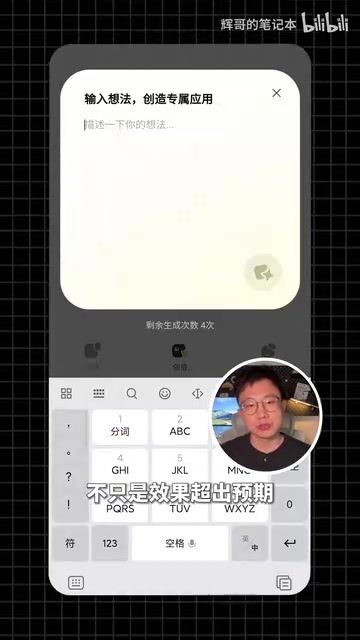
With Tusi, the first step in the development process isn't writing code — it's chatting. After you feed your requirements into the tool, the AI proactively guides you through several key steps:
- Confirm the requirements list: Define exactly what features the app needs
- Choose a design style: Determine the visual direction
- Set the name and description: Define the product's brand identity
This process closely mirrors the communication between a product manager and a development team in real software development — except the one sitting across from you isn't a programmer, but an AI.
The core capability involved here is known in the AI field as Prompt Engineering, but as tools evolve, this concept is shifting toward a broader notion of "requirements engineering." Early Prompt Engineering focused on using specific syntax structures and keywords to guide AI output, but tools like Tusi can now proactively guide users to clarify their needs through multi-turn dialogue — users no longer need to master complex prompting techniques; they just need to express their ideas as they would to a product manager. Behind this shift lies significant improvements in AI's intent understanding, context memory, and task decomposition capabilities.
Automated Development Phase: AI Handles Everything from Design to Programming
Once requirements are confirmed, the AI automatically executes the complete workflow from product planning and design to development and programming. In about 10 minutes, the initial version of BOOSTi was generated. After that, you can continue refining and optimizing through ongoing dialogue, and finally package it as an app file ready to install directly on your phone.
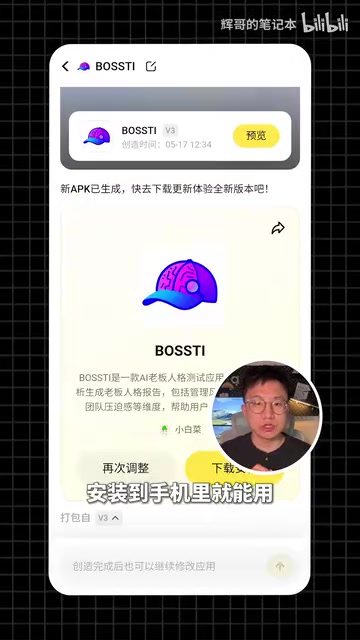
What's notable is that "zero code" isn't a gimmick here — the entire development process was genuinely completed through natural language conversation, with all technical implementation handled entirely by the AI.
The underlying technology of AI zero-code development tools like Tusi relies on the code generation capabilities of Large Language Models (LLMs). These tools typically integrate multiple AI capability modules: a natural language understanding module parses user requirements, a code generation module (similar to GitHub Copilot or GPT-4's coding capabilities) translates requirements into executable code, and a UI generation module automatically handles interface design and layout. The entire workflow essentially chains together what were traditionally separate stages — requirements analysis, UI/UX design, frontend development, and backend logic — into an automated pipeline through AI Agent orchestration. This aligns with the rising concept of the "AI Software Engineer" — products like Devin, Cursor, and Bolt.new are all exploring similar directions.
It's worth noting that zero-code/low-code development isn't an entirely new concept born of the AI era. As early as the 2010s, no-code platforms like Bubble, Adalo, and FlutterFlow already allowed users to build applications by dragging and dropping components. However, these tools still required users to understand abstract concepts like database structures, API calls, and conditional logic — essentially replacing "writing code" with "configuring parameters," with a still-steep learning curve. The new generation of AI-driven zero-code tools represents a qualitative leap — users only need to describe their intent in natural language, and the AI automatically handles everything from architecture design to code implementation. This is a jump from "visual programming" to "conversational programming," truly lowering the development barrier to a level accessible to ordinary people.
Product Breakdown: A Four-Dimensional Personality System That Exceeds Expectations
Test Question Design: Hitting Workplace Pain Points with Precision
BOOSTi's test questions are surprisingly high quality. The AI-designed questions all zero in on real workplace scenarios:
- How does your boss control your work process?
- How often do you receive messages from your boss on weekends?
- How does your boss typically handle disagreements?
These questions precisely target the core pain points of the boss-employee relationship, demonstrating that AI already has considerable capability in understanding contextual requirements.
Personality Labels and Analysis System: Character Profiles Rivaling MBTI in Depth
After completing the test, the app generates unique personality labels for bosses — such as "Zen Boss," "Honey Communicator," "Warm Blade," and more — each accompanied by MBTI-style letter abbreviations. For example, "Warm Blade" corresponds to CEGM, with each letter representing a different personality dimension.
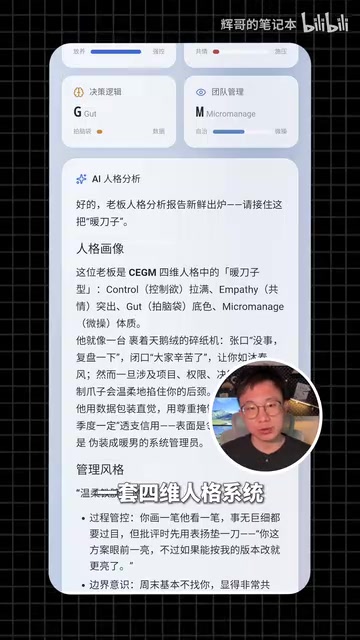
Even more impressive, the AI independently constructed a four-dimensional personality analysis system with remarkably precise characterizations for each boss type. For instance, the description of the "Warm Blade" boss:
"Like a paper shredder wrapped in velvet — their words feel like a warm spring breeze, but their controlling claws will gently grip the back of your neck."
It's hard to imagine that such a description — blending literary flair with sharp insight — was automatically generated by AI in just a few minutes. This reflects an important property of large language models — Emergent Abilities. When model parameter scale and training data volume reach certain thresholds, models suddenly exhibit capabilities not explicitly required by their training objectives, such as humor, metaphor usage, and contextual empathy. A metaphor like "a paper shredder wrapped in velvet" is precisely the kind of creative expression that emerges from training on massive literary corpora. The model doesn't truly "understand" workplace relationships — rather, it has learned rich patterns for describing such relationships from training data and can flexibly combine and apply them in specific contexts.
Practical Workplace Survival Guides
Beyond the entertaining personality analysis, BOOSTi also provides targeted "survival guides" that systematically teach users how to work with each boss type. For example, advice for dealing with a data-driven boss:
- Prepare three data-backed proposals before any decision
- Accompany every suggestion with charts and numbers
- Use data to "build a nest" for your boss and establish trust
This gives what seems like a purely entertainment-oriented test tool genuine practical value in the workplace.
Deeper Reflections: What AI Development Tools Are Really Changing
A Fundamental Shift in the Development Barrier: From Writing Code to Expressing Needs
The most noteworthy aspect of this case isn't the app itself, but the trend it reveals: the core competency in software development is shifting from technical implementation to requirements expression.
In the past, getting from idea to product meant overcoming layer upon layer of technical barriers — programming languages, development frameworks, UI design, and more. Now, AI tools like Tusi are dismantling these barriers one by one. All you need to do is clearly describe what you want.
The deeper significance of this shift is that software development is undergoing a transformation similar to the spread of literacy. Just as the invention of the printing press freed knowledge dissemination from dependence on scribes, AI code generation tools are freeing software creation from dependence on professional programmers. Of course, just as widespread literacy didn't eliminate the profession of writing, AI development tools won't eliminate programmers — what's changing is who gets to participate in creation.
The Liberation of Creativity: Everyone Can Be a Developer
As the creator himself reflected, being an AI content creator over the past few years has kept him in a constant state of excitement — the old helplessness of "just needing a programmer" has completely vanished, replaced by an open atmosphere of creation. The tools handle implementation; people just need to focus on creating.
This doesn't mean programmers will be replaced. It means more people without technical backgrounds can participate in software creation. When creativity is no longer blocked by technical barriers, we'll likely see more interesting and practical products like BOOSTi emerge. In fact, every historical democratization of creative tools has triggered a content explosion — digital cameras and smartphones made everyone a photographer, YouTube and TikTok made everyone a video creator, and AI development tools may be opening the same revolution for software.
Current Limitations and Future Outlook
Of course, AI-generated apps still lag behind products from professional development teams in terms of complexity, performance optimization, and security. Specifically, AI-generated code still struggles with engineering challenges like high concurrency, data encryption, and cross-platform compatibility; generated application architectures tend toward monolithic designs that can't support large-scale user bases; and when it comes to sensitive features like payments and user privacy, AI-generated code may contain security vulnerabilities. But for scenarios like prototype validation, personal tools, and creative experiments, these zero-code development tools are already more than sufficient. As AI capabilities continue to evolve — particularly in code reasoning, automated testing, and security auditing — the boundary of "sufficient" will only keep expanding.
Conclusion
Thirty minutes, zero code, one fully functional app — this isn't the future; it's happening right now. For everyone with ideas but without a technical background, this may be the best era yet: your creativity no longer has to wait for that programmer.
Related articles

ChatGPT Schedule Planning Feature Explained: How AI Helps Teams Organize Work Efficiently
A deep dive into ChatGPT's schedule planning feature: coordinate team schedules and assign tasks through natural language. Learn AI planning strategies and practical tips to boost collaboration.
Vibe Coding in Practice: Three Strategies for Building an English Learning Game with Dramatically Different Results
Three controlled experiments compare pure Prompt, pre-prepared assets, and Godot engine strategies for Vibe Coding an English learning game — revealing dramatic differences in quality and Token cost.
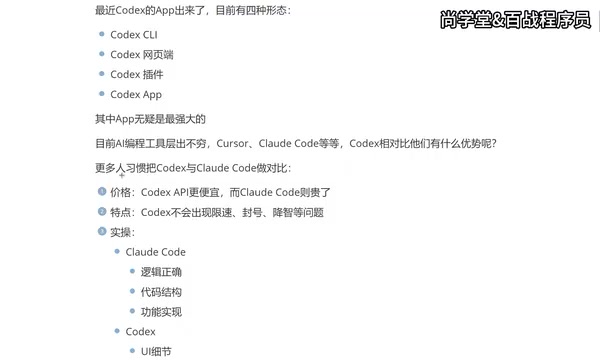
Codex APP Deep Dive: Core Advantages and AI Coding Tool Selection Guide
In-depth comparison of Codex APP, Claude Code, and Cursor across pricing, stability, and capabilities. Discover Codex APP's unique strengths in frontend development and find the best AI coding tool.