ChatGPT Schedule Planning Feature Explained: How AI Helps Teams Organize Work Efficiently

How ChatGPT's schedule planning feature helps teams coordinate work through natural language conversations.
OpenAI demoed ChatGPT's ability to plan team schedules through natural language conversation, showcasing week-wide task coordination and responsibility assignment. This article analyzes the AI's planning logic, the underlying LLM technology, the competitive landscape of AI scheduling tools, and offers practical tips for using ChatGPT to optimize team workflows.
ChatGPT Schedule Planning Feature Overview
OpenAI recently showcased ChatGPT's planning capabilities in everyday life scenarios. In an official demo video, a user coordinated their team's work schedule through simple natural language conversation, having ChatGPT help ensure everyone could leave work early to catch a game. While seemingly straightforward, this scenario demonstrates the enormous potential of AI assistants in real-world work coordination.
Real-World Use Case Demo
Natural Language Requests with Zero Learning Curve
In the demo, the user made a very casual request to ChatGPT: "Help me organize everyone's schedule so we can all leave early to watch the game." This highlights the core advantage of ChatGPT's schedule planning — no need to learn special commands or complex formats. You can get a plan just by expressing your needs as naturally as chatting with a colleague.
ChatGPT's ability to deliver this "zero learning curve" interaction experience relies on breakthroughs in natural language understanding by large language models (LLMs). Traditional scheduling tools (like Google Calendar and Microsoft Outlook) typically require users to input information through structured methods such as forms and drag-and-drop interfaces. LLMs, on the other hand, can extract key information — time constraints, participants, priorities — from unstructured, conversational language. This capability stems from the Transformer architecture's deep understanding of contextual semantics, combined with instruction-following abilities gained through RLHF (Reinforcement Learning from Human Feedback) training. Instead of users adapting to the machine's language, the machine adapts to human expression habits.

AI's Planning Approach: Week-Wide Coordination, Not Single-Day Compression
After receiving the request, ChatGPT quickly produced a structured planning proposal. Its core strategy involves two key steps:
- Plan ahead: Prepare at the beginning of the week by front-loading important tasks
- Distribute responsibilities: Allocate the week's workload across different time slots

One notable detail: ChatGPT didn't simply compress one day's workload. Instead, it coordinated the schedule across the entire work week. This planning logic shows that AI has made significant progress in understanding human work patterns, flexibly reallocating time while maintaining work quality.
From a technical perspective, ChatGPT's "week-wide coordination" capability touches on the Automated Planning problem in AI. Traditional AI planning systems (such as STRIPS and PDDL) rely on predefined state spaces and action sets, while LLMs derive their planning abilities primarily from implicit learning of vast human planning experiences in training data. OpenAI has been investing heavily in reasoning capabilities in recent years — from Chain-of-Thought prompting to the deep reasoning of the o1 series models — all aimed at enhancing the model's ability to decompose complex problems into executable steps. However, it's worth noting that LLM planning capabilities currently rely mainly on "pattern matching + experience generalization." When facing highly complex constraint optimization problems, their reliability still falls short of specialized operations research algorithms, so human review and adjustment remain necessary in practice.
Task Breakdown and Team Responsibility Assignment
ChatGPT further refined the plan into specific responsibility assignments, distributing the week's tasks across different time slots and team members. This approach ensures work continuity while freeing up ample time for game day.

Development Trends for AI Assistants in Schedule Management
From General Q&A to Scenario-Based Planning
Although brief, this demo reveals an important direction in AI assistant development: the shift from general Q&A to scenario-based planning. Traditional AI assistants primarily excelled at answering questions and generating content, while the new generation of AI assistants, led by ChatGPT, is evolving toward "action planning" — not just telling you "what something is," but helping you plan "how to do it."
This transition technically corresponds to the evolution from Retrieval-Augmented Generation (RAG) to AI Agent architectures. The core of the Agent architecture lies in giving AI a closed-loop capability of "perceive-plan-act-feedback." OpenAI's Operator, launched in 2025, along with widely discussed mechanisms like Function Calling and Tool Use, are all designed to enable AI to not only generate text suggestions but also directly invoke external tools to execute actions — such as actually creating calendar events, sending meeting invitations, and setting reminders. This direction is considered a critical step in moving AI applications from "Copilot" to "Autopilot," meaning AI will gradually grow from an advisor into an executor.
The Competitive Landscape of AI Schedule Management
It's worth noting that AI schedule management isn't a track exclusive to ChatGPT. Google deeply integrated Gemini into Google Calendar and Google Workspace in 2024, supporting natural language event creation and intelligent conflict detection. Microsoft Copilot similarly offers AI-driven scheduling suggestions and meeting summary features in Outlook and Teams. Additionally, vertical-market startups like Reclaim.ai, Clockwise, and Motion applied AI to schedule optimization even earlier, achieving automatic time-block allocation and intelligent meeting scheduling through deep integration with calendar APIs. ChatGPT's differentiating advantage lies in its powerful conversational understanding and flexibility, but in terms of integration depth with actual calendar systems, it currently lags behind these specialized tools. This means the future competitive focus will be not just about AI intelligence, but about seamless integration with existing workflows.
Pain Points AI Can Solve in Team Collaboration
In team collaboration scenarios, schedule coordination is often the most time-consuming and friction-prone task. AI assistants stepping into this role can deliver several significant improvements:
- Reduced communication costs: Quickly generate preliminary proposals that team members only need to confirm or fine-tune
- A holistic perspective: Avoid the limitations of individual viewpoints by optimizing schedules from an overall standpoint
- Structured output: Transform vague requirements into clear, actionable plans
Practical Tips for Schedule Planning with ChatGPT
If you want to use ChatGPT for similar schedule planning in your daily work, the following tips can help you get better results:
- Define clear constraints: Tell ChatGPT about specific time limits, number of participants, and key tasks — the more specific the information, the more practical the plan
- Provide sufficient context: Explain your team's work habits, project priorities, and existing fixed commitments
- Iterate through multi-turn conversations: Use the AI-generated initial plan as a starting point, then refine it through follow-up questions and additional details
Conclusion: AI Is Becoming the Efficiency Engine for Team Collaboration
ChatGPT's schedule planning feature demonstrates the trend of AI assistants evolving from "information lookup tools" to "collaboration partners." While the current demo is still relatively basic, as AI continues to deepen its understanding of user habits, team dynamics, and workflows, AI scheduling assistants are poised to become essential tools for boosting team efficiency.
The deeper change behind this is that AI is learning to understand not just what we say, but what we truly want to achieve — and that is precisely the most essential capability of an excellent collaboration partner. As multimodal perception, long-term memory, and tool-calling capabilities continue to evolve, future AI assistants will no longer just passively respond to commands. They will proactively anticipate needs, prepare solutions in advance, and truly become indispensable efficiency engines in team operations.
Related articles

Vibe Coding in Practice: Three Strategies for Building an English Learning Game with Dramatically Different Results
Three controlled experiments compare pure Prompt, pre-prepared assets, and Godot engine strategies for Vibe Coding an English learning game — revealing dramatic differences in quality and Token cost.
Build an App in 30 Minutes with Zero Code: A Complete Hands-On Walkthrough Using the AI Tool Tusi
Build a fully installable mobile app in 30 minutes with zero code using AI tool Tusi. A complete walkthrough from requirements to finished product, showing how AI shifts app development from coding skills to clear communication.
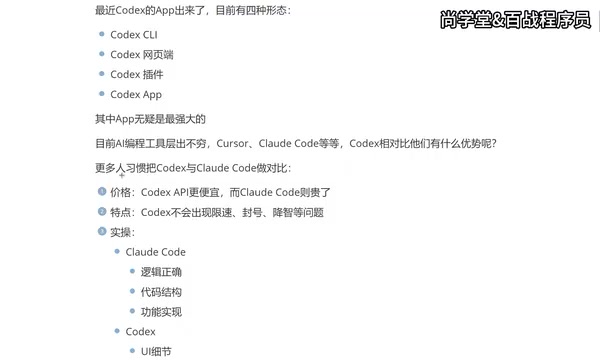
Codex APP Deep Dive: Core Advantages and AI Coding Tool Selection Guide
In-depth comparison of Codex APP, Claude Code, and Cursor across pricing, stability, and capabilities. Discover Codex APP's unique strengths in frontend development and find the best AI coding tool.