Building a WeChat Mini Program with AI from Scratch: How a Non-Coder Created a Poetry Memorization App in 7 Days
A non-coder used AI to build and launch a poetry memorization WeChat Mini Program in 7 days.
Bilibili creator Tao Qigu, with zero programming experience, used AI assistance to develop and launch "Poetry for Brain Health" — a WeChat Mini Program designed to help elderly users exercise their memory through daily classical poetry memorization. This article covers the full journey from identifying a real family need, to AI-assisted coding and debugging, to designing an elderly-friendly four-step learning flow with spaced repetition based on the Ebbinghaus forgetting curve.
A person with absolutely zero programming knowledge used AI assistance to build and launch a WeChat Mini Program from scratch in just 7 days — something nearly unimaginable in the past, but it actually happened. Bilibili creator Tao Qigu shared the complete journey of developing his "Poetry for Brain Health" mini program. This story is not just a record of a technical experiment — it reveals how AI is reshaping the boundaries of what ordinary people can create.
Starting from a Real Need: Why Build a Poetry Memorization App?
This project didn't start from a technical impulse, but from a very simple family need. Tao Qigu noticed that the elderly members of his family were showing clear signs of memory decline as they aged — repeatedly asking about things just said, searching everywhere for a phone sitting right on the table, looking for keys already in their hand. These subtle changes got him thinking: if our bodies need exercise, doesn't our brain need it too?
He tried Sudoku, number memorization, vocabulary drills, and various brain training games, but quickly ran into a practical problem: many things that young people find simple just don't appeal to the elderly. Complex interfaces packed with buttons and settings immediately turned off most older users.
Then one day, he thought of classical Chinese poetry. "Quiet Night Thought," "Spring Dawn," "Climbing Stork Tower" — these poems are familiar to most elderly Chinese people, and picking them back up is far easier than learning something entirely new. Moreover, classical poetry has natural advantages for memory training: rhythm, rhyme, vivid imagery, and easy recitation. And so, a clear product vision was born — build a minimalist mini program that lets elderly users memorize one poem a day, spending just a few minutes exercising their brain.
This approach is worth learning from for anyone who wants to build a product: great products aren't about piling on features — they start from real pain points and find solutions that users can most easily embrace.
AI-Assisted Development: A Non-Coder's Real Experience
The idea was there, but who would build it? Tao Qigu admitted that terms like "frontend, backend, database, API" gave him a headache, and WeChat Mini Program development was completely foreign territory. But he decided to give it a shot with AI — "the worst that could happen is failure."
He described the entire development process as having a tech consultant sitting next to you who never gets annoyed by your questions. From homepage design, font selection, and button layout to daily recommendation logic, learning progress tracking, data storage, and share poster generation — whatever came to mind, he just asked.
But he also emphasized that AI-generated code is absolutely not a copy-paste-and-ship situation. The pitfalls he encountered that week were countless:
- Pages showing nothing but a white screen
- Buttons that did nothing no matter how many times you tapped
- Features working fine on Android but breaking on iPhone
- Audio playback failures
- Layouts completely falling apart
His most memorable experience was building the share poster feature — he worked on it from 8 PM until 1 AM, tweaking it over and over with no success, only to discover that the culprit was a single mistyped character.
Yet it was precisely through this constant cycle of hitting walls that AI's value truly shone. In the past, encountering a bug meant searching through documentation, scouring forums, and watching tutorials — and even after all that, you might not find a solution. Now, you just send the error message, code, and screenshots directly to the AI, and many problems can be quickly identified with a fix suggested.
The core development loop was: error → fix → test → another error → another fix → test again. AI doesn't do the work for you — it works alongside you to solve problems one by one.
Product Design: A Learning Flow Tailored for Elderly Users
After a week of refinement, "Poetry for Brain Health" delivered a complete and thoughtfully designed learning system. The entire interface followed one core principle: what elderly users fear most isn't too few features, but too many. The simpler, the better.
Opening the mini program immediately shows today's recommended poem. Tapping it launches a four-step learning flow:
Step 1: Understand the Meaning
First read the original text, then the interpretation, and finally the appreciation. Understanding the content before memorizing is far more efficient than rote learning. Large fonts were specifically implemented here to accommodate older users' eyesight.
Step 2: Read Aloud Repeatedly
Read along line by line, getting a feel for the rhythm and flow. No memorization is required at this stage — the focus is on becoming familiar with the content.
Step 3: Recall from Memory
Parts of the content are hidden, and users try to recall them on their own. This is the most critical step in the entire flow — many people think memory happens during reading, but real memory training happens during recall, because only when you start trying to remember does your brain truly engage.
Step 4: Fill-in-the-Blank Reinforcement
A fill-in-the-blank exercise reinforces the memory one more time, helping the newly learned content leave a deeper impression.
The entire flow takes just a few minutes — not tiring and completely pressure-free.
Additionally, he designed an automatic review feature based on the Ebbinghaus forgetting curve. Learned poems automatically enter a review schedule, with reminders sent when it's time to review — users don't need to remember what to review on their own. This design addresses the biggest pain point of poetry memorization: it's not that you can't learn it, but that you forget it the very next day.
Other thoughtful features include: large font mode and extra-large font mode, a title system ranging from "Poetry Apprentice" to "Poetry Champion" (providing a sense of achievement and positive feedback), a favorites function, a mistake notebook, a learning calendar, share posters, and more. Each feature looks simple on its own, but for a non-coder, every single one was painstakingly built piece by piece.
AI Lowers the Barrier to Creation, but Doesn't Eliminate the Need for Effort
The most thought-provoking aspect of this project isn't how polished the mini program is, but the trend it reveals: AI is dramatically lowering the barrier for ordinary people to build products.
In the past, there was a towering technical wall between having an idea and having a usable product. Many people didn't lack ideas — they lacked the technical ability to bring them to life. But now, the division of labor has shifted: AI handles the technical problems, while humans are responsible for defining requirements, evaluating results, and continuously testing and optimizing.
Of course, Tao Qigu also honestly pointed out AI's limitations: it makes mistakes, misses things, and sometimes confidently produces nonsense. Ultimately, a human still needs to test, verify, and make judgments. But even so, for ordinary people, this already represents a massive leap in capability.
Final Thoughts
The story of "Poetry for Brain Health" is essentially a story about "starting." As Tao Qigu put it well: Many things aren't about learning everything before you begin — they're about beginning and learning along the way. The biggest threat to an idea isn't doing it poorly — it's never moving beyond the thinking stage.
If you're also a non-coder with a small project that's been living in your head, why not take the first step with AI? Build it first, then refine it gradually. In the age of AI, execution matters more than technical skill, and truly valuable products often come from observing and caring about the real needs of the people around you.
Related articles
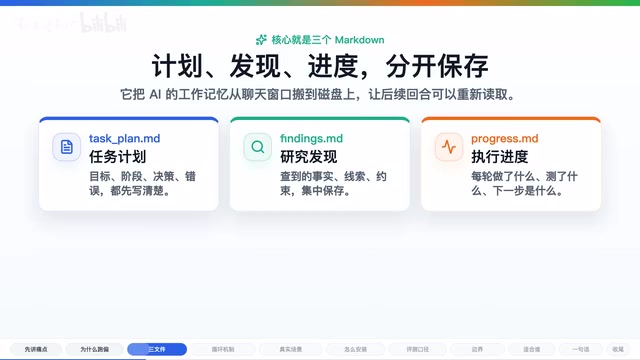
Planning with Files: Solving AI Coding's "Amnesia" Problem with Three Files
Planning with Files uses three Markdown files and Hooks to solve the context loss problem in AI coding tools like Claude Code and Cursor during long tasks.
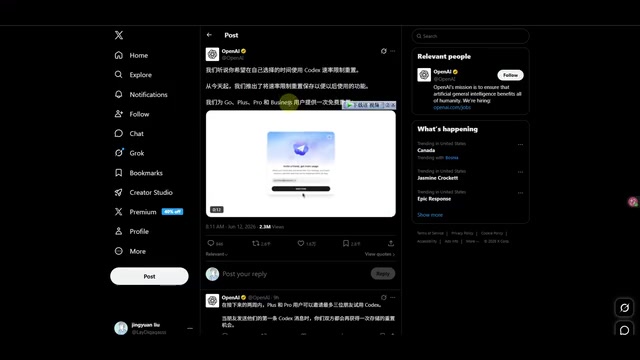
How to Claim Your Free OpenAI Codex Rate Limit Reset Pack
OpenAI is giving Plus, Pro, and Business users free Codex rate limit resets — 1 free reset per user, plus up to 3 more via referrals. Learn how to claim and use them before the 30-day deadline.

Building a WeChat Mini Program with AI + Cursor: A Full Workflow from Ideation to Frontend
A hands-on guide using DeepSeek, Claude, and GPT for product ideation, then Cursor to build a WeChat Mini Program. Four iterations from zero to frontend.