ChatGPT Integrates Codex: Three Major Features Reshaping Enterprise AI Collaboration
OpenAI integrates Codex into ChatGPT with three features transforming it from chat tool to enterprise OS.
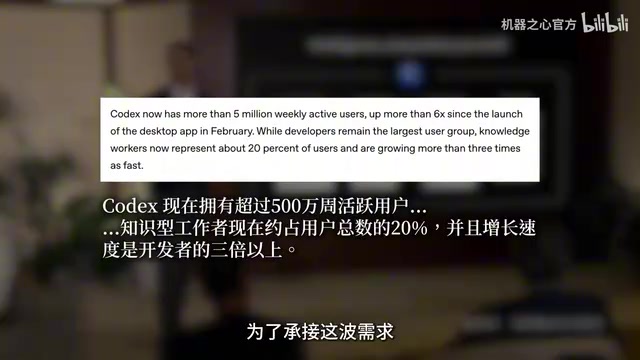
OpenAI has deeply integrated Codex into ChatGPT while launching three major features: six role-based AI plugins for instant enterprise deployment, Sites for generating interactive websites from natural language, and Annotations for precise iterative editing. With Codex surpassing 5 million weekly active users and knowledge workers growing 3x faster than developers, this move signals ChatGPT's transformation from a conversational assistant into a full enterprise operating system.
OpenAI recently announced the deep integration of Codex into ChatGPT, along with the simultaneous launch of three major features — six role-based AI plugins, Sites for one-click website creation, and Annotations for iterative refinement. This isn't just a product upgrade; it's a clear signal that OpenAI is launching a full-scale offensive into the enterprise market.
Codex Merges into ChatGPT: From Developer Tool to Universal Productivity
A noteworthy data point: Codex currently has over 5 million weekly active users, and knowledge workers are growing more than three times faster than developers. This means an increasing number of non-technical professionals are relying on AI coding capabilities to get their daily work done.
Codex was originally launched by OpenAI in 2021 as a code generation system built on GPT models, and it served as the core engine behind GitHub Copilot. It can transform natural language descriptions into executable code, supporting over a dozen programming languages including Python, JavaScript, and TypeScript. Early on, Codex primarily targeted the developer community and was offered as a standalone API. As large language model capabilities continued to evolve, Codex's applications expanded well beyond traditional coding assistance into areas like data analysis, automation scripting, and web page generation — scenarios that don't require developer expertise. This merger into ChatGPT marks Codex's official transformation from a vertical development tool into general-purpose productivity infrastructure.
After the merger, users no longer need to switch back and forth between ChatGPT and Codex. Want AI to run code or handle a task? Just make the request directly in the GPT chat window. This "seamless fusion" dramatically lowers the barrier to entry and evolves ChatGPT from a conversational assistant into a true work platform.
Breaking Down the Three New Features
Feature One: Six Role-Based AI Plugins — Ready-to-Use AI Colleagues
OpenAI has launched six specialized plugins targeting specific job roles — essentially six AI colleagues for different positions, ready to hit the ground running.
Previously, if you wanted to build a dedicated sales advisor, you'd need to manually configure role definitions, background context, operational guidelines, and other parameters step by step. The process was tedious and required a certain level of prompt engineering expertise. Prompt Engineering refers to the technical practice of carefully designing input prompts to guide large language models toward desired outputs. In enterprise scenarios, a high-quality AI assistant often requires multiple layers of configuration — system prompts, contextual knowledge bases, output format constraints, tool-calling permissions, and more. This presents an extremely high barrier for non-technical users and typically requires dedicated AI engineers to set up.
Now these pre-built plugins work right out of the box, covering common enterprise roles like sales, customer service, and analytics, dramatically lowering the barrier for enterprise AI deployment. The pre-built role plugins OpenAI has released essentially package these complex prompt engineering and toolchain configurations into ready-to-use templates, allowing enterprises to deploy quickly without investing in dedicated AI configuration personnel.
The design philosophy here is crystal clear: Instead of teaching users how to use AI, make AI directly adapt to users' work scenarios.
Feature Two: Sites — Generate Interactive Websites with a Single Sentence
The second major update is called Sites. In simple terms, it lets you turn your work ideas into an interactive website with just one sentence.

Once generated, you can share it via URL with your team, allowing everyone in the company to use and modify it together. The use cases are incredibly broad: aggregating customer information, building financial scenario planners, setting up internal data dashboards… not knowing how to code is no longer an obstacle.
The core value of Sites lies in upgrading AI's generative capability from "content output" to "tool output". Previously, AI helped you write documents; now AI helps you build tools — a qualitative leap. Traditional AI generation capabilities were primarily focused on the content layer — text, images, code snippets, and other static outputs. The "tool output" that Sites represents is an entirely new paradigm: AI doesn't just generate content, it generates interactive applications. This relies on AI's deep understanding of frontend frameworks (such as React, HTML/CSS/JavaScript), as well as automated deployment and hosting capabilities. Similar trends have already emerged in the industry — for example, Vercel's v0 can generate UI components through natural language, and Replit's Agent can build complete applications. But OpenAI embedding this capability directly into ChatGPT, which has hundreds of millions of users, gives it potential impact far beyond vertical tools.
Feature Three: Annotations — Teaching AI to Truly "Revise"
The third new feature, Annotations, addresses a long-standing pain point in AI collaboration: Generating the first draft isn't hard; the hard part is continuous revision.
In AI-assisted content creation, there's a massive gap between "one-shot generation" and "continuous iteration." The traditional AI interaction model is linear — users give instructions, AI returns complete results, and if you're not satisfied, you need to re-describe the entire requirement. This model is extremely inefficient when dealing with long documents, complex spreadsheets, or multi-page presentations, because users might only need to modify 5% of the content but risk having the other 95% altered.
Now users can directly highlight the specific areas they want modified in documents, spreadsheets, presentations, or web pages, precisely directing AI to make localized adjustments. The "local annotation + precise modification" mechanism introduced by Annotations borrows from the interaction paradigms of code review in software development and document collaboration tools (like Google Docs' suggestion mode), enabling AI to understand the spatial boundaries of modifications and only change what needs changing. This makes Codex feel more like a real team member that can accept feedback, make targeted edits, and iterate continuously — rather than a generator that starts from scratch every time.
This feature may seem simple, but the improvement to actual workflows is enormous. It fills in the final piece of the puzzle in AI's journey from "generation" to "collaboration."
The Enterprise AI Market: A Head-On Collision of Two Strategies
OpenAI isn't the only player eyeing the enterprise market. Anthropic actually began positioning enterprise Agents in finance, engineering, design, and other scenarios even earlier.
Anthropic was founded in 2021 by former OpenAI Research VP Dario Amodei, with AI safety research as its core philosophy. Its flagship Claude model series excels in long-context understanding, complex reasoning, and code generation. In terms of enterprise market strategy, Anthropic has taken a fundamentally different approach from OpenAI: it leverages a deep partnership with Amazon AWS to gain cloud infrastructure and enterprise customer channels, while developing customized Agent solutions for high-value vertical scenarios like financial compliance, legal document analysis, and engineering design. Anthropic has also launched Claude for Enterprise, offering higher security standards, data isolation, and audit trail capabilities, directly targeting large enterprise clients with stringent data security requirements.
The two companies are pursuing distinctly different strategies:
- Anthropic: Expanding outward from vertical enterprise scenarios — first establishing deep capabilities in specific industries, then gradually broadening
- OpenAI: Leveraging ChatGPT's massive user base to penetrate enterprises, using consumer-grade product adoption to pry open the enterprise market
Each strategy has its strengths and weaknesses. Anthropic's approach makes it easier to build industry moats but limits expansion speed; OpenAI's approach grows faster but may face challenges in professional depth. Judging from the data — Codex's 5 million weekly active users with knowledge workers growing far faster than developers — OpenAI's "top-down" penetration strategy is clearly proving effective.
Final Thoughts
The essence of this update is that OpenAI is redefining ChatGPT from a "chat tool" into an "enterprise operating system." This positioning isn't mere marketing rhetoric — it reflects a deep structural shift in enterprise software architecture. Traditional enterprise IT architecture centers on standalone systems like ERP, CRM, and OA, connected through APIs or middleware to form a complex "system jungle." The AI-native enterprise operating system concept uses natural language as a unified interaction interface and large models as the central processing engine, consolidating functions previously scattered across different software — data analysis, document processing, workflow automation, application development — into a single platform. Microsoft's Copilot ecosystem and Google's Gemini for Workspace are pursuing similar paths, but OpenAI, with the dual advantage of model capability and user base, is attempting to become the definer of this new paradigm.
The six role-based plugins solve the role adaptation problem, Sites solves the tool generation problem, and Annotations solves the iterative collaboration problem — together, they form a relatively complete enterprise AI workflow loop.
Competition among AI Agents in the enterprise market will only intensify from here. For everyday users and enterprise decision-makers, the most important thing to watch isn't which model is more powerful, but who can embed AI capabilities most seamlessly into real workflows. From this perspective, OpenAI has made a remarkably precise strategic move.
Related articles
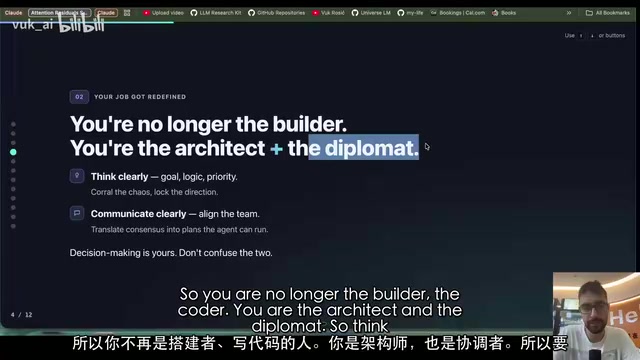
DeepSeek Researcher Summarizes 10 Rules for Using AI Agents
A DeepSeek researcher shares 10 universal rules for using AI agents, covering the shift from execution to judgment, memory file systems, human-AI collaboration boundaries, and more.
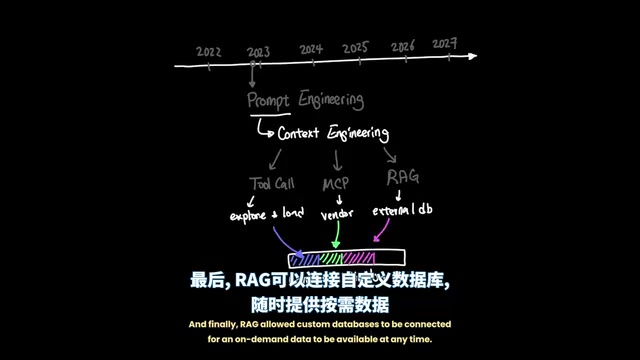
Agent Harness: A New AI Agent Paradigm from Prompt Engineering to Execution Environment Orchestration
Deep dive into Agent Harness Engineering: how loop execution and context isolation overcome the bottlenecks of prompt and context engineering in modern AI coding agents like Cursor.
DeepSeek V4 Flash Free Usage Guide: Configuration for Cherry Studio and CC Switch
DeepSeek V4 Flash is free for a limited time with zero token charges. Learn how to register on OpenModel and configure it in Cherry Studio and CC Switch.