Claude Code + Codex: The Most Reliable Division of Labor — A Three-Phase Approach of Planning, Execution, and Review

Use Claude Code for planning and review, Codex for execution — a three-phase AI programming workflow.
This article presents a proven three-phase workflow combining Claude Code and Codex: Claude Code serves as the architect (planning tasks, setting boundaries and acceptance criteria), Codex acts as the executor (implementing clearly defined tasks), and Claude Code returns for final review. The key to success lies in standardized handoff formats between tools, treating AI collaboration like a CI/CD pipeline.
Introduction: AI Programming Tools Aren't an Either/Or Choice
When developers have multiple AI programming tools at their disposal, the most common mistake is trying to identify "the strongest one" and throwing all tasks at it. But real-world project experience tells us that pushing a single tool to its limits is often less stable and controllable than orchestrating multiple tools together.
One developer discovered a collaborative workflow between Claude Code and Codex through hands-on project experience — one handles the thinking, the other handles the doing. The core idea behind this approach is simple yet effective: let each tool do what it does best.


Why You Shouldn't Let AI Jump Straight Into Modifying Code
Many developers have a habit: when a requirement comes in, they toss the code to an AI and say "fix this for me." This works fine for small projects, but once the codebase grows and module coupling becomes complex, this approach easily leads to increasingly messy code.
The fundamental reason: When AI lacks a global perspective, every modification it makes is locally optimal, not globally optimal. It doesn't know your architectural constraints, doesn't understand inter-module dependencies, and has no idea whether this change will break other functionality.
There's a technical explanation behind this: large language models are limited by their Context Window size when processing code. Even the most advanced models can only "see" a limited amount of code at once. When a project has hundreds of thousands of lines of code across hundreds of files, AI cannot fully understand all inter-module dependencies in a single interaction. It's like asking someone who can only see a small piece of a puzzle to judge whether the overall composition is sound — modifications that look perfect locally might break interface contracts, violate architectural layering principles, or introduce circular dependencies when viewed globally.
So the truly reliable approach is to clearly define roles first, then let AI get to work.
The Three-Phase Workflow: Planning → Execution → Review
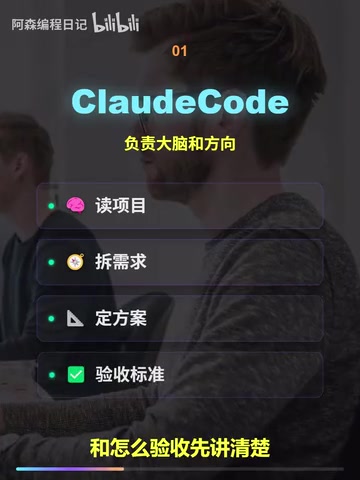
Claude Code as the Architect (Planning Phase)
Claude Code is Anthropic's command-line AI programming tool, built on the Claude model. It can directly read project files in the terminal, understand codebase structure, and conduct multi-turn conversational reasoning and analysis. Its core strengths lie in its ultra-long context window (supporting 200K tokens) and powerful logical reasoning capabilities, making it particularly suited for scenarios requiring understanding of complex code relationships and architectural decision-making. Unlike traditional code completion tools, Claude Code functions more like a technical consultant that can read an entire project and provide systematic recommendations.
In this workflow, Claude Code's strengths — understanding complex context, performing logical reasoning, and designing solutions — are fully leveraged. Its responsibilities include:
- Reading the project: Understanding existing code structure and module relationships
- Breaking down requirements: Decomposing a large requirement into executable small tasks
- Defining the approach: Clarifying the implementation path for each task
- Setting standards: Defining acceptance criteria — specifying exactly "what counts as done"
The output of this phase isn't code, but a clear task list that includes boundary conditions and acceptance criteria.
Codex as the Construction Crew (Execution Phase)
Codex is OpenAI's AI programming agent, designed to autonomously execute coding tasks in a sandboxed environment. It can independently handle file creation and modification, run shell commands, and deal with compilation errors and test failures. Codex's core advantage is execution power — it doesn't just generate code text, but actually runs code, observes output, and automatically debugs based on error messages, forming a "write code → run → fix" loop. This autonomous execution capability makes it particularly suited for handling clearly defined implementation tasks.
After receiving the task list output by Claude Code, Codex executes items one by one:
- Writing code, modifying files
- Running commands, handling errors
- Completing implementation according to clearly defined boundary conditions
The key point: Codex doesn't receive vague requirement descriptions, but rather explicit instructions that have been thought through by the architect. This dramatically reduces the risk of it "freelancing" and drifting off course.
Claude Code Returns for Review (Verification Phase)
After Codex finishes modifying code, don't blindly trust the results. Bring Claude Code back for a final quality gate:
- Review code diffs to confirm modifications align with the original plan
- Run tests to verify functional correctness
- Check whether anything deviates from the architectural design or introduces new issues
This step is equivalent to a Code Review, except the reviewer is also AI — but it's reviewing with a global perspective and acceptance criteria in hand. This "AI reviewing AI" pattern essentially leverages the differences between models: the executor and reviewer are based on different model architectures and training data, enabling them to discover each other's blind spots. This is similar to the software engineering principle that "developers shouldn't review their own code."
Handoff Format: The Critical Link That Determines Collaboration Success
In this workflow, the most easily overlooked yet most critical element is the handoff format. The quality of information transfer between Claude Code and Codex directly determines the quality of the final output.
The design philosophy of the handoff format originates from the "Design by Contract" concept in software engineering — behavior between the caller and executor is constrained through explicit preconditions, postconditions, and invariants. In traditional team collaboration, this corresponds to Tech Spec documents, JIRA task descriptions, and Acceptance Criteria. Applying this practice to AI tool collaboration essentially acknowledges that AI agents, like human developers, need clear task boundaries and completion standards to deliver high-quality results.
A good handoff document should contain:
- Task list: One-sentence description per task, clearly stating what to do
- Boundary conditions: Which files can't be touched, which interfaces can't be changed
- Acceptance criteria: What tests should pass after completion, what conditions should be met
This is essentially the classic software engineering flow of "design document → development → testing," except the executor at each stage has changed from a human to a different AI tool.
Conclusion: The Essence of AI Programming Is Process Design
Remember this formula:
Claude Code plans → Codex executes → Claude Code reviews
The path to advanced AI programming isn't about perfecting prompts for a single tool, but about assembling multiple tools into a reliable pipeline. Each tool delivers maximum value in its area of strength, connected through standardized handoff formats to form a reusable, iterable workflow.
This multi-tool collaborative pipeline thinking is highly similar to CI/CD (Continuous Integration/Continuous Deployment) pipeline design in the DevOps domain. In CI/CD, code passes through multiple stages — build, test, deploy — with each stage handled by specialized tools, connected through standardized Artifacts passed between stages. The AI programming workflow's "Planning → Execution → Review" follows the same pattern: each stage has clear inputs and outputs, dedicated executors, and Quality Gates. The value of this process-oriented thinking lies in observability, traceability, and optimizability — when something goes wrong at any stage, you can precisely identify whether the planning was unclear, the execution deviated, or the acceptance criteria weren't strict enough.
This approach applies not only to the Claude Code and Codex combination — whenever any new AI programming tool emerges in the future, you can use the same framework to think: Where should it sit in the process? How does it hand off to other tools?
Once you've mastered process design thinking, tools may come and go generation after generation, but your efficiency advantage remains.
Related articles
Anthropic London Developer Conference: Claude Model Upgrades, Enterprise Agent Platform, and Developer Tools Fully Evolved
Anthropic's first London Code with Claude event unveiled Opus 4.7, Mythos, Cloud Managed Agents, Claude Code Routines, and more for AI-assisted development.
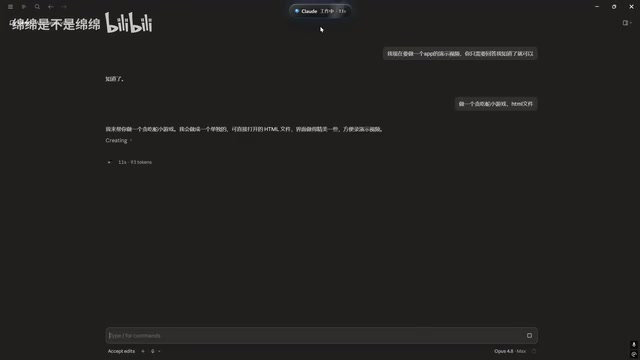
Claude Code Desktop Status Capsule: An Open-Source Widget for Real-Time AI Coding Status Monitoring
An open-source desktop status capsule that monitors Claude Code's idle, working, and completed states in real time, with multi-conversation management, memos, and music control for developers.

GPT-5.2 Codex vs Opus 4.5 Hands-On: A Comprehensive Comparison of Coding Ability, Speed, and Developer Experience
Hands-on comparison of GPT-5.2 Codex vs Opus 4.5 across frontend generation, physics simulation, 3D scenes, and code refactoring, with practical selection advice.