Claude Code Creator Reveals: How AI Programming Boosts Engineering Efficiency by 200%
Claude Code Creator Reveals: How AI Pr…
Claude Code creator reveals how AI programming delivers 200% productivity gains and reshapes engineering teams.
Boris Cherny, creator of Claude Code at Anthropic, shares how AI programming tools are fundamentally transforming software engineering. With 90%+ of code now written by AI, engineers gain 200% productivity improvements, new hires onboard in two days, and the era of generalist engineers arrives. The key insight: when technical execution is no longer the bottleneck, human values become the ultimate differentiator.
Boris Cherny, the creator of Claude Code at Anthropic, recently shared on the Acquired Unplugged podcast how AI programming tools are fundamentally transforming software engineering practices. From uninstalling his IDE to deploying hundreds of AI instances that automatically generate product ideas, these insights from a frontline practitioner deserve serious consideration from every developer.
From Assistant to Workhorse: The Evolution of Claude Code
Claude Code was born in late 2024, initially handling only 10%-20% of code writing. But as the underlying model capabilities rapidly improved, that percentage climbed quickly. Boris himself has completely uninstalled his traditional IDE, instead writing automation loops that send prompt instructions to Claude.
Claude Code is Anthropic's command-line AI programming tool that runs directly in the terminal, capable of understanding the full codebase context, performing file edits, running commands, conducting code reviews, and more. Unlike traditional IDE plugin-style AI assistance (such as GitHub Copilot's autocomplete mode), Claude Code operates in Agent mode—it can autonomously plan multi-step tasks, invoke tools, and verify results, rather than passively waiting for developers to confirm line by line.
Boris's mention of "writing automation loops to send prompt instructions to Claude" actually represents an emerging Agentic programming paradigm. In this model, developers no longer write code line by line but instead design prompt chains and workflow orchestration logic. Specifically, this may involve: writing scripts to batch-generate task descriptions, setting up validation checkpoints to ensure AI output quality, and building feedback loops for AI self-correction. This bears similarities to traditional CI/CD (Continuous Integration/Continuous Deployment) pipelines, but the object of automation shifts from "code building and deployment" to "code generation itself."
This isn't simply "using AI to write code"—it's a fundamental shift in work paradigm. Engineers transform from manually writing code to becoming architects who design and orchestrate AI workflows. Code is still being produced, but the human role shifts from executor to conductor.
Currently, over 90% of the Claude Code team's code is written by the tool itself. This means a team building an AI programming tool is using its own product to build its own product—this bootstrapping validation approach itself speaks to the tool's maturity. "Bootstrapping" in computer science refers to the process of using something to build itself, with the most classic example being a C compiler written in C. This dogfooding strategy not only validates the tool's reliability but also creates a positive feedback loop—problems discovered during use immediately drive product improvements, and the improved product better supports the next round of development.
Compound Growth in Engineering Productivity: 200% Efficiency Gain Per Person
During its expansion, Anthropic achieved a seemingly contradictory data point: while the engineering team doubled in size, each engineer's productivity increased by 200%. This means overall output grew approximately 4x.
Measuring engineering productivity has always been a challenge in the software industry. Traditional metrics like lines of code (LOC) and commit counts have long been proven misleading—an elegant refactoring might reduce code lines while dramatically improving system quality. Modern measurement frameworks like Google's DORA metrics (deployment frequency, lead time for changes, time to restore service, change failure rate) and the SPACE framework (Satisfaction, Performance, Activity, Communication & Collaboration, Efficiency) attempt to evaluate productivity from multiple dimensions. While Anthropic hasn't publicly disclosed the specific measurement methodology behind their claimed 200% productivity improvement, combined with the data point of new hires becoming productive in two days, it suggests they may be measuring end-to-end feature delivery speed—the complete cycle from requirement proposal to code deployment.
Even more impressive is the onboarding speed for new engineers. In traditional tech teams, it typically takes new hires several weeks to become independently productive, involving familiarization with the codebase, understanding architectural decisions, and mastering internal tools. With Claude Code's assistance, this process has been compressed to two days.
The logic behind this isn't hard to understand: AI programming tools can instantly answer questions about the codebase ("Why was this module designed this way?" "What's the call chain for this function?"), automatically generate code that conforms to team conventions, and help new hires quickly understand and modify existing systems. The dramatic reduction in onboarding barriers significantly lowers the marginal cost of team expansion—something nearly impossible in traditional software engineering, because Brooks's Law tells us that "adding manpower to a late software project makes it later."
The Golden Age of Generalist Engineers Has Arrived
Boris made an important assertion: we are entering the "golden age of generalist engineers." With AI tools, every engineer can independently complete work that previously required collaboration among multiple specialized roles:
- Requirements definition and scope setting
- Direct communication with users for feedback
- Data extraction and analysis
- Building data dashboards
- Completing design work and delivering results
The concept of generalist engineers isn't entirely new. Early software developers were inherently generalists—one person handled everything from hardware interfaces to user interfaces. As software complexity exploded, the industry underwent deep specialization: frontend, backend, DevOps, data engineering, security, and other roles each handling their own domain. The rise of "full-stack engineers" in the 2010s was the first swing back, but limited by individual cognitive bandwidth, full-stack often meant "knowing a little about every area but not deeply enough." AI tools break this limitation—they serve as instant expert advisors in every specialized domain, enabling one person to truly work across multiple fields at a professional level. This forms an interesting echo with Fred Brooks's "surgical team" model from The Mythical Man-Month: a few elite individuals with powerful tool support outperform a stack of average developers.
This has profound implications for team organization. Boris's recommendation: assign fewer people to projects, but give them ample token budgets. In this model, communication costs drop dramatically (fewer people means less coordination overhead—according to combinatorics, the number of communication channels for n people is n(n-1)/2, so halving the team size reduces communication complexity by 75%), while AI fills in individual capability gaps across specialized domains.
AI Is Replacing "Product Intuition": The Shelf Life of Taste Is Shrinking
One particularly inspiring practice within Anthropic: deploying hundreds of Claude instances to continuously monitor information streams on Twitter, GitHub Issues, and Slack, automatically generating product ideas and improvement suggestions.
This approach essentially automates the "Product Discovery" process. Traditional product discovery relies on product managers manually conducting user interviews, competitive analysis, and market research—a time-consuming process limited by individual information processing bandwidth. An excellent product manager can deeply read at most a few dozen pieces of user feedback per day. AI's advantage lies in processing massive amounts of unstructured information 24/7, identifying patterns and trends that humans struggle to perceive. This is similar to quantitative trading's impact on traditional fund managers—when machines can process information at scales far exceeding human capacity, decision-making advantages based on "intuition" and "experience" are systematically eroded.
This means that "product intuition" and "market sense"—once considered core competencies of senior product managers—are being replaced by AI's large-scale information processing capabilities. The shelf life of so-called "taste"—the judgment of what should and shouldn't be done—is shrinking, because AI can increasingly reach similar conclusions through massive data analysis. However, distilling actionable product strategy from information still requires comprehensive judgment about company strategy, resource constraints, and deep user needs—capabilities that current AI hasn't fully mastered.
What's the Last Thing Humans Need to Convey in the AI Era?
Boris gave a thought-provoking answer: Values.
Not coding ability—models have already mastered that. Not design sense—models are learning it. Not product awareness—models already possess it through data analysis. The last thing that needs humans to define and convey is value orientation: Who do we serve? What principles do we uphold? How do we make trade-offs when interests conflict?
This judgment has deep philosophical foundations. AI systems are essentially optimization machines—given an objective function, they can find the optimal path. But the question of "what should be optimized" cannot itself be answered through optimization. This is the philosophical concept of "Hume's Guillotine"—you cannot derive an "ought" from an "is." At a practical level, this means: when two teams can both rapidly build products with AI, what differentiates their products is value choices—prioritize user privacy or personalized experience? Pursue growth or sustainability? Serve the masses or focus on a niche? These choices have no objectively optimal answer; they reflect the creators' beliefs and positions.
This judgment elevates the discussion of AI engineering to a more fundamental level. When technical execution is no longer the bottleneck, what truly differentiates products is the value choices behind them.
Practical Implications for Developers
From Boris's sharing, several key practical directions can be distilled:
- Adapt to the role shift early: Transform from a code "executor" to an AI workflow "orchestrator." This means learning how to write effective prompts, how to design verification mechanisms, and how to decompose complex tasks into AI-executable subtasks.
- Invest in generalist capabilities: Cross-domain comprehensive literacy is more valuable than depth in a single technology. When AI can provide professional-level execution in any domain, the human advantage lies in connecting different fields and discovering cross-boundary opportunities.
- Clarify your value proposition: Think about what unique values and judgment your team brings—this is the most irreplaceable asset in the AI era. Tech stacks become outdated, frameworks evolve, but a clear value stance can continuously guide product direction.
The rules of software engineering are being rewritten. Engineers who can quickly adapt to the new paradigm and leverage AI programming tools to amplify their capabilities will gain enormous competitive advantages in this transformation. Those who still anchor their value in "being able to write code in a certain language" may need to rethink their positioning—because code-writing ability is rapidly becoming commoditized, and what's truly scarce is judgment, taste, and values.
Related articles
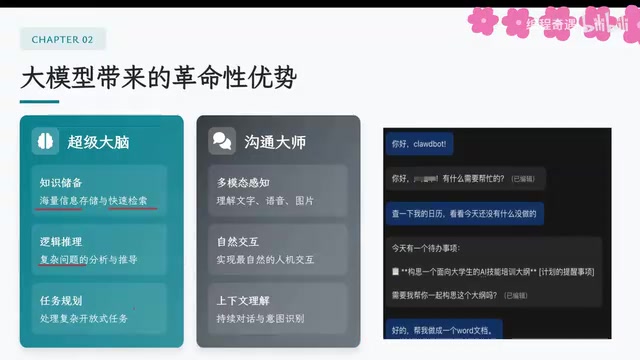
AI Agent Core Architecture Breakdown: From Concept to Enterprise-Grade Intelligent Agent Development
Deep dive into AI Agent architecture: perception, brain, and action modules. Covers RAG memory systems, tool calling mechanisms, Chain of Thought reasoning, and enterprise agent development roadmap.
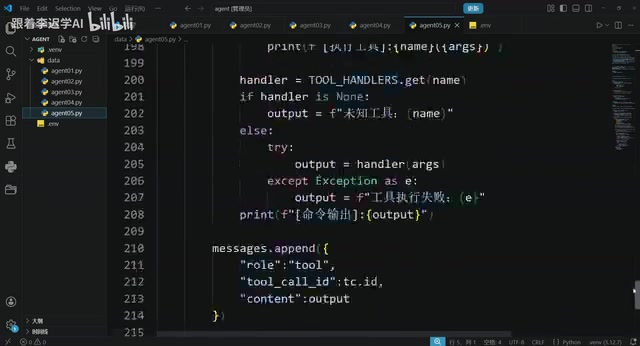
Hands-On Tutorial: Build an AI Agent from Scratch with 200 Lines of Python
Build an AI Agent from scratch with 200 lines of Python, covering prompts, memory, tool calling, RAG, and Skills — a practical guide for developers.
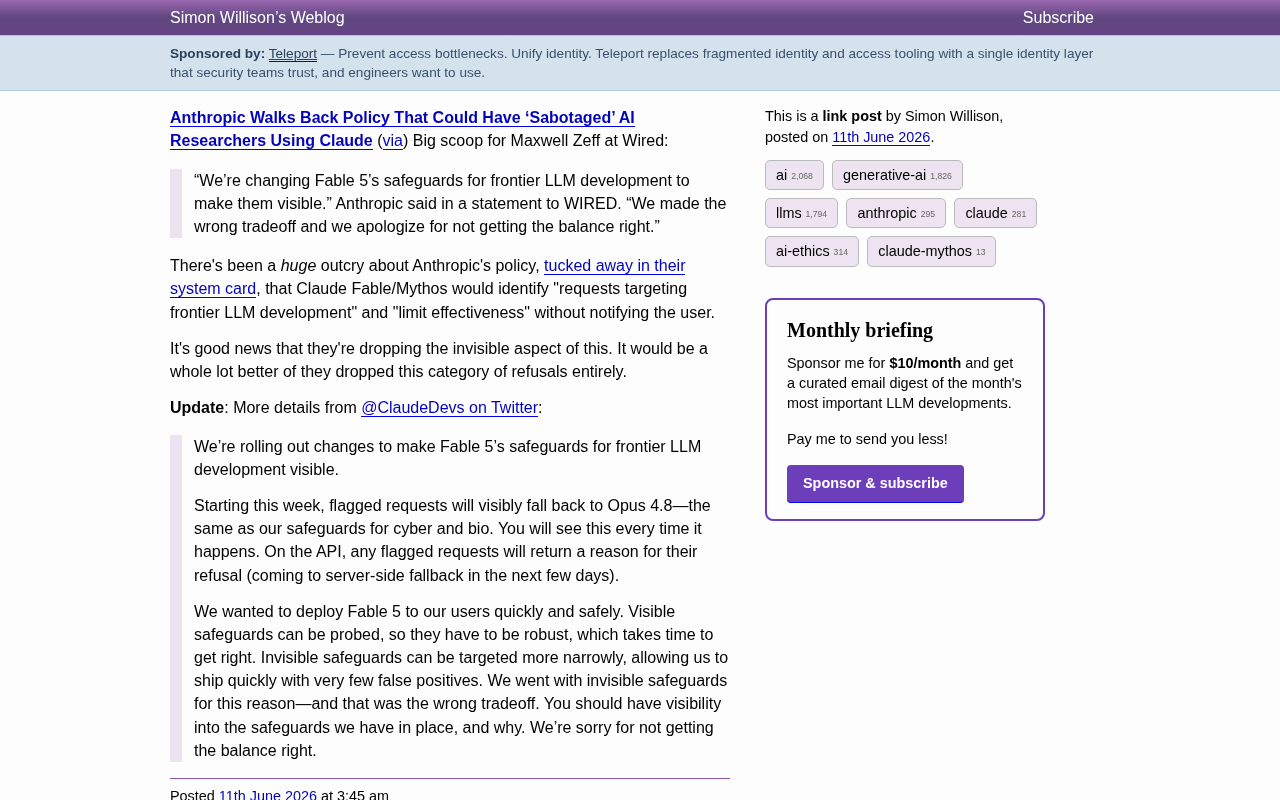
Anthropic Reverses Controversial Policy of Secretly Throttling AI Researchers Using Claude
Anthropic reverses its controversial policy of secretly throttling Claude Fable/Mythos responses to frontier LLM development requests after community backlash, raising critical questions about AI transparency.