Claude Code Deep Dive: Why Full-Project Context Understanding Crushes Other AI Coding Assistants
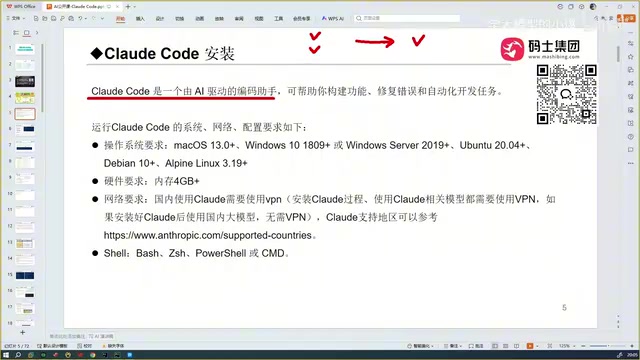
Deep analysis of why Claude Code's full-project context understanding outperforms competing AI coding assistants.
This article provides an in-depth comparison of Claude Code against mainstream AI coding assistants including GitHub Copilot, Cursor, and Trae. It analyzes Claude Code's core advantages: full-project context understanding via 200K token windows, automated debugging loops that eliminate manual error-fixing cycles, and superior code accuracy powered by Anthropic's Sonnet model. The piece traces the evolution from simple code completion to agentic coding and offers practical guidance for developers.
Introduction: The Evolution of AI Coding Assistants
From the earliest GitHub Copilot to Cursor, and now the highly anticipated Claude Code, AI coding assistants have undergone rapid iteration. Each generation has pushed the boundaries of what developers expect from "AI-written code." Claude Code's emergence has led many developers to consider it the most powerful AI coding tool available today — it doesn't just auto-complete code, but can read through entire project contexts, automatically debug and fix errors, and ultimately output complete, ready-to-run code.
This article is based on a hands-on review shared by an experienced developer on Bilibili, systematically covering Claude Code's core advantages, comparisons with similar tools, and key considerations for Chinese users getting started.
What Is Claude Code? How Does It Differ from Traditional AI Conversational Coding?
Claude Code is an AI coding assistant launched by Anthropic. It requires no website login — you simply install it on your local machine and use it directly within your development tools. Anthropic was founded in 2021 by former OpenAI Research VP Dario Amodei and his sister Daniela Amodei, and is currently one of the world's most influential AI safety research companies. Their core philosophy is developing "reliable, interpretable, and controllable" AI systems. While Claude Code might sound similar to other AI coding tools on the surface, its core differentiator lies in project-level context understanding.
Project-level context understanding refers to the fact that in software engineering, a medium-sized project may contain hundreds of source code files with complex interdependencies — including module imports, interface calls, class inheritance, configuration references, and more. Traditional large language models are limited by their context window size, typically handling only a few thousand to tens of thousands of tokens of input, making it impossible to "see" an entire project at once. Claude Code uses local code indexing and intelligent context retrieval technology to dynamically load relevant file contents as needed, constructing a global dependency graph of the project. This capability relies on the Claude model family's support for ultra-long context windows of up to 200K tokens, far exceeding most competing models.
Pain Points of Traditional Conversational Coding
When using conversational AI coding tools like DeepSeek or ChatGPT, the workflow typically looks like this:
- You describe your requirements, and the AI provides a code snippet
- You copy the code into your project and run tests
- You discover errors, then go back to describe the problem in conversation
- After multiple rounds of dialogue, you might finally get correct code
The more critical issue is that these conversational AIs cannot read through your entire project. If your project has 100 code files, the AI can't see the dependencies and context between these files. You need to manually read the code and manually tell the AI "what's in my project" — an extremely inefficient process.
Claude Code's Three Core Capabilities
Claude Code takes a completely different approach:
- Full project context reading: It can scan and understand the contents of all files in a project, passing the complete project structure as context to the large model
- Automated debugging loop: After generating code, it can automatically run it, detect errors, fix issues, and ultimately deliver an accurate, error-free code version
- End-to-end automated development: From requirement understanding to code generation and test verification, it forms a complete automated programming workflow
Among these, the automated debugging loop is one of Claude Code's most practically valuable features. In traditional development workflows, the "write-run-debug" cycle requires developers to manually complete each step: write code, run it in the terminal, read error logs, locate problems, modify code, and repeat endlessly. Claude Code completely automates this cycle — after generating code, it automatically executes the code or runs test cases in the local environment, captures standard output and error output, analyzes the semantic meaning of error messages, then automatically modifies the code and re-runs it until all tests pass or a preset iteration limit is reached. This capability relies on Claude Code's deep integration with the local development environment — it can invoke terminal commands, read and write the file system, and execute build scripts and testing frameworks. This "Agentic Coding" paradigm represents a fundamental shift in AI coding tools from "advisor" to "executor."
In simple terms, traditional AI coding is a fragmented "you ask, I answer" model, while Claude Code is a systematic "understand the big picture, complete autonomously" model.
Horizontal Comparison of AI Coding Assistants: From Copilot to Claude Code
Over the past two years, numerous products have emerged in the AI coding assistant space. Based on this developer's long-term usage experience, we can trace a clear evolutionary path.
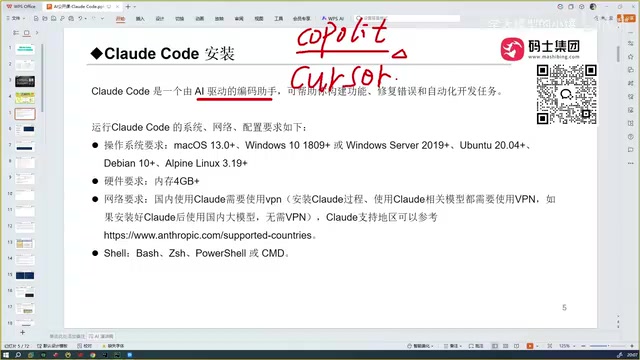
First Generation: GitHub Copilot
Copilot is a code completion plugin jointly launched by OpenAI and GitHub that brought a revolutionary experience to developers. First released in 2021, it was initially based on OpenAI's Codex model (a code-fine-tuned version of GPT-3) and later upgraded to a GPT-4-based architecture. Copilot runs as a VS Code plugin, analyzing the code context before and after the cursor in the current file to predict what the developer might write next in real-time. Its training data comes from billions of lines of public code on GitHub, making it excellent at completing common programming patterns.
Its core capability is auto-completing code — you write a few lines, and it continues the logic for you. But it's essentially still a "completion tool," primarily relying on information from the current file and a few adjacent files for inference, lacking the ability to understand the overall project architecture. This means that when code involves cross-module calls or project-specific design patterns, Copilot's completion accuracy drops significantly.
Second Generation: Cursor
Cursor's emergence brought AI coding into a new phase. Developed by Anysphere, it's a deeply customized AI-native code editor based on VS Code, rather than a simple plugin. Cursor's core innovation lies in deeply integrating AI capabilities into every interaction point of the editor — including multi-file editing, codebase semantic search, and intelligent refactoring. It supports multiple underlying large models (including GPT-4, Claude, etc.) and achieves a degree of project-level understanding through proprietary code indexing technology. Its "Composer" feature allows developers to describe requirements in natural language, and the AI will automatically make coordinated modifications across multiple files.
Cursor is smarter than Copilot, capable of automated coding, and in terms of capability is "comparable" to Claude Code. However, Cursor is a paid product (Pro version approximately $20/month), and there's still room for improvement in code accuracy. Since it's essentially an AI assistant within an editor, there remains a gap between it and Claude Code's command-line fully automated workflow in terms of automation level and end-to-end task completion capability.
Third Generation: Trae (ByteDance)
Trae comes in international and domestic versions; Chinese users are advised to use the domestic version directly (the international version charges fees). Trae's advantage lies in its excellent Chinese language understanding, which is an important bonus for Chinese developers. This developer stated that before encountering Claude Code, he once considered Trae the most perfect coding tool. However, Trae's shortcomings are also apparent: on slightly niche tech stacks, the quality of generated code drops noticeably.
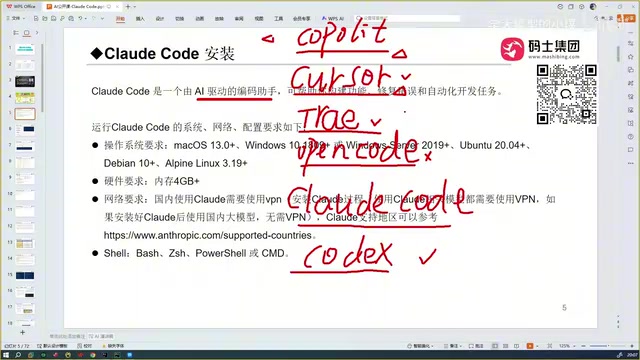
Current Best: Claude Code
After comparing Copilot, Cursor, Trae, Open Code, and domestic models like Qwen and ERNIE, this developer reached a clear conclusion: Claude Code is currently the best AI coding tool available.
He particularly emphasized several key judgments:
- Extremely high accuracy: This is Claude Code's biggest advantage over Cursor and Trae — the accuracy of generated code is clearly ahead
- Powerful underlying model: Claude Code's core competitiveness comes from its underlying Sonnet model (with even stronger models available). Ultimately, a coding assistant's capability ceiling depends on the large model's capability. The Claude model family currently includes multiple tiers: Haiku (lightweight and fast), Sonnet (best balance of performance and cost), and Opus (strongest capability). The Sonnet 4 model performs excellently on the SWE-bench coding benchmark, which requires AI to solve real GitHub issues involving understanding codebases, locating problems, and submitting fix patches — complex tasks
- Makes programmers feel a "sense of crisis": This assessment alone speaks to Claude Code's capability level
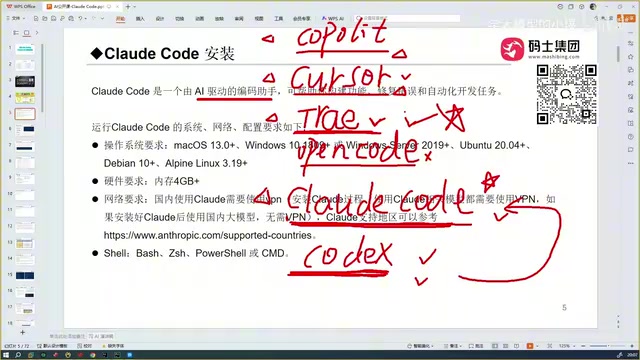
A Noteworthy Competitor: OpenAI Codex
OpenAI's Codex is also considered a very powerful coding tool. Codex was originally released in 2021 as a code generation model and served as the underlying engine for GitHub Copilot. In 2025, OpenAI relaunched an entirely new Codex product, positioned as a cloud-based AI coding agent. The new Codex runs in OpenAI's cloud sandbox environment and can process multiple programming tasks in parallel, with each task executing in an independent isolated environment. Unlike Claude Code's local execution model, Codex uses an asynchronous workflow — developers submit tasks and can go do other things while Codex completes code writing, testing, and debugging in the background, then notifies developers to review results. The new Codex is based on code-optimized versions of GPT-4o and o3 models, with significant improvements in code understanding and generation capabilities.
According to feedback from other developers, Codex configured with GPT-5 is on par with Claude Code in programming capability. The two products represent two different design philosophies for AI coding tools: Claude Code emphasizes local execution and real-time interaction, while Codex emphasizes cloud-based and asynchronous parallel processing. However, this reviewer admitted limited experience with Codex and therefore didn't provide an in-depth comparison.
Considerations for Chinese Users Using Claude Code
For Chinese developers, there are several things to note when using Claude Code:
System Compatibility
Claude Code supports most mainstream operating systems, so compatibility shouldn't be a major concern. After installation, it can be integrated directly into local development tools without needing to log into any website.
Model Selection Recommendations
Claude Code supports multiple models. The default Sonnet model is already very powerful, with higher-tier models also available. Developers are advised to choose flexibly based on project complexity and budget. For everyday development tasks, Sonnet provides the best balance between performance and cost; for architecture design, complex refactoring, and other high-difficulty tasks, consider switching to more powerful models like Opus.
Choosing Between Claude Code and Domestic Tools
If you're looking for something free with good Chinese language understanding, the domestic version of Trae is a solid choice. But if you have high requirements for code accuracy, especially for projects involving complex tech stacks, Claude Code is currently the better solution.
Conclusion: The AI Coding Landscape Is Being Reshaped
From Copilot's code completion, to Cursor's intelligent coding, to Claude Code's full-project automated development, the capability boundaries of AI coding assistants continue to expand. Claude Code stands out for two core reasons: first, Anthropic's continuous breakthroughs in large model capabilities (the company received massive investments from tech giants like Google and Amazon during 2024-2025, with a valuation exceeding $60 billion, providing ample funding for sustained R&D investment); second, the product design philosophy of "full project context understanding + automated debugging loop."
For developers, now is the best time to embrace AI coding tools. Whether you're a seasoned programmer or a coding beginner, Claude Code is worth trying — it may completely transform your development workflow.
Key Takeaways
Related articles
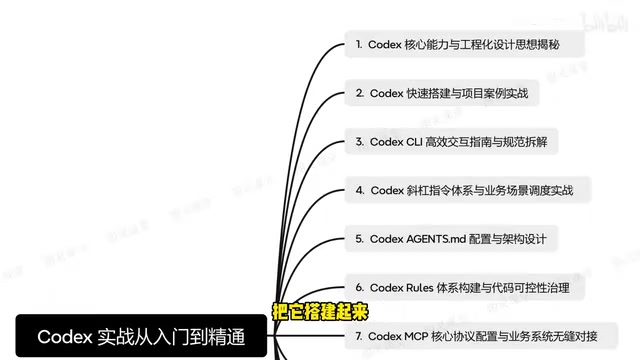
The Complete Guide to OpenAI Codex CLI: From Installation and Configuration to Enterprise-Level Practice
In-depth guide to OpenAI Codex CLI: covering installation, agents.md design, multi-agent collaboration, MCP protocol integration, and a RAG customer service project.
Decoding Google's AI Control Roadmap: A Defense Framework for When AI Goes Off the Rails
Google releases its AI Control Roadmap, a new safety paradigm that assumes alignment may fail and builds defenses at the system architecture level.

Agent Factory: Voice-Driven AI Coding — A Hands-On Guide to Building Apps for Free
Agent Factory wraps Claude Code into a voice-driven AI coding tool with dozens of free models, letting you build apps, games, and websites through conversation.