Agent Factory: Voice-Driven AI Coding — A Hands-On Guide to Building Apps for Free
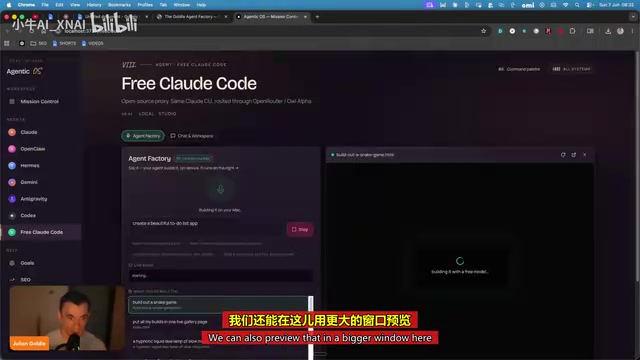
Agent Factory lets you build apps for free by simply talking to AI — no coding required.
Agent Factory wraps Claude Code in an agent framework, enabling voice-driven real-time coding with dozens of free AI models. Users can build websites, games, and tools through natural conversation without any programming knowledge. The platform integrates into a broader Agent OS with task management and workspace features, making AI-powered development accessible to everyone in just four setup steps.
What Is Agent Factory?
Imagine simply speaking a sentence to your computer and having AI generate a complete application in real time — websites, games, tools, you name it. That's the experience Agent Factory delivers. It wraps the free Claude Code inside an agent framework, enabling users to drive real-time AI-powered coding through voice or text conversations.
Claude Code is a command-line programming tool from Anthropic that lets developers use natural language instructions to have Claude AI write, edit, and execute code directly in the terminal. Unlike traditional chat-based AI assistants, Claude Code has file system access, code execution capabilities, and project context awareness. An Agent Framework refers to a software architecture that enables AI models to autonomously plan tasks, invoke tools, and carry out multi-step operations. Within this framework, AI is no longer passively answering questions — it actively decomposes tasks, selects tools, and validates results, forming a complete workflow loop. By wrapping Claude Code in such a framework, Agent Factory essentially adds an autonomous decision-making layer on top of AI coding capabilities.
More importantly, all of this is free. You don't need a paid API, you don't need to know how to code, and you don't need to know how to use an IDE — you just need to be able to talk.
Core Feature Demo: Speak Your Requirements, AI Writes the Code
Voice-Driven Real-Time Programming
The most exciting feature of Agent Factory is its voice input support. You can simply tell the AI, "Create a beautiful to-do app," and the system automatically converts your speech into a prompt, after which Claude Code begins generating code in real time. Throughout the process, you can watch the application being built in the live preview panel on the right.
From a technical pipeline perspective, voice-driven programming involves chaining multiple stages: first, ASR (Automatic Speech Recognition) converts the user's voice to text; then NLU (Natural Language Understanding) parses the user's intent; next, Prompt Engineering transforms that intent into structured coding instructions; and finally, the code generation model outputs executable code. In this pipeline, the accuracy of speech recognition and the precision of intent understanding directly determine the quality of the generated code. Current mainstream speech recognition engines (such as OpenAI's Whisper) have achieved near-human-level recognition accuracy, making voice-driven programming a practical reality rather than just a concept.
This interaction model dramatically lowers the barrier to development. Traditional development requires you to open an IDE, write code, and debug — but now you simply describe your requirements, and AI handles the entire workflow from code generation to live preview.
Versatile Application Building Capabilities
In the demo, the creator showcased a variety of use cases:
- To-Do App: After voicing the requirements, a fully interactive application is generated within seconds
- Snake Game: A casual "Build me a Snake game" produces the game instantly
- Enterprise Landing Page: Creating a professional marketing page for a CEO agency
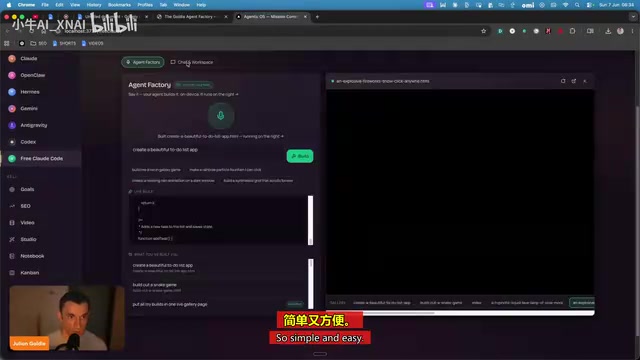
These examples demonstrate that Agent Factory is suitable not only for simple utility development but also for relatively complex front-end page construction tasks.
Technical Architecture and the Free Model Ecosystem
Dozens of Free Models to Switch Between
One of Agent Factory's biggest advantages is its open model integration capability. The platform offers dozens of free models for users to choose from, including:
- Nemotron 34B: An enterprise-grade LLM released by NVIDIA, specifically designed for AI agent applications with an emphasis on reasoning and instruction-following
- Gemma 2 9B / 2 2B: Open-source general-purpose models from Google based on Gemini technology, available in different parameter sizes
- Local Models: Support for running locally deployed models
Since 2024, the AI industry has seen a clear trend toward open-source and free models. The emergence of these free models stems from big tech companies' ecosystem competition strategies — attracting developers to build application ecosystems through free models, which in turn drives growth in core businesses like cloud computing and hardware. NVIDIA promotes its GPU ecosystem through Nemotron, Google expands its developer community through Gemma, and the ultimate beneficiaries are end-user applications like Agent Factory and their users — who gain access to powerful AI capabilities without paying API costs that can run hundreds of dollars per month.
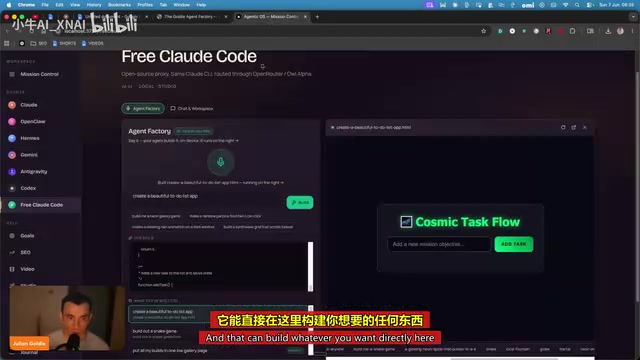
Users can freely switch between different models to test and compare outputs, finding the best solution for their specific needs. This flexibility allows developers to explore best practices at zero cost.
Agent OS Integration
Agent Factory doesn't exist in isolation — it's part of a larger Agent Operating System. Agent OS is a cutting-edge concept in the AI agent space, borrowing design principles from traditional operating systems. Just as Windows/macOS manages hardware resources and applications, Agent OS is responsible for coordinating multiple AI agents, task scheduling, memory storage, and tool invocation. This architecture addresses the limitations of a single AI assistant: when task complexity exceeds a single model's processing capacity, multiple specialized agents can collaborate, each handling their own responsibilities.
The system includes several collaborative components:
- Mission Control Center: Equivalent to an OS process manager, providing unified management of execution states for all tasks and projects
- Workspace: Similar to a file system, allowing you to view previously built content and manage all projects in one place
- Cloud OMI / Anti-Gravity / CodeDex: Multiple specialized tools working in concert, each responsible for different functional modules
This integrated design means you don't need to dig through a terminal to find what you've previously built — everything is clearly visible in the workspace.
Getting Started: Barrier to Entry and User Experience
Four Steps to Set Up — Accessible Even for Complete Beginners
The creator emphasizes that the entire setup process can be completed in just four steps. The Agent OS setup is designed to be extremely simple, allowing even completely non-technical users to get started quickly.
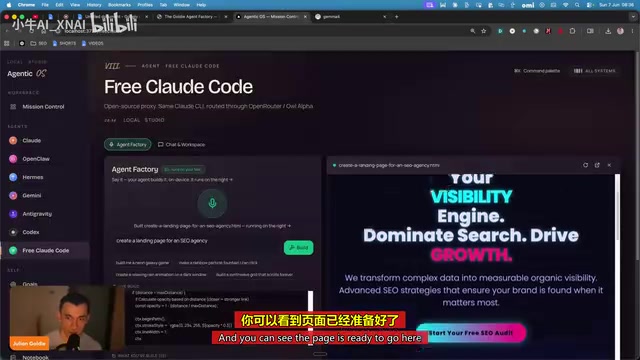
The creator openly admits to "not being technical, not knowing how to code, and not knowing how to use an IDE," yet is still able to build various applications using Agent Factory. This is precisely the power of AI agents — they democratize professional coding capabilities, enabling everyone to become a "developer."
Democratization of programming has been a major trend in the tech industry in recent years. Its core idea is to lower the technical barrier to software development so that non-programmers can also create digital products. This trend has progressed through several stages: from early visual programming tools (like Scratch), to low-code/no-code platforms (like Bubble and Webflow), to today's AI-driven natural language programming. According to Gartner, by 2025, 70% of new applications will be developed using low-code/no-code technologies. AI coding tools are pushing this further, because natural language is the most intuitive form of human expression, eliminating the biggest obstacle — learning programming syntax.
Practical Usage Tips
It's worth noting that generation quality varies depending on which API you use. While free models are powerful, they may not be as stable as paid APIs in certain complex scenarios. Specifically, free models may fall short in the following areas: code robustness and error handling, accurate implementation of complex logic, and maintaining coherence over long contexts. The good news is that these APIs are continuously improving, and users can keep an eye on newly released models for a better experience.
Conclusion: The New Paradigm of Conversation-as-Development
Agent Factory represents a fundamentally new software development paradigm: conversation as development. By combining Claude Code with a free model ecosystem, voice interaction, and live preview, it makes application development simpler than ever before. For users who want to quickly validate ideas, build prototypes, or learn AI-powered coding, this is a tool worth trying.
Of course, it's currently better suited for rapid front-end application and simple tool development. Complex back-end logic and large-scale projects still require more professional development workflows. But as a free AI coding entry point, Agent Factory has already demonstrated impressively capable results. From a broader perspective, the "conversation as development" paradigm that Agent Factory represents may be a significant milestone in software engineering's transition from "writing code" to "describing intent." When AI can accurately understand human intent and autonomously handle implementation, the essence of programming will shift from "how to do it" to "what to do" — perhaps the most profound paradigm shift in software development.
Related articles
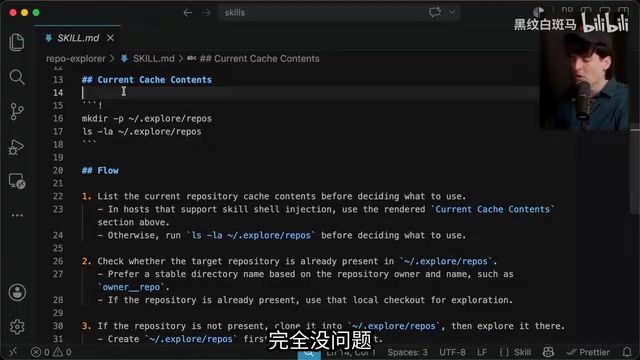
Claude Code's Hidden Advantages Explained: Design Choices Every AI Coding Tool Should Copy
Deep dive into Claude Code's leading design in agentic coding: skill script execution, CLAUDE.md imports, remote control, dynamic workflow orchestration, and why Cursor, Codex and others should adopt these features.

Agent Harness: The Paradigm Leap from Prompt Engineering to Harness Engineering
Deep dive into Agent Harness: tracing the paradigm evolution from Prompt Engineering to Context Engineering to Harness Engineering, and how loop-based architectures solve context loss in AI coding agents.
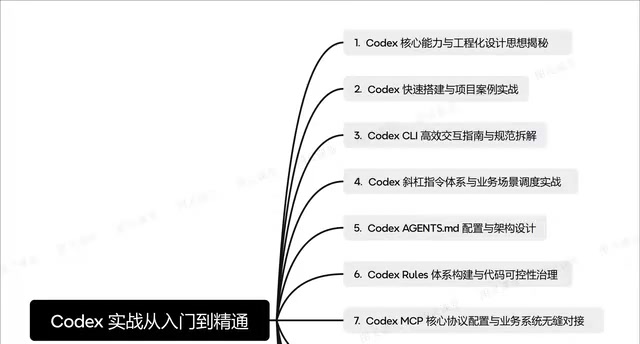
OpenAI Codex CLI Practical Guide: From Installation and Configuration to Enterprise-Level Development
A deep dive into OpenAI Codex CLI's core capabilities and practical usage, covering setup, agents.md configuration, slash commands, MCP protocol, multi-agent collaboration, and RAG system development.