Claude Code Loop Patterns in Practice: Community Insights and Best Practices
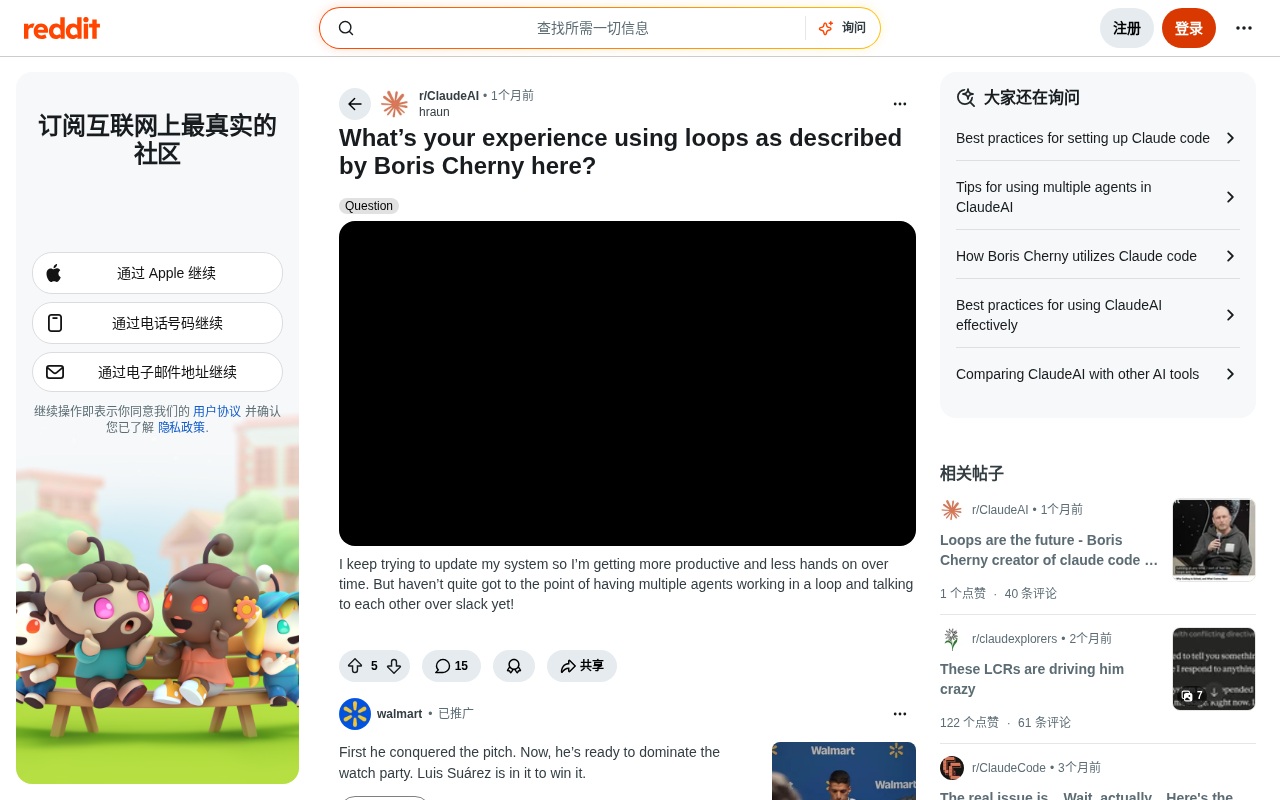
A deep dive into Claude Code's loop patterns with community-tested best practices for AI-driven development.
This article explores the loop pattern for AI programming proposed by Boris Cherny of Anthropic's Claude Code team. It covers the core philosophy of continuous iteration over one-shot interactions, practical usage of the /loop command, and three community-proven orchestration patterns: test-driven loops, code review loops, and multi-agent collaboration. The piece also addresses key limitations like loop divergence and context loss, and offers best practices including clear exit conditions, hierarchical task decomposition, and strategic human checkpoints.
What Is the Loop Pattern Proposed by Boris Cherny?
Boris Cherny is the lead of the Claude Code project at Anthropic. He introduced an AI programming workflow pattern based on "loops." The core idea is to have an AI agent work continuously within a feedback loop—executing tasks, checking results, fixing errors, and re-verifying—until the desired outcome is achieved.
The AI agent referred to here is an artificial intelligence system capable of autonomous decision-making and action. Unlike traditional chat-based AI, an agent operates within a closed loop of "act-observe-think": it can not only understand instructions but also plan execution steps, invoke external tools (such as terminal commands and file system operations), observe execution results, and adjust subsequent behavior accordingly. This closed-loop capability is the technical foundation that makes the loop pattern possible.
Recently, the Reddit community has engaged in lively discussions around this workflow pattern. Developers have shared their real-world experiences using Claude Code's loop functionality, including tips for the /loop command, automated agent orchestration patterns, and feedback on effectiveness in real projects.
Core Principles of the Loop Pattern
From One-Shot Interactions to Continuous Iteration
Traditional AI programming assistants typically follow a "question-answer" one-shot interaction model: the developer states a requirement, the AI generates code, and then the developer manually verifies and modifies it. The loop pattern proposed by Boris Cherny breaks this paradigm, enabling the AI agent to:
- Execute autonomously: Write and run code based on instructions
- Self-verify: Check whether the output meets expectations
- Iterate and correct: Automatically adjust the approach when issues are found
- Converge through loops: Repeat the above process until the task is complete
This pattern essentially simulates a human developer's workflow—code, test, debug, code again—but automates the entire process. From a cybernetics perspective, this is a classic negative feedback control system: the gap between the target state (tests passing, functionality working) and the current state drives the system to continuously adjust until the error approaches zero.
Practical Usage of the /loop Command
Claude Code is a command-line AI programming tool released by Anthropic. It runs directly in the developer's terminal environment and can read/write files, execute shell commands, run test suites, and interact with version control tools like Git. Unlike GitHub Copilot, which operates as a VS Code plugin, Claude Code is more like an "AI developer colleague" capable of independently completing the full development workflow from code writing to debugging and verification.
The /loop command in Claude Code is the concrete implementation of the loop philosophy. Developers can set a goal and verification conditions, then let Claude Code work autonomously within the loop. For example, you can tell it "implement this feature and make sure all tests pass," and Claude Code will repeatedly modify the code until all tests pass. During this process, Claude Code automatically executes test commands, parses error output, locates problematic code, generates fixes, and runs verification again—all without human intervention.
Real-World Experiences Shared by the Community
Three Mainstream Loop Orchestration Patterns
Community discussions have revealed several loop orchestration patterns that developers use in real projects:
Test-Driven Loops: Write test cases first, then let Claude Code implement the code in a loop until all tests pass. This is the most common and reliable approach because it has a clear exit condition. This pattern naturally aligns with the Test-Driven Development (TDD) methodology in software engineering—TDD requires developers to first write failing test cases, then write the minimal code to make the tests pass, and finally refactor. Test cases provide machine-verifiable exit conditions, allowing the AI agent to automatically run tests, parse failure reasons, and modify code, forming a fully automated "red-green-refactor" cycle. This is why many community users consider TDD the best engineering practice to pair with AI loop patterns.
Code Review Loops: After Claude Code generates code, it takes on a reviewer role to inspect its own output and self-corrects any issues found. This self-review pattern leverages an interesting property of large language models—when given different role prompts, the model can examine the same code from different perspectives, catching issues that the "coder role" might have overlooked. This approach can significantly improve code quality.
Multi-Agent Collaboration Loops: Set up multiple Claude Code instances—one for coding, one for testing, one for documentation—forming a pipeline-style automated workflow. Multi-agent collaboration is a cutting-edge direction in AI system design, inspired by microservice architecture in software engineering and human team collaboration patterns. In this architecture, each AI agent takes on a specific role and passes work products through well-defined interfaces. This division of labor not only improves output quality through role specialization but also overcomes the context window limitations of a single agent—each agent only needs to focus on information within its own scope of responsibility, rather than the entire project context.
Where Loop Patterns Excel
Based on community feedback, the loop pattern performs well in the following scenarios:
- Well-defined programming tasks (e.g., implementing a specific API, fixing a known bug)
- Work with clear verification criteria (e.g., unit tests, type checking)
- Repetitive code refactoring and migration tasks
The common characteristic of these scenarios is having "machine-verifiable completion criteria"—the AI agent can objectively determine whether a task is complete by running commands or checking output, rather than relying on subjective assessment.
Limitations to Be Aware Of
There are also challenges in practical use:
- Loop divergence: When the task definition isn't clear enough, the AI may fall into infinite loops or make things progressively worse. In control theory, this is known as "positive feedback runaway"—each correction not only fails to close the gap with the target but introduces new problems, causing the system state to continuously drift away from the goal.
- Resource consumption: Each loop iteration consumes tokens, and complex tasks can incur significant API costs. LLM APIs charge per token, and a single loop iteration involving code generation, execution, and verification can consume thousands to tens of thousands of tokens. If a task requires dozens of iterations to converge, the cumulative cost can be substantial. This makes loop efficiency optimization—how to reach the goal with fewer iterations—an important consideration in practical engineering.
- Context loss: Extended loops can cause the context window to overflow, degrading the quality of subsequent decisions. The context window is the maximum text length a large language model can process at once, measured in tokens. As loop iterations increase, the accumulated conversation history, code snippets, and execution logs gradually fill the context window, causing the model to "forget" important early information or become unable to accept new input. This is the core technical bottleneck for long-running loop tasks and the fundamental reason community users recommend breaking large tasks into multiple smaller loops.
Best Practices for Using Loop Patterns Effectively
Set Clear Exit Conditions
The key to successfully using loop patterns is defining clear "completion criteria." Vague instructions like "optimize this code" can easily lead to infinite loops because "optimization" has no objective termination criterion—code can always be further "optimized" from some angle. In contrast, "ensure response time is below 200ms and all tests pass" provides a clear convergence target that the AI agent can objectively verify by running performance benchmarks and test suites.
Good exit conditions typically have three characteristics: quantifiable (with specific numerical metrics), automatically verifiable (checkable via command-line tools), and clearly bounded (not dynamically changing during implementation).
Hierarchical Task Decomposition
Experienced users recommend breaking large tasks into multiple smaller loops rather than trying to accomplish everything in one large loop. Each small loop focuses on a specific goal, and upon completion, the workflow moves to the next phase. This approach is not only more controllable but also makes better use of the context window—each small loop can start with a reset context, retaining only key results from the previous phase and avoiding irrelevant information consuming precious context space.
This layered strategy also aligns with the "divide and conquer" principle in software engineering: decompose complex problems into independently solvable sub-problems, where the solutions to each sub-problem combine to form the overall solution.
Set Up Human Checkpoints at Critical Junctures
Although the loop pattern aims for automation, setting up human checkpoints at critical junctures remains important. Community users recommend retaining human review for architectural decisions, security-related code, and performance-critical paths, while letting AI handle more mechanical implementation work. This "human-AI collaboration" model reflects the pragmatic philosophy of current AI programming: AI excels at rapid iteration and pattern matching, humans excel at high-level decision-making and risk assessment, and combining both achieves optimal results.
Specifically, you can design the loop workflow as an alternating structure of "automation phases" and "checkpoints": the AI iterates freely during automation phases, pauses at preset checkpoints to await human confirmation, and then enters the next automation phase after approval.
The Significance of Loop Patterns for AI Programming
The loop pattern represents an important step in AI programming tools evolving from "assistance" to "autonomy." In the evolution of AI programming tools, we've progressed through three stages: code completion (like early TabNine), conversational code generation (like ChatGPT), and agentic autonomous programming (like Claude Code's loop pattern). Each step has granted AI greater autonomy and a more complete work loop.
As model capabilities improve and toolchains mature, this workflow pattern will become more widespread and reliable. Boris Cherny's vision has not only influenced Claude Code's product design but also provided an important paradigm reference for the entire AI programming field—future AI programming tools will likely all incorporate some form of loop mechanism, enabling AI to iterate autonomously until goals are achieved.
For developers, now is the time to learn and adapt to this new workflow pattern. Mastering loop orchestration techniques can help you achieve significant productivity gains in AI-assisted programming. More importantly, understanding the principles and limitations of loop patterns helps you judge when to let AI run autonomously and when to intervene, finding the optimal balance between efficiency and quality.
Related articles
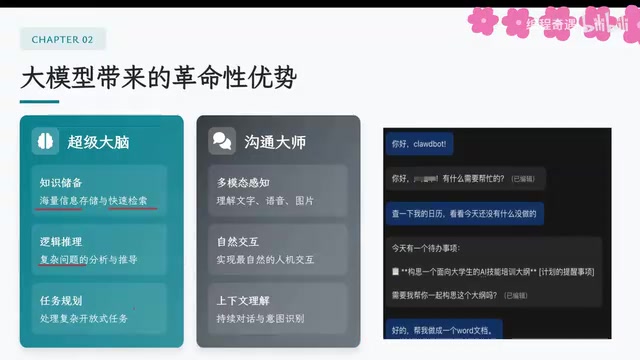
AI Agent Core Architecture Breakdown: From Concept to Enterprise-Grade Intelligent Agent Development
Deep dive into AI Agent architecture: perception, brain, and action modules. Covers RAG memory systems, tool calling mechanisms, Chain of Thought reasoning, and enterprise agent development roadmap.
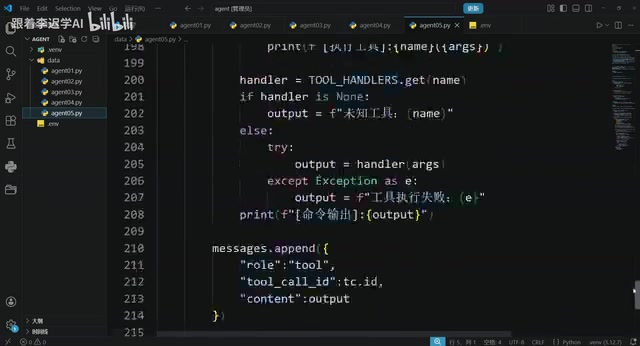
Hands-On Tutorial: Build an AI Agent from Scratch with 200 Lines of Python
Build an AI Agent from scratch with 200 lines of Python, covering prompts, memory, tool calling, RAG, and Skills — a practical guide for developers.
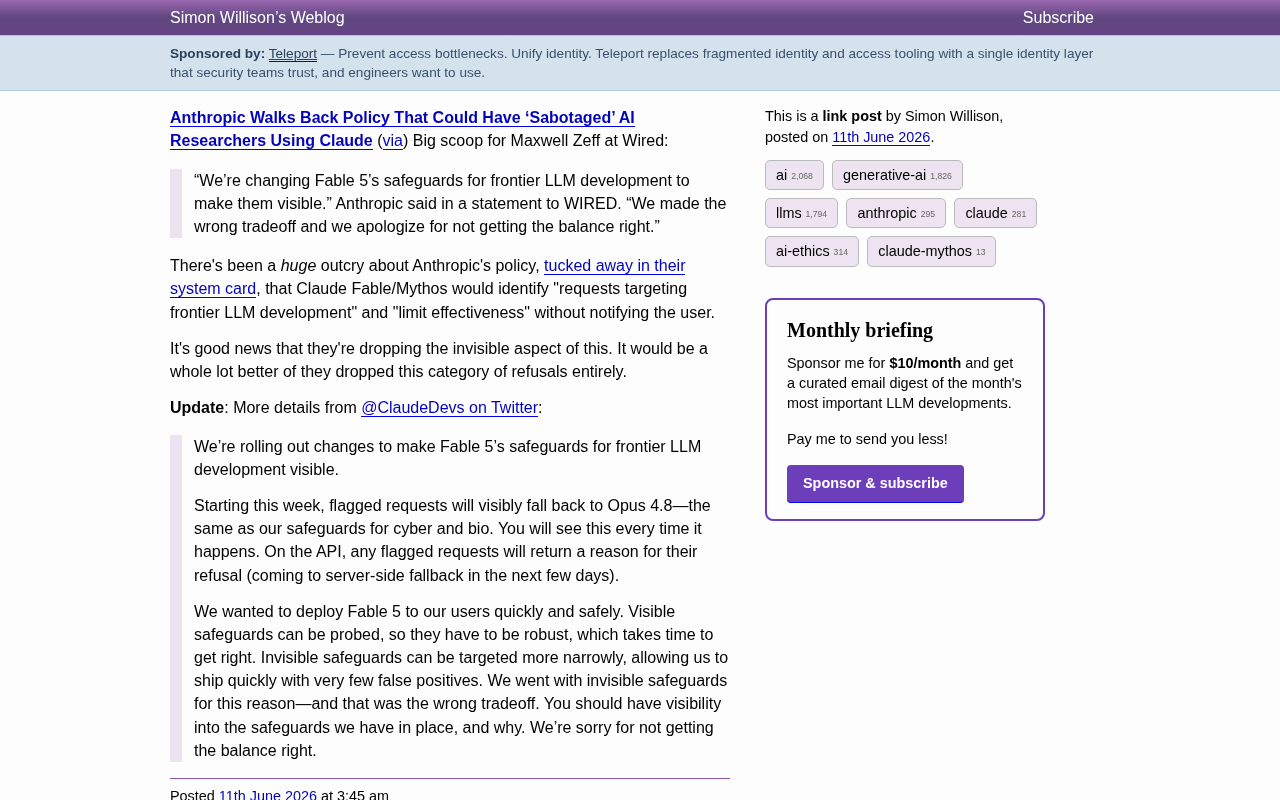
Anthropic Reverses Controversial Policy of Secretly Throttling AI Researchers Using Claude
Anthropic reverses its controversial policy of secretly throttling Claude Fable/Mythos responses to frontier LLM development requests after community backlash, raising critical questions about AI transparency.