Claude Code vs ByteDance Codex: A Guide to Chinese Learning Resources and Choosing the Right Tool
Claude Code vs ByteDance Codex: A Guid…
A comparison guide for choosing between Claude Code and ByteDance Codex for AI programming beginners.
This article compares Claude Code and ByteDance Codex — two AI programming tools with distinct strengths. Claude Code offers superior reasoning and code generation for complex projects, while ByteDance Codex provides a lightweight, Chinese-friendly experience ideal for beginners. The guide recommends starting with Codex for fundamentals before advancing to Claude Code, emphasizing hands-on practice and transferable skills over any single tool.
Introduction: Pain Points of Getting Started with AI Programming
Many people looking to get into AI programming face similar challenges: official documentation is entirely in English, tutorials are fragmented, and configuration processes are complex. After spending considerable time searching for resources, they still can't get tools up and running.
Recently, some content creators on Bilibili have compiled comprehensive Chinese learning materials for both Claude Code and ByteDance Codex, claiming them to be "fully localized, systematically organized, and beginner-friendly." This article provides an in-depth analysis of the positioning differences between these two AI programming tools and how beginners should choose the right learning path.
Claude Code: One of the Most Powerful AI Coding Assistants Available
Core Capabilities
Claude Code is an AI programming assistant developed by Anthropic. Thanks to the Claude model's powerful code comprehension and generation capabilities, it has become a popular tool in the developer community.
Anthopic was co-founded in 2021 by former OpenAI Research VP Dario Amodei and his sister Daniela Amodei, making it one of the most influential companies in the AI field today. Its core product, the Claude model series, is known for its "Constitutional AI" technical approach — a self-supervised set of principles that govern model behavior, putting it at the forefront of safety and controllability. The Claude model has evolved from Claude 1.0 to the Claude 4 series (Sonnet/Opus), consistently setting new benchmarks in code generation, long-context understanding, and logical reasoning. Claude Code is built on this powerful foundation model as a terminal-based AI programming tool that runs directly in the command line, reads project files, understands codebase context, and performs end-to-end development operations including writing code, running tests, and committing to Git.
Based on available Chinese documentation, its learning content covers the following areas:
- Basic Usage: Complete workflow from installation to basic interaction
- Interface Localization: Solving usability barriers from English-only interfaces
- Login-Free Configuration: Lowering the barrier to entry
- Model Integration: Flexible switching between multiple models
- Custom Skills: Tailoring AI behavior to personal needs
Practical Use Cases
Claude Code's core value lies in enabling: intelligent code writing, automatic bug fixing, project refactoring, and automated documentation generation. For developers with some programming background, it significantly boosts daily development efficiency, particularly excelling at handling repetitive code and untangling complex logic.
ByteDance Codex: A Lightweight Local AI Programming Solution
Positioning and Features
Compared to Claude Code's "heavyweight" positioning, ByteDance Codex takes a lightweight, localized approach. As an AI programming tool from ByteDance, it has natural advantages in Chinese language comprehension and compatibility with domestic development environments.
ByteDance's investment in AI programming extends far beyond Codex alone. Its self-developed Doubao (豆包) large model series provides underlying capabilities for multiple AI tools, while on the developer toolchain side, ByteDance has also launched MarsCode (Doubao Programming Assistant), offering IDE plugin-based code completion and conversational programming features. ByteDance Codex is positioned as a lighter command-line AI programming tool, complementing MarsCode as part of a product matrix. Notably, ByteDance has deep accumulation in AI infrastructure — its Volcano Engine platform provides model inference services, and its self-developed clusters of tens of thousands of GPUs support large-scale model training. This full-stack capability from chip scheduling to the application layer gives ByteDance's AI programming tools a competitive edge in response speed, service stability, and cost control.
Learning Path Design
According to the documentation organizers, ByteDance Codex's tutorial system unfolds across these dimensions:
- Foundational Understanding: Grasping the underlying logic of AI programming
- Core Principles: Understanding model working mechanisms
- Prompt Engineering: Learning to communicate effectively with AI
- Hands-on Cases: A complete loop from theory to implementation
Among these, Prompt Engineering is the core methodology for efficient interaction with large language models. Its essence is guiding models to produce expected outputs through carefully designed natural language instructions. Key techniques in AI programming scenarios include: role setting (having the model act as a domain expert), few-shot learning (providing input-output examples to help the model understand task patterns), Chain-of-Thought (requiring the model to reason step-by-step rather than jumping to answers), and context management (organizing the presentation order of code snippets and requirement descriptions). Developers who master these techniques often achieve vastly different output quality from the same AI tool — which is why prompt engineering is listed as a core module in AI programming education.
Target Audience
ByteDance Codex is particularly suited for:
- Student practice projects
- Efficiency improvements in daily development
- Script creation and automation
- Code debugging and optimization
How to Choose Between Claude Code and ByteDance Codex
Complementary, Not Competing
From a positioning standpoint, Claude Code and ByteDance Codex are not direct competitors but rather form a strong complement:
| Dimension | Claude Code | ByteDance Codex |
|---|---|---|
| Model Capability | Stronger reasoning and code generation | More Chinese-friendly |
| Entry Barrier | Requires some configuration | Ready out-of-the-box |
| Best For | Complex project development | Lightweight tasks |
| Ecosystem | International | Localized |
Recommendations for Beginners
For absolute beginners, it's recommended to start with ByteDance Codex to familiarize yourself with basic AI programming interaction patterns and prompt techniques. Once you've built a foundation, move on to Claude Code for more complex development tasks.
For experienced programmers, you can jump straight into Claude Code and leverage its powerful code comprehension capabilities to boost your productivity.
A Rational Perspective on AI Programming Learning Materials
Important Considerations
It's worth noting that any "complete learning package" is merely a starting point, not a destination. AI programming tools iterate extremely fast — today's best practices may be outdated in a few months.
The iteration speed in the AI programming tools space is nearly unprecedented in software industry history. Taking 2024-2025 as an example: GitHub Copilot evolved from code completion to Copilot Workspace (full-workflow development), Cursor editor grew from a niche tool to a startup valued at billions of dollars, Devin triggered industry shockwaves as the first "AI software engineer," Google launched Jules and Gemini Code Assist, and Amazon upgraded CodeWhisperer to Q Developer. In this rapidly evolving environment, the biggest challenge for learners isn't mastering the specific operations of any single tool, but building transferable cognitive frameworks — understanding AI programming interaction paradigms, context management strategies, task decomposition methodologies, and other foundational skills that remain applicable even as tools change.
What truly matters is:
- Understanding Underlying Logic: Mastering the core principles of prompt engineering
- Hands-on Practice: Building a project yourself beats reading countless documents
- Staying Current: Following tool updates and community best practices
- Critical Thinking: AI-generated code isn't always correct and requires human review
Regarding point four, the necessity of AI code review deserves special emphasis. Multiple studies have shown that LLM-generated code exhibits "hallucination" — code that looks logically sound and syntactically correct but may call non-existent APIs, introduce security vulnerabilities, or produce incorrect results under edge cases. A 2023 Stanford University study found that developers using AI-assisted programming were actually more likely to introduce security vulnerabilities because their excessive trust in AI output led them to relax their review standards. Therefore, the industry recommends a "human-AI collaboration" model: AI handles initial draft generation and repetitive work, while human developers handle architecture design, code review, and critical logic verification. In practice, it's advisable to run complete unit tests, static analysis, and security scans on AI-generated code rather than merging it directly into production codebases.
Thoughts on Free Resources
Free learning materials on the internet often come with promotional intentions, which is perfectly understandable. However, learners should be clear: systematic learning depends more on your own practice and synthesis than on any single "perfect document." While official documentation is in English, using it alongside translation tools often provides the most accurate and up-to-date information.
Conclusion
Claude Code and ByteDance Codex represent two directions in AI programming tools: one pursuing ultimate code capabilities, the other focusing on localized ease of use. For those looking to get started with AI programming, choosing the tool that matches your current skill level, combining it with systematic Chinese learning materials, and adding extensive hands-on practice is the most effective learning path.
Key Takeaways
Related articles
Anthropic London Developer Conference: Claude Model Upgrades, Enterprise Agent Platform, and Developer Tools Fully Evolved
Anthropic's first London Code with Claude event unveiled Opus 4.7, Mythos, Cloud Managed Agents, Claude Code Routines, and more for AI-assisted development.
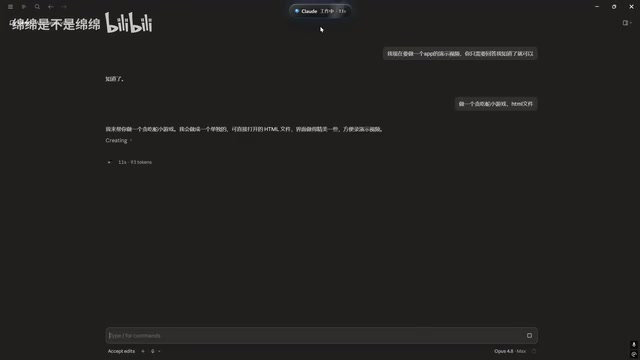
Claude Code Desktop Status Capsule: An Open-Source Widget for Real-Time AI Coding Status Monitoring
An open-source desktop status capsule that monitors Claude Code's idle, working, and completed states in real time, with multi-conversation management, memos, and music control for developers.
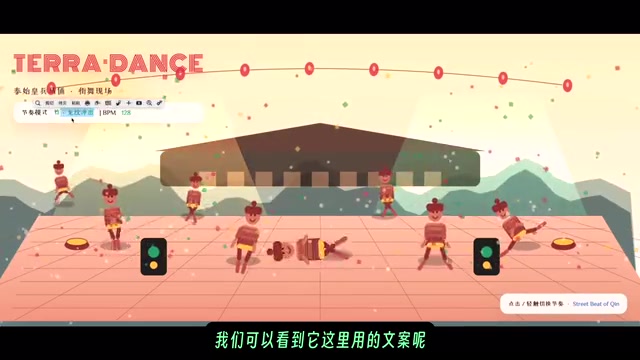
GPT-5.2 Codex vs Opus 4.5 Hands-On: A Comprehensive Comparison of Coding Ability, Speed, and Developer Experience
Hands-on comparison of GPT-5.2 Codex vs Opus 4.5 across frontend generation, physics simulation, 3D scenes, and code refactoring, with practical selection advice.