Claude Code Source Code Leak: Full Roadmap for Opus 4.7 and Mythos 5 Exposed
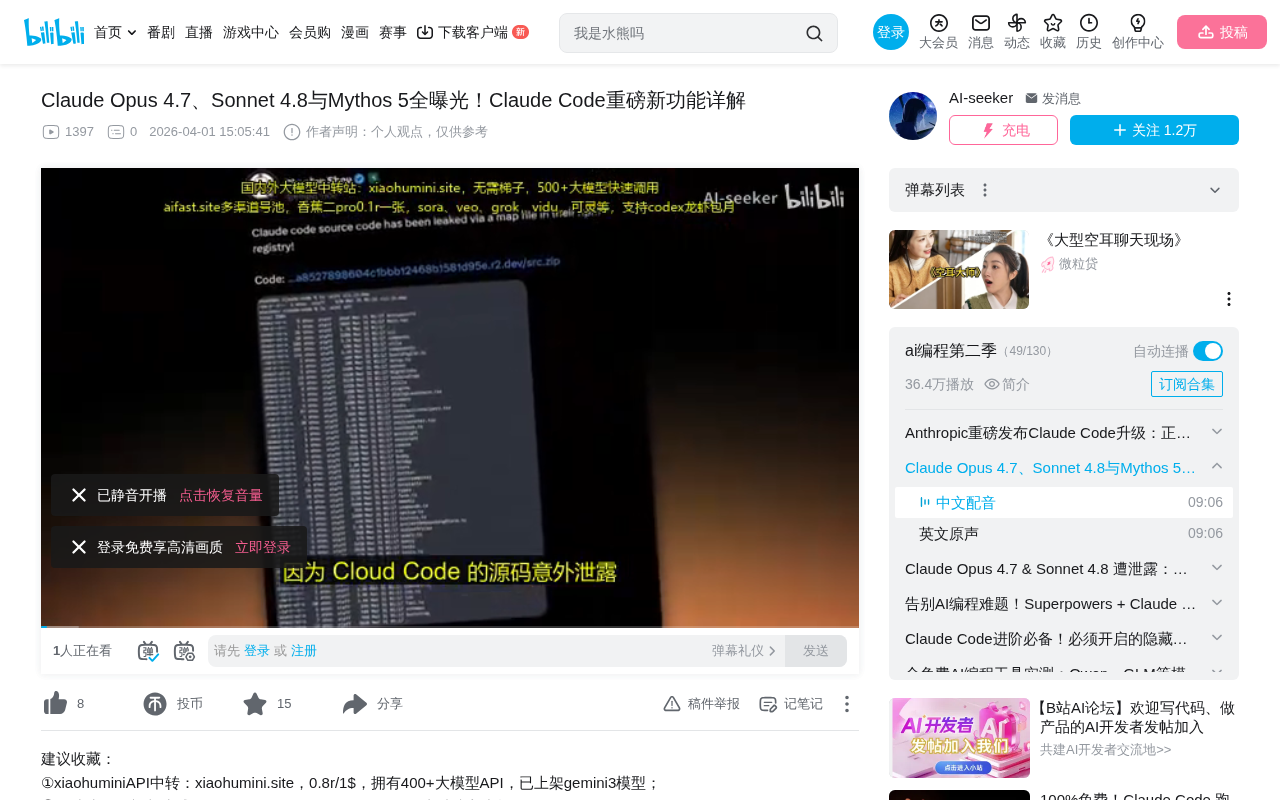
Anthropic's accidental code upload exposes Claude Code source, unreleased models, and full product roadmap.
An Anthropic developer accidentally uploaded debug files to GitHub, leaking over 500,000 lines of Claude Code source code that were quickly mirrored and cannot be fully removed. The leak reveals unreleased Opus 4.7 and Sonnet 4.8 models, the next-gen Mythos flagship line with 1-million-token context support, 44 hidden feature flags covering multi-agent collaboration, voice mode, proactive agents, and full computer control, plus the complete internal codename system and product roadmap. The community has already rebuilt an open-source version with safety restrictions removed, effectively force open-sourcing Claude Code.
Incident Overview: A Late-Night Mistake Triggers a Full Exposure
Anthropic recently suffered a serious code leak. A developer accidentally uploaded debug files to GitHub at 4 AM, exposing over 500,000 lines of Claude Code's internal source code. The files spread within minutes, and despite the company's urgent attempts to take them down, the code had already been widely mirrored and backed up—making it impossible to fully remove.
This type of incident is not unprecedented in the AI industry. In 2023, Meta's LLaMA model weights were leaked and rapidly spread across the open-source community, ultimately leading Meta to officially open-source subsequent versions. As the world's largest code hosting platform, GitHub's instant visibility for public repositories means any accidental upload can be captured within seconds by automated crawlers and monitoring tools. Once code is forked or mirrored, the nature of distributed version control systems (Git) means that deleting the original repository cannot stop already-cloned copies from continuing to circulate—exactly the predicament Anthropic now faces.
What's even more troubling for Anthropic is that developers have already rebuilt the entire system from scratch based on the leaked code and published it on GitHub under the name "Free Code"—Claude Code has essentially been "force open-sourced." But what truly sent shockwaves through the industry wasn't the leak itself, but what was leaked: unreleased model codenames, 44 hidden feature flags, a complete agent architecture design, and Anthropic's future product roadmap.
New Models Exposed: Opus 4.7, Sonnet 4.8, and Mythos 5
Mythos: Anthropic's Next-Generation Flagship Product Line
The leaked information reveals that Mythos appears to be Anthropic's next-stage flagship product line. Both Mythos Docs and a model codenamed "Copybara" were exposed during internal testing, and both feature a 1-million-token ultra-large context window with support for fast mode and full reasoning mode.
To understand the significance of this number, it helps to understand the concepts of tokens and context windows. A token is the basic unit that large language models use to process text—in English, one token corresponds to roughly 4 characters or 0.75 words, while in Chinese, one character typically maps to 1-2 tokens. The context window refers to the maximum number of tokens a model can process simultaneously in a single conversation. One million tokens means the model can process approximately 750,000 English words at once—equivalent to about 10-15 complete books. Previously, Claude 3.5 had a context window of 200,000 tokens, while Google Gemini 1.5 Pro was the first to achieve a 1-million-token context. Therefore, Mythos's million-token capability represents a major leap for Anthropic on this critical metric, directly competing with Google Gemini's long-context advantage.
Opus 4.7 and Sonnet 4.8: Next-Generation Models in Internal Testing
Internal documents also revealed two new models—Opus 4.7 and Sonnet 4.8—both currently undergoing internal projection testing within Claude Code. You may not have noticed, but the leaked code confirmed the internal codename system that outsiders had previously speculated about:
- Fenik = Opus series
- Tango = Haiku series
- Copybara/Sonic = Sonnet series
- Titan = Unknown series
Using internal codenames for unreleased products is standard practice in the tech industry—it facilitates internal communication while preventing premature information leaks. Apple's macOS versions were once named after California landmarks, and Google's Android versions were once named after desserts. In the AI space, OpenAI internally uses codenames like "Arrakis" (rumored to be GPT-5) and "Strawberry" (which became the o1 reasoning model). Anthropic's codename system had previously only been sporadically discovered by external developers through API logs and occasional error messages. This leak is the first complete confirmation of the mapping between codenames and product lines.
Developers had previously tested the model codenamed Fenik, and it delivered impressive results across multiple domains including frontend, backend, component building, and agent tasks—it could even independently build a fully functional browser-based operating system, writing all the code itself. If Opus 4.7 is an iteration of Fenik, its capabilities are well worth anticipating.
44 Hidden Feature Flags: Claude Code's Complete Feature Blueprint
The most valuable part of this leak is the 44 hidden feature flags inside Claude Code, revealing Anthropic's complete strategy in the AI coding agent space.
Feature flags are a standard practice in modern software engineering that allow development teams to deploy code for unfinished or experimental features to production environments while controlling their visibility to users through configuration switches. This approach supports continuous integration/continuous deployment (CI/CD) workflows, enabling teams to gradually roll out new features to specific user groups through gray releases while retaining the ability to quickly roll back. Companies like Facebook, Google, and Netflix typically maintain thousands of feature flags in their production environments. The existence of 44 hidden flags in Claude Code indicates that Anthropic has adopted a mature progressive release strategy, with many features likely already fully implemented in the code but not yet publicly available.
Core Agent Features
- AutoDream: Gives Claude conversations unlimited memory, addressing Claude Code's current memory limitations
- Kairos Agent: An entirely new agent system whose specific positioning has not been fully disclosed
- Proactive Agent: Can automatically wake up, find tasks, and autonomously write code without human triggers
- Orchestrator Mode: A multi-agent collaboration system for scheduling parallel work
- Ultra Plan: An agent scheduling scheme for running routine tasks
An AI agent refers to an AI system capable of autonomously perceiving its environment, formulating plans, and executing actions—distinct from traditional chatbots that passively respond to user commands. In multi-agent collaboration systems, multiple specialized agents each handle different subtasks (such as code writing, testing, and code review), with an Orchestrator managing task allocation and result integration. This architecture draws from distributed computing and microservice design principles, enabling the handling of complex tasks that a single agent would struggle with. Projects like OpenAI's Swarm framework, Microsoft's AutoGen, and CrewAI are all exploring similar multi-agent collaboration paradigms, and Anthropic's Orchestrator mode is clearly its core play in this arena.
Interaction and Control Features
- Voice Mode: Supports real-time voice conversations with Claude Code (partially launched)
- Background Sessions & Remote Control: Scheduling functionality that supports running agents in daemon mode for extended periods
- MCP Full Computer Control: Complete control of the local computer through Model Context Protocol
- Peer Discovery: Supports mutual discovery and collaboration between local Claude instances
Regarding daemon mode: this is a concept from Unix/Linux systems referring to service processes that run continuously in the background, independent of user terminal sessions—they continue executing even after the user logs out. Running an AI agent in daemon mode means it can continue executing long-running tasks after the user leaves—such as large-scale code refactoring, continuous integration testing, or monitoring codebase changes and responding automatically. This mode upgrades the AI coding assistant from an "instant Q&A tool" to a "continuously working virtual team member."
Model Context Protocol (MCP) is a standardized protocol open-sourced by Anthropic in late 2024, designed to provide AI models with a unified interface for interacting with external tools and data sources. MCP uses a client-server architecture where the AI model acts as a client that can connect to various "servers" through standardized protocols—including file systems, databases, API services, and even OS-level functions. Achieving "full computer control" through MCP means the AI agent can operate a computer's various functions just like a human user, including file management, application control, and system settings adjustments, dramatically expanding the boundaries of what an AI agent can do.
Hidden Experimental Features
- Advisor Mode: A server-side tool where a more powerful Claude model monitors the current conversation in real time, automatically retrieving the full conversation history and evaluating output quality—essentially a "real-time supervisor" for AI sessions
- Undercover Mode: A special operating mode that hides the AI's identity
- AFK Auto-Operation: Speculated to be the recently released auto mode
- Session Teleportation: Supports transferring session state between different environments
There's also an interesting Easter egg: the Claude Code lead revealed that the /body command is actually an April Fools' prank—essentially a virtual pet you can interact with inside Claude Code, providing statistics and programming fun facts.
Deeper Impact of the Leak: Claude Code Open-Sourcing Is Now Irreversible
The impact of this leak extends far beyond the code itself. The developer community has already begun secondary development based on the leaked architecture:
- Architecture Transparency: Claude Code's complete agent architecture, permission control system, and token optimization design are now fully exposed, allowing competitors to reference them directly
- Feature Unlocking: Developers have compiled a reconstructed version called "Free Code" that removes telemetry and safety system prompts, unlocking experimental features including UltraPlan and async multi-agent capabilities
- Self-Improvement System: Some have used the leaked code to build agent teams that analyze Claude Code itself, turning Claude into a self-improving system
Regarding the two key features removed in "Free Code": Telemetry is a software module that collects usage data, performance metrics, and error reports, helping developers understand how their product is actually being used. Safety system prompts are hidden instructions embedded in AI products that constrain model behavior, prevent harmful outputs, and ensure compliance. Removing these two features gives users greater privacy (no more data sent back to Anthropic), but also removes the protective mechanisms that prevent the model from generating dangerous code or bypassing safety restrictions. This has sparked intense debate in the security research community about the balance between AI safety and openness.
From a technical architecture perspective, the leaked TypeScript code reveals a highly modular design containing components for agent systems, tool instructions, and structured long-term memory. This architecture itself serves as an important technical reference for the AI coding agent field.
Summary and Outlook
This leak provides a rare window into Anthropic's complete technical roadmap:
- Short-term: Opus 4.7 and Sonnet 4.8 are approaching release, and Claude Code will progressively roll out new features including voice mode and multi-agent collaboration
- Mid-term: The Mythos product line will bring million-token context capabilities, and AutoDream will definitively solve the memory problem
- Long-term: Anthropic is building a complete AI agent ecosystem encompassing proactive agents, Orchestrator mode, background execution, and more
For developers, regardless of when these features officially launch, the leaked architecture design itself is an extremely valuable technical reference. And for Anthropic, while this incident is embarrassing, it also indirectly demonstrates the depth of their technical reserves—after all, code that inspires an entire community to study it speaks volumes about its technical merit.
Related articles
 Tech Frontiers
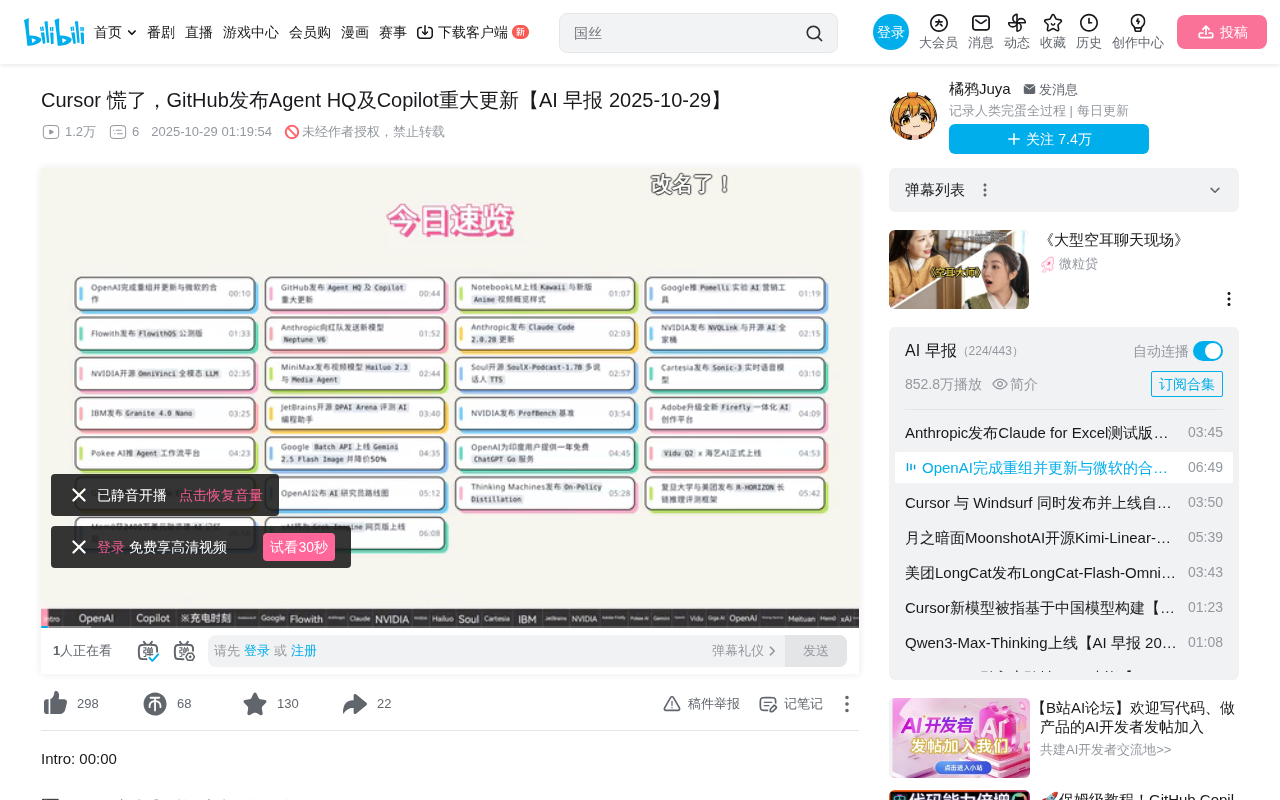
GitHub Agent HQ Launch: AI Coding Tools Enter the Era of Platform Competition
GitHub Universe unveils Agent HQ platform for unified coding agent management, Copilot upgrades with multi-model support. OpenAI completes restructuring, Anthropic tests new model, NVIDIA open-sources AI models.
 Tech Frontiers
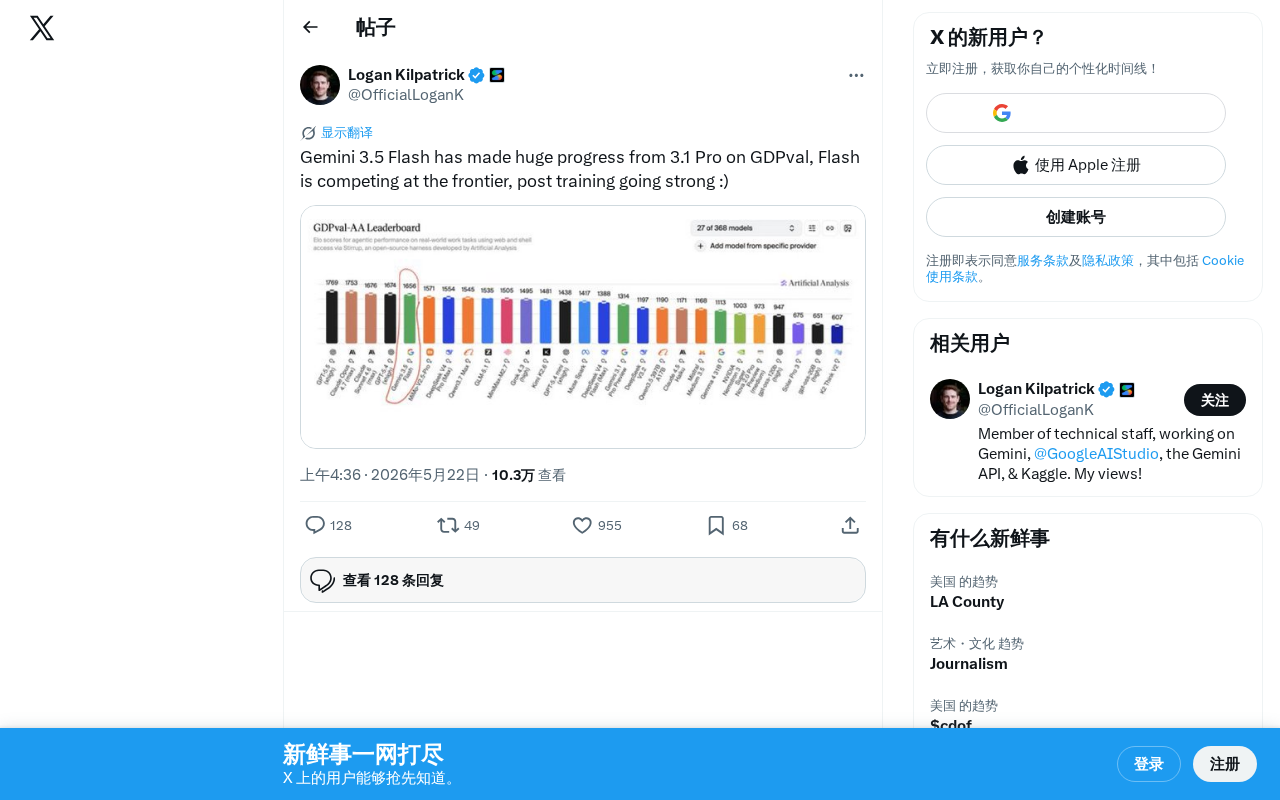
Gemini 3.5 Flash Achieves a Massive Leap on the GDPval Benchmark
Google Gemini 3.5 Flash surpasses Gemini 3.1 Pro on the GDPval benchmark. The lightweight Flash model leverages post-training techniques to approach frontier-level performance, redefining the balance between quality and cost.
 Tech Frontiers
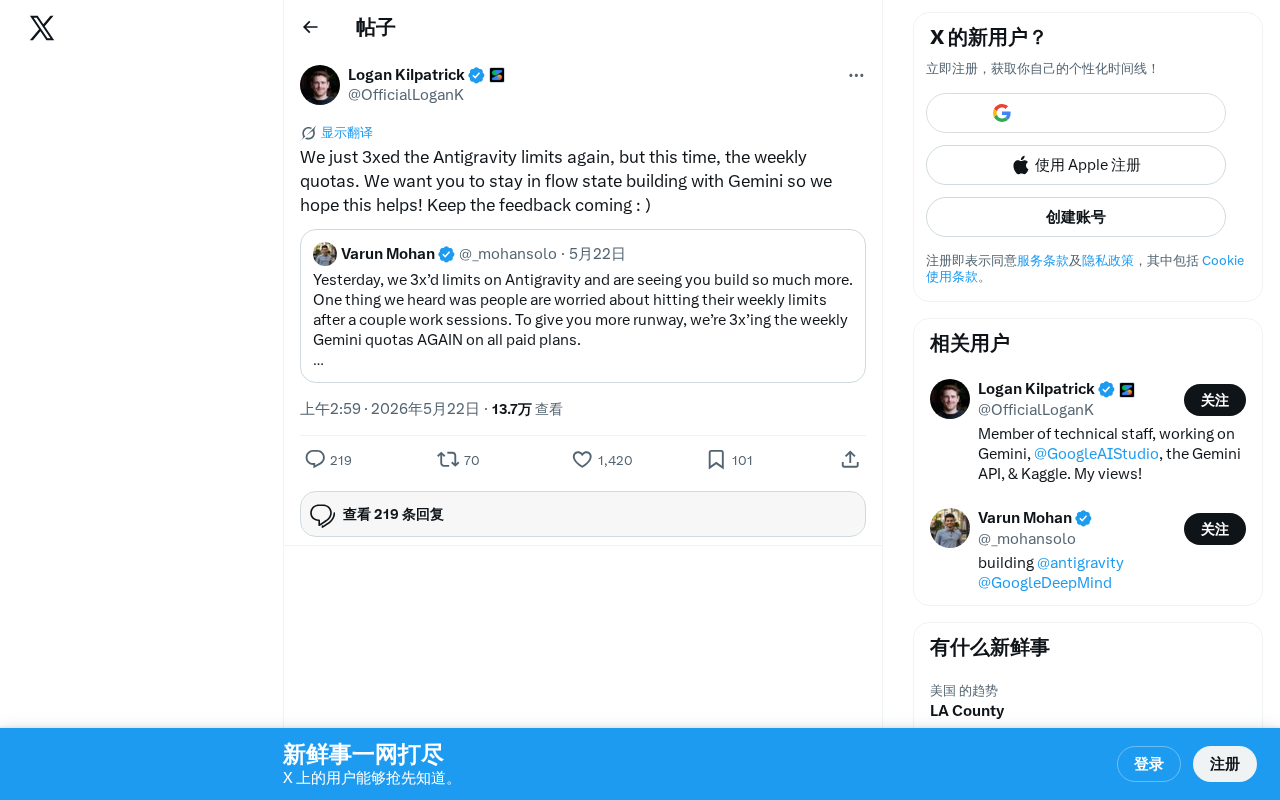
Google Gemini Antigravity Weekly Quota Tripled — AI Coding Without Limits
Google Gemini triples Antigravity weekly quotas following a prior daily quota boost. Analyzing the impact on developers and its strategic significance in AI coding.