Claude Fable 5 Global Ban: Deep Analysis of the AI Economic Chain Fracture Crisis
Claude Fable 5's sudden global ban exposes AI economic fragility and the risks of fear-based marketing.
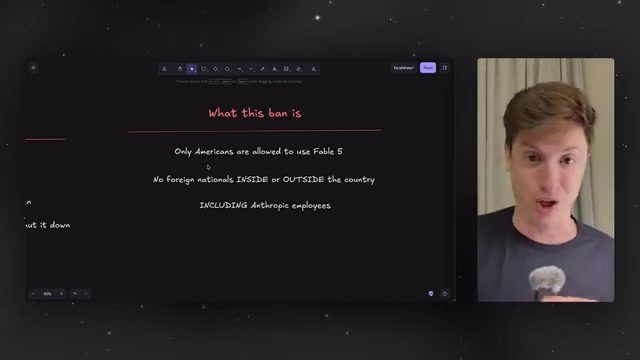
Three days after its release, Claude Fable 5 was banned for non-U.S. users by the Trump administration over jailbreak concerns. This analysis examines the questionable technical justification, the potential collapse of the global AI supply chain's circular economy, how Anthropic's own fear marketing and regulatory advocacy backfired, and why local AI deployment with open-source models is the only reliable long-term strategy for users worldwide.
The Full Story: The Most Powerful AI Model in History Hit by a Government Ban
Claude Fable 5—widely acknowledged by virtually every user as the most powerful AI model ever created—was struck by an unprecedented storm just three days after its release. The Trump administration demanded that Anthropic shut down access to the model for all non-U.S. users, citing leaked jailbreak methods that could potentially be used to create dangerous materials.
Anthropic subsequently issued a lengthy statement confirming the ban. According to its terms, only U.S. citizens may continue using Fable 5—all foreign users, whether inside or outside the United States, will have their access revoked.
The timing of this announcement—late on a Friday night—is widely considered no coincidence. Analysts point out that nearly every major financial news item during Trump's second term has been released on Friday evenings, deliberately avoiding the immediate, volatile reactions of weekday stock markets.
The Jailbreak Controversy: Does the Technical Justification for the Fable 5 Ban Hold Up?
The Trump administration's core rationale is that Fable 5's jailbreak methods were leaked, and given the model's extraordinary capabilities, anyone could potentially exploit it to produce dangerous materials.
To understand this controversy, some technical background on AI jailbreaking is necessary. AI model jailbreaking refers to the use of carefully crafted prompts or interaction patterns to bypass a model's built-in safety alignment mechanisms, causing it to produce otherwise restricted content. Common jailbreak techniques include role-play attacks (making the model assume an unrestricted persona), multi-turn conversational escalation, encoded or encrypted instruction bypass, and exploiting inconsistencies in safety policies across different languages. Virtually all large language models face jailbreak risks—it's one of the most active offensive-defensive battlegrounds in AI safety today.
However, Anthropic's own rebuttal is quite compelling. They acknowledged that jailbreak vulnerabilities were indeed discovered, but emphasized that these were not universal jailbreaks—meaning they don't allow users to freely bypass all safety restrictions at will. A "universal jailbreak" refers to a method that can systematically circumvent all safety limitations, whereas the vulnerabilities Anthropic found could only breach certain restrictions under specific scenarios—a fundamentally different level of danger. More critically, Anthropic pointed out that such jailbreak vulnerabilities emerge every month, and that ChatGPT 5.5 has similar jailbreak methods yet has not received the same treatment.
This raises a core question: if jailbreaking is a universal phenomenon, why is only Fable 5 being banned? The technical legitimacy of this ban is clearly questionable.
Chain Reaction: The Global AI Economic Chain Faces Fracture Risk
The impact of this ban extends far beyond the availability of a single model. It could trigger an economic chain reaction reverberating across the globe.
The AI Talent Crisis Hits First
One shocking detail: Anthropic's own foreign employees can no longer use Fable 5. These are people who helped build the model, yet are now banned from using their own creation. This leads directly to two consequences: first, AI labs may conduct mass layoffs of foreign staff, since they can no longer work on frontier models; second, these companies will stop hiring foreign talent, causing severe turbulence in the global AI talent market. Notably, the proportion of foreign employees in Silicon Valley AI labs is extremely high—by some estimates, over 60% of researchers at top U.S. AI research institutions were born outside the United States, with researchers from China, India, Canada, and Europe making up the vast majority. If this ban is enforced long-term, it will fundamentally reshape the talent structure of America's AI industry.
The Risk of AI Supply Chain Collapse
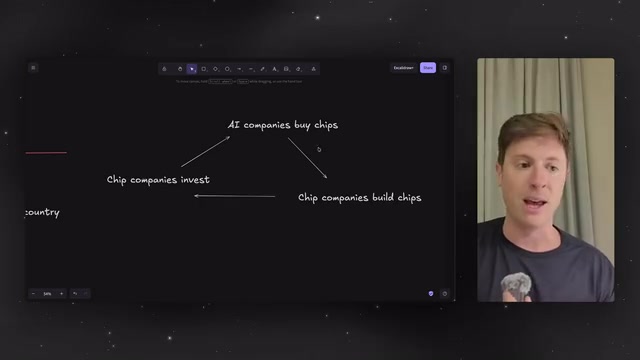
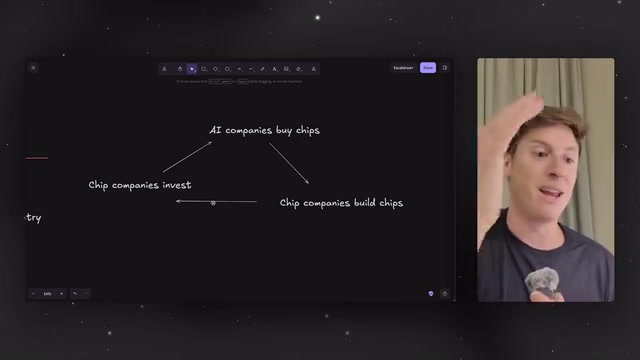
The deeper crisis lies in the potential breakdown of the global AI supply chain's circular economy. The global AI industry has formed a highly interlocked capital cycle—AI companies sign long-term pre-purchase contracts worth tens or even hundreds of billions of dollars with chip manufacturers, memory makers, and cloud infrastructure providers to secure future compute capacity. These contracts are based on growth projections for global AI service revenue. Hardware companies, armed with prepayments and contract guarantees, reinvest the funds into capacity expansion, R&D, and ecosystem investments—some of which even flow back to the AI companies themselves. The current logic works like this:
- AI companies like OpenAI and Anthropic sign 5-to-10-year contracts worth hundreds of billions of dollars with hardware companies like NVIDIA and Micron
- These contracts are based on global revenue growth projections—the assumption that AI revenue will continue to explode over the next decade
- Hardware companies take the contract funds and reinvest in other companies, sometimes even investing back into the AI companies themselves
- This cycle underpins the sustained profit and revenue growth the global economy has maintained over the past few years, despite high inflation and employment pressure
If Anthropic can only earn revenue from the U.S. market, its five-year revenue will fall far below projections, meaning it cannot fulfill the hundreds of billions of dollars in contracts already signed. When Anthropic defaults, hardware companies like NVIDIA will also be unable to honor their own investment commitments, and the entire cycle will collapse like dominoes. This type of risk is known in finance as "systemic risk"—a single node's default propagates through the contract network, potentially triggering a credit crisis across the entire supply chain.
The foundation of NASDAQ and S&P repeatedly hitting all-time highs is precisely the expectation that these companies will invest trillions of dollars over the next decade. This ban directly undermines that assumption.
Will Trump Reverse the Fable 5 Ban?
Some analysts believe this ban will most likely be reversed over the weekend. The core logic is simple: Trump is extremely sensitive to the stock market. If the ban persists until Monday's market open, a NASDAQ and S&P crash is virtually certain. One long-time AI industry commentator put it bluntly: "I don't think he wants the entire global economy and stock market to collapse."
The choice to release this news late on a Friday night itself signals the decision-makers' concern about market reactions. The weekend buffer provides negotiation space for all parties and leaves room for a potential policy reversal. Looking at historical precedent, Trump's second term has already seen multiple instances of the "Friday leak, weekend negotiation, pre-Monday walkback" policy playbook, and this ban will very likely follow the same script.
Anthropic's "Fear Marketing" Strategy Backfires
The most ironic part of this crisis: Anthropic may be its own worst enemy.
Over the past few years, Anthropic has made "spreading fear" a core marketing strategy—AI will take all jobs, it will destroy everything, it's too dangerous to release publicly. This strategy reached its peak a few months ago when Methos (the foundation model behind Fable 5) was released, with Anthropic claiming Methos was "too dangerous to give to the public."
More critically, Anthropic had publicly advocated that the government should have the power to halt dangerous AI models. They thought they were fighting for a seat at the rule-making table, never anticipating that the government would use the very powers they requested against them. This strategy is known in policy circles as "Regulatory Capture"—where companies push for regulatory frameworks favorable to themselves to build competitive moats, excluding smaller competitors and the open-source community. However, the risk of regulatory capture is that once regulatory power is established, its direction of enforcement is no longer entirely controlled by its advocates.
This is a textbook case of shooting yourself in the foot. Fear marketing did help Anthropic gain attention and differentiated positioning in the short term, but when the government actually followed their recommendations, the deepest damage fell on Anthropic itself. Observers note that Anthropic appeared to have started dialing back its fear marketing rhetoric in recent weeks, but it was too late. This case also provides a profound lesson for the entire AI industry: when calling for regulation, one must carefully consider the possibility that regulatory power could be abused or used for unintended purposes.
What Should Ordinary Users Do? Alternatives and Long-Term Strategies
Short-Term Alternative: Return to ChatGPT 5.5
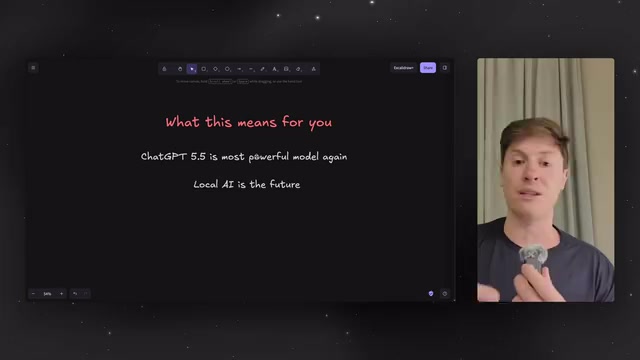
With Fable 5 banned, ChatGPT 5.5 has re-emerged as the strongest available model. In the weeks before Fable 5's release, 5.5 was actually the first GPT-series version in a year and a half to claim the best coding capabilities. Although Fable 5 briefly surpassed it, the ban puts 5.5 back on top. Moreover, 5.5 has higher usage limits and lower pricing, making it the more practical choice for most users.
Long-Term Solution: Local AI Deployment Is the Ultimate Safeguard
This ban perfectly validates a long-standing prediction: local AI and open-source models are the future. Governments can ban access to cloud-based models, and companies can raise prices beyond ordinary people's reach, but no government can take away the Q13.6 running on your Mac Studio, and no one can confiscate the GLM 5.1 running on your DGX Spark.
Local AI deployment has made significant technical progress in recent years, making this option increasingly viable. Apple's Mac Studio with M-series chips (such as the M4 Ultra) offers up to 192GB of unified memory, capable of running quantized large open-source models. NVIDIA's desktop-class AI workstations like the DGX Spark provide even more powerful GPU compute. Quantization techniques (such as the Q13.6 mentioned here, referring to 13-bit quantization precision) dramatically reduce memory usage and computational requirements by lowering the numerical precision of model parameters while preserving performance as much as possible. The open-source model ecosystem—including Meta's Llama series and Zhipu's GLM series—provides a rich selection of models for local deployment, while tools like Ollama and llama.cpp have greatly simplified the deployment and execution process, enabling ordinary technical users to run capable AI models on consumer-grade hardware.
By purchasing hardware, building your own compute infrastructure, and running open-source AI models locally, users can obtain AI capabilities that no external force can take away. This incident won't be the last—similar policy interventions will only become more frequent, and local deployment is the only long-term safeguard.
Conclusion: The Alarm Bell Has Sounded for the AI Industry
Regardless of how the Fable 5 ban ultimately plays out, it has already sounded an alarm for the entire AI industry. It exposes the fragility of the current AI economy—a single policy decision can potentially shake a multi-trillion-dollar industrial chain. It also reminds us that while AI capabilities are advancing at breakneck speed, the political battles over AI governance have only just begun. For ordinary users and developers, diversifying risk, embracing open source, and building local AI capabilities have shifted from "nice to have" to "must have."
Related articles

The Era of Managed Agents: Anthropic vs. Google's Two Diverging Approaches
Deep analysis of Anthropic vs Google's Managed Agent architectures, pricing strategies, and selection guidance. Managed Agents are emerging as a new AI infrastructure product category.
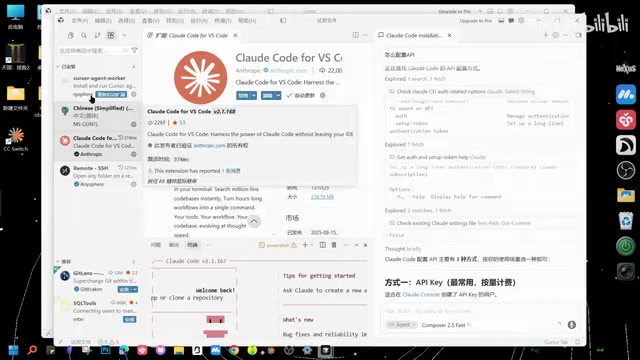
Setting Up Claude Code from Scratch: An Installation & Configuration Troubleshooting Guide
A complete guide for beginners to set up Claude Code, covering VS Code installation, plugin troubleshooting, API configuration, model switching pitfalls, and practical usage tips.

AI Summoning Power: Insights and Practices from Zero-Code Game Development with AI
A creator with no coding experience built a complete game using only AI prompts. Explore AI summoning power, zero-code development, and what it means for PMs, developers, and everyone.